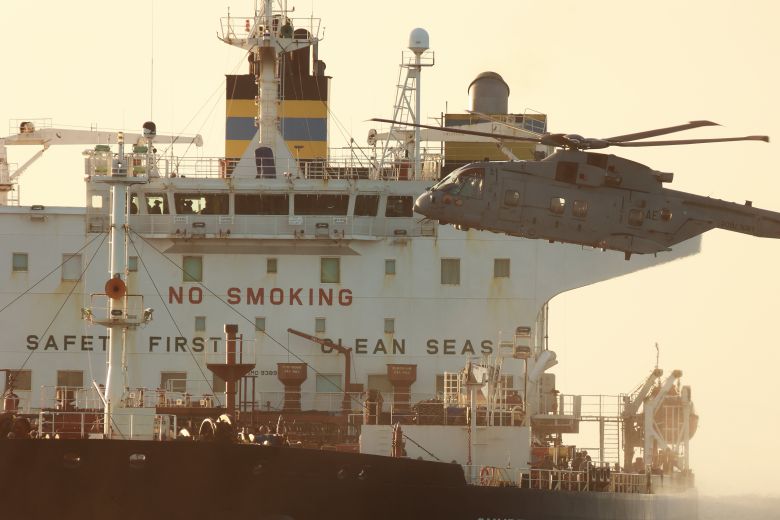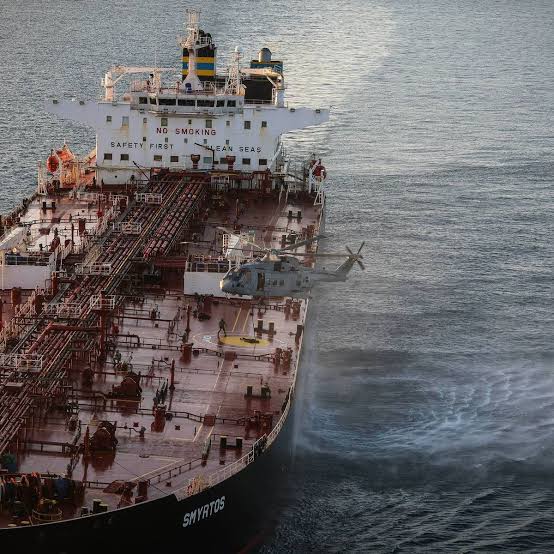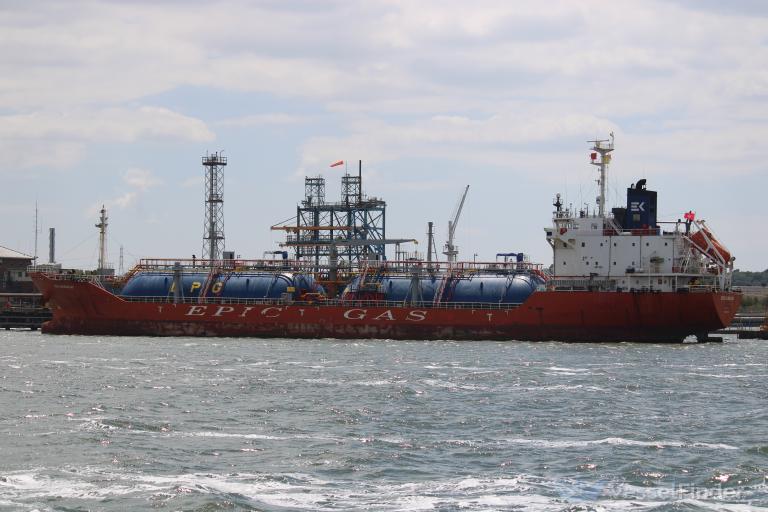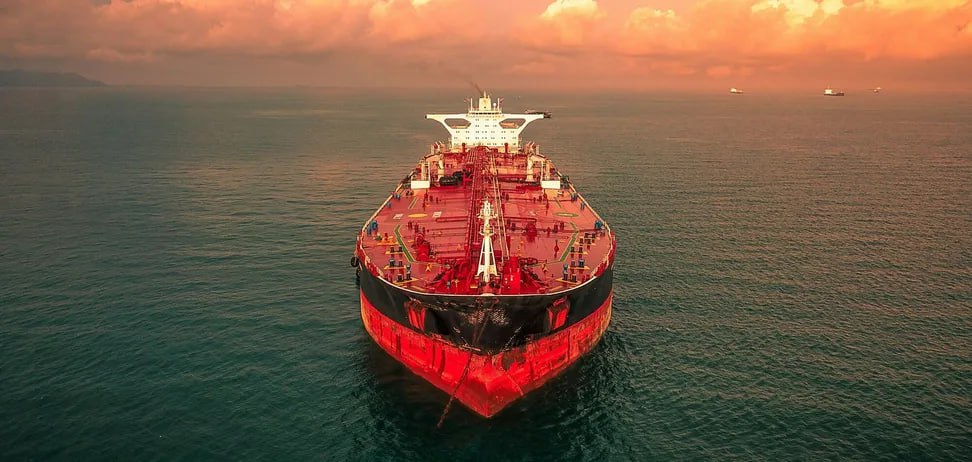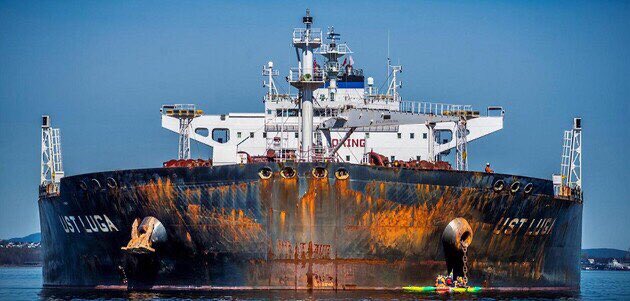

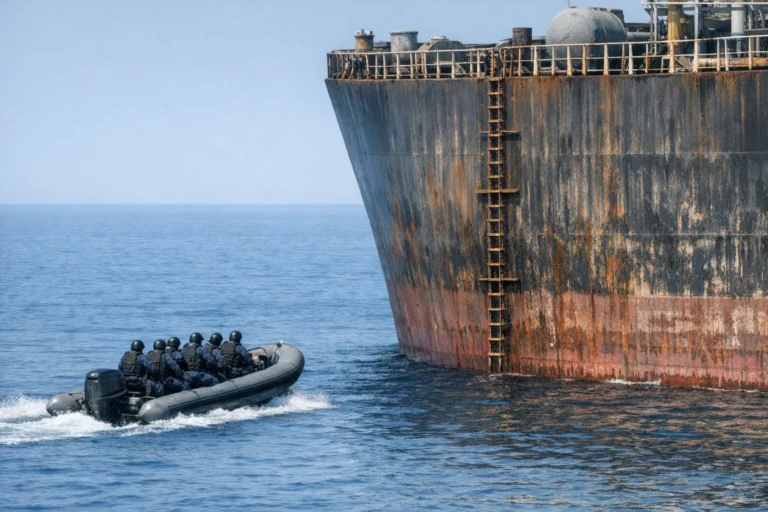
On November 13, 2026, personnel from the European Union naval operation EUNAVFOR MED IRINI boarded the tanker MV MIDAG in the Mediterranean Sea. The inspection established that the vessel, suspected of belonging to Russia’s shadow fleet, was using a false flag registration. On November 15, EU High Representative for Foreign Affairs Kaja Kallas publicly reported the operation.
This incident has implications far beyond the inspection of a single vessel. It demonstrates the EU’s gradual shift from predominantly financial and administrative sanctions to physical oversight of shipping that may facilitate the circumvention of restrictions on Russian oil exports.
At the same time, the operation exposed a fundamental contradiction in European policy: naval personnel may establish that a vessel has violated registration rules, but this does not necessarily provide sufficient legal grounds for prolonged detention or confiscation.
Key findings: Legal precedent. The EU demonstrated the possibility of invoking Article 110 of the United Nations Convention on the Law of the Sea to inspect vessels of questionable nationality. A new sanctions-enforcement tool. The operation creates additional risks for shipowners, operators, and intermediaries using false flags and opaque registration arrangements. Limited immediate outcome. Despite the identified violation, MIDAG continued its voyage. The operation therefore does not yet demonstrate the EU’s ability to systematically remove such tankers from international shipping. International dimension. The vessel’s history suggests a possible overlap between Russian and Iranian oil transportation networks, complicating sanctions enforcement. Political signal to Moscow. European states are demonstrating their willingness to use naval capabilities to inspect suspicious vessels without entering into direct military confrontation with Russia.
Why MIDAG Is an Illustrative Example of Russia’s Shadow Fleet
- May 5–8, 2026. The vessel, then named Midas, called at the Russian ports of Vostochny and Kozmino. A change in its reported draft indicates that cargo was loaded. May 19. The U.S. Treasury Department sanctioned the tanker for transporting Iranian oil, rather than for a particular voyage carrying Russian cargo. July. The vessel was renamed Midag. Maritime registries began reporting unauthorized use of the Zimbabwean flag. November 13. European naval personnel boarded the tanker and confirmed that it was flying a false flag. November 15. According to AIS tracking data, the vessel continued sailing westward in the Mediterranean Sea.
Three circumstances are particularly important. First, the tanker has a history of shipments associated with different sanctions regimes. This demonstrates that vessels used to transport sanctioned oil may serve several trading routes. Second, changes to the vessel’s name, flag, and registration details make it more difficult to identify operator responsibility and monitor the ship. Its permanent IMO number nevertheless allows its history to be traced despite renaming. Third, the absence of information about protection and indemnity (P&I) insurance in available registry data raises additional questions about coverage for potential losses arising from an accident or marine pollution.
However, calls at Russian ports, U.S. sanctions, and the use of a false flag do not prove that the tanker was carrying Russian oil when it was inspected on November 13. Its cargo at the time and final destination remain unconfirmed.
Why Article 110 of the UN Convention on the Law of the Sea Changes the EU’s Options
The legal basis for the operation was its central element.
Article 110 of the United Nations Convention on the Law of the Sea (UNCLOS) provides for a warship’s right to visit a foreign vessel on the high seas under specified circumstances, including where there are reasonable grounds to suspect that the vessel is without nationality.
This is fundamentally different from attempting to stop a tanker solely because of its suspected involvement in transporting Russian oil.
A vessel’s association with the shadow fleet or its inclusion on sanctions lists does not, by itself, create a universal right to seize it on the high seas. By contrast, a false flag may provide grounds for verifying the vessel’s legal status.
Legal Logic of the Operation
Reasonable suspicion concerning the vessel’s flag
Grounds for verifying the vessel’s nationality
Boarding by an inspection team under Article 110 of UNCLOS
Examination of ship documents and claimed registration → Confirmation of the false flag → Documentation of the violation and possible further legal action → Where additional grounds exist
Further measures under applicable international and domestic law
Where sufficient grounds are absent → Completion of the inspection and permission for the vessel to continue its voyage
The MIDAG operation demonstrated that the first stage of this procedure can be carried out in practice, but it did not establish an automatic mechanism for confiscation.
This is an important limitation. Under international maritime law, the right to visit and inspect a vessel is not equivalent to the right to arrest it, detain it for an extended period, or seize its cargo.
This gives rise to a strategic dilemma for the EU: can a vessel inspection become an effective tool against the shadow fleet if, after a violation is established, the tanker continues its commercial voyage?
The answer will depend on subsequent enforcement practice, cooperation with flag states and port authorities, and the availability of other legal grounds for detention.
Why MIDAG Was Not Detained: The Limits of Europe’s Maritime Strategy
After the inspection, MIDAG continued sailing through the Mediterranean Sea. As of November 15, it was tracked north of Algeria.
This is one of the most important aspects of the incident.
The operation confirmed the feasibility of naval inspections but also demonstrated their limited ability to directly interrupt illegal or suspicious shipments.
The reasons may be both legal and practical. Even when grounds for detaining a vessel exist, questions arise over jurisdiction, the crew’s legal status, responsibility for maintaining custody of the tanker, its cargo, and potential environmental hazards.
Nevertheless, the absence of detention does not mean the operation produced no results.
The inspection may generate additional evidence for sanctions proceedings, clarification of registration data, identification of vessel operators, and subsequent oversight by port states.
Without systematic use of such information, however, the impact will remain primarily informational and preventive.
Why the EU Is Expanding Operation IRINI’s Mandate
EUNAVFOR MED IRINI was launched in 2020 primarily to support enforcement of the UN arms embargo on Libya.
In October 2026, its mandate was extended until March 31, 2029, with tasks related to countering Russia’s shadow fleet added. The Mediterranean is regarded as an important transit and transshipment area for oil.
This means that the EU is beginning to use its existing naval infrastructure for economic-security purposes.
The strategic significance of this decision lies in the changing nature of sanctions enforcement. Previously, its principal tools were financial restrictions, bans on service provision, insurance restrictions, and port inspections. Naval surveillance and inspections of vessels in international waters are now being added.
However, IRINI is not becoming a universal maritime sanctions-enforcement authority. Its activities remain constrained by international law and its specific mandate.
Importantly, MIDAG was not the first vessel inspected. Euronews reported earlier operations involving the tankers MV Sun and MV Toa Payoh. This indicates an emerging practice rather than a one-off demonstration.
Implications for Russia’s Sanctions-Evasion System
Russia’s shadow fleet operates through a complex combination of shipowners, trading intermediaries, operators, flag registries, and maritime service providers.
Physical inspections can affect this system even without the large-scale detention of vessels.
Potential Implications for Participants in Oil Transportation
| Participant | Potential implication |
| Shipowners | Increased risk of inspections, delays, and additional costs |
| Tanker operators | Need to verify vessel registration and legal status |
| Oil buyers | Greater risk of disrupted deliveries and sanctions screening of counterparties |
| Insurers | Additional liability risks and verification of insurance coverage |
| Flag states | More requests to confirm registration and identify its unauthorized use |
The most important potential consequence is a gradual increase in the cost of using opaque maritime arrangements.
This outcome is not guaranteed. Operators may adapt their routes, use alternative registration structures, or move cargo transshipments to areas subject to less intensive monitoring.
The effectiveness of the new policy will therefore be measured not by the number of boardings, but by the EU’s ability to change the economic incentives of shadow-fleet participants.
The Russian-Iranian Dimension: Why MIDAG’s History Extends Beyond the War Against Ukraine
One of the most significant details is the vessel’s U.S. sanctions record.
On May 19, 2026, the United States sanctioned the tanker and Ocean Marvel Shipping Company Limited for activities related to transporting Iranian oil. According to U.S. authorities, the vessel carried hundreds of thousands of barrels of Iranian oil during 2026.
This circumstance supports a broader analytical conclusion.
Russian and Iranian sanctions-evasion schemes may use shared or interchangeable elements of maritime logistics: tankers, intermediary companies, trading routes, and mechanisms for concealing registration details.
However, shared use of a vessel does not prove the existence of a single Russian-Iranian command center directing these shipments.
Strategic implication: effective action against the shadow fleet requires examining not only individual Russian oil shipments but also international networks transporting sanctioned cargo.
This also provides grounds for deeper cooperation between European and U.S. sanctions-enforcement agencies, regardless of differences in their approaches to negotiations with Moscow.
Could Moscow Respond to Tighter Maritime Oversight?
Further expansion of inspections could provoke a political and diplomatic response from Russia.
Three possible lines of response can be identified.
Diplomatic pressure. Moscow may characterize inspections as unlawful interference with freedom of navigation and demand that such operations cease. The legality of any particular boarding will depend on the facts and applicable rules of international law.
Information operations. Russian state and affiliated media may portray the inspections as an attempt by the EU to impose a maritime blockade or threaten international trade. Such claims would require independent verification.
Adaptation of maritime logistics. Operators may change routes, use other vessels, or seek to reduce shipments through areas subject to intensified surveillance.
Direct military confrontation is not an inevitable consequence of these inspections. Nevertheless, regular interactions between warships and suspicious tankers increase the importance of clear procedures and communication channels to prevent incidents.
Why the Incident Matters Now
The operation against MIDAG coincided with preparations for a new EU sanctions decision.
EU member-state ambassadors agreed to add 145 individuals and legal entities to new sanctions lists targeting Russian financial structures, the shadow fleet, and disinformation networks. Formal adoption was expected on November 16.
Reuters
In addition, France and the United Kingdom announced an international conference in Paris on December 4 devoted to countering Russia’s shadow fleet.
The boarding of MIDAG is therefore part of a broader process of developing European maritime sanctions-enforcement policy.
The significance of the incident lies in the combination of three instruments: naval surveillance, international maritime law, and financial sanctions.
The ability to coordinate these instruments will determine whether Operation IRINI becomes a means of exerting systematic pressure on Russian oil revenues.
Conclusion
The boarding of the MIDAG tanker by EU naval personnel on November 13, 2026, marks a new phase in efforts to counter Russia’s shadow fleet.
For the first time in a considerable period, European sanctions pressure is centered not only on financial restrictions affecting a vessel but also on the ability to inspect its legal status directly at sea.
At the same time, the incident exposed the limits of this strategy. Despite confirmation of a false flag, the tanker continued its voyage, while its cargo and final destination remained unconfirmed.
The principal outcome of the operation was therefore not the physical interruption of a shipment, but a demonstration of the EU’s ability to inspect suspicious vessels on the high seas and document violations of international shipping rules.
For Moscow, the strategic risk is a potential gradual increase in the cost and complexity of operating the shadow fleet. For the EU, the main challenge remains turning individual inspections into a coordinated enforcement system.
In the longer term, the significance of the MIDAG operation will depend on whether European states can move beyond identifying false flags toward legally grounded measures that genuinely restrict the use of opaque oil-transport networks.It is precisely this transition—from documenting violations to effective sanctions enforcement—that will shape the future of European policy toward Russia’s shadow fleet.