

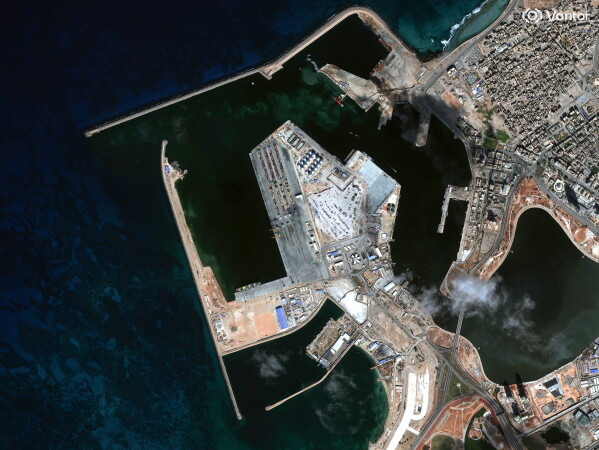
According to Ukrainian President Volodymyr Zelensky and the Security Service of Ukraine (SBU), on November 22, 2026, Ukrainian forces sank the Russian corvette Merkury, destroyed a shipborne Ka-27 helicopter, and struck the sanctioned cargo vessel MV ANGARA in the Libyan port of Benghazi. The full extent of the damage and the circumstances surrounding the operation require independent verification.
The operation demonstrates the ability to strike Russian naval and transport assets far beyond the Black Sea. Its principal strategic significance lies not only in the loss of a warship but also in the vulnerability of the logistical infrastructure sustaining Russia’s military presence in the Mediterranean and Africa.
Moscow can no longer automatically regard the ports of partner countries as safe locations for crew rest, replenishment, and military transportation. This could increase the cost of maintaining Russia’s naval presence, restrict its operational flexibility, and force Moscow to reconsider its reliance on foreign port infrastructure.
Meanwhile, the unrecognized administration of eastern Libya condemned the attack as a violation of sovereignty and called for an international investigation. For Ukraine, the operation creates additional diplomatic and international legal challenges associated with the use of force on the territory of a third country.
What Happened in Benghazi
On November 22, maritime drones attacked Russian naval assets in the port of Benghazi. According to Ukrainian sources, the operation targeted:
The corvette Merkury — a Project 20380 multipurpose warship designed for patrol missions, anti-submarine warfare, vessel escort, and engagement of surface targets.
MV ANGARA — a sanctioned cargo vessel that, according to the SBU, was used to transport Russian military supplies.
A Ka-27 helicopter — a shipborne helicopter that, according to Ukrainian authorities, was aboard the corvette.
According to available information, the Merkury was in Benghazi to replenish supplies under arrangements between Russia and the eastern Libyan administration. This indicates that local port infrastructure is being used as part of Russia’s naval logistics network.
Libya’s Strategic Importance to Russia
Russia’s presence in Libya rests on longstanding military and political cooperation with institutions in the eastern part of the country controlled by Khalifa Haftar. For Moscow, Libya serves three interconnected strategic functions.
It enables Russia to maintain a naval presence in the central Mediterranean. Eastern Libyan ports are used for replenishment, vessel servicing, and transportation operations.
Libya constitutes an important component of Russia’s logistical network in Africa, facilitating the movement of personnel, military equipment, and material resources.
The importance of Libyan infrastructure is growing amid uncertainty surrounding the future of Russia’s military presence in Syria. Cooperation with Haftar provides Moscow with additional opportunities to preserve its naval influence in the Mediterranean.
In this context, the strategic impact of the Benghazi operation could extend far beyond the neutralization of individual vessels. It calls into question the reliability of the infrastructure on which Russia relies to pursue its military policy in North Africa.
Implications for Russia’s Naval Capabilities
If the destruction of the corvette Merkury is confirmed, Russia will face several interconnected challenges.
Reduced combat capabilities. The loss of a modern multipurpose warship restricts Russia’s capacity to conduct patrol missions, anti-submarine warfare, and transport vessel escort operations. Given Russia’s limited ability to rapidly replenish its fleet, such a loss cannot be immediately compensated for.
Reduced security of military transportation. According to the SBU, the Merkury regularly escorted transport convoys, including MV ANGARA. If confirmed, its loss could adversely affect the security of Russian military shipments.
Reputational damage. The successful targeting of a warship in a foreign port raises questions about the effectiveness of Russia’s naval asset protection system and its coordination with the host country’s forces.
At the same time, a single incident is insufficient to conclude that Russia has lost control over its Mediterranean routes. Such an assessment would require additional information on subsequent shipments, changes in naval activity, and the operational readiness of other vessels.
The Expanding Geography of Maritime Warfare
A distinctive feature of the Benghazi operation is the deployment of Ukrainian unmanned maritime systems at a considerable distance from the traditional theater of hostilities.
Ukraine is demonstrating the potential to employ such systems not only to defend its coastline and counter Russia’s Black Sea Fleet but also to affect Russian naval capabilities in other regions.
For Moscow, this means having to account for threats to its military assets while they are stationed in foreign ports. Geographic distance from Ukraine is no longer a sufficient guarantee of their security.
Over the medium term, this could increase Russia’s expenditure on maritime transportation security and the maintenance of its naval presence beyond the Black Sea.
At the same time, publicly acknowledging responsibility for operations on the territory of third countries creates additional diplomatic risks. The practice of Israeli intelligence services is illustrative in this regard, as they frequently refrain from officially confirming their involvement in certain overseas operations.
International Legal Justification for the Operation
The strikes against Russian vessels in Benghazi must be considered within the context of the international armed conflict between Russia and Ukraine. However, a distinction must be drawn between the military status of the targeted assets and the legality of using force on the territory of a third country.
Article 52(2) of Additional Protocol I to the Geneva Conventions defines military objectives according to two principal criteria:
- The object, by its nature, location, purpose, or use, makes an effective contribution to military action.
- Its destruction, capture, or neutralization, in the circumstances prevailing at the time, offers a definite military advantage.
The Russian corvette Merkury, serving in Russia’s Black Sea Fleet, constitutes a military objective by its very nature. Establishing its military status does not require proof that the vessel directly participated in attacks against Ukraine or transported weapons to Russian units deployed on the Ukrainian front.
A different evidentiary standard applies to the civilian cargo vessel MV ANGARA. It must be established that its actual use or intended purpose satisfied the criteria for classification as a military objective. International law does not restrict the right of self-defense to the location where the response to aggression takes place, whether on the territory of the attacked state, the territory of the aggressor, or in international waters.
According to an Associated Press report dated November 23, the Ukrainian president stated that MV ANGARA had been used by Russia to transport weapons.
The Africa Corps and the Connection Between Russian Logistics and the War Against Ukraine
An important element of the international legal justification could be establishing a connection between Russia’s military infrastructure in Libya and its combat operations against Ukraine.
According to an assessment published by the U.S. Congressional Research Service (CRS) in April 2026, the Africa Corps emerged from the reorganization of the Wagner Group’s networks and operates under the supervision of Russian military intelligence.
The CRS also notes that some Wagner personnel left Libya in 2022 to participate in the war against Ukraine. Russia’s presence in Libya includes military and logistical facilities.
This indicates the existence of personnel and organizational links between Russian operations in Africa and the war against Ukraine, as well as the potential for reallocating military resources between different theaters.
However, the documented movement of personnel from former Wagner structures does not automatically establish that current Africa Corps shipments through Benghazi are intended for the Ukrainian front.
Paragraphs 40–41 of the San Remo Manual on International Law Applicable to Armed Conflicts at Sea establish the criteria for distinguishing between military objectives and civilian objects.
International humanitarian law does not require that a military advantage necessarily materialize directly on the Ukrainian front. However, that advantage must be definite and cannot be reduced to the general economic or political weakening of Russia.
Consequently, an established connection between MV ANGARA and the transportation of weapons or personnel for Russian operations against Ukraine would constitute a stronger legal argument than a general assertion regarding the Africa Corps’ involvement in Russian military policy.
Libya’s Sovereignty and Neutrality
The most complex aspect of the international legal assessment of the operation remains the use of force in the port of a third country. Russia, however, systematically uses its military presence and logistical infrastructure beyond its own territory to sustain military operations and build capabilities that support its war against Ukraine.
Paragraphs 14–16 of the San Remo Manual prohibit hostile actions in neutral waters, including attacks against the military objectives of parties to a conflict. Paragraph 20 permits limited replenishment of warships in neutral ports without automatically depriving the host country of its neutral status.
According to Reuters, the Russian corvette was in Benghazi for refueling and replenishment under arrangements with the eastern Libyan authorities. The local administration stated that Libya was not a party to the Russian-Ukrainian war and condemned the attack as a violation of sovereignty.
Paragraph 22 of the San Remo Manual provides for a narrowly defined exception in cases where a violation of neutrality creates a serious and immediate threat to the security of a belligerent state, subject to additional conditions, including the absence of a timely alternative.
Available information does not establish whether these conditions were met in Benghazi.
The mere existence of Russian-Libyan military cooperation does not mean that Libya has automatically become a party to the war against Ukraine. The threat to Libya was created by Russian warships and Russian arms transport vessels that regularly enter the country’s ports for military purposes outside a United Nations mandate.
Unlike Syria, where Russia justified its military intervention in 2015 by citing an official invitation from Bashar al-Assad’s government, the legal foundations of Russia’s military presence in Libya are considerably less transparent because of the country’s political and institutional fragmentation.
The strongest argument concerning the limited legitimacy of Russia’s military presence lies in the existing resolutions of the United Nations Security Council.
| Document | Legal Significance |
|---|---|
| Resolution 1970 (2011) | Establishes an arms embargo on Libya. |
| Resolution 2174 (2014) | Strengthens restrictions on military supplies. |
| Ceasefire Agreement of October 23, 2020 | Provides for the withdrawal of foreign mercenaries and fighters. |
| Resolution 2769 (2025) | Reaffirms the need to withdraw foreign forces and comply with the arms embargo. |
| Resolution 2819 (2026) | Calls for the immediate withdrawal of all foreign forces, foreign fighters, and mercenaries. |
Implications for Russia’s Relations with Khalifa Haftar
For the leadership of eastern Libya, cooperation with Russia combines military and political benefits with the risk of an external conflict spilling over onto Libyan territory.
Russia’s military presence could create additional threats to the country’s port infrastructure, civilian shipping, and political stability.
The eastern Libyan administration condemned the attack and called for an international investigation. The government in Tripoli also expressed concern about the possibility of external conflicts spreading onto Libyan territory.
Haftar faces a dilemma: maintaining military and political cooperation with Moscow provides certain advantages but simultaneously increases the risks associated with the presence of Russian military assets.
For Russia, the incident raises questions about the reliability of its partners’ infrastructure and could necessitate a review of certain arrangements with the Libyan authorities.
At present, however, there are insufficient grounds to conclude that the attack will result in a rupture or substantial deterioration in relations between Moscow and Haftar.
Russia’s Possible Response
Russia’s response could combine diplomatic, informational, and military-organizational measures.
The most revealing indicator of Russia’s response will not be its public rhetoric but actual changes in naval activity and the nature of its cooperation with Libyan institutions.
Forecast and Strategic Implications
Over the medium term, the most likely consequence of the Benghazi operation may be not a withdrawal of Russia’s presence from the Mediterranean, but an increase in the cost of maintaining it and a reduction in Moscow’s operational flexibility.
For Ukraine, the operation demonstrates the potential to affect Russian military capabilities far beyond the traditional theater of hostilities. Its long-term effectiveness, however, will depend not only on military outcomes but also on the quality of the supporting evidence, international legal justification, and management of diplomatic risks.
Benghazi could become a turning point in the confrontation with Russia’s naval presence. If the reported results of the operation are confirmed, its principal strategic significance will lie not so much in the loss of an individual warship as in the dismantling of Moscow’s perception of the Mediterranean as a secure rear area.
The rising cost of sustaining Russia’s military presence in Africa, restrictions on its operational freedom, and growing risks to its partnerships could have considerably more lasting consequences than the immediate material losses resulting from the operation.