
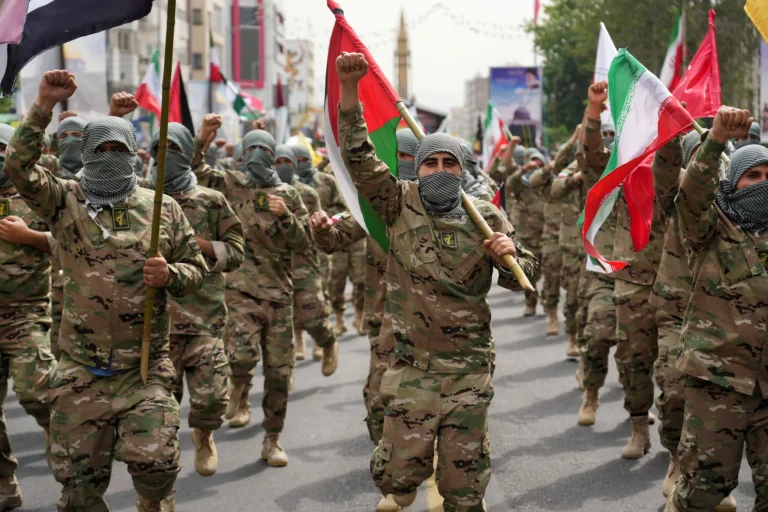
In December 2025, reports emerged that Russia has begun a large-scale campaign to recruit Iranian citizens to fight in its war against Ukraine. Throughout multiple cities in the Islamic Republic of Iran, leaflets have appeared offering local men lucrative contracts to join Russian military units. According to journalists, the recruitment effort is being directed from Russian networks operating out of Armenia.
These Persian-language leaflets target men aged 18 to 45, promising:
- a one-time payment of $20,000,
- a monthly salary of about $2,000,
- free tickets to Russia,
- free housing,
- medical care, and
- additional bonuses and commissions.
The leaflets include:
- an email address,
- an Armenian WhatsApp number,
- and a Telegram channel titled “Join To Russian Army For Foreigners”, active since November 2025.
The channel publishes posts in Russian, English, Persian, and Arabic and currently has over 2,000 subscribers.
A recruiter who spoke with reporters confirmed that these advertisements are part of an official Russian campaign to enlist fighters in Iran, allegedly coordinated between Moscow and Iran’s government. Western intelligence analysts also believe that Russian recruiting networks operate either with the tacit approval of Iranian authorities or even with direct participation by Iranian security organs.
The Iranian government has so far issued no public comment.
Context: Scope and Methods of the Recruitment Operation
The leaflets claim that the Russian Ministry of Defense is seeking:
- infantry soldiers,
- drone operators,
- drivers, and
- technical personnel.
Although the campaign primarily targets young men, the advertisements also offer jobs to women with medical training. Knowledge of Russian is not required.
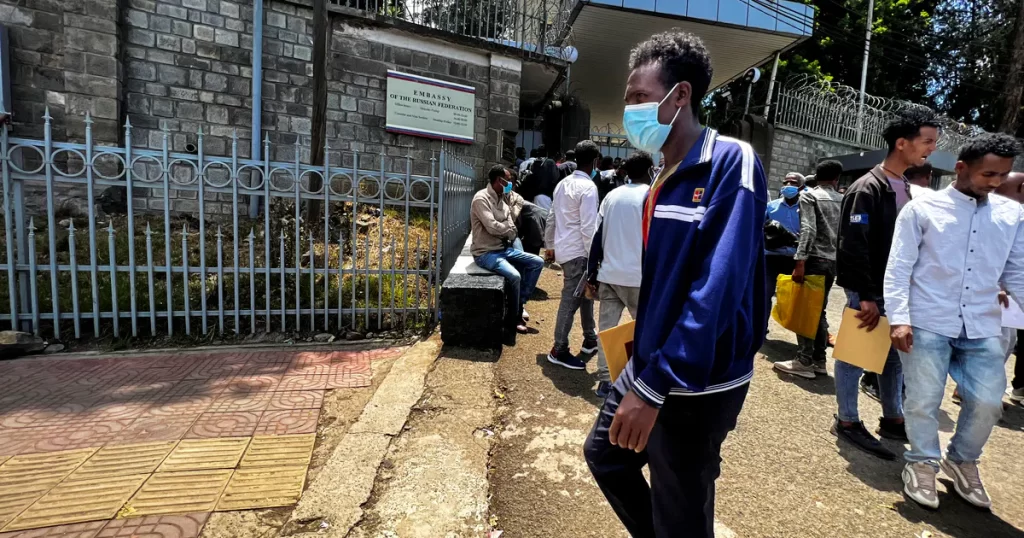
The Russian Embassy in Tehran denied any involvement, calling the leaflets “fake”. However, numerous precedents show that Russian diplomatic personnel have been directly involved in covert or semi-covert recruitment campaigns abroad, especially since 2022.
ESTABLISHED FACTS: Russian Diplomatic Missions Involved in Recruitment Abroad
While Moscow publicly denies recruiting foreigners through its embassies, multiple confirmed cases contradict these denials:
Africa
- In Mali, Central African Republic, Burkina Faso, and Sudan, Wagner-linked officials operating under diplomatic cover recruited local fighters for deployments in Ukraine.
- In Libya, Russian “cultural centers” were used to identify and recruit former militia members.
Middle East
- In Syria, the Russian Embassy and military police coordinated the recruitment of Syrian fighters, offering salaries between $200 and $500 per month.
- Syrian soldiers deployed to Ukraine have been documented since 2022.
Latin America
- In Cuba (2023), Russian diplomats were linked to a recruitment network that hired young Cuban men via fake job offers, later sending them to fight in Ukraine.
Central Asia
- In Tajikistan and Kyrgyzstan, Russian diplomatic staff coordinated “employment centers” used to funnel migrant workers into Russia’s military units.
India and Nepal
- In 2024–2025, diplomatic staff facilitated travel for Nepalese and Indian recruits who later died on the front. India formally protested to Moscow.
The pattern is consistent:
Russia uses embassy channels, consular offices, military attachés, and state-linked “cultural centers” as covert recruitment nodes.
Thus, claims of embassy non-involvement in Iran lack credibility.
WHY IRAN IS A PRIME TARGET
1. Demographics and economic hardship
Iran’s population of 88 million faces:
- rising unemployment,
- inflation,
- and stagnating economic growth due to U.S. sanctions.
This creates a large pool of vulnerable men receptive to high-pay military contracts.
2. Afghan refugee population
Iran hosts 3–5 million Afghan refugees, many undocumented, marginalized, and desperate for income.
Russian recruiters have a long history of exploiting such populations.
3. Strategic Russian–Iranian Military Partnership
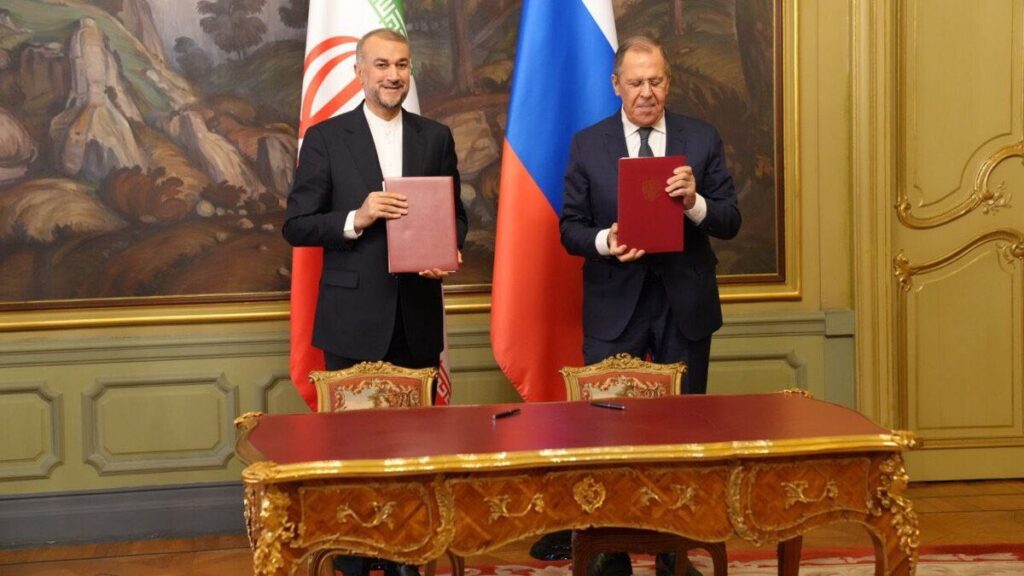
In January 2025, Tehran and Moscow signed a Comprehensive Strategic Partnership Agreement, covering:
- defense,
- intelligence,
- military-technical cooperation.
This formalized a relationship already strengthened since 2022, including:
- production of Shahed drones in Russia,
- Iranian transfers of drone components and expertise,
- covert coordination in Syria and the South Caucasus.
Given this context, it is entirely plausible that Iran allows — or at minimum ignores — Russian recruitment activity.
WHY RUSSIA IS EXPANDING FOREIGN RECRUITMENT
1. Catastrophic Russian losses
Russia has lost over 1 million killed and wounded since the full-scale invasion began (including wounded unfit for return). Moscow must urgently replenish manpower to support new offensives.
Global network of mercenary sourcing
By late 2025, Russia had recruited at least 18,000 foreigners from 128 countries, not counting North Korean combatants.
Key recruitment hotspots:
- Cuba
- Syria
- Jordan
- Nepal
- India
- Kenya
- South Africa
- Central Asian republics
- North Korea (11,000–13,000 fighters documented; 6,000 more pledged for 2025)
Foreigners are used as expendable assault troops
Russia deploys many foreign recruits to:
- “meat assault” infantry groups,
- high-risk mine-clearing,
- drone reconnaissance teams with short life expectancy.
Training often lasts 1–2 weeks before deployment.
IMPLICATIONS: WHY IRANIAN RECRUITMENT MATTERS
1. It signals a deeper Russia–Iran military axis
Joint operations now include:
- drone production,
- intelligence sharing,
- logistical corridor usage (Caspian Sea),
- and now manpower recruitment.
2. It destabilizes the Middle East
Russia’s recruitment of Afghan refugees in Iran could create a dangerous precedent and pull the region into greater instability.
3. It demonstrates Moscow’s desperation
The Kremlin is forced to recruit globally, indicating:
- strategic overstretch,
- manpower crisis,
- and inability to rely on voluntary Russian mobilization.
CONCLUSION
Russia’s large-scale mercenary recruitment campaign in Iran is:
- real,
- coordinated,
- consistent with global patterns,
- and partially enabled by Russian diplomatic structures, even if indirectly.
The Kremlin is now using Iran as one of its key manpower providers, exploiting:
- economic desperation,
- refugee vulnerability,
- and a permissive political environment created by expanding Russian–Iranian military cooperation.
Why Russia Began Recruitment in Iran Only Now: A Multi-Layered Analysis
Iran became strategically available only after the 2025 Comprehensive Strategic Partnership
For years, Iran avoided allowing Russia to openly recruit on its territory because:
- Tehran feared domestic backlash,
- it did not want to appear subordinate to Moscow,
- it sought to avoid additional U.S. sanctions.
However, the situation changed after January 2025, when Iran and Russia signed a Comprehensive Strategic Partnership Agreement covering:
- defense cooperation,
- intelligence sharing,
- military technology transfers,
- and long-term coordination.
This agreement politically normalized invasive Russian activity inside Iran, including covert recruitment.
Before 2025, Russia simply did not have formal access to Iran’s domestic security environment.
Iran’s internal economic collapse created the “perfect recruitment pool” only now
By late 2024–2025, Iran faced:
- accelerating inflation,
- unemployment above 20–25% for young men,
- disappearing wages due to sanctions,
- collapse of the private sector,
- rising poverty in rural areas.
This produced a new demographic pool of desperate recruits, similar to Africa and Central Asia earlier.
Why now?
Because the economic crisis deepened only in 2023–2025, making recruitment financially attractive for Iranians and Afghan refugees.
Earlier, Iranian men were not as financially vulnerable or desperate as today.
Russia’s manpower crisis peaked only in 2024–2025
Russia suffered catastrophic manpower losses:
- over 1 million killed or wounded since February 2022,
- huge attrition in assault brigades,
- inability to maintain offensive operations without new manpower.
By 2023–2024, Russia recruited:
- Syrians,
- Afghans,
- Cubans,
- Nepalis,
- Central Asians,
- Indians,
- Kenyans.
But by 2025, these sources began to dry up due to:
- international exposure of recruitment scandals,
- crackdowns in Cuba and Nepal,
- waning volunteerism,
- growing awareness of the extremely high death rate for foreign fighters.
Russia ran out of easy recruitment pools, forcing it to expand into Iran, a population it previously had not tapped.
Iran’s Afghan refugee population is now a major target
Iran hosts 3–5 million Afghan refugees, many:
- undocumented,
- unemployed,
- subject to regular police harassment,
- vulnerable to coercion or financial inducements.
Russia did not previously recruit heavily from this population because:
- Iran restricted foreign military recruitment,
- Taliban/Iran tensions increased refugee flows only in 2022–2025.
Now, Afghan refugees in Iran form a cheap, desperate, and abundant manpower source, similar to the Syrians recruited earlier in the war.
Iran–Russia cooperation deepened dramatically due to shared international isolation
Before 2022, Iran kept Russia at arm’s length to:
- avoid being fully dependent on Moscow,
- maintain negotiating space with the West.
After:
- Russia’s invasion of Ukraine,
- Iran’s crackdown on domestic protests,
- the failure of JCPOA negotiations,
- increasing Western sanctions on both states,
Tehran and Moscow became strategic allies out of necessity.
By 2024–2025, Iran was:
- producing Shahed drones for Russia,
- supplying ballistic missile parts,
- sharing intelligence,
- negotiating oil swaps,
- integrating into the North–South Transport Corridor.
At this stage, allowing Russian recruitment became politically and strategically acceptable.
Iran wanted payment — and Russia only recently offered it
Recruitment operations are not free.
Iran likely demanded:
- financial compensation,
- security cooperation,
- covert weapons transfers,
- Russian diplomatic support against Israel and the U.S.
Only after 2024, when Russia became more dependent on Iran for:
- drone production,
- missile components,
- access to Persian Gulf logistics,
did Moscow offer Iran concessions that made recruitment acceptable.
Russia’s earlier focus was Africa and Central Asia — because access was easier
Russia’s recruitment chronology shows clear logic:
2022–2023: Africa & Middle East
- CAR, Mali, Libya, Syria
→ Wagner networks, weak state institutions, permissive environments.
2023–2024: Central Asia & South Asia
- Tajikistan, Kyrgyzstan, Nepal, India
→ labor migrants, economic desperation.
Late 2024–2025: Latin America
- Cuba
→ diplomatic cover + economic collapse.
Only after 2025: Iran
→ after formal military alignment + internal crisis + Afghan refugee pool.
Iran was “opened” only after the geopolitical alignment reached the necessary depth.
Iran’s domestic political climate shifted toward militarized cooperation
Iran’s leadership has grown far more militarized after:
- IRGC expansion,
- purges after nationwide protests,
- pressure from Israel–Gaza escalation,
- closer strategic dependence on Russia and China.
The IRGC now influences foreign and defense policy more than ever, and supporting Russia’s war fits their broader ideological narrative.
Thus, permitting recruitment is no longer seen as a political risk for Tehran — but rather a geopolitical opportunity.
Conclusion: Why Only Now?
Russia began recruiting in Iran only now because:
- A formal strategic partnership with Iran was signed in 2025.
- Iran’s economic crisis created a new, large pool of desperate recruits.
- Russia’s manpower losses reached unsustainable levels.
- Millions of Afghan refugees in Iran became easy targets.
- Iran–Russia military cooperation deepened to unprecedented levels.
- Earlier recruitment sources were drying up or politically risky.
- Embassy involvement became possible only after political alignment solidified.
In short:
Moscow turned to Iran only once the geopolitical, economic, and demographic conditions aligned — and when Russia’s desperation finally demanded it.
- Flyers offering $20,000 signing bonus + ~$2,000/month to Iranian men aged 18–45 to join Russia’s war in Ukraine have appeared in Tehran, with roles advertised as soldiers, drivers, drone operators
- The flyers reference a Telegram channel “Join To Russian Army For Foreigners” and list contact details (email + non-Iranian WhatsApp number), matching the pattern of Russia’s global online recruitment infrastructure targeting poor countries.
- The Russian embassy in Tehran officially calls the flyers “forgeries”, but this is exactly the same denial pattern seen in Cuba, Syria, and elsewhere where recruitment was later confirmedAt this stage, we’re seeing early-stage signaling and infrastructure, not yet evidence of thousands of deployed Iranian fighters.
Time horizon for forecast: 12–24 months.
Key structural drivers:
- Russia’s chronic manpower deficit after huge casualties in Ukraine
- Iran’s deepening economic crisis + large pools of unemployed young men and millions of Afghan refugees.
- A comprehensive Russia–Iran strategic partnership (defense, intel, military-technical) signed in 2025, enabling deeper cooperation, including covert activities.
- Russia’s proven practice of recruiting Syrians, Central Asians, Cubans, Iraqis, Africans via diplomatic and proxy networks.
2. Scenario 1 – Symbolic / Experimental Recruitment
Scale: ~200–500 fighters over 12–18 months
Description
Russia keeps the Iranian track at a pilot level: a few hundred volunteers, mainly:
- Afghan refugees in Iran,
- Iranians with prior military experience,
- individuals funneled through Armenia or third countries.
They are quietly mixed into existing Russian units or Redut/Wagner-type formations.
Drivers that keep it small
- Tehran fears domestic backlash if coffins start coming back.
- IRGC wants to avoid U.S. and EU tightening sanctions explicitly on Iranian manpower exports.
- Other recruitment pools (Syria, Central Asia, Arab world) still supply enough cannon fodder.
Key indicators we’re in Scenario 1
- Only sporadic individual stories of Iranians/Afghans killed in Ukraine.
- No visible Iranian “foreign legion” branding in Russian propaganda.
- Flyers and Telegram channels continue, but without evidence of formal contracts via Iranian state structures.
Implications
- Political cost for Tehran is modest and deniable.
- Russia uses Iran as a reserve manpower pool, not a primary source.
- Risk of large-scale destabilization inside Iran remains low.
3. Scenario 2 – Structured but Limited Manpower Source
Scale: ~2,000–5,000 fighters over 12–24 months
Description
Recruitment becomes organized and systematic, but still below the scale of Syrian or Central Asian contingents. Fighters are:
- Recruited via a mix of online channels + physical networks near mosques, refugee districts, and informal labor markets.
- Contracted through Russian MoD–linked PMCs (e.g., Redut) or “volunteer corps”, allowing Tehran to claim deniability.
Iranian and Afghan recruits might be grouped into:
- mixed assault units,
- engineering / logistics units,
- support roles in occupied Ukrainian territories or Russian border regions.
Drivers pushing toward Scenario 2
- Russian casualties continue at current or higher levels; Kremlin needs fresh assault troops.
- Cuba, Nepal, and other earlier recruitment theatres become politically costly and harder to exploit.
- IRGC sees value in:
- combat-hardened veterans returning under its influence,
- Russian economic or arms concessions in exchange for manpower.
Key indicators
- Regular appearances of Persian- or Dari-speaking fighters in Russian Telegram videos from the front.
- Russian pro-war channels bragging about “Iranian volunteers” or “Shia brothers”.
- Isolated funerals in Iran or Afghan communities with vague explanations (“died in an accident in Russia”).
KEY JUDGMENTS
(Russia’s Recruitment of Iranian and Afghan Nationals for the War in Ukraine)
Russia has initiated a structured recruitment campaign inside Iran, targeting both Iranian citizens and Afghan refugees.
Evidence from Persian-language flyers, online recruitment channels, and journalist engagement with recruiters indicates that Moscow has activated a deliberate foreign-manpower pipeline operating from Iranian territory. This campaign mirrors previous Russian recruitment efforts in Syria, Cuba, Central Asia, and parts of Africa.
. The campaign is likely conducted with the tacit approval of Iranian authorities and may involve elements of the IRGC.
The scale, geographic spread, and persistence of recruitment activity would be difficult to sustain without at least non-interference by Iranian security services. Russia’s embassy denials are consistent with earlier patterns of covert involvement by diplomatic staff in Africa and Latin America.
Russia aims to offset severe manpower shortages caused by significant losses in Ukraine.
We assess with high confidence that Russia’s recruitment in Iran is part of a broader strategy to secure foreign auxiliary forces following estimated Russian casualties exceeding 1 million killed and wounded. Existing recruitment pools (Cuba, Nepal, Syria, Central Asia) have become politically sensitive or insufficient.
Iran has become an attractive recruitment environment due to its economic crisis and large Afghan refugee population.
Iran’s worsening unemployment and the presence of 3–5 million vulnerable Afghan migrants create a highly exploitable demographic for Russian recruiters. Afghan refugees are at particularly high risk of coercion, deception, or financial inducement.
The January 2025 Russia–Iran Comprehensive Strategic Partnership Agreement created the political and operational conditions for recruitment to expand.
This agreement deepened cooperation in defense, intelligence, and military-technical sectors, lowering Iranian resistance to Russian activities that would have been unacceptable before 2022.
We assess that Russia is currently operating in an early-to-intermediate phase of recruitment.
Most indicators point to a structured but limited effort involving low thousands of potential recruits over 12–24 months. This corresponds to the pattern Russia used in Syria in early 2017–2019 before scaling up.
Russia could escalate to large-scale recruitment (5,000–10,000+) if operational pressures intensify.
This high-end scenario becomes more likely if:
- Russia suffers a major battlefield setback requiring rapid replenishment;
- Iran seeks deeper economic or security concessions from Moscow;
- or if other foreign recruitment networks collapse due to international pressure.
A larger Iranian/Afghan contingent would carry significant regional and domestic risks.
High casualty rates among Iranian and Afghan fighters could trigger:
- localized protests in Iran,
- criticism of Tehran’s alignment with Moscow,
- potential refugee unrest,
- and renewed Western sanctions specifically targeting Iranian manpower exports.
Russian diplomatic personnel remain a critical enabler of recruitment networks.
Consistent with documented activity in Cuba, Mali, CAR, Libya, Syria, and Nepal, Russian embassies provide:
- logistics,
- visa facilitation,
- travel paperwork,
- and cover for PMC-linked recruitment cells.
Recruitment in Iran is unlikely to be an exception.
Without external pressure, Russia’s foreign recruitment infrastructure in Iran will almost certainly expand.
Current indicators suggest that recruitment operations in Iran are scalable, low-cost, and politically advantageous for both regimes. Unless the U.S., EU, and regional actors impose targeted sanctions, disrupt facilitation networks, or pressure Tehran diplomatically, Moscow is positioned to develop Iran into a major manpower source for the war in Ukraine.
- Increased Russian–Iranian coordination announcements framed as “reconstruction teams” or “engineers” deployed to Russian regions close to Ukraine.
Implications
- Iran becomes a mid-level manpower hub, comparable to Syria.
- Western governments start debating sanctions specifically on Iranian recruitment support.
- Domestic criticism inside Iran grows but is still manageable with repression + propaganda.
4. Scenario 3 – Major Foreign Legion from Iran and Afghan Refugees
Scale: ~5,000–10,000+ fighters over 18–24 months
Description
This is the maximalist / high-risk scenario. Russia, under extreme manpower pressure, and Iran, under deep economic and political isolation, turn recruitment into a semi-official program:
- Thousands of Iranian citizens and Afghan refugees are offered multi-year contracts.
- Training camps are established either:
- in southern Russia,
- or on joint facilities in Iran/Armenia under Russian supervision.
- A named formation appears in Russian propaganda, e.g. “Iranian Volunteer Corps” or “Imam Ali Brigade”.
What would drive escalation to this scale?
- A new large Russian offensive or second front (e.g., in another theatre) demanding tens of thousands of extra troops.
- Major domestic resistance in Russia to further mobilizations, forcing the Kremlin to look outward for manpower.
- Tehran calculating that openly providing thousands of fighters will:
- secure large Russian economic aid,
- guarantee Russian support against Israel/U.S.,
- and help export Iran’s internal “excess” of discontented young men.
Key indicators
- Leaked or semi-official bilateral agreements referencing “military specialists”, “construction brigades”, “demining units” going to Russia in big numbers.
- Large numbers of death notices among Iranian and Afghan families, especially in poorer provinces.
- Western sanctions explicitly citing “Iranian fighters in Ukraine” with names of units.
- Russian state TV openly glorifying Iranian or Afghan units the way it previously promoted Wagner and Syrian fighters.
Implications
- Iran becomes a core external manpower pillar of Russia’s war machine.
- Domestic blowback in Iran could be severe:
- protests by families of the dead,
- factional struggles inside the elite over the cost of alignment with Russia.
- Western response likely shifts from economic sanctions to considering coercive pressure on recruitment networks (cyber, financial, possibly kinetic disruption of transit).
Which Scenario Is Most Likely?
Based on:
- current flyer-based recruitment,
- embassy denials,
- the early stage of public exposure,
- and Iran’s caution about domestic backlash,
the most plausible trajectory over the next 12–18 months is:
Scenario 2: structured but limited recruitment (2,000–5,000 fighters)
Scenario 1 (a few hundred) is possible if Russian losses decrease or Tehran comes under strong Western pressure.
Scenario 3 (5,000–10,000+) becomes likely only if:
- Russia suffers a major new military crisis, and
- Iran concludes that it has “nothing left to lose” vis-à-vis the West.
Assessment: Effectiveness of Iranian Mercenaries in Russian Military Operations
Key Judgment
Iranian mercenaries would have limited tactical effectiveness but high strategic utility for Russia, primarily as expendable manpower for attritional operations rather than as skilled combat units.
Combat skills and training levels
Baseline capability
Most Iranian recruits will likely come from:
- poor youth with no military training,
- Afghan refugees with limited or no combat experience,
- former Basij volunteers with basic training,
- a smaller group of IRGC conscripts or paramilitaries with asymmetric warfare exposure.
This produces widely uneven combat quality.
Expected combat readiness
Russia provides only 7–14 days of training for foreign recruits (based on Syrian, Cuban, and Nepali precedents).
This typically includes:
- basic rifle handling,
- trench assault drills,
- drone spotting basics,
- explosive handling at a very rudimentary level.
Result: Iranian mercenaries will not become competent infantry in conventional warfare. Their value lies in volume, not skill.
Best-case tactical roles for Iranian fighters
Iranian and Afghan recruits would be most effective in:
A. Massed infantry assaults (“meat waves”)
As seen with:
- Wagner’s use of Syrian and African fighters,
- Storm-Z penal units,
- Cuban and Nepali volunteers.
They can be used to:
- probe Ukrainian lines,
- force Ukrainian defenders to expend ammunition,
- identify firing positions,
- overwhelm trenches through sheer numbers.
Effectiveness: Moderate (high casualties, limited tactical impact, but useful for Russia’s attrition strategy).
B. Rear-area logistics and construction
Many Afghan refugees in Iran have worked in construction and manual labor.
Useful tasks:
- trench building,
- fortifications,
- ammunition transport,
- field logistics.
Effectiveness: High, because these tasks do not require language skills or advanced training.
C. UAV surveillance support
Some recruits may be trained as:
- drone spotters,
- FPV operators,
- reconnaissance assistants.
Given Iran’s own UAV ecosystem, a small subset of recruits could adapt quickly.
Effectiveness: Low-to-Moderate, depending on motivation and training.
D. Light-force garrison duty in occupied territories
Iranian recruits could replace Russian soldiers in:
- rear garrisons,
- checkpoints,
- patrols.
This frees up regular Russian troops for frontline deployment.
Effectiveness: Moderate, depending on discipline and unit cohesion.
Where Iranian mercenaries would be least effective
A. High-skill combat roles
They would struggle in:
- combined-arms operations,
- urban assaults requiring coordination,
- mechanized warfare,
- electronic warfare,
- precision firing.
Effectiveness: Very low.
B. Independent offensive units
Iranian units would not be effective acting autonomously because of:
- linguistic barriers,
- weak officer corps,
- poor tactical education,
- high attrition rates.
Effectiveness: Very low.
C. Winter operations
Iranian and Afghan recruits would lack:
- cold-weather gear,
- cold-weather training,
- physical conditioning for prolonged exposure.
Russia has a long record of losing foreign recruits quickly in winter conditions.
Effectiveness: Poor.
Strategic utility for Russia (where their value is highest)
Despite their low tactical skill, Iranian mercenaries could provide significant strategic advantages for Russia:
A. Manpower substitution
They allow Russia to:
- avoid politically dangerous mobilization inside Russia,
- preserve regular units for key operations,
- replace heavy losses in assault units.
B. Attrition warfare
Russia’s current strategy relies on:
- high-volume assaults,
- overwhelming Ukrainian defense lines through constant pressure.
Foreign recruits are ideal for expendable assault waves.
C. Political deniability
Moscow can claim:
- “volunteers”,
- “contractors”,
- “foreign supporters”,
reducing domestic backlash.
D. Diplomacy leverage with Iran
Recruitment deepens:
- intelligence ties,
- drone cooperation,
- missile production deals.
Likely combat performance: a comparative estimate
| Group | Effectiveness in Ukraine | Notes |
| IRGC-trained Iranians | Moderate | Good discipline; asymmetric warfare experience. |
| Basij / poor Iranian youth | Low | Minimal military skills; poor cohesion. |
| Afghan refugees in Iran | Very Low to Moderate | Highly variable; many desperate but inexperienced. |
| Syrians in Wagner precedent | Low to Moderate | Comparable to Iranian recruits. |
| Cuban / Nepali recruits | Very Low | Deployed as expendable infantry. |
Overall expected effectiveness of Iranian recruits:
Low tactical effectiveness but high operational utility.
Key vulnerability: morale and cohesion
Foreign units often:
- desert,
- refuse orders,
- panic under fire,
- revolt after first heavy casualties.
Morale tends to collapse once recruits understand:
- their role as expendable infantry,
- the brutality of Russian command structures,
- lack of evacuation or compensation.
Expected desertion/casualty tolerance: extremely low.
7. Intelligence community consensus (based on analogues)
Syria, Africa, Cuba, and Nepal provide a clear pattern:
Foreign mercenaries do not win battles for Russia, but they allow Russia to continue battles it would otherwise lose.
Iranian mercenaries will serve the same purpose.
Iranian mercenaries will not significantly improve Russia’s tactical performance in Ukraine, but they will strengthen Russia’s ability to wage a long attritional war.
Their main value is:
- replacing Russian manpower,
- absorbing casualties,
- enabling Russia to conserve its more trained forces.
For Iran, the key risk is political backlash once the scale of casualties becomes visible.
How Iranian Fighters Returning From Ukraine Could Affect the Middle East After the War
Key Judgment
Combat-experienced Iranian mercenaries returning from Ukraine would significantly increase instability across the Middle East, strengthening militant networks, empowering the IRGC’s regional agenda, and escalating risks of proxy conflict with Israel, the Gulf states, and Western forces.
A New Class of Combat-Hardened Fighters Appears in Iran’s Orbit
Iran will acquire a pool of fighters with:
- real experience fighting a modern, NATO-supported military,
- exposure to drone warfare, trench combat, electronic warfare, and urban assault,
- familiarity with Russian weapons systems and tactics,
- psychological hardening from high-casualty, high-intensity conflict.
This will be a qualitatively different generation of militants compared to:
- Iraqi Shia militias,
- Syrian civil war fighters,
- Houthi combatants,
- and older Basij/IRGC veterans.
They will bring back:
- hard combat skills,
- battlefield adaptability,
- connections to Russian instructors,
- modern small-unit tactics,
- social networks of foreign mercenaries.
This alone shifts the regional balance.
IRGC Gains a Fresh Reservoir of Proxy Potential
The IRGC will not waste experienced manpower.
It will:
- integrate returning fighters into Quds Force-affiliated proxy units,
- embed them into local militias in Iraq, Syria, and Lebanon,
- use them as:
- trainers,
- advisers,
- drone operators,
- field commanders.
Likeliest deployments:
- Iraqi Shia militias (PMF factions loyal to Tehran),
- Syrian regime forces and NDF units,
- Hezbollah auxiliary units,
- Houthi special teams generating drone and missile attacks on Gulf targets.
This gives Iran a battlefield-hardened cadre capable of reshaping proxy warfare.
Drone and FPV Expertise Will Transform Proxy Warfare
Iranian mercenaries in Ukraine will learn:
- FPV loitering-munitions operations,
- trench-clearing drone tactics,
- low-cost mass drone swarming,
- battlefield ISR integration,
- anti-drone countermeasures.
These tactics, developed under Russian supervision, will migrate into the Middle East.
Likely outcomes:
- Hezbollah adopts Ukrainian-style FPV swarming.
- Houthis refine long-range ISR using cheap drones.
- Iraqi militias gain precision-attack capabilities.
- Syrian militias improve cross-border strike effectiveness.
The Middle East enters a new drone-centric warfare era, with Russia-trained Iranian veterans as key amplifiers.
Radicalization and Mercenary Culture Will Spread
Returning fighters will form:
- semi-autonomous armed groups,
- criminal-military hybrid networks,
- cross-border mercenary recruitment pipelines.
Just like Afghan war veterans destabilized Pakistan in the 1990s or ISIS veterans destabilized Syria/Iraq in the 2010s, Ukrainian-war veterans could become:
- recruiters,
- ideological influencers,
- paramilitary leaders,
- organized crime enforcers.
Risk: Tehran loses full control of the networks it indirectly helped create.
Afghanistan’s Refugee Community Becomes Militarized
Afghan refugees recruited in Iran will:
- return with military experience,
- bring new extremist or sectarian loyalties,
- potentially form armed networks linked to IRGC or criminal pipelines.
This could:
- destabilize Herat and western Afghanistan,
- complicate Taliban–Iran relations,
- generate new insurgent nodes for the Taliban to manage.
Greater Iranian Leverage in Regional Confrontations
Iran could deploy experienced fighters to:
a) Pressure Israel via Hezbollah
Veterans could:
- train Hezbollah in advanced trench and counter-trench warfare,
- enhance Hezbollah’s urban combat capabilities,
- support cross-border operations in the Galilee if war erupts.
b) Pressure the Gulf States
IRGC may use Ukrainian-war veterans to strengthen:
- Houthi drone operations against Saudi Arabia and the UAE,
- maritime sabotage networks in the Gulf,
- cross-border raids in Yemen.
c) Influence Iraq’s political-military landscape
Veterans could:
- train PMF to resist Western military presence,
- serve as shock troops in internal Iraqi power struggles,
- reinforce pro-Tehran militias during crises.
Net effect: Iran’s regional coercive toolkit expands.
Increased Risk of Russia-Iran Proxy Coordination
Russia will likely encourage these fighters’ integration into Iranian proxy operations since:
- it strengthens Moscow’s influence over IRGC,
- provides Russia with regional leverage over Israel and the Gulf,
- expands Moscow’s informal network of militant allies.
Potential outcomes:
- Russian instructors embedded with Hezbollah or Iraqi militias,
- shared EW/anti-drone tactics,
- supply of Russian-origin munitions via Iran.
This deepens the Russia–Iran axis well beyond Ukraine.
Blowback for Iran: High-Risk Domestic Outcomes
Returning fighters may:
- demand compensation,
- protest if benefits are not given,
- challenge local authorities,
- join opposition militias or criminal gangs.
Iran could face:
- localized instability in poor provinces,
- intra-elite conflict between IRGC and government ministries,
- public outrage when casualties from Ukraine become widely known.
Iran will almost certainly try to manage returning fighters by:
- absorbing them into Basij/IRGC units,
- dispersing them across proxies to keep them out of domestic politics.
How This Changes Regional Military Calculations
After the Ukraine war, Middle Eastern militaries and intelligence agencies will confront a new reality:
- Militia units trained in high-intensity trench warfare
- Proxies capable of advanced drone operations
- IRGC-linked fighters familiar with NATO weapons tactics
- Potentially higher insurgency risks in Afghanistan, Iraq, and Syria
Regions most affected:
- Lebanon–Israel front
- Iraq–Syria IRGC corridor
- Yemen–Saudi–UAE theatre
- Gulf maritime domain
Iranian and Afghan mercenaries returning from Ukraine will export the war’s most dangerous lessons into the Middle East.
Their presence will:
- strengthen Iran’s proxies,
- escalate regional conflict potential,
- introduce modern battlefield tactics into proxy warfare,
- complicate Israeli, Gulf, and Western security planning,
- and risk empowering uncontrollable militant networks.
In short:Ukrainian combat experience will transform Iran’s militant ecosystem and reshape the future of Middle Eastern conflict.
More on this story: Russia uses African mercenaries as consumables in the war against Ukraine
More on this story: Geopolitics National Security Situation Reports
More on this story: Russia–Iran Defense Convergence: Strategic Implications for U.S. Policy
More on this story: Axis of Arms: Russia and Iran’s Expanding Shadow Trade”
More on this story: Russia and Iran: The Limits of Strategic Partnership in the Face of Conflict