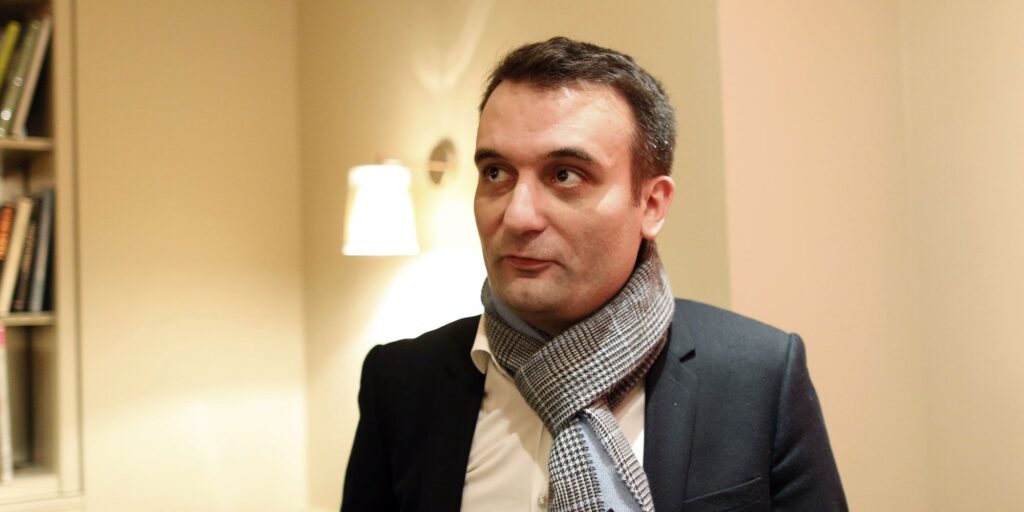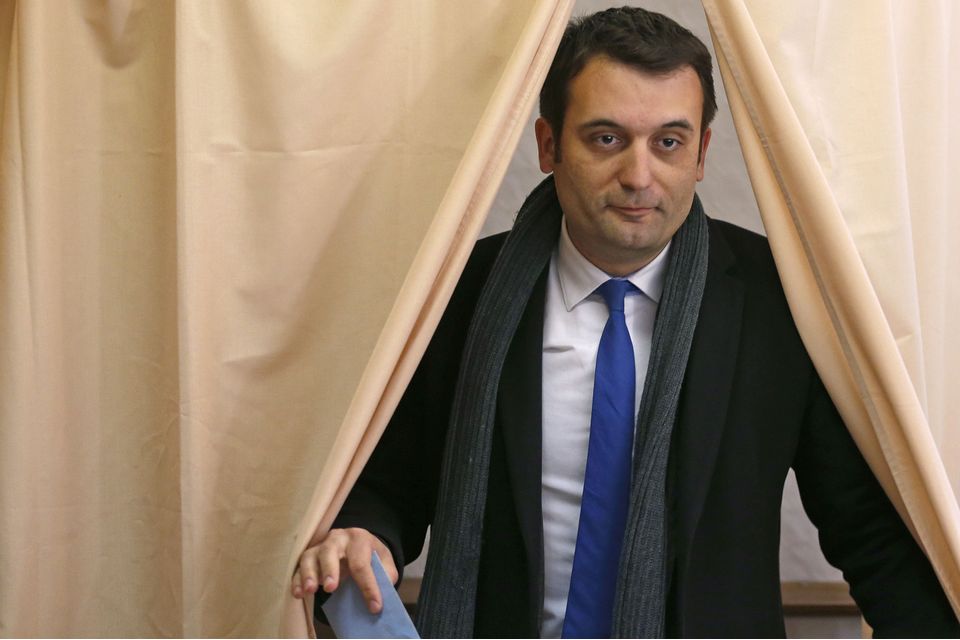

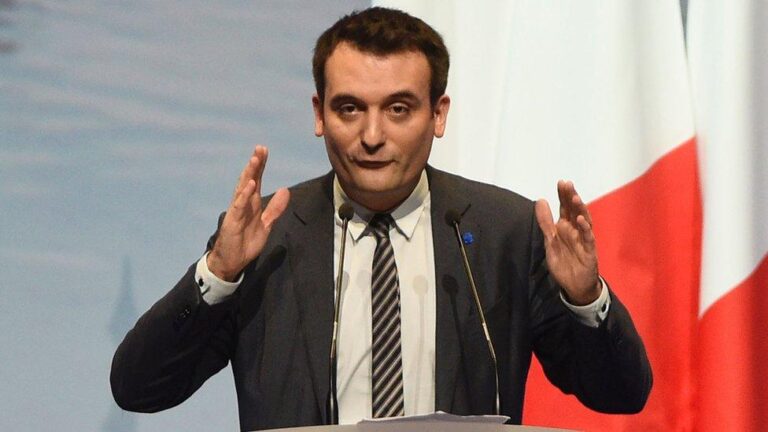
The statements made by Florian Philippot regarding Germany’s military modernization represent more than an isolated political opinion or Eurosceptic rhetoric. They reflect a broader information narrative actively promoted by pro-Kremlin influence networks seeking to weaken European defense cohesion, undermine NATO unity, and amplify distrust between key European powers.
By portraying Germany’s rearmament as a greater danger than Russia itself, Philippot effectively reproduces one of Moscow’s central strategic narratives: the idea that Europe’s internal divisions and historical fears pose a larger threat than contemporary Russian military aggression.
This narrative is particularly significant because it attempts to redirect French public anxiety away from Russia’s ongoing war in Ukraine and toward historical trauma associated with German militarization. In doing so, it weaponizes collective memory for contemporary geopolitical purposes.
The timing of these statements is not accidental. Germany’s new defense strategy — including plans to significantly expand the Bundeswehr and assume a more central military role in Europe by 2039 — marks a historic shift in European security policy. For the first time since the end of the Cold War, Berlin is openly preparing for long-term strategic confrontation with Russia and for a leadership role in European defense architecture.
From Moscow’s perspective, this transformation is deeply threatening.
A militarily stronger Germany: strengthens NATO’s eastern flank; increases Europe’s defense-industrial capacity; reduces dependence on U.S. military guarantees; improves long-term deterrence against Russia; enhances European resilience in the event of prolonged confrontation.
For this reason, Russian influence operations increasingly attempt to frame German rearmament not as a defensive necessity, but as a revival of historical militarism.
The amplification of Philippot’s statements by Russian media affiliated with Russian military intelligence is therefore strategically revealing. Such platforms do not merely report sympathetic views — they selectively elevate narratives capable of producing political fragmentation inside Europe.
The underlying objective is twofold: To weaken public support for European rearmament; To revive historical distrust between France and Germany — the two core pillars of the EU.
Historically, Franco-German reconciliation formed the foundation of postwar European integration. Any deterioration in trust between Paris and Berlin directly weakens EU strategic cohesion; common defense initiatives;sanctions coordination; NATO political unity.
This makes anti-German fear narratives particularly useful for Russian influence operations.
Philippot’s rhetoric also fits a broader pattern visible across pro-Kremlin political ecosystems in Europe. These actors frequently oppose: increases in defense spending; military aid to Ukraine; NATO modernization; European strategic autonomy; expansion of defense-industrial cooperation.
Importantly, this opposition is often framed not through overtly pro-Russian language, but through themes designed to resonate emotionally with domestic audiences peace activism; anti-war sentiment; sovereignty concerns;economic fears; historical trauma.
In France, references to German militarization are especially potent because they touch on deeply embedded national memories related to the Franco-Prussian War, World War I, and World War II. The narrative therefore attempts to transform legitimate historical sensitivity into contemporary geopolitical suspicion.
However, the comparison itself is strategically misleading.
Modern German military modernization differs fundamentally from historical militarization because it operates within: NATO command structures; EU political frameworks; multilateral defense coordination; democratic oversight mechanisms; allied strategic planning, including close cooperation with France.
Unlike the unilateral militarization of earlier historical periods, current Bundeswehr reforms are explicitly integrated into collective European and transatlantic security structures.
Moreover, Germany’s defense expansion is driven primarily by Russia’s invasion of Ukraine and the recognition that Europe faces a deteriorating security environment. The objective is not strategic autonomy from allies, but enhanced collective deterrence against external threats.
By attempting to portray German rearmament as a threat to France, pro-Kremlin narratives seek to obscure the actual driver of Europe’s military transformation: Russian aggression itself.
Strategically, Moscow benefits if: France distrusts Germany; Germany hesitates to lead militarily; European publics oppose defense spending; NATO cohesion weakens; European societies remain psychologically divided.
In this sense, the narrative promoted by Philippot and amplified by Russian influence channels functions as part of a wider cognitive warfare strategy aimed at undermining Europe’s political and military consolidation during a period of growing confrontation between Russia and the West.
Ultimately, the controversy surrounding Germany’s rearmament illustrates a broader reality: contemporary influence operations increasingly rely not on creating entirely false narratives, but on manipulating real historical fears and political sensitivities in ways that serve Russian strategic interests.
The statements by Florian Philippot closely correlate with recent narratives promoted by Vladimir Putin regarding an alleged “crisis” in Germany and the dangers of German militarization. While the rhetoric differs in tone and audience targeting, both narratives converge strategically around the same objective: undermining Germany’s growing role as the military and political backbone of European security.
Over recent months, Putin and senior Russian officials have increasingly portrayed Germany as: economically collapsing; politically unstable; socially fragmented; dangerously militarizing under NATO influence.
This messaging serves several interconnected strategic purposes.
First, the Kremlin seeks to delegitimize Germany’s historic defense transformation. Berlin’s decision to expand the Bundeswehr, increase defense spending, and assume a larger leadership role inside NATO directly threatens Russian strategic calculations in Europe. Germany possesses: Europe’s largest economy; major industrial capacity; critical defense-industrial potential; central logistical importance for NATO’s eastern flank.
For Moscow, a militarily assertive Germany represents a long-term structural challenge.
As a result, Russian narratives increasingly attempt to frame Germany not as a stabilizing security actor, but as a source of danger and instability. Putin’s references to crisis, militarization, and social decline create the broader geopolitical framework within which figures like Philippot amplify complementary narratives to Western audiences.
The correlation becomes especially visible in the way both narratives weaponize historical memory.
Putin’s discourse frequently invokes: World War II memory; anti-fascist symbolism; warnings about “revanchism”; accusations of renewed German militarism.
Similarly, Philippot frames Germany’s military modernization through the lens of France’s traumatic historical experience with German military power. Both narratives deliberately shift public attention away from contemporary Russian aggression and toward historical fears associated with Germany.
This is strategically useful for Moscow because it attempts to fracture the psychological foundation of European defense cooperation.
The Kremlin understands that Franco-German cooperation remains the central political engine of the European Union. If distrust between Paris and Berlin deepens, several Russian objectives become easier to achieve weakening EU strategic cohesion; slowing collective defense initiatives; reducing military aid coordination for Ukraine; undermining European rearmament; increasing political fragmentation inside NATO.
In this context, Philippot’s rhetoric functions as a localized amplifier of broader Russian strategic messaging.
Importantly, the Kremlin no longer needs European political actors to openly support Russia. Modern influence operations are more sophisticated. Moscow benefits even when politicians simply: oppose defense spending; question NATO policy; amplify fears of militarization; argue against European strategic consolidation; redirect public anxiety toward internal European tensions.
Philippot’s messaging fits this model precisely.
Another important correlation lies in the economic dimension.
Putin’s recent claims about Germany often focus on: deindustrialization; energy shortages; economic decline caused by sanctions;
This narrative attempts to convince European audiences that confrontation with Russia harms Europe more than Russia itself.
Philippot similarly portrays Germany’s military expansion as a destabilizing project that threatens France rather than protects Europe. In both cases, the underlying message is that European resistance to Russia is irrational, self-destructive, and manipulated by elites.
This convergence is unlikely to be accidental.
Russian state media and intelligence-linked platforms systematically amplify European political figures whose statements: weaken transatlantic unity; generate distrust among allies; oppose military modernization;
The fact that Russian media affiliated with Russian military intelligence actively promoted Philippot’s statements strongly suggests that the Kremlin views such rhetoric as operationally valuable within its broader information warfare strategy.
Strategically, the combination of Putin’s macro-level geopolitical narrative and Philippot’s domestic political rhetoric creates a mutually reinforcing influence ecosystem: Putin frames Germany as dangerous internationally; Philippot adapts this fear to French domestic politics; Russian media amplifies the narrative; public distrust inside Europe increases; European defense cohesion weakens.
In effect, both narratives converge around the same strategic outcome: preventing the emergence of a militarily cohesive, psychologically confident, and strategically autonomous Europe capable of deterring Russia over the long term.
The reaction of European far-right forces to Germany’s rearmament is far from uniform, but several common patterns have emerged across the continent. Most far-right and nationalist movements do not openly oppose Germany’s right to self-defense in principle; instead, they frame Berlin’s military expansion through narratives centered on: fear of militarization; national sovereignty; distrust of NATO; anti-EU sentiment;
At the same time, many of these narratives objectively align with Russian strategic interests because they undermine support for European defense integration and weaken political consensus regarding deterrence against Russia.
Alternative for Germany (AfD) occupies a particularly important position because it combines: skepticism toward NATO; opposition to military aid for Ukraine; criticism of sanctions against Russia; resistance to long-term militarization policies.
Unlike some traditional conservative forces in Germany, AfD does not primarily frame rearmament as a patriotic revival of German power.
AfD’s rhetoric generally does not promote German militarism in nationalist terms. Rather, it portrays the current rearmament process as an externally driven escalation caused by confrontation with Russia.
This allows AfD simultaneously to: criticize Russia’s opponents; oppose sanctions; reject military aid to Ukraine; resist NATO military planning, while avoiding direct defense of Russian aggression itself.
The party’s broader positioning toward Russia has repeatedly generated controversy inside Germany. German intelligence officials and multiple investigations have warned about the spread of Russian narratives within parts of the AfD ecosystem.
Recent scandals intensified these concerns after AfD politicians reportedly sought detailed information regarding NATO vulnerabilities and military exercises. Critics argued such requests could indirectly benefit Russian intelligence assessments.
Figures such as Florian Philippot openly portray German militarization as a greater threat than Russia itself.
Meanwhile, Marine Le Pen takes a more calibrated position: supporting stronger French defense; defending sovereignty; but remaining cautious about Germany dominating European military leadership.
These narratives often overlap with Russian strategic messaging regarding European security.
The Kremlin’s concern is not merely symbolic.
A rearmed Germany fundamentally changes Europe’s strategic balance because: Germany possesses Europe’s largest industrial economy; it can sustain long-term defense production; it has major logistical infrastructure; it can anchor NATO’s eastern defense architecture.
This explains why Russian narratives — and many pro-Russian European political actors — increasingly focus on portraying Germany’s militarization as: dangerous; destabilizing; historically threatening; economically irrational.
The debate over German rearmament has become one of the central ideological fault lines inside Europe.Mainstream European governments largely view Germany’s military transformation as necessary for deterrence; essential for NATO; a response to Russian aggression.