
The upcoming presidential elections in Peru represent one of the most consequential political moments in the country’s modern history. After nearly a decade of chronic institutional instability, impeachment crises, social unrest, corruption scandals, and rising criminal violence, Peruvians are heading into an election shaped less by ideological enthusiasm than by exhaustion, fear, and distrust of the political class.
The 2026 elections are unfolding in a fragmented political environment where no candidate commands broad national legitimacy. Instead, the contest has evolved into a polarized runoff between two highly divisive figures: Keiko Fujimori on the right and Roberto Sánchez on the left. The election has become a referendum not only on economic management and security, but also on the legacy of authoritarianism, anti-establishment populism, and Peru’s geopolitical orientation.
Peru entered the 2026 election cycle amid severe political fatigue. Since 2016, the country has experienced an almost uninterrupted sequence of presidential collapses, impeachments, resignations, and institutional paralysis. By 2026, Peru was preparing to install its tenth president in roughly a decade.
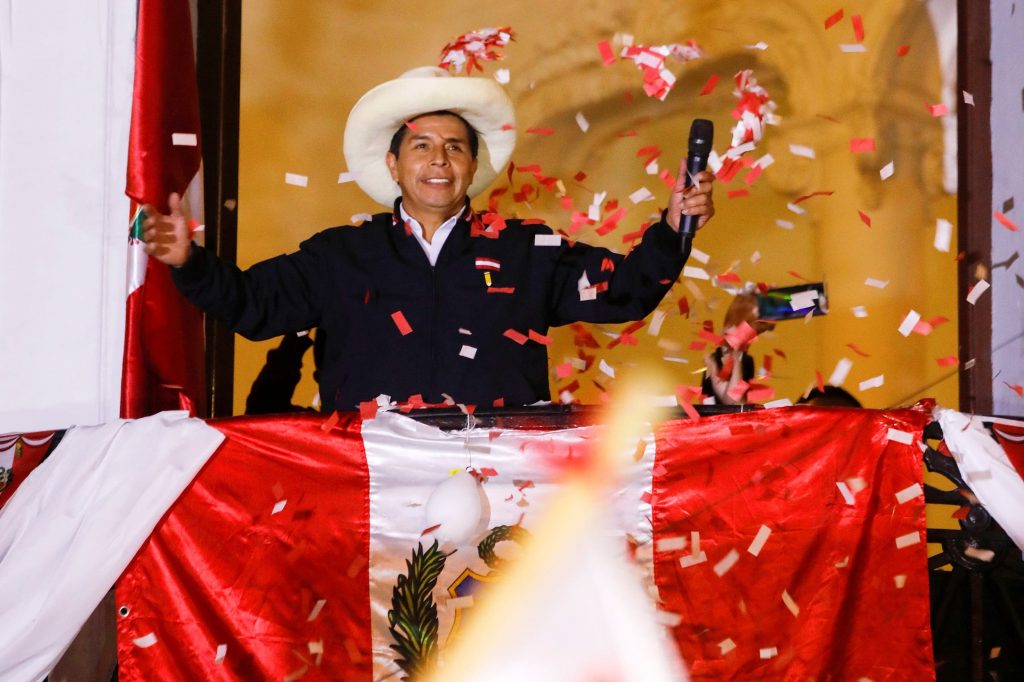
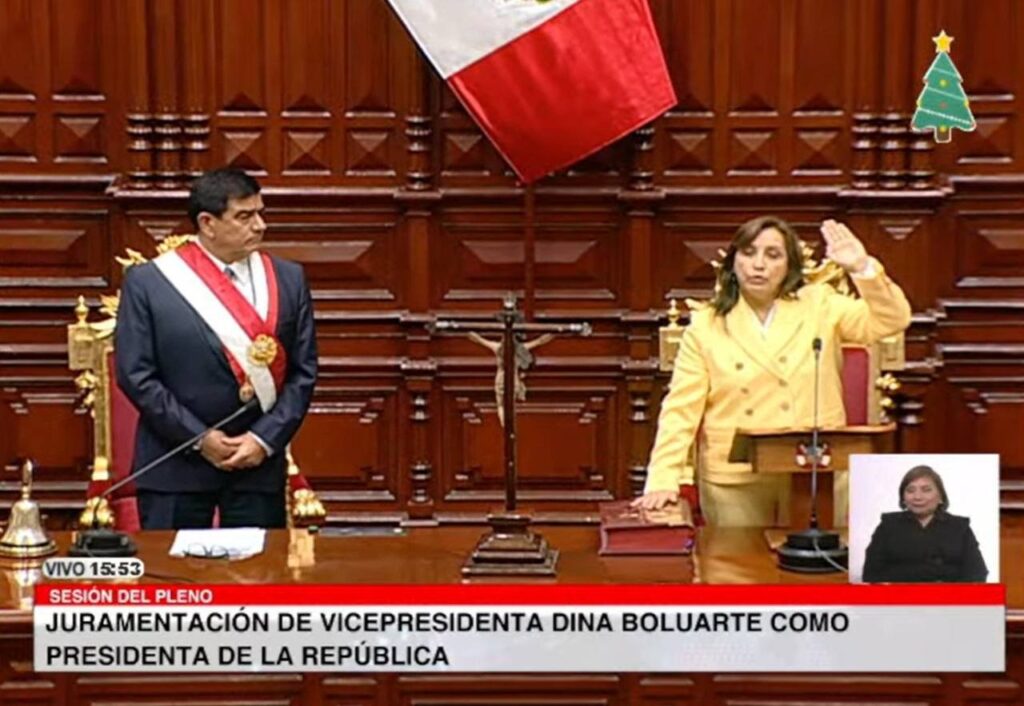
The political crisis accelerated after the failed self-coup attempt by former president Pedro Castillo in December 2022, which led to his arrest and triggered mass protests across southern Peru. His successor, Dina Boluarte, became one of the most unpopular leaders in Latin America, with disapproval ratings exceeding 90%.
Security deterioration has become one of the defining issues of the campaign. Organized crime, extortion, illegal mining networks, narco-trafficking, and urban violence have expanded rapidly, especially in Lima and coastal regions. Crime fears increasingly shape voter behavior, creating favorable conditions for hardline law-and-order rhetoric.
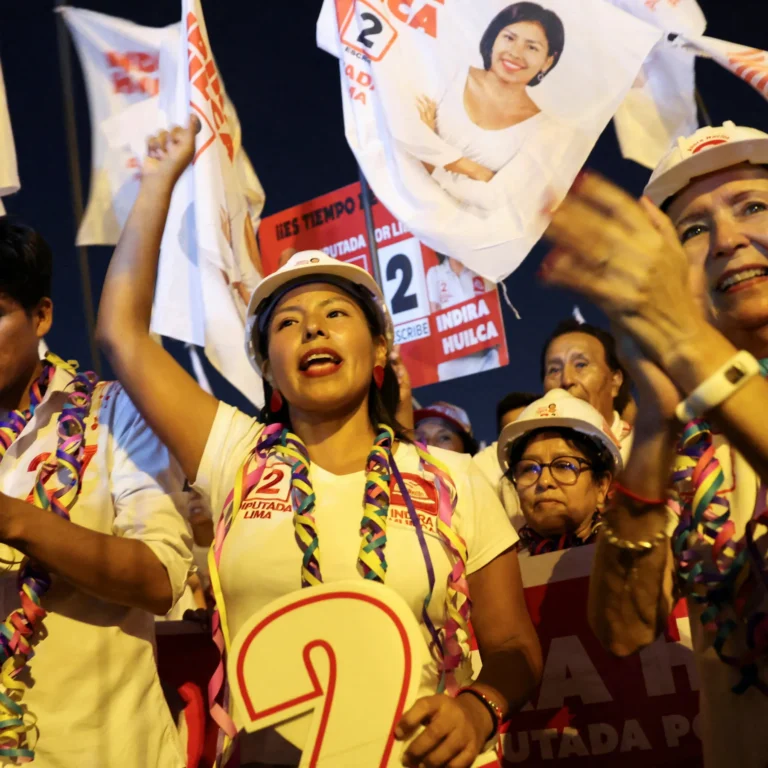
Simultaneously, Peru’s economic growth has slowed despite strong mineral exports. Rising inequality, weak state capacity, and frustration among rural and indigenous communities continue to fuel anti-establishment sentiment. The political system itself suffers from deep fragmentation: more than thirty candidates initially competed in the first round, demonstrating the collapse of traditional party structures.
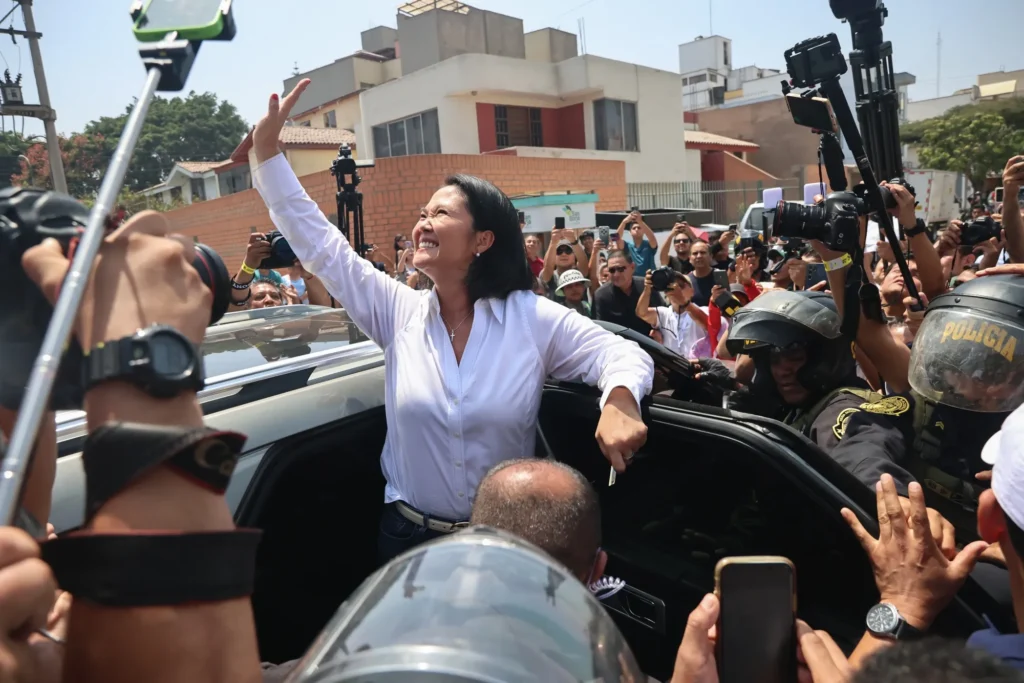
Keiko Fujimori remains the most recognizable political figure in Peru. Daughter of former president Alberto Fujimori, she represents the continuation of “Fujimorismo” — a political movement combining neoliberal economics, conservative nationalism, authoritarian security policies, and strong anti-left rhetoric.
Her campaign centers on three pillars: restoring public order, strengthening security forces, preserving macroeconomic stability.
Fujimori benefits from nostalgia among parts of the population that associate her father’s presidency with the defeat of insurgencies and economic stabilization during the 1990s.
However, she also remains one of the most polarizing figures in Peru. Large parts of the electorate associate Fujimorismo with corruption, authoritarianism, and democratic erosion. Her repeated allegations of electoral fraud after previous defeats have damaged trust among moderate voters.
Fujimori’s support is concentrated among: urban middle and upper classes, business elites, conservative coastal regions, security-oriented voters concerned about crime, anti-left and anti-Castillo constituencies.
She also receives support from sectors fearing constitutional reforms or state intervention in mining and natural resources.
Roberto Sánchez emerged as the principal left-wing challenger after unexpectedly advancing into the runoff. He is widely perceived as the political heir to Pedro Castillo’s anti-establishment movement. Sánchez positions himself as a representative of marginalized rural Peru and advocates stronger state intervention in the economy, constitutional reform, and redistribution policies.
Unlike Castillo, however, Sánchez has attempted to moderate his image by appointing pragmatic economists such as Pedro Francke to reassure investors and international markets.
His rhetoric combines: social justice themes, rural development, criticism of neoliberalism, nationalist control over strategic resources.
Sánchez draws support primarily from: rural Andean regions, poorer southern provinces, indigenous communities, labor sectors, anti-establishment voters, Castillo sympathizers.
His strongest support comes from economically marginalized populations that feel excluded from Lima-centered economic growth.
Recent polling suggests an extremely competitive race.
According to the latest Ipsos Peru survey, Fujimori leads Sánchez by approximately 39% to 35%, though a very large percentage of voters remain undecided or intend to cast blank ballots. Earlier polling showed a statistical tie between the two candidates.
Several structural factors explain the volatility: very low trust in institutions, weak party loyalty, strong anti-candidate sentiment, regional polarization, high undecided voter numbers.
The race appears divided geographically:
| Region/Sector | Likely Preference |
| Lima & coastal urban zones | Fujimori |
| Rural Andes & southern Peru | Sánchez |
| Business elites | Fujimori |
| Informal workers & poor rural voters | Sánchez |
| Security-focused voters | Fujimori |
| Anti-establishment electorate | Sánchez |
At present, Fujimori appears slightly favored because: fears of economic instability remain strong, business sectors increasingly mobilize behind her, crime concerns benefit hardline security narratives, moderate voters fear radical constitutional change.
However, Sánchez retains strong momentum in poorer regions and could benefit from protest voting against Peru’s political establishment.
The most probable scenarios are:
| Scenario | Probability |
| Narrow Fujimori victory | 45% |
| Narrow Sánchez victory | 35% |
| Institutional crisis/disputed outcome | 20% |
The risk of post-election unrest remains significant regardless of the winner. Peru’s recent history demonstrates that losing factions increasingly challenge electoral legitimacy.
China remains Peru’s largest trading partner and the dominant external economic actor, especially in the mining sector. Beijing has major strategic interests in: copper extraction, lithium access, port infrastructure, transport corridors.
Washington increasingly views Peru as a geopolitical battleground in the broader U.S.-China competition across Latin America.
China is expected to maintain pragmatic relations with either candidate, though Sánchez’s resource nationalism could create tensions with Chinese mining firms if contract revisions intensify.
The United States has intensified diplomatic engagement with Peru ahead of the election. Washington is concerned about: growing Chinese influence, instability in a key Pacific partner, expansion of organized crime, risks of anti-democratic governance.
U.S. policymakers appear more comfortable with Fujimori’s market-oriented approach, although concerns remain regarding democratic norms and institutional independence.
A Sánchez victory could generate cautious relations with Washington, especially if constitutional reforms or resource nationalism accelerate.
Russian influence in Peru remains relatively limited compared to China, but Moscow benefits indirectly from anti-Western and anti-establishment narratives within parts of the Peruvian left. Russian media ecosystems and disinformation networks may attempt to exploit polarization and distrust in democratic institutions, particularly through social media amplification of fraud allegations and anti-U.S. messaging.
However, Peru is not currently a primary Russian strategic priority in Latin America compared to countries such as Venezuela, Cuba, or Nicaragua.
A Fujimori presidency would likely produce stronger alignment with business elites, tougher security policies, closer cooperation with the United States, preservation of investor-friendly mining policies.
However, such a victory could also intensify protests in southern Peru, deepen polarization, revive fears of authoritarian governance, increase tensions over democratic institutions.
Fujimori’s political baggage means her legitimacy would remain fragile even after victory.
In case of Sánchez Victory
His presidency would likely bring renewed constitutional reform debates, stronger resource nationalism, expanded social spending, empowerment of rural and indigenous movements.
Markets would likely react negatively in the short term, particularly if uncertainty over mining contracts increases. Capital flight pressures and currency instability could emerge.
At the same time, Sánchez could attempt to moderate his administration to avoid repeating the collapse of Castillo’s presidency.
The most dangerous outcome for Peru may not be ideological victory by either side, but continued institutional fragmentation.
Peru’s underlying structural problems remain unresolved: weak parties, corruption, fragmented Congress, distrust in institutions, regional inequalities, criminal expansion.
Even after the elections, Peru is likely to remain politically unstable unless broader constitutional and institutional reforms are implemented.
The 2026 elections in Peru reflect a country trapped between competing forms of populism, deep institutional exhaustion, and growing geopolitical importance.
The runoff between Keiko Fujimori and Roberto Sánchez is not merely a contest between right and left. It is a struggle over Peru’s political identity, the future of its democracy, the role of the state in the economy, and the balance between order and representation.Regardless of the outcome, the elections are unlikely to produce immediate stability. Instead, they may represent another phase in Peru’s long-running crisis of governance — one increasingly shaped not only by domestic divisions, but also by the intensifying geopolitical competition between United States and China in Latin America.
More on this story: Peru’s 2026 General Election
More on this story: Peru president removed from office, charged with rebellion.