

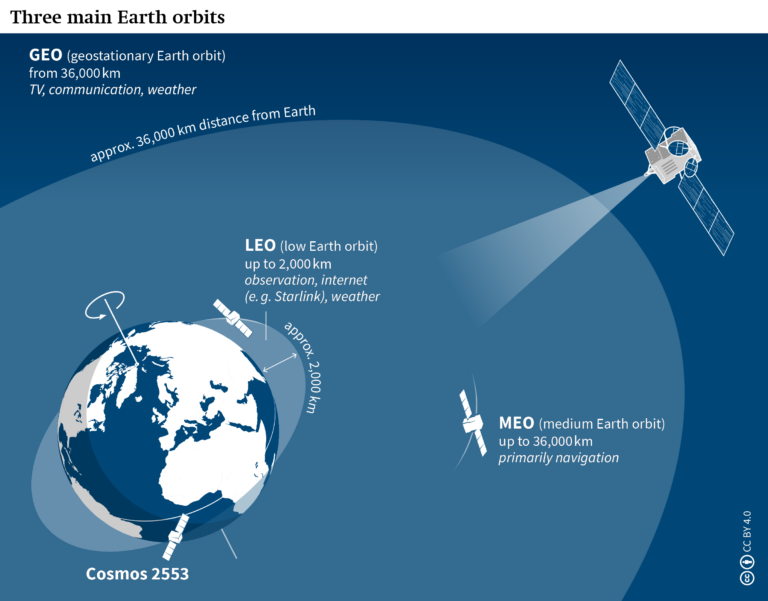
The growing concern in Washington over potential Russian plans to deploy nuclear weapons in space reflects a deeper transformation in the nature of strategic competition. Statements by Stephen Whiting indicate that such a scenario would not merely represent another escalation step, but a systemic disruption of the technological backbone on which modern societies depend. A nuclear detonation in low Earth orbit would not function as a traditional strike against a specific target; rather, it would produce cascading effects across entire orbital layers, disabling thousands of satellites simultaneously and creating a long-lasting debris field. The consequences would extend far beyond military domains, potentially crippling global communications, navigation, financial systems, and critical infrastructure. In this sense, the concept of a “space Pearl Harbor” is not rhetorical exaggeration but an attempt to capture the scale and simultaneity of the potential disruption.
Since the beginning of Russia’s full-scale invasion of Ukraine in 2022, Moscow has already demonstrated a willingness to expand confrontation into the space domain, albeit below the threshold of kinetic escalation. Persistent jamming of satellite communications and GPS signals, which has affected civilian aviation in parts of Europe, illustrates how space is being integrated into hybrid warfare. These activities serve both operational and strategic purposes: they degrade the effectiveness of adversary systems while simultaneously signaling Russia’s capability to contest the electromagnetic and orbital environment. The reported development of weapons aimed at disabling systems such as Starlink further underscores this trajectory. Starlink, due to its role in maintaining Ukrainian communications and military coordination, has become a symbol of Western technological advantage, making it a logical target within Russia’s asymmetric strategy.
The potential deployment of nuclear capabilities in orbit would represent a qualitative shift from disruption to systemic denial. Unlike conventional anti-satellite weapons, which typically target individual assets, a nuclear detonation could render entire orbital regions unusable for extended periods. This would effectively transform space from a contested domain into a degraded environment where the functionality of all actors—military and civilian alike—is compromised. Such an outcome aligns with a broader Russian strategic logic that prioritizes asymmetry. By targeting the infrastructure that underpins Western technological superiority, Moscow seeks to offset its own conventional limitations and impose disproportionate costs on its adversaries.
This approach must also be understood within the framework of deterrence signaling. Even without actual deployment, the mere possibility of nuclear weapons in space alters strategic calculations. It introduces uncertainty into the reliability of satellite-dependent systems, which are central not only to military operations but also to economic stability and governance. In this sense, orbital nuclear capabilities function as a form of coercive leverage. They expand the spectrum of hybrid tools available to the Kremlin, allowing it to exert pressure without crossing the threshold into open conflict. The psychological impact of potential orbital chaos becomes itself a strategic asset.
At the same time, such a development would directly challenge the legal and normative foundations of space governance. The Outer Space Treaty explicitly prohibits the placement of nuclear weapons in orbit, reflecting a Cold War consensus that space should remain a domain free from weapons of mass destruction. A violation of this principle would not only undermine the treaty itself but could trigger a broader erosion of arms control regimes. Other major powers might respond by accelerating their own military space programs, leading to an arms race in a domain that has so far remained relatively restrained compared to land, sea, and air.
A nuclear detonation in low Earth orbit would not resemble a traditional nuclear strike on the ground—there would be no blast wave, firestorm, or direct casualties at the surface. But its consequences on Earth would be systemic, cascading, and potentially global, because modern civilization is tightly dependent on satellite infrastructure.
Immediate collapse of navigation systems
The most immediate effect would be the loss of satellite navigation systems such as GPS, GLONASS, and Galileo. These are not just tools for maps on phones; they are embedded in:
- aviation navigation, maritime shipping, military targeting, financial ti synchronization, emergency response systems.
Without them, aircraft would face severe routing constraints, maritime traffic would slow or become unsafe, and precision military operations would degrade sharply. In dense airspace like Europe, even short-term GPS disruption can already create risk; a global loss would force aviation into emergency fallback modes.
A large share of global communications relies on satellites, especially:
- satellite internet systems like Starlink, remote region connectivity, backup communication channels for governments and militaries.
If thousands of satellites were disabled, entire regions—particularly in Africa, Asia, and maritime zones—could lose connectivity. Even in developed countries, redundancy would be strained. Military command-and-control systems that rely on satellite links would be disrupted, reducing coordination and situational awareness.
One of the least visible but most critical impacts would be on the financial system. Satellite-based timing signals synchronize stock exchanges, interbank transfers, payment systems.
If timing accuracy is lost, transactions cannot be reliably verified or sequenced. This could lead to temporary shutdown of trading systems, delays in global payments, loss of confidence in financial markets.
The effect would not be a permanent collapse, but it could trigger acute short-term financial shock.
Many sectors rely on satellite data indirectly: energy grids use GPS timing for load, balancing logistics networks depend on tracking systems, agriculture relies on satellite positioning, telecommunications networks use satellite synchronization.
The loss of these systems would create multi-sector disruption, especially in highly digitized economies. Transport systems would slow, supply chains would fragment, and emergency services would operate with reduced coordination.
Long-term orbital contamination (Kessler cascade)
A nuclear detonation in orbit would generate massive debris. This is not a short-lived effect. It could trigger a Kessler syndrome, where debris collisions create more debris, entire orbital bands become unusable.
This would have long-term consequences on Earth launching new satellites becomes risky or impossible, global connectivity degrades for years or decades, space-based services become less reliable.
In practical terms, humanity would lose a significant part of its space infrastructure for a prolonged period.
Modern militaries depend heavily on satellites for:
- reconnaissance communications, navigation, missile warning systems.
A sudden loss would:
- degrade intelligence capabilities, increase uncertainty, raise the risk of miscalculation.
This is particularly dangerous in nuclear deterrence systems, where early-warning satellites are critical. If those systems are degraded, states may adopt more aggressive postures due to fear of surprise attack.
Electromagnetic and radiation effects
A high-altitude nuclear detonation would also produce electromagnetic pulse (EMP), artificial radiation belts.
Even without direct casualties, the global reaction would be profound. A “space attack” of this magnitude would be interpreted as a strategic escalation, trigger emergency responses, potentially lead to retaliatory actions.
The psychological effect—loss of connectivity, navigation, and stability—would amplify the crisis. Governments would face immediate pressure to respond, increasing the risk of broader conflict.
The consequences on the ground would not be physical destruction, but functional paralysis. A nuclear explosion in low orbit targets the systems that make modern life possible, rather than cities themselves.
It is a form of systemic warfare, aimed at disabling the technological foundation of modern society rather than destroying it directly.
For Europe, the implications are particularly acute. European economies and security architectures are deeply dependent on satellite systems for navigation, communications, and surveillance. A large-scale disruption would therefore have immediate and severe consequences, ranging from the breakdown of transportation networks to the destabilization of financial systems. Unlike traditional military threats, which can be geographically contained, a space-based disruption would be inherently transnational, affecting multiple countries simultaneously and complicating coordinated responses.
In strategic terms, Russia’s posture in space reflects a broader shift toward the use of systemic vulnerabilities as instruments of power. Rather than competing symmetrically, Moscow seeks to exploit the interconnectedness of modern infrastructure, where disruption in one domain can propagate across multiple sectors. Space, with its central role in enabling global connectivity, represents a particularly attractive target within this framework. The move toward potential nuclearization of orbit therefore should not be seen in isolation, but as part of an evolving doctrine that integrates military, technological, and informational dimensions.
The response to this challenge will likely require both technological and political adaptation. On the technological side, increasing the resilience of satellite networks, including redundancy and rapid replacement capabilities, becomes essential. On the political side, there is a growing need to revisit and strengthen international frameworks governing space activities. Without such measures, the current trajectory risks transforming space from a shared domain into a contested and unstable environment, where the absence of clear rules increases the likelihood of escalation.
Ultimately, the issue is not only about Russia’s capabilities or intentions, but about the changing nature of conflict itself. As space becomes more central to both civilian life and military operations, it also becomes more vulnerable to strategic disruption. The prospect of nuclear weapons in orbit represents the most extreme manifestation of this trend, highlighting the need to rethink how security is defined and maintained in an increasingly interconnected world.
A rough estimate is on the order of 1,000 Chinese satelliteswill be lost, and in a very severe low-Earth-orbit detonation scenario it could be somewhat higher.
Here is the logic. The U.S. Space Force says China had more than 1,301 satellites in orbit as of November 2025. Independent 2026 reporting also points to China having over 1,100 satellites by August 2025, with many of them in low Earth orbit, and one 2026 forecast cited China at 1,871 satellites in 2025.
If you apply the frequently cited worst-case assumption that a nuclear detonation in low Earth orbit could disable around 80% of satellites in orbit, then the simple proportional loss for China would be roughly:
- 1,301 × 0.8 ≈ 1,040
- 1,871 × 0.8 ≈ 1,497
So the plausible range is about 1,000 to 1,500 Chinese satellites, depending on which baseline you use and how broadly the debris/radiation effects propagate.
The biggest caveat is that the real number would depend on which orbital shells were hit. If the burst occurred in a band heavily used by Chinese spacecraft, especially their growing low-orbit communications constellations, losses could be closer to the upper end of that range. If more Chinese satellites were outside the most affected orbital region, losses could be lower. Recent analysis indicates China’s low-orbit buildup is substantial, including more than 100 satellites already deployed in the SpaceSail project alone, which suggests China is increasingly exposed to a low-orbit mass-disruption event.
So the best concise answer is: probably around a thousand Chinese satellites, and potentially closer to fifteen hundred in an extreme scenario.
Probably around 145 Russian satellites will be hit, with a rough extreme-case range of about 140–150.
If you apply the same worst-case assumption discussed earlier—that a low-Earth-orbit nuclear detonation could disable roughly 80% of satellites in the affected orbital environment—Russia’s losses would be approximately:
181 × 0.8 = 145
So the simple answer is that Russia could lose about 145 satellites in that kind of scenario.
The real number could be somewhat different because not all Russian satellites are in the same orbital bands. Some are in geostationary orbit or other higher orbits and would be less exposed than satellites in low Earth orbit, while Russia also has military and communications satellites in lower orbits that would be more vulnerable. Public reporting also shows Russia is trying to expand some low-orbit systems, which means its exposure in LEO could grow over time.
Thus,: roughly 145 Russian satellites, assuming an 80% loss scenario and using the best public country count available.
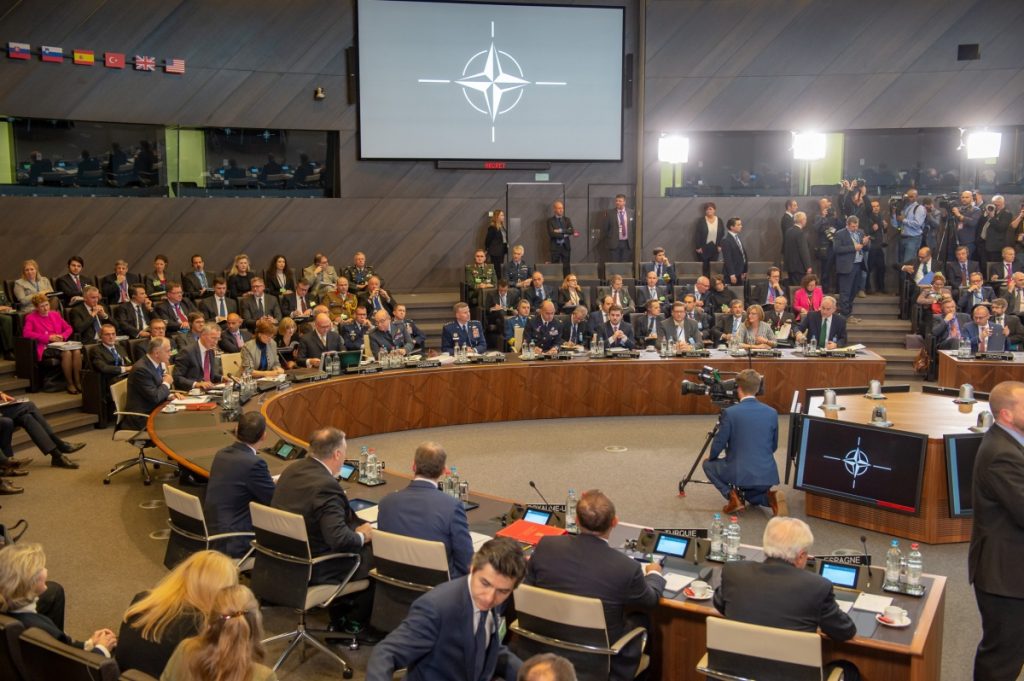
More on this story: Space as a new NATO operational domain questions Article 5 using
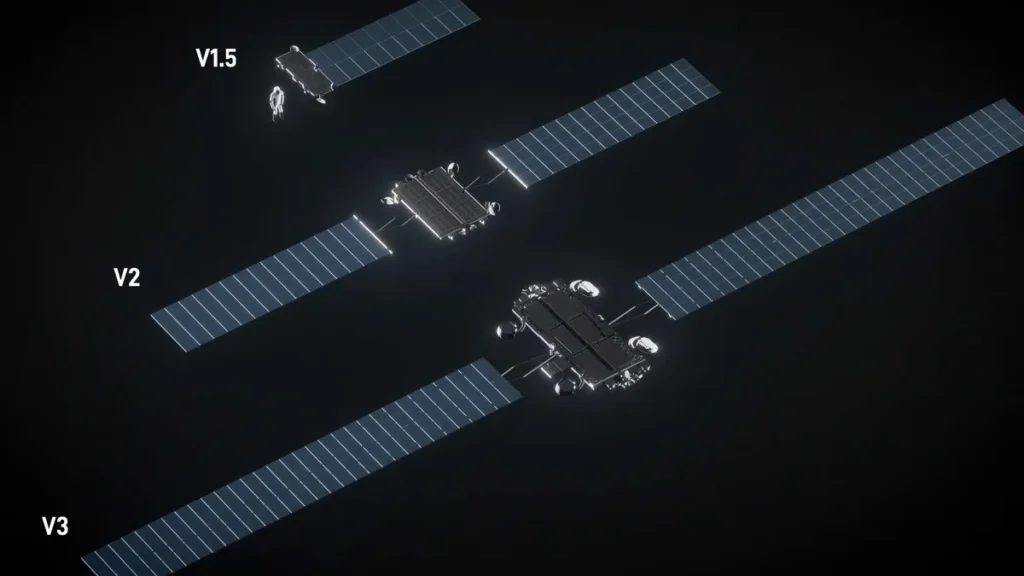
More on this story: Hybrid War Goes Orbital: Russia’s Threats Against SpaceX and the United States
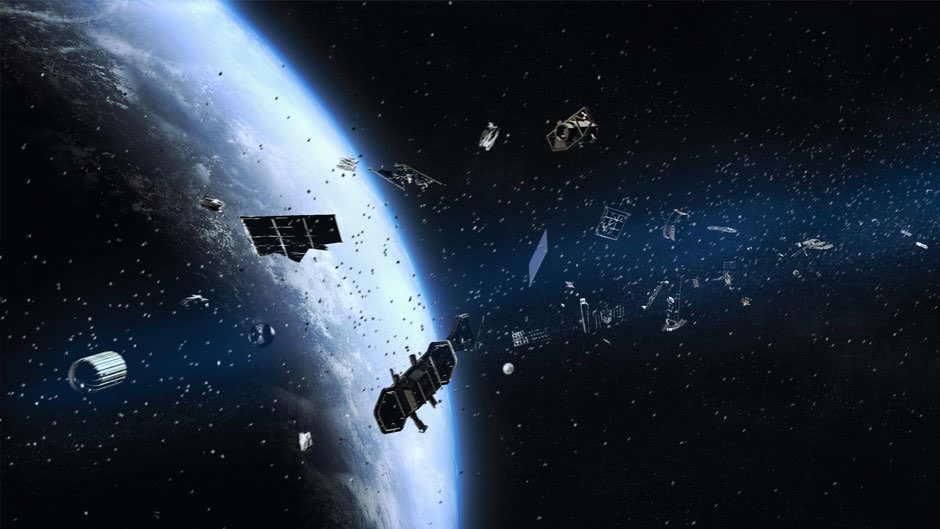
More on this story: Russia tests an anti-satellite missile and leaves a lot of trouble in space