
Russia’s Passport Expansion in Transnistria: A Hybrid Mobilization Tool and a Potential Prelude to Regional Escalation
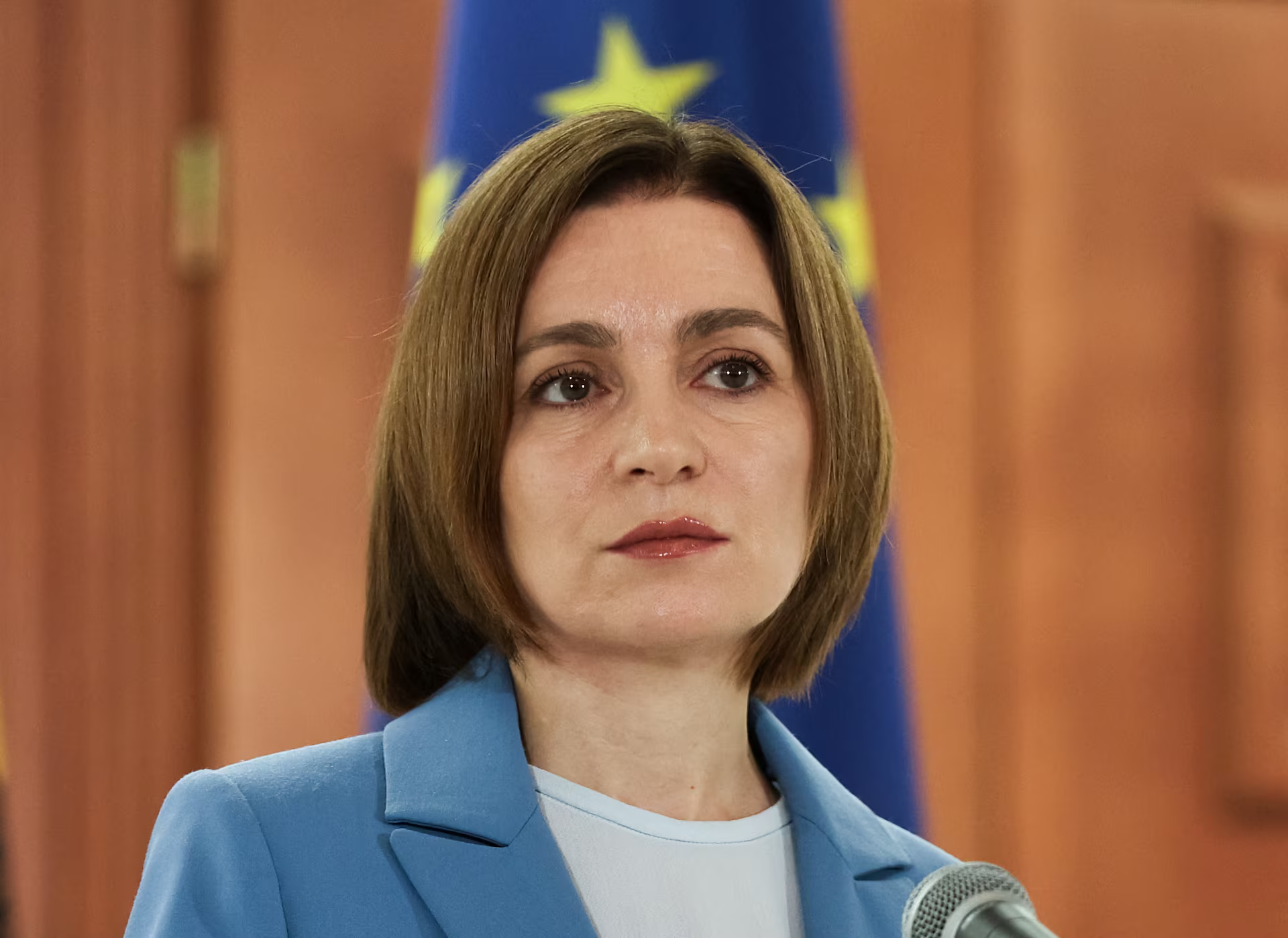
President of the Republic of Moldova Maia Sandu sharply criticized Vladimir Putin’s decree simplifying the acquisition of Russian citizenship for residents of Moldova’s separatist region of Transnistria. Under the new rules, residents are no longer required to meet standard conditions for obtaining Russian citizenship, including residing in Russia for at least five years, knowledge of the Russian language, familiarity with Russian history, and understanding of Russian legislation.
This initiative represents not merely another attempt by the Kremlin to strengthen its influence in the region. It is also aimed at creating a pool of potential recruits for Russia’s war against Ukraine.
Maia Sandu stated that Putin’s decree on simplified Russian citizenship for residents of unrecognized Transnistria could be used to mobilize people from the Moldovan region for participation in military operations. According to Sandu, the measure is effectively a hidden mobilization instrument for the war in Ukraine:
“They probably simply need more people to send to the war in Ukraine.”
Sandu emphasized that this tactic is part of the Kremlin’s broader strategy of pressuring Moldova in response to Chișinău’s efforts to reintegrate Transnistria.
According to the Moldovan president:
“Since the beginning of the war in Ukraine, most residents of the region have chosen Moldovan citizenship because they believed that with Moldovan citizenship they would be safer than with Russian citizenship.”
When asked whether Putin could block Moldova’s accession to the European Union through the Transnistrian issue, Sandu responded:
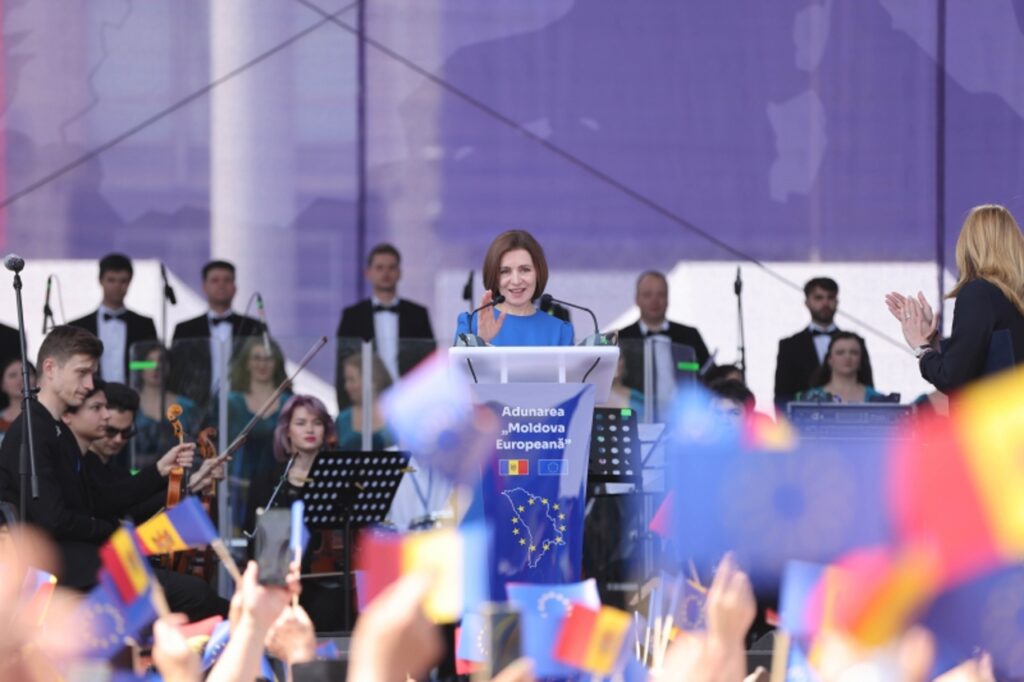
“Only the European Union can decide whether Moldova becomes part of the EU or not. Russia has nothing to do with it.”
According to the Kremlin decree, adult foreign citizens and stateless persons permanently residing in Transnistria at the time the document entered into force are eligible for simplified Russian citizenship. Applications may be submitted through Russian diplomatic missions and consular institutions. The decree states that the decision was adopted “for the protection of the rights and freedoms of man and citizen.”
However, the decree signed by Vladimir Putin appears to serve a broader geopolitical purpose. Simplified passport distribution in Transnistria may function as an instrument of future covert mobilization of the local population to replenish Russian military forces that could be used not only in the war against Ukraine, but potentially in future aggression against EU member states.
The removal of residency and language requirements also increases hybrid pressure on Chișinău and is aimed at destabilizing Moldova amid its ongoing efforts to reintegrate the left bank of the Dniester River.
Statements by Maia Sandu demonstrate that Russia’s manipulation of the Transnistrian issue is incapable of stopping Moldova’s European integration process. At the same time, the growing number of residents in the region holding Russian passports creates additional tension in negotiations regarding Moldova’s future accession to the EU.
The Moldovan president effectively neutralized Moscow’s geopolitical narrative by emphasizing that Chișinău’s political resilience is reinforced by: a pro-European parliamentary majority, public support for EU integration, and readiness to resist the Kremlin’s expansionist ambitions.
The decree on simplified passportization also coincides with recently updated Russian legislation concerning the “protection of Russian citizens abroad.” The artificial increase in the number of Russian passport holders in Transnistria could provide Moscow with a formal pretext for future aggression under the guise of defending “compatriots.”
This strategy mirrors the pattern previously used by Russia in: Donbas, Abkhazia, and South Ossetia.
The Kremlin first distributes passports, then claims Russian-speaking populations are under threat, and later uses “protection of compatriots” as justification for military intervention.
Simplified passportization of Transnistria therefore represents another attempt by Moscow to legitimize its long-term military presence in the region, where Russian troops have been stationed for decades. By artificially increasing the number of Russian citizens on sovereign Moldovan territory, Moscow may seek to recreate a “Donbas scenario” of hybrid expansion.
Under the pretext of “protecting its people,” the region could potentially be transformed into a future zone of military confrontation, similar to eastern Ukraine, where slogans about “saving the Russian population” ultimately served as cover for destruction, occupation, and destabilization.
Maia Sandu strongly criticized the Kremlin’s plans to issue Russian passports to residents of Moldova’s separatist region, while also highlighting the failure of Russia’s broader passport-expansion policy. Since 2022, there has been a stable trend of residents in the region increasingly choosing Moldovan citizenship as the only reliable guarantee of personal security.
The Russian scenario remains largely unchanged: first, the Kremlin distributes passports; then it claims Russian citizens are under threat; afterward, military intervention follows under the banner of “protection.”
In practice, this Russian “protection” has repeatedly brought war, destruction, occupation, and transformation of prosperous regions into devastated conflict zones.
In this context, the expansion of Russian citizenship inside Moldova represents not merely a bureaucratic process, but a potential instrument of hybrid destabilization and a growing threat to the national security of both Moldova and Europe as a whole.
The decree signed by Vladimir Putin simplifying the acquisition of Russian citizenship for residents of Transnistria represents far more than a symbolic political gesture toward a separatist territory. The measure should be viewed as part of a broader Kremlin strategy aimed at expanding Russia’s pool of potential military manpower, strengthening hybrid leverage over Moldova, and creating long-term operational conditions for future military escalation in Eastern Europe.
Officially, Moscow presents the initiative as a humanitarian effort designed to “protect the rights and freedoms” of residents in Transnistria. In practice, however, the decree closely resembles previous Russian “passportization” campaigns used in Donbas, Abkhazia, and South Ossetia.
One of the most important but underestimated aspects of Russia’s passport expansion policy is its military dimension.
The simplification of Russian citizenship procedures in Transnistria effectively creates a future manpower reserve for the Russian Armed Forces.
By removing requirements such as five years of residence in Russia, language examinations, and knowledge of Russian law, the Kremlin is dramatically accelerating the legal incorporation of Transnistrian residents into the Russian state system.
Once individuals receive Russian citizenship, Moscow gains legal grounds for military mobilization, expanded recruitment opportunities, and additional mechanisms for integrating residents into Russian military structures.
This is especially significant because the war in Ukraine has exposed Russia’s growing demographic and manpower problems.
After years of high battlefield losses in Ukraine, Russia increasingly faces personnel shortages, mobilization fatigue, demographic decline, and growing domestic resistance to large-scale conscription.
The Kremlin therefore seeks alternative manpower sources outside core Russian regions.
This strategy already includes: recruitment in occupied Ukrainian territories, enlistment of migrants, prison recruitment, financial incentives for poor regions, and foreign contract fighters.
Passportization in Transnistria fits directly into this broader mobilization architecture.
The separatist region contains a Russian-speaking population, Soviet military traditions, long-standing dependency on Moscow, and an existing Russian military presence.
From the Kremlin’s perspective, Transnistria represents a politically manageable recruitment environment compared to mobilization inside major Russian cities.
Although Transnistria is small, its geopolitical value is disproportionately large.
The region already hosts Russian military contingents, ammunition depots, intelligence infrastructure, and pro-Russian political structures.
By increasing the number of Russian passport holders there, Moscow achieves several parallel objectives.
Even limited recruitment from Transnistria provides Russia with: additional contract soldiers, logistical personnel, intelligence operatives, and auxiliary military manpower.
For a Kremlin increasingly dependent on peripheral recruitment pools, every externally controlled population becomes strategically valuable.
Passportization creates a formal basis for future Russian narratives about:
“defending Russian citizens abroad.”
This doctrine has already been used repeatedly by Moscow to justify intervention in post-Soviet conflicts.
The larger the number of Russian citizens in Transnistria, the easier it becomes for the Kremlin to frame any Moldovan reintegration efforts as “persecution,” “ethnic discrimination,” or “threats to Russian compatriots.”
The passport campaign also functions as psychological and political pressure against Chișinău.
The Kremlin aims to: destabilize Moldova internally,complicate EU accession negotiations, deepen societal polarization, and maintain permanent leverage over Moldovan sovereignty.
The existence of a large Russian-passport population inside Moldova creates a constant instrument of coercion.
The “Donbas Model” and Risks for Europe
The similarities with eastern Ukraine are deeply concerning.
Before 2022, Russia massively expanded passport distribution in occupied areas of Donbas. Moscow later cited the need to “protect Russian citizens” as one of the political justifications for escalation against Ukraine.
The Transnistrian strategy increasingly resembles a smaller-scale version of this model.
The danger is not necessarily an immediate invasion. Rather, the Kremlin seeks to preserve: a permanent frozen conflict, long-term military leverage, and the possibility of rapid escalation when strategically useful.
This creates broader risks not only for Moldova, but also for: Romania, the EU’s eastern flank, and Black Sea regional security.
President Maia Sandu responded aggressively because Chișinău understands the long-term implications of Russian passportization.
Sandu emphasized that many residents of Transnistria increasingly choose Moldovan citizenship precisely because Russian citizenship is associated with militarization, instability, and geopolitical risk.
This trend represents an important failure of Kremlin policy.
Instead of becoming more loyal to Moscow after the invasion of Ukraine, many residents appear to perceive Moldovan and European integration as safer and more stable than incorporation into Russia’s geopolitical orbit.
That directly threatens Moscow’s long-term influence strategy.
The broader Russian strategy increasingly merges citizenship policy, military mobilization, hybrid warfare and geopolitical coercion.
Russian passports are no longer merely legal documents.
They function as instruments of influence, future military claims, demographic tools, and potential mobilization resources.
The Kremlin’s approach reflects a growing militarization of Russian foreign policy under wartime conditions.
As the war in Ukraine continues draining Russian manpower and resources, Moscow increasingly searches for peripheral recruitment pools, politically dependent territories, and externally controlled populations.
Transnistria now appears to be integrated into this system.
The long-term consequences of Russia’s Transnistrian passportization policy may include: increased Russian military recruitment capacity, greater hybrid pressure on Moldova, additional instability around the Black Sea, and creation of future escalation pretexts against neighboring states.
At the same time, the policy reveals deeper structural problems inside Russia itself.
A state confident in its demographic future and military sustainability would not need to aggressively expand citizenship among isolated separatist populations abroad.
The Kremlin’s growing dependence on external recruitment pools increasingly reflects demographic decline, mobilization exhaustion, and mounting long-term pressures on the Russian military system.
The Kremlin’s decree on simplified passportization in Transnistria directly complements the recent decision by the Russian parliament granting Vladimir Putin expanded authority to deploy Russian troops abroad under the pretext of “protecting Russian citizens.”
Together, these two measures form a coherent hybrid-warfare mechanism that mirrors the strategy previously used by Moscow in Crimea, Donbas, Abkhazia, and South Ossetia.
The sequence is strategically important: Russia artificially increases the number of Russian citizens abroad through accelerated passportization. Moscow later claims these citizens face “threats” or “discrimination.” Russian legislation then provides legal justification for military deployment abroad to “protect compatriots.” The Kremlin uses this narrative to legitimize intervention, escalation, or permanent military presence.
The new Russian parliamentary law significantly lowers the political threshold for external military operations. It authorizes the use of Russian armed forces abroad in cases involving Russian citizens allegedly facing arrest, prosecution, or threats outside Russia.
This legal framework becomes especially dangerous when combined with mass passportization campaigns in disputed territories.
The Kremlin is effectively building a future legal and demographic justification for intervention in Moldova.
By distributing Russian passports en masse in Transnistria, Moscow creates a larger population formally classified as “Russian citizens,” potential mobilization reserves, and a legal pretext for future troop deployments.
The parliamentary decision and the Transnistrian decree therefore should not be viewed separately. They are interconnected components of a broader Russian strategic doctrine.
Moscow increasingly institutionalizes the concept that any territory containing large numbers of Russian passport holders may become an object of Russian military “protection.”
This creates direct security risks not only for Moldova, but also for neighboring NATO and EU states.
The Kremlin has repeatedly tested this model.
Before the war in Georgia, Russia distributed passports extensively in Abkhazia and South Ossetia. Moscow later justified military intervention by claiming it was protecting Russian citizens.
Russia massively expanded passportization in Donbas after 2019. Later, the Kremlin cited the “protection” of Russian citizens and Russian speakers as one of the formal justifications for the full-scale invasion of Ukraine.
The same mechanism is now being institutionalized in Transnistria: accelerated citizenship, military-legal authorization, hybrid destabilization, and preservation of escalation options.
The difference is that the Kremlin is now codifying this doctrine more openly into Russian law than before.
The linkage between passportization and military legislation also has a direct operational dimension for the Russian Armed Forces.
Transnistria provides Russian-speaking populations, Soviet military traditions, economic dependency, and long-standing Russian influence infrastructure.
This makes the region strategically attractive as a supplementary manpower reservoir.
A larger Russian-citizen population in Transnistria strengthens Moscow’s argument for maintaining military contingents, expanding intelligence operations, and preserving logistics networks in the region.
The Kremlin could increasingly portray any pressure on Transnistria as a threat to Russian nationals requiring “protective measures.”
The new doctrine creates ambiguity for neighboring states.
If Russia claims the right to intervene wherever Russian citizens allegedly face threats, this logic could theoretically apply to the Baltic states, Moldova, Kazakhstan, or other regions with Russian-speaking minorities.
European intelligence services increasingly fear that Moscow may use provocations, information operations, staged incidents, or ethnic tensio to manufacture intervention. narratives.
The combination of external passportization, militarized citizenship policy, and legal authorization for troop deployment abrod reflects a broader transformation of Russian foreign policy under wartime conditions.
Russia increasingly treats citizenship not as a civic institution, but as: a geopolitical weapon, a mobilization mechanism, and an instrument for legitimizing military expansion.
The Kremlin is effectively constructing a transnational security doctrine where: Russian passports create future zones of potential Russian military intervention.
This doctrine fundamentally destabilizes the post-Soviet region because it undermines the sovereignty of neighboring states by implying that Moscow reserves the right to intervene wherever Russian citizens reside.
For Moldova, the risks include intensified hybrid destabilization, political pressure on EU integration, frozen-conflict escalation, and permanent Russian leverage over national sovereignty.
For Europe, the implications are broader.
The synchronization of passport expansion, military authorization laws, and aggressive Russian rhetoric suggests the Kremlin is institutionalizing a long-term intervention framework extending beyond Ukraine.
This is particularly concerning because Russia increasingly frames military action abroad not as exceptional, but as legally normalized state policy.
The Kremlin’s decree simplifying Russian citizenship in Transnistria and the Russian parliament’s decision granting Putin broader authority to deploy troops abroad are strategically interconnected.
Together, they form a unified doctrine based on artificial expansion of Russian citizenship abroad, legal justification for military intervention, hybrid coercion, and long-term geopolitical destabilization.
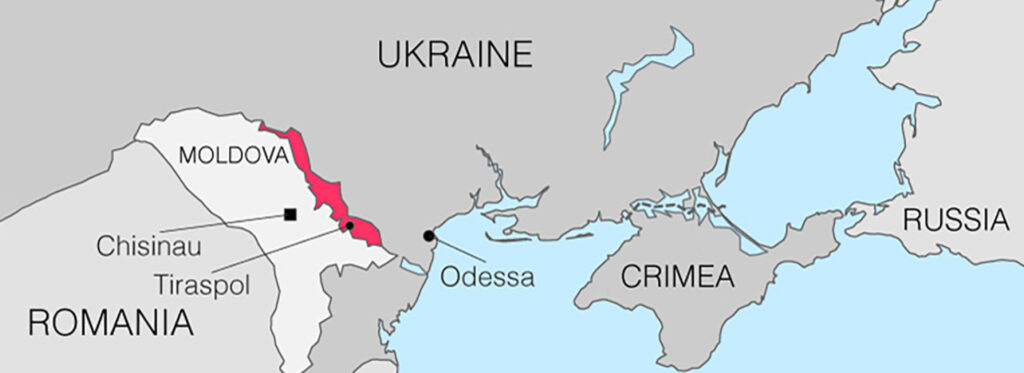
It is possible that Russia views Transnistria as a potential future pressure point against Odesa, particularly within the framework of hybrid warfare, destabilization operations, or a broader regional escalation scenario. However, under current military conditions, a large-scale conventional Russian offensive from Transnistria directly toward Odesa remains difficult and unlikely in the near term without major changes on the battlefield.
Nevertheless, the Kremlin almost certainly sees Transnistria as strategically valuable in relation to southern Ukraine.
Odesa occupies enormous geopolitical importance for Russia.
Control or destabilization of Odesa would severely weaken Ukraine economically, threaten Ukrainian access to the Black Sea, disrupt grain exports, undermine maritime trade, and potentially isolate Ukraine from key logistics corridors.
For Moscow, Odesa also carries symbolic and ideological importance: it is historically linked to the Russian imperial narrative, contains a large Russian-speaking population, and has long been targeted by Kremlin information operations.
If Russia could eventually destabilize or pressure Odesa, it would dramatically alter the strategic balance in the Black Sea region.
Transnistria sits directly along Ukraine’s southwestern border near the Odesa region.
Although the territory is small, it provides Russia with intelligence infrastructure, covert influence networks, military presence, ammunition depots, and potential sabotage capabilities close to Odesa.
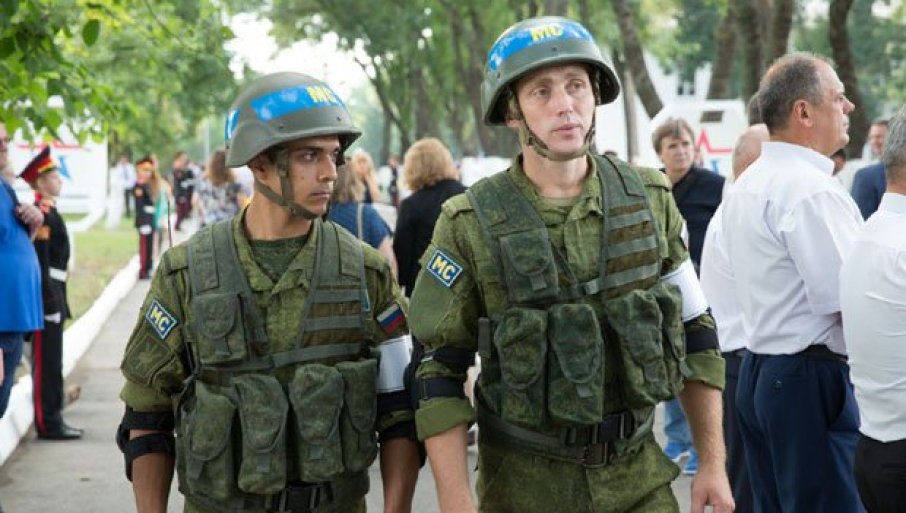
The region already hosts Russian military personnel officially labeled as “peacekeepers,” along with large Soviet-era ammunition stockpiles at Cobasna ammunition depot.
This creates a latent military foothold near Ukraine’s southern flank.
Rather than a classic frontal invasion, the more realistic threat involves hybrid and destabilization operations.
Russia could use Transnistria to force Ukraine to maintain defensive forces near Odesa instead of reallocating them elsewhere.
Even a limited threat from Transnistria ties down Ukrainian troops, complicates operational planning and increases pressure on southern defenses.
This already serves Russian strategic interests.
Transnistria could function as a logistics hub for covert operatives, an intelligence collection platform, or a base for sabotage operations targeting Odesa infrastructure.
Potential targets could include ports, railways, grain facilities, energy systems and military logistics nodes.
Russia historically uses frozen-conflict zones as intelligence and hybrid warfare platforms.
The Kremlin may seek to create synchronized instability in Moldova, Transnistria, and southern Ukraine.
The objective would not necessarily be territorial conquest, but political destabilization, economic disruption, refugee pressure, and erosion of regional security.
This could complicate Moldova’s EU integration, Ukrainian Black Sea operations, and NATO’s eastern flank security planning.
The current passportization campaign in Transnistria becomes important here.
If Moscow massively increases the number of Russian citizens in the region, the Kremlin gains a future narrative framework for: “protecting Russian citizens near Odesa.”
Despite these risks, several major obstacles currently limit Russia’s ability to launch a major offensive toward Odesa directly from Transnistria.
Transnistria is physically isolated from Russia.
Russia currently lacks a land corridor to the region, secure logistics routes, and operational depth necessary for major offensive operations.
Without control over southern Ukraine, Transnistria remains strategically constrained.
The Russian military contingent there is relatively small and not configured for large-scale offensive warfare.
Most forces are lightly equipped, isolated, and dependent on local structures.
They could support hybrid or sabotage operations far more easily than a major mechanized offensive.
Since 2022, Ukraine has significantly strengthened defenses around Odesa and the Transnistrian border.
Kyiv clearly understands the strategic risks posed by the region.
Any visible Russian military buildup in Transnistria would likely trigger rapid Ukrainian countermeasures, Moldovan security alerts, and increased NATO monitoring.
Even if immediate invasion prospects remain limited, Transnistria retains major strategic utility for Moscow because it: creates permanent instability, complicates Moldova’s sovereignty, pressures Ukraine’s southwest, and preserves escalation options for the future.
The Kremlin often prefers maintaining frozen conflicts precisely because they provide leverage, uncertainty, and long-term coercive influence.
For Russia, Transnistria functions less as a fully operational front line and more as a strategic trigger point that can be activated during wider regional crises.
The risk would increase significantly if Russia regains operational momentum in southern Ukraine, Ukrainian defenses weaken, internal instability emerges in Moldova, or Moscow succeeds in destabilizing Odesa politically or socially.
Under such conditions, Transnistria could become a coordination hub a diversionary axis, or part of a broader Russian strategy aimed at isolating Ukraine from the Black Sea.
At present, a direct large-scale Russian invasion of Odesa from Transnistria remains militarily difficult due to geographic isolation, limited Russian troop strength, and Ukrainian preparedness.
However, the Kremlin almost certainly views Transnistria as strategically valuable in any long-term effort to pressure or destabilize southern Ukraine.
More on this story: The future after Moldova’s reintegration