
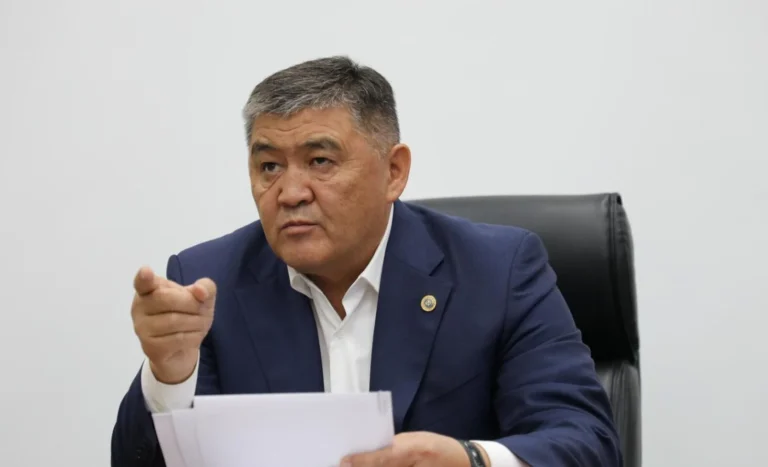
The latest alleged coup attempt in Kyrgyzstan reflects a deepening internal power struggle within the country’s ruling elite rather than a classic ideological revolution. The accusations against former security chief Kamchybek Tashiev reveal growing fractures inside the political system created by President Sadyr Japarov after the turbulent 2020 protests that brought both men to power.
The case is strategically significant because Kyrgyzstan has historically been the most politically unstable state in Central Asia, with repeated revolutions in 2005, 2010, and 2020. Unlike neighboring authoritarian systems such as Kazakhstan or Uzbekistan, Kyrgyzstan possesses a fragmented political culture shaped by regional clan rivalries, elite competition, and weak institutional control.
The alleged coup attempt therefore represents not merely a domestic security incident, but a potentially destabilizing event with implications for Russian influence, Chinese regional interests, organized criminal structures, and the broader security architecture of Central Asia.
According to reports, Kyrgyz authorities charged Kamchybek Tashiev and several associates with plotting to overthrow President Japarov and seize power. The proceedings are classified, with closed court hearings and severe restrictions on media reporting.
The accusations emerged after Tashiev’s abrupt dismissal in early 2026, ending the long-standing Japarov–Tashiev political tandem that had dominated Kyrgyz politics since the 2020 unrest.
For years, the two leaders balanced Kyrgyzstan’s deeply rooted north-south political divide: Japarov represented northern elite networks, Tashiev controlled major southern political and security structures.
More on this story: Russia Escalates Rhetoric Against Kyrgyzstan
The southern regions of:
- Osh,
- Jalal-Abad,
- and Batken
- have long been strategically important for:
- transit trade,
- customs control,
- fuel smuggling,
- narcotics transit,
- and informal cross-border commerce linked to the Ferghana Valley.
This geography made southern elite networks especially influential in shadow economic systems.
Kamchybek Tashiev himself originates from the south and built influence through southern patronage networks, security structures, and regional alliances. While there is no public evidence directly linking Tashiev personally to narcotics trafficking, analysts widely acknowledge that southern political elites historically operated in environments deeply intertwined with smuggling economies.
Their alliance temporarily stabilized the country after the 2020 revolution. However, as Tashiev accumulated growing influence over the security apparatus, economic networks, and regional patronage systems, tensions reportedly intensified between the two camps.
The purge of Tashiev’s allies across parliament, law enforcement, and state companies suggests that the alleged coup case may also function as a broader elite restructuring campaign by Japarov aimed at consolidating personal power before upcoming elections.
Main Actors
Sadyr Japarov Camp
President Japarov seeks consolidation of presidential authority, removal of rival elite factions, control over security services, and preservation of regime stability.
Since coming to power, Japarov gradually centralized authority and weakened opposition forces, independent media, and civil society structures. The current crackdown indicates concern that Tashiev’s political network had become too autonomous.
Japarov likely fears: fragmentation inside security institutions, regional elite rebellion, and challenges to succession control ahead of future elections.
Kamchybek Tashiev Network
Tashiev was one of the most powerful figures in Kyrgyzstan:
- former head of the State Committee for National Security, influential southern political patron, and a major force behind anti-corruption and security campaigns.
His network reportedly included security officials, regional governors, parliamentarians, business interests, and informal patronage structures in southern Kyrgyzstan.
The alleged coup accusations may reflect: a genuine power struggle, fears of elite fragmentation, or a preemptive neutralization campaign by Japarov.
In Kyrgyz political culture, removal from office often creates existential risks for elite actors because political defeat frequently leads to criminal prosecution, asset seizures, exile, or imprisonment.
This dynamic increases incentives for preemptive elite confrontation.
Foreign Actors and Geopolitical Interests
Russia
Russia remains the dominant external security actor in Kyrgyzstan.
Moscow’s interests include: preserving regional stability, preventing Western influence expansion, protecting Russian military infrastructure, maintaining labor migration dependence, and ensuring political loyalty inside the Eurasian sphere.
Kyrgyzstan hosts Russian military facilities and remains economically dependent on remittances from migrant workers in Russia.
Russia traditionally prefers predictable authoritarian stability in Central Asia. A major elite conflict or revolutionary scenario in Kyrgyzstan threatens regional instability, Islamist mobilization risks, and weakening of Russian influence.
However, Moscow may also exploit elite rivalries to increase leverage over Bishkek.
Historically, the Kremlin often maintains parallel relationships with competing factions in post-Soviet states to preserve influence regardless of which side prevails.
China is increasingly important economically.
Kyrgyzstan plays a critical role in Belt and Road transit corridors, regional logistics, and trade routes connecting China with Central Asia and Europe.
Beijing fears: instability near Xinjiang, militant infiltration, ethnic unrest, and disruptions to infrastructure projects.
China strongly prefers centralized authoritarian control and likely supports rapid stabilization regardless of internal political alignments.
Unlike Russia, China generally avoids direct political intervention but uses economic leverage, debt dependency,infrastructure financing, and elite influence networks.
Turkey maintains growing cultural and political influence across Turkic Central Asia.
An unstable Kyrgyzstan could create opportunities for Ankara to expand soft power, strengthen pan-Turkic institutions, and deepen security cooperation.
However, Turkey also fears Islamist radicalization, organized crime expansion, and refugee or migration instability.
Western Actors
The influence of the United States and the European Union has declined significantly compared to the 2000s.
Western governments primarily seek regional stability, prevention of authoritarian excesses, anti-corruption reforms, and reduced Russian-Chinese dominance.
However, Western leverage in Kyrgyzstan remains limited.
One of the most important but often overlooked dimensions of Kyrgyz politics is the role of informal economic and criminal networks.
Political factions in Kyrgyzstan frequently overlap with smuggling routes, customs corruption, fuel trade, gold mining interests, and cross-border trafficking systems.
The struggle between Japarov and Tashiev likely also involves competition over control of customs revenues,shadow economic flows, and regional patronage systems.
This makes political instability particularly dangerous because state institutions remain heavily intertwined with informal power structures.
The greatest immediate danger is fragmentation within security services, regional administrations, and clan-based patronage systems.
If southern elite groups perceive the crackdown as politically motivated, regional tensions may intensify.
2. Risk of Protests or Violence
Kyrgyzstan’s political history demonstrates that elite conflicts frequently spill into street mobilization.
The country experienced revolutions in 2005, 2010, and 2020.
A renewed confrontation could trigger:
- mass protests,
- regional unrest,
- or clashes between rival political factions.
The government may use the coup allegations to justify tighter security controls, suppression of opposition, expanded surveillance, and restrictions on independent media.
This could accelerate Kyrgyzstan’s transformation from the region’s relatively pluralistic political system into a more centralized authoritarian model.
Instability in Kyrgyzstan affects the entire region because the country borders Kazakhstan, Uzbekistan, Tajikistan, and China.
The current conflict appears elite-driven rather than ideological, instability creates opportunities for extremist groups.
Central Asia remains vulnerable to recruitment efforts by groups linked to Islamic State Khorasan Province, especially among economically marginalized populations.
Weakening state institutions could increase long-term security risks.
Russian-Chinese Competition
The crisis may also deepen strategic competition between Russia and China inside Central Asia.
Russia prioritizes political-security dominance. China prioritizes: economic corridor security.
If Kyrgyz instability intensifies, both powers may expand influence efforts inside state institutions and elite networks.
The alleged coup attempt in Kyrgyzstan reflects a dangerous elite rupture within the ruling system established after the 2020 revolution. At its core, the crisis is driven by:
- competition for power, control of security institutions, regional clan rivalries, and economic patronage networks.
The confrontation between Sadyr Japarov and Kamchybek Tashiev threatens to destabilize one of Central Asia’s most politically fragile states.
Foreign powers — especially Russia and China — seek above all to prevent uncontrolled instability, but may also use the crisis to expand influence over Kyrgyzstan’s weakened political system.
If the situation escalates further, Kyrgyzstan could face deeper authoritarian consolidation, renewed street unrest, regional fragmentation, and increased geopolitical competition across Central Asia.
In the current Kyrgyz political crisis, Russia appears primarily focused on preserving regime stability rather than openly backing one faction publicly. However, based on historical patterns, strategic interests, and elite relationships, Moscow is more likely to favor President Sadyr Japarov — while simultaneously maintaining informal channels with networks linked to Kamchybek Tashiev as a hedge against future instability.
This reflects a classic Kremlin strategy in post-Soviet states: support the incumbent power center publicly, but preserve influence inside rival elite groups privately.
From Moscow’s perspective, Japarov currently represents: institutional continuity, predictability, and centralized control.
Russia strongly dislikes revolutionary scenarios in post-Soviet states because they risk weakening Kremlin influence, encouraging anti-Russian nationalism, inspiring unrest elsewhere in Central Asia, or opening space for Western or Turkish influence.
Kyrgyzstan is strategically important for Moscow because it hosts Russian military infrastructure, depends economically on Russia, and remains integrated into Russian-led organizations such as the Collective Security Treaty Organization and the Eurasian Economic Union.
For the Kremlin, preserving state control matters more than ideological preferences.
Japarov therefore offers Moscow: relative stability, manageable nationalism, and continuity of Russian influence.
At the same time, Moscow likely views Japarov cautiously.
Like many Central Asian leaders, Japarov has tried balancing Russian security dependence, Chinese economic ties, and limited regional autonomy.
Russia understands that Kyrgyz elites are highly fluid and opportunistic. Political loyalties in Kyrgyzstan frequently shift according toclan interests, and personal survival.
Because of this, the Kremlin traditionally avoids overcommitting to a single individual.
Tashiev himself also maintained important relationships with Russian security structures during his tenure as head of the security services.
His anti-Western rhetoric, emphasis on centralized authority, and security-oriented governance model aligned well with Kremlin preferences.
Russian intelligence and security agencies likely developed extensive contacts inside Tashiev’s security apparatus, border forces, intelligence structures, and regional patronage networks.
This means Moscow probably does not view Tashiev as “anti-Russian.” Quite the opposite:
he represented a familiar silovik (“strong security state”) model that Russia often prefers in the post-Soviet space.
The Kremlin’s greatest fear is not which elite faction wins, but that the confrontation spirals into: mass protests, regional fragmentation, violent unrest, or another “color revolution.”
Each episode alarmed Moscow because they demonstrated how quickly power can collapse in weak post-Soviet systems.
Russia fears that prolonged instability could: weaken CSTO credibility, encourage Islamist mobilization, disrupt migrant labor systems, increase Turkish or Chinese influence, or inspire unrest in neighboring Central Asian states.
The Kremlin historically operates through parallel influence channels in unstable post-Soviet environments.
In Kyrgyzstan, this probably means recognizing Japarov as legitimate leader, supporting constitutional order, encouraging stability, backing security crackdowns if unrest emerges.
Privately Moscow can preserving ties with Tashiev-linked networks, maintaining contacts inside security institutions, monitoring elite fragmentation, preparing contingency influence options if power shifts again.
This strategy allows Russia to retain leverage regardless of which faction dominates.
Russia could Benefit From Controlled Instability. The Kremlin often benefits when post-Soviet states become politically dependent, economically weakened, and security-fragile.
Limited instability can increase reliance on Moscow for intelligence support, security guarantees, political mediation, and economic stabilization.
However, Russia does not want full chaos in Kyrgyzstan. Unlike in Ukraine or parts of the Caucasus, Moscow gains relatively little from state collapse in Central Asia because instability there could spill toward: Kazakhstan, Tajikistan, the Ferghana Valley, and ultimately Russia itself.
Russia’s balancing act may affect broader Central Asian dynamics.
Kazakhstan fears revolutionary contagion and watches Kyrgyz instability closely. Uzbekistan worries about border insecurity and militant spillover.
China likely supports rapid stabilization but may distrust excessive Russian manipulation near Chinese economic corridors.
This creates a delicate geopolitical environment in which Russia seeks dominance without triggering uncontrollable instability.
Russia most likely officially supports President Sadyr Japarov because he currently guarantees institutional continuity and preserves Kyrgyzstan within Moscow’s geopolitical orbit.
However, the Kremlin almost certainly maintains parallel channels with networks connected to Kamchybek Tashiev and the security establishment.
Moscow’s primary objective is not loyalty to one politician, but preservation of regional stability,The Kremlin therefore appears to favor a controlled authoritarian stabilization model:
strong enough to prevent revolution, but sufficiently dependent on Moscow to preserve long-term Russian leverage over Kyrgyzstan.