
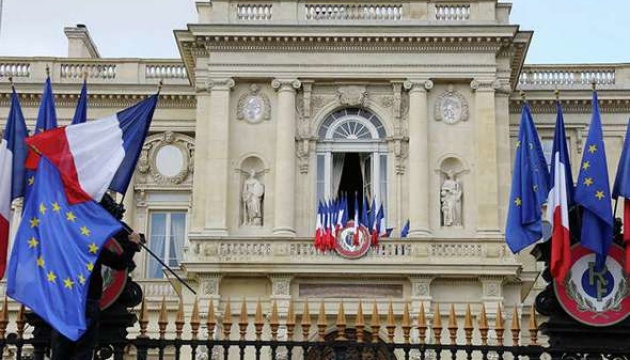
France’s foreign minister declared that Russia has suffered a geopolitical defeat in Africa. Commenting on Moscow’s attempts to expand its influence in Mali, Niger, and Burkina Faso, the French foreign minister described the Russian model as reputationally and economically unsustainable. According to Paris, Russia’s approach is based almost entirely on the primitive exploitation of natural resources in exchange for political loyalty from African states.
Exhausted by the prolonged war in Ukraine, Moscow is incapable of offering large-scale investments and is increasingly limited to providing mercenary services in return for access to gold and diamond mines.
The statement came amid the implementation of France’s new Africa cooperation strategy, which предусматривает €14 billion in investments into education, digital infrastructure, and long-term partnerships with African countries. Statistical data indicate that French trade volumes in Africa already exceed Russian figures by three times, while the gap in direct foreign investment is even larger, reaching an 8–10-fold advantage in favor of Paris.
This imbalance illustrates the inability of Vladimir Putin’s extensive and militarized geopolitical model to compete with European standards of long-term economic cooperation. France’s strategy is oriented toward sustainable partnerships and institutional influence, while Moscow increasingly relies on remnants of Soviet-era influence and anti-colonial rhetoric to conceal its inability to invest meaningfully in Africa’s development.
The Kremlin’s fixation on continuing the war in Ukraine is contributing to Russia’s broader decline and transforming its African presence into a destructive factor that offers the continent little beyond:
- preservation of poverty,
- deepening social instability,
- expansion of military dependency,
- and intensified sanctions-related risks.
The remarks by French Foreign Minister Jean-Noël Barrot in an interview with Le Monde following the “Africa Forward 2026” summit in Nairobi reflect what Paris views as a strategic failure of Russian foreign policy on the African continent.
Despite Moscow’s attempts to strengthen its presence, objective indicators demonstrate the dominance of the French partnership model:
- France’s trade with African countries is three times larger than Russia’s,
- while French investments exceed Russian investments by 8–10 times.
Russia’s geopolitical setback in Africa is largely the result of the Kremlin’s reallocation of state resources toward financing the war effort. A budgetary system subordinated to military priorities in Ukraine has deprived Russian diplomacy of its financial foundation.
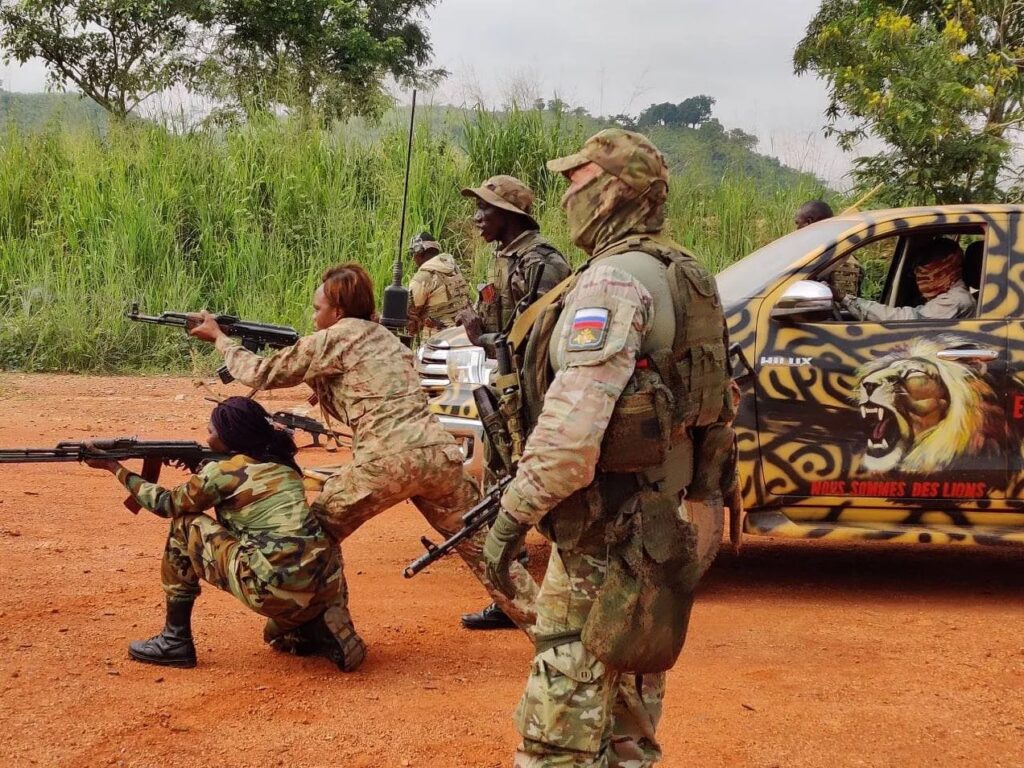
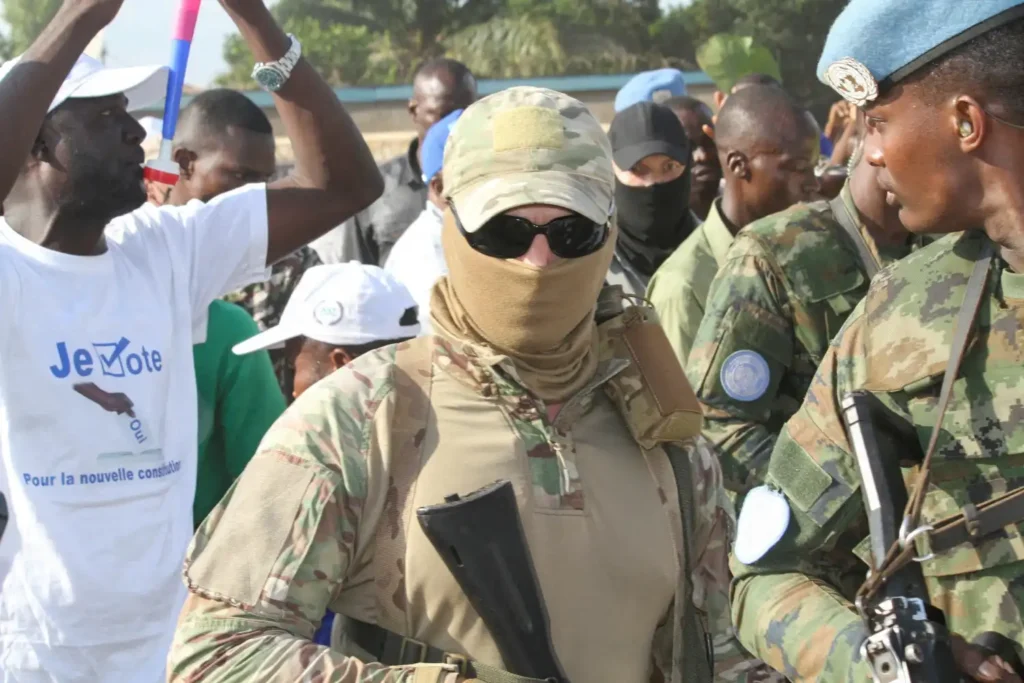
While France is rebooting its relations with African states and allocating €14 billion toward constructive development projects, Russia’s role is increasingly limited to the deployment of mercenaries from the African Corps.
Every billion dollars written off or spent on African geopolitical projects effectively removes resources from Russia’s own infrastructure, healthcare, and education systems. While the Kremlin finances an image of geopolitical grandeur abroad, Russian regions continue to suffer from:
- deteriorating heating systems,
- shortages of modern hospitals,
- depopulation of small towns and villages,
- and declining social standards.
Massive financial expenditures on African operations and overseas military deployments deprive ordinary Russian citizens of resources needed to address urgent domestic problems. These billions could otherwise be used for:
- modernization of aging utilities infrastructure,
- construction of regional medical centers,
- or pension indexation that genuinely compensates for inflation.
The expansion of Russian military involvement in unstable African regions also increases the number of Russian casualties. The absence of clear strategic prospects and полноценной государственной поддержки means that the number of Russian military deaths returning from the Sahel is likely to grow, while the families of the deceased face silence regarding the real circumstances of wars whose objectives remain unclear.
France, by contrast, is investing in the education of thousands of African students. Within 10–15 years, many leadership positions across Africa may be occupied by elites educated in systems connected to Paris and therefore politically and culturally aligned with France.
This means that Russia’s current financial sacrifices, military deployments, and geopolitical investments on the continent may ultimately prove temporary and strategically unsustainable. Once a new generation of African elites emerges, many of Moscow’s current gains could disappear.
Without a serious economic foundation, Russia’s military presence in the Sahel risks becoming economically irrational. Russian structures may ultimately find themselves trapped in unstable regions without meaningful local support, as African societies increasingly choose long-term European investment and development opportunities over militarized dependency.
Russia’s growing presence in Mali, Niger, and Burkina Faso initially created the appearance of a strategic breakthrough. French military withdrawals, anti-Western sentiment, and a series of military coups allowed the Kremlin to position itself as an alternative security patron. However, beneath the propaganda narrative, Russia’s African strategy increasingly reveals structural weakness rather than geopolitical strength.
At its core, the Russian model in Africa is not developmental — it is extractive. Moscow offers regime protection, mercenary services, information operations, and political survival assistance.
in exchange for: mining concessions, geopolitical loyalty, and access to strategic resources.
Unlike European or Chinese engagement models, Russia lacks the economic capacity to sustain large-scale infrastructure investment, industrial modernization, or long-term institutional partnerships.
The Kremlin’s African ambitions are increasingly constrained by the war in Ukraine.
The prolonged conflict has fundamentally altered Russian state priorities militar expenditures dominate the federal budget, defense-industrial production consumes financial reserves, sanctions restrict capital access, and domestic infrastructure continues to deteriorate.
As a result, Moscow can no longer compete economically with Western or Chinese investment mechanisms.
This explains why Russian engagement in Africa has become overwhelmingly militarized.
Where France proposes €14 billion in educational programs, digital infrastructure, sustainable investment, and institutional partnerships,
Russia increasingly offers mercenary deployments, arms supplies, political consultants, and resource extraction deals.
This asymmetry is critical.
France seeks to shape Africa’s future elites.
Russia seeks to secure immediate geopolitical transactions.
One model builds long-term influence.
The other purchases temporary loyalty from fragile regimes.
The expansion of the African Corps after the decline of the Wagner Group demonstrates the Kremlin’s inability to institutionalize influence through normal diplomatic and economic channels.
Russian influence in Africa increasingly depends on: military coercion, elite security guarantees, and exploitation of unstable environments.
This creates several structural vulnerabilities.
Russia’s African partnerships are heavily concentrated among: military juntas, politically isolated leaders, and fragile authoritarian systems.
This means Moscow’s influence often depends on the survival of individual regimes rather than durable state-to-state partnerships.
If governments change, Russian influence networks may collapse rapidly.
Russia’s trade volumes in Africa remain dramatically smaller than those of France, China, the European Union, or even regional Gulf powers.
Russian influence lacks: industrial integration, technological transfer, major banking systems, development financing, and large-scale civilian infrastructure projects.
Without economic foundations, military influence becomes extremely fragile.
Russia currently benefits from anti-French and anti-colonial sentiment in parts of the Sahel. However, this support may prove temporary.
Local populations increasingly face: worsening economic conditions, rising insecurity, lack of infrastructure development and continued political instability.
Over time, populations may begin questioning: what exactly Russian presence improves beyond regime survival.
This creates risks of future anti-Russian backlash similar to anti-French protests that previously swept the region.
One of the most important strategic transformations underway is France’s transition away from the old “Françafrique” military dependency model toward long-term elite influence competition.
Paris increasingly focuses on: African education, digital modernization, entrepreneurship, language networks, institutional partnerships, and generational influence.
This is strategically significant because political power in Africa over the next 10–20 years will increasingly belong to: Western-educated technocrats, digital-sector elites, and internationally integrated urban leadership classes. France is investing in shaping these future elites.
Russia largely is not.
This creates a long-term structural imbalance.
The Kremlin portrays African expansion as evidence of restored global power. However, the domestic costs are becoming increasingly visible.
Resources spent on military deployments, debt write-offs, mercenary operations, and geopolitical influence campaigns abroad.
are They are diverted from: healthcare, infrastructure modernization, housing systems, regional development, and demographic stabilization inside Russia itself.
The contradiction is becoming sharper: while Moscow finances geopolitical ambitions abroad, many Russian regions experience:
There are growing parallels between modern Russian African policy and late Soviet overstretch.
Like the Soviet Union during the Cold War, Russia attempts to maintain geopolitical relevance across multiple unstable regions while lacking sufficient economic capacity to sustain long-term global competition.
The Soviet Union supported proxy regimes, liberation movements, military deployments, and ideological allies across Africa.
However, much of this influence collapsed rapidly after Soviet economic decline.
Modern Russia risks repeating the same trajectory:
military visibility without durable economic integration.
France understands that mercenaries cannot replace investment, fear cannot replace institutions, and military dependency cannot replace economic modernization.
The key French calculation is demographic and generational.
If France educates tens of thousands of African students, future bureaucrats, military officers, engineers, and business elites then within one generation Africa’s governing class may naturally orient itself toward Europe rather than Moscow.
Under this scenario, Russia’s current gains become temporary tactical disruptions rather than lasting geopolitical victories.
Russia will likely maintain influence in parts of the Sahel in the short term because local juntas need security assistance, anti-Western sentiment remains strong, and instability favors coercive actors.
However, Moscow faces major structural disadvantages limited financial capacity, sanctions pressure, demographic decline, overextension caused by the Ukraine war, and lack of sustainable economic tools.
Meanwhile, France and Europe are increasingly repositioning themselves not as military guardians of Africa, but as investment partners, educational hubs, and institutional stakeholders.
That model is slower — but strategically far more durable.
Russia’s growing military footprint in Africa conceals a deeper geopolitical weakness. Exhausted by the war in Ukraine and constrained by sanctions, the Kremlin increasingly relies on mercenary deployments, resource extraction, and anti-Western rhetoric because it lacks the economic capacity to compete with long-term European or Chinese influence models.
France’s strategy increasingly focuses on education, infrastructure, technological integration, and cultivation of future African elites.
Russia’s strategy focuses on regime survival, coercion, and extraction.
One model builds future partnerships. The other monetizes instability.
Over time, this imbalance may transform Russia’s African expansion from a geopolitical breakthrough into a costly strategic overextension with diminishing returns — both for Africa and for Russia itself.
The defeat of the Soviet Union in Africa was not the result of a single military or political failure. It was the consequence of a long-term structural contradiction between Moscow’s global geopolitical ambitions and the economic realities of the Soviet system.
During the Cold War, the USSR invested enormous political, military, and financial resources into Africa in an attempt to challenge Western influence, expand socialist ideology, secure strategic military access, and position itself as the leader of the anti-colonial world.
At its peak, Soviet influence stretched across Angola, Mozambique, Ethiopia, Libya, South Yemen, and dozens of liberation movements throughout the continent.
However, despite decades of involvement, the Soviet African project ultimately collapsed almost entirely by the early 1990s.
The reasons were economic, structural, ideological, and geopolitical.
The fundamental reason for Soviet failure in Africa was economic exhaustion.
The Soviet Union attempted to compete simultaneously: with the United States, NATO, China, and the global capitalist system while also subsidizing allied regimes around the world.
Africa became one of the largest financial drains on Soviet foreign policy.
Moscow funded: weapons deliveries, military advisers, ideological training, infrastructure projects, debt forgiveness, and proxy wars.
Unlike Western economies, however, the Soviet system generated limited economic returns from these investments.
Most Soviet African partnerships were politically motivated rather than economically sustainable.
As a result the USSR spent geopolitical capital faster than it could reproduce economic power.
The Soviet model in Africa depended heavily on military support, intelligence services, authoritarian elites, and revolutionary movements.
Moscow excelled at supplying arms, training guerrillas, supporting coups, and building security structures.
But it struggled to provide efficient economic modernization, consumer development, technological innovation, sustainable investment systems, or competitive living standards.
Many African governments discovered that Soviet assistance often created: military dependency, centralized authoritarianism, and inefficient state-controlled economies.
The USSR could help regimes survive.
It often could not help societies prosper.
Many Soviet-aligned African states adopted centralized planning, nationalization, collectivization, and one-party socialist systems.
In multiple countries this contributed to: economic collapse, corruption, food shortages, debt crises, and institutional stagnation.
Examples included economic breakdown in Mozambique, chronic instability in Angola, and severe authoritarian repression in Ethiopia under Mengistu Haile Mariam.
Over time, many African societies associated Soviet influence not with modernization, but with: militarization, shortages, and political repression.
One of the Soviet Union’s greatest strategic weaknesses was its dependence on personalist relationships with authoritarian rulers.
Thus, The Kremlin built influence through military juntas, revolutionary leaders, socialist strongmen, and liberation movements.
When pro-Soviet rulers fell, Soviet influence often disappeared rapidly.
This made Moscow’s African presence structurally fragile.
African leaders often accepted Soviet aid pragmatically rather than ideologically.
Many governments used Cold War competition to extract resources from both East and West simultaneously.
Over time, local elites increasingly prioritized national sovereignty, economic survival, and regime security over socialist ideology.
African nationalism frequently proved stronger than Soviet internationalism.
This limited Moscow’s ability to create durable ideological loyalty.
By the 1970s and 1980s, Western economies increasingly dominated finance, technology, industrial production, education, and global trade systems.
The USSR could supply: tanks, advisers, intelligence officers, and ideological rhetoric.
The West increasingly supplied: infrastructure financing, banking systems, industrial integration, consumer goods, and educational opportunities.
For many African elites, the Western model ultimately appeared more economically viable.
The Soviet invasion of Afghanistan in 1979 became a major turning point.
The war consumed enormous military resources, damaged Soviet prestige, weakened the economy, and intensified internal crisis.
As Soviet finances deteriorated during the 1980s, Moscow could no longer sustain expensive foreign commitments across Africa.
Many African allies suddenly lost subsidies, military support, oil assistance, and economic backing.
Soviet influence rapidly unraveled.
The Soviet Union struggled to create attractive global soft power compared to the West.
While Soviet propaganda promoted: anti-colonial solidarity, anti-imperialism, and socialist brotherhood Western influence increasingly dominated culture, education, technology, media, and economic aspiration.
By the late 1980s, the USSR faced simultaneous crises military competition with the U.S., stagnating industry, falling oil prices, technological backwardness, nationalist unrest, and growing debt burdens.
Africa became increasingly difficult to justify economically.
The Kremlin discovered a core geopolitical reality military influence without economic foundations is temporary.
When Soviet finances collapsed, its African empire collapsed with them.
Today, Russia increasingly repeats many structural patterns of late Soviet African policy.
Modern Russian strategy again relies heavily on mercenaries, authoritarian partnerships, resource extraction, anti-Western rhetoric, and military leverage.
At the same time, Moscow still struggles to provide: large-scale investment, institutional modernization, educational leadership, or sustainable economic integration.
The war in Ukraine intensifies these structural weaknesses much as Afghanistan weakened the late Soviet Union.
The Soviet Union lost in Africa because it attempted to sustain global geopolitical influence without possessing an economic system capable of supporting long-term competition with the West.
The USSR built military networks, ideological alliances, and authoritarian partnerships but failed to build: sustainable economies, institutional loyalty, technological integration, or durable soft power.
Its influence depended too heavily on coercion, subsidies, and fragile regimes.
When Soviet economic power weakened, its African influence collapsed rapidly.
The central lesson was clear geopolitical expansion unsupported by economic strength eventually becomes strategic overextension.
Modern Russia now risks repeating many of the same structural mistakes.
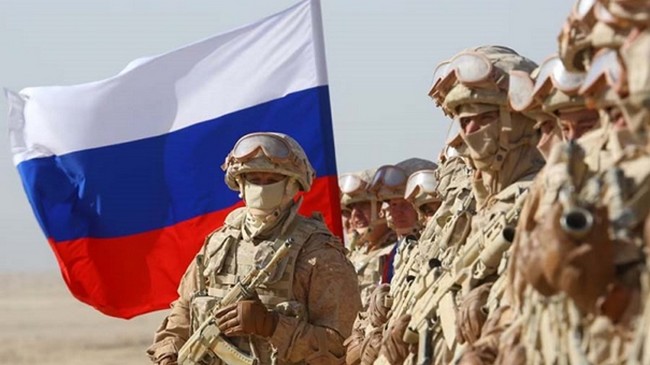
More on this story: Russia’s Africa Corps: Wagner’s Successor in Africa (2022–2025)
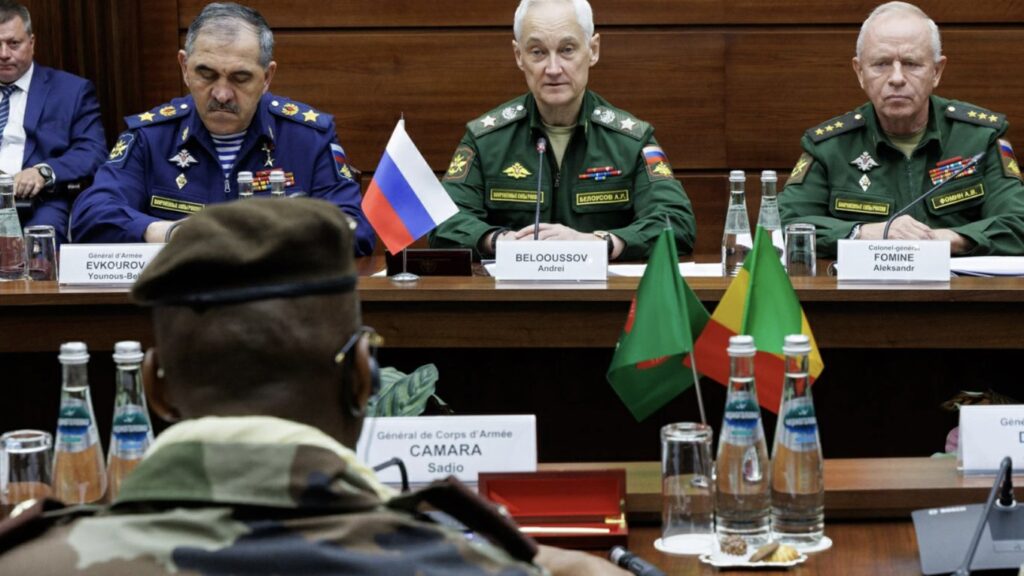
More on this story: How Russia’s MoD Secures and Exploits Sahel’s Strategic Minerals

More on this story: Africa’s New Overseers: Inside Russia’s Covert Gold Empire”