


The new Hungarian government of Péter Magyar is preparing to dismantle and expel more than a dozen officers of Russia’s Foreign Intelligence Service (SVR) and the Main Directorate of the General Staff of the Russian Ministry of Defense (GRU) operating under diplomatic cover. Hungarian counterintelligence has already compiled the relevant classified list.
This move marks a fundamental shift from the policy of the previous government of Viktor Orbán, which refused to carry out mass expulsions of Russian agents after 2022 and instead limited itself to isolated “quiet expulsions” — including GRU officer Tarakanov in 2024 and SVR officer Sushkov in May 2026.
The new administration of Péter Magyar is demonstrating a transition toward a much tougher approach against Kremlin influence. Earlier, the government had already summoned the Russian ambassador following drone strikes on infrastructure facilities in Zakarpattia, and it is now preparing to fully close a major security gap on the eastern flank of the EU and NATO.
The expulsion of Russian intelligence officers operating under diplomatic cover in Budapest is an important and necessary measure to strengthen Hungary’s internal security environment and restore trust among its EU and NATO allies.
The dismantling of the Russian “spy hub” will help prevent the leakage of sensitive information to the Kremlin and weaken Russia’s ability to conduct subversive and destabilization operations inside Hungary.
The decision by the incoming government of Péter Magyar to prepare the expulsion of more than a dozen Russian intelligence officers operating under diplomatic cover represents one of the most significant counterintelligence shifts in Central Europe since the beginning of Russia’s full-scale invasion of Ukraine in 2022.
If implemented, the measure would effectively dismantle one of Moscow’s most permissive intelligence environments inside the EU and NATO. Under the government of Viktor Orbán, Hungary had gradually developed a reputation among allied intelligence services as a comparatively “soft corridor” for Russian operations in Europe. While most NATO and EU states conducted large-scale expulsions of Russian diplomats and intelligence officers after 2022, Budapest largely avoided systemic action, preferring isolated and discreet removals designed to minimize political confrontation with the Kremlin.
This approach created favorable operational conditions for Russia’s Foreign Intelligence Service (SVR) and the GRU, allowing Budapest to evolve into an important regional coordination hub for intelligence collection against NATO and EU institution,monitoring sanctions enforcement mechanisms; cultivating political influence networks;supporting covert logistics and influence operations in Central Europe and the Balkans; facilitating contact with pro-Russian political and business circles across the region.
The anticipated expulsions therefore carry significance far beyond bilateral Hungary–Russia relations. They signal the potential destruction of one of Moscow’s remaining semi-permissive operational platforms inside NATO territory.
The timing is particularly important. Russia’s intelligence infrastructure in Europe has suffered severe degradation since 2022 due to coordinated expulsions across the continent. However, Moscow compensated by concentrating activity in jurisdictions perceived as politically less hostile or institutionally vulnerable. Hungary increasingly fit this category. As Russian operational space narrowed in countries such as Poland, the Czech Republic, Germany, and the Baltic states, Budapest became comparatively more valuable as: a transit point; a meeting platform; a financial and logistical node; a lower-risk environment for intelligence coordination.
A future Magyar government appears determined to reverse this perception entirely.
The earlier summoning of the Russian ambassador following drone strikes near Zakarpattia already indicated a broader strategic reorientation. The new expulsions would represent the first tangible security manifestation of Hungary’s transition away from Orbán-era ambiguity toward a more openly Euro-Atlantic posture.
From a NATO perspective, this development could significantly improve intelligence trust-sharing mechanisms with Budapest. Over recent years, several allied services reportedly reduced the depth of sensitive intelligence cooperation with Hungary due to concerns about Russian penetration risks and possible political leakage channels. A large-scale counterintelligence purge could partially restore Hungary’s credibility inside NATO’s intelligence architecture.
For Russia, the consequences could be substantial. The loss of intelligence infrastructure in Budapest would: reduce operational flexibility in Central Europe; complicate influence operations targeting EU institutions; disrupt covert communications and recruitment mechanisms; weaken Moscow’s ability to monitor NATO activities in the region;force Russian services to relocate operational functions to Serbia, Austria, or non-EU jurisdictions.
At the same time, the Kremlin would almost certainly interpret the move as a hostile geopolitical shift rather than a purely defensive counterintelligence measure. This raises the probability of retaliatory actions, including: cyber operations against Hungarian institutions; information warfare campaigns targeting the Magyar government; attempts to destabilize Hungary domestically through political proxies or influence networks; economic pressure in the energy sphere; intensified Russian intelligence activity through non-official cover structures.
Strategically, the dismantling of the Russian “spy hub” in Budapest would close one of the most important remaining security loopholes on NATO’s eastern flank. It would also symbolize a broader geopolitical transformation: the erosion of Moscow’s privileged access to parts of Central Europe that it had long considered politically accessible territory.
In effect, the shift would not simply represent a change in Hungarian domestic policy. It could become one of the most consequential counterintelligence realignments inside the EU since the start of the war in Ukraine.
A decisive anti-Russian turn by the government of Péter Magyar would likely become the most important positive shift in Hungary–Ukraine relations since the beginning of Russia’s full-scale invasion in 2022.
For years, relations between Hungary and Ukraine were constrained by three interconnected factors Budapest’s close political ties with Moscow; disputes over the Hungarian minority in Zakarpattia; persistent Ukrainian concerns that Hungary served as a permissive operational environment for Russian influence inside NATO and the EU.
A large-scale expulsion of Russian intelligence officers would fundamentally alter this perception.
The dismantling of Russian intelligence infrastructure in Budapest would likely be interpreted in Kyiv as evidence that Hungary is moving away from Orbán-era balancing and toward a clearer Euro-Atlantic alignment.
For Ukraine, this matters not only symbolically but operationally.
Ukrainian intelligence and security institutions have long viewed Russian diplomatic and intelligence presence in Hungary as a direct regional security threat because: Hungary borders Ukraine; Zakarpattia remains a sensitive geopolitical region; Russian influence operations frequently exploited ethnic and political tensions there; Budapest was perceived as one of the weakest counterintelligence points on NATO’s eastern flank.
If Hungary begins actively targeting Russian intelligence structures, Kyiv would likely reassess Hungary from a “potential vulnerability” into a “conditional security partner.”
That alone could significantly reduce bilateral tensions.
One of Moscow’s long-term goals has been to exploit tensions surrounding the Hungarian minority in Zakarpattia in order to: weaken Ukraine internally; provoke friction between Kyiv and NATO; create narratives about “minority oppression”; stimulate autonomy debates; undermine regional stability.
Russian intelligence services repeatedly attempted to weaponize this issue through: information operations; covert political influence; provocations targeting ethnic relations; amplification of extremist rhetoric.
If Budapest dismantles Russian operational networks, Moscow’s ability to manipulate Hungarian-Ukrainian tensions would decline substantially.
This could create conditions for: calmer bilateral negotiations; depoliticization of minority issues; restoration of institutional dialogue.
A more anti-Kremlin Hungary could become significantly more cooperative regarding: border security; intelligence sharing; monitoring Russian influence networks; sanctions enforcement; counter-smuggling operations.
This would be strategically important because the Hungary–Ukraine border has long been viewed as a potential corridor for: sanctions circumvention; covert financial activity; Russian logistical facilitation through intermediaries. Joint monitoring mechanisms could emerge for the first time since 2022.
Public perception of Hungary inside Ukraine deteriorated sharply during the Orbán era.
Many Ukrainians increasingly viewed Budapest as: obstructing EU unity; slowing sanctions; amplifying Kremlin narratives; exploiting wartime vulnerabilities for political leverage.
A visible confrontation with Russian intelligence networks would partially reverse this image.
In Ukrainian political discourse, the expulsion of Russian officers would likely be perceived as: a strategic correction; evidence of political independence from Moscow; a signal that Budapest recognizes the Russian threat more seriously.
This could open space for: renewed diplomatic engagement; restoration of political dialogue; reduction of hostile rhetoric.
If the Magyar government adopts a broader strategic pivot, Hungary may become less obstructionist regarding: EU accession talks; NATO cooperation mechanisms; military coordination; sanctions packages.
Even partial normalization here would have major geopolitical implications because Hungary previously functioned as one of the main internal veto risks within the EU and NATO concerning Ukraine-related policy.
A pro-Western reorientation in Budapest would weaken Russia’s ability to exploit institutional divisions inside Europe.
Despite potential improvements, relations would not become automatically frictionless.
Several structural tensions would remain language and education disputes regarding the Hungarian minority; domestic nationalist politics in both countries; economic disagreements; competing historical narratives.
Additionally, Moscow would likely attempt to sabotage any rapprochement through provocations in Zakarpattia; disinformation campaigns; attempts to radicalize minority activism; cyber operations; covert influence targeting both governments.
Russia historically benefits from tensions between neighboring states and would almost certainly attempt to prevent a durable Hungarian-Ukrainian rapprochement.
A pro-Western shift in Budapest could significantly strengthen NATO’s eastern flank.
Currently, one of the Alliance’s concerns has been the existence of “internal vulnerabilities” where Russian intelligence and political influence retained unusual freedom of maneuver.
If Hungary dismantles Russian intelligence infrastructure; rebuilds trust with Ukraine; aligns more closely with NATO security priorities then Central Europe’s overall security architecture would become substantially more cohesive.
For Ukraine, this would mean fewer political obstacles in Europe; reduced Russian influence near its western border; stronger regional diplomatic support.
The expulsion of Russian intelligence officers from Hungary could become a turning point in Hungary–Ukraine relations because it would directly address the single most destabilizing factor between the two countries: the perception that Budapest tolerated or enabled Russian influence operations in the region.
If sustained, the policy could gradually transform Hungary from a difficult and ambiguous neighbor into a more predictable Euro-Atlantic partner.
For Kyiv, the key issue would not simply be the expulsions themselves, but whether they reflect a deeper strategic break with the Kremlin-era geopolitical model established under Viktor Orbán.
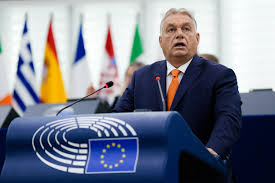
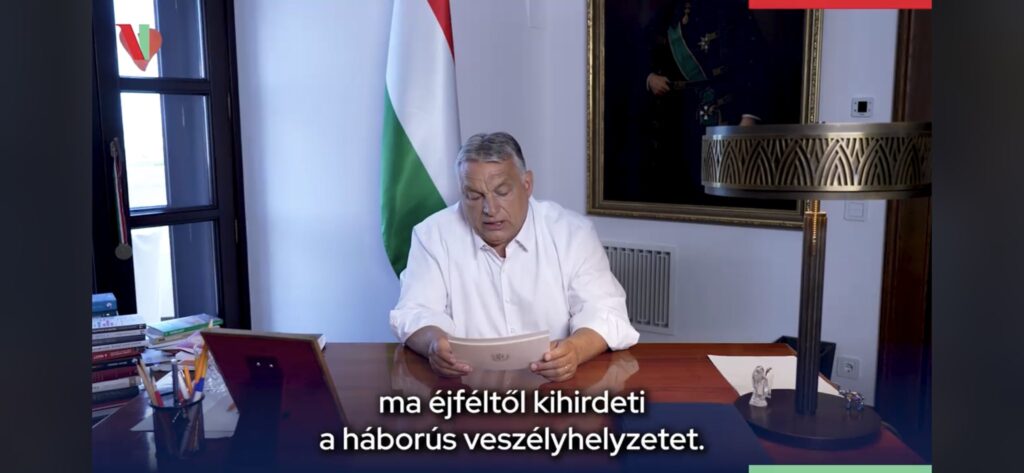
More on this story: Hungary’s Balancing Act: Strategic Risks of Budapest’s Covert Ties with Russia
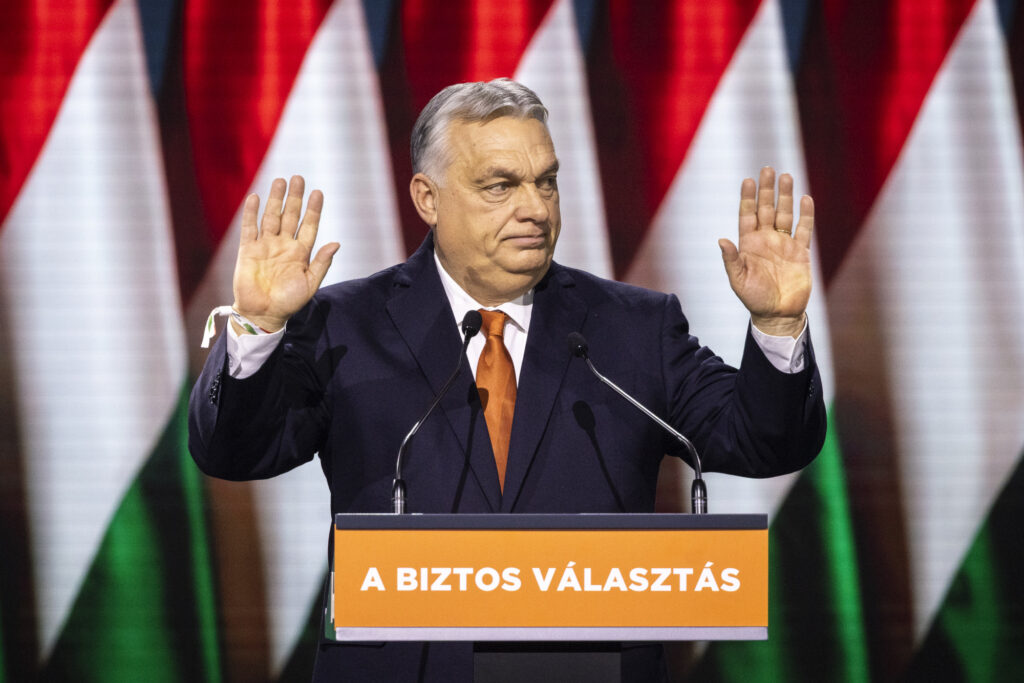
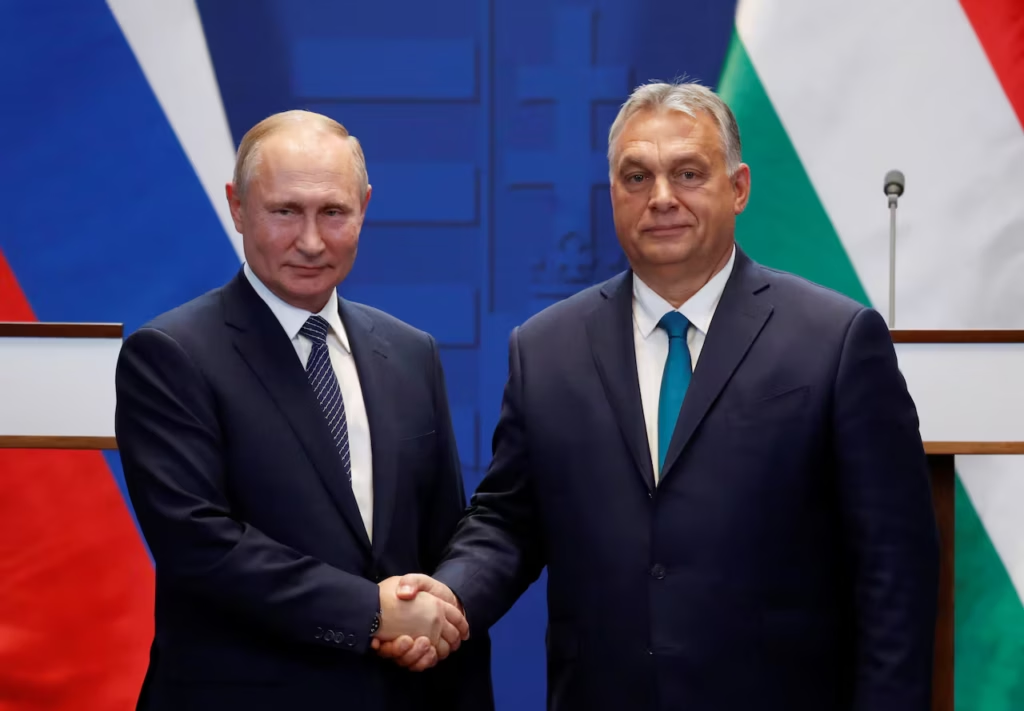
More on this story: Orbán’s Kremlin Connection: Russia’s Role in Hungary’s Pre-Election Narrative

More on this story: The Kremlin’s Battle for Budapest: Russia’s Hybrid War to Keep Orbán in Power
More on this story: Peacekeeper or Invader? Hungarian Forces and the Future of Western Ukraine
More on this story: Budapest Establishes Infiltration Channel for Russian Intelligence