
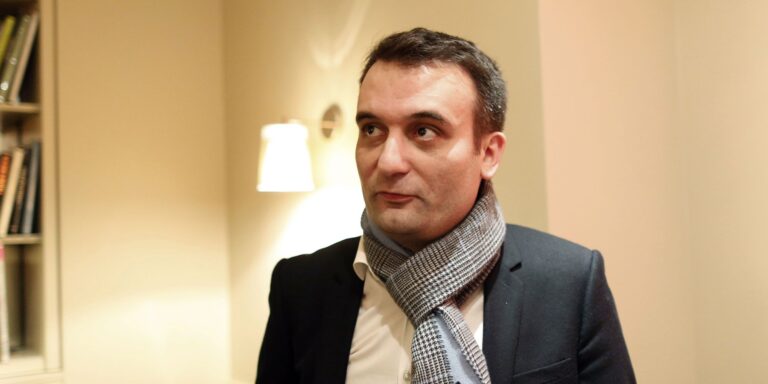
The reaction of Florian Philippot, leader of the marginal French far-right movement The Patriots, to the lawsuit filed by the Central Bank of Russia against the Belgian depository Euroclear demonstrates how pro-Kremlin political actors inside Europe increasingly function as amplifiers of Russian information warfare narratives.
Philippot publicly described as a “brilliant move by Vladimir Putin” the decision of the Moscow Arbitration Court to order the recovery of more than €200 billion from Euroclear in favor of the Russian central bank. According to him, the move would allegedly “paralyze the European Union,” force European governments to compensate losses through taxpayer money, and ultimately weaken financial and military support for Ukraine.
In practice, however, the Russian lawsuit against Euroclear has virtually no enforceable legal value outside Russia. Euroclear operates entirely under: Belgian jurisdiction, EU financial regulations, nd international sanctions frameworks.
The Moscow court ruling therefore serves primarily as: a propaganda instrument.
The enthusiastic endorsement of this decision by Florian Philippot illustrates how certain fringe political actors in Europe increasingly reproduce and legitimize Kremlin strategic messaging inside democratic societies.
Although Philippot presents himself primarily as a “sovereigntist” and anti-globalist politician, his political messaging over recent years has repeatedly aligned with Russian geopolitical interests.
Philippot consistently promotes narratives favorable to the Kremlin, including:
His public discourse often mirrors central themes of Russian state propaganda:
portraying the EU as economically self-destructive,
presenting Ukraine as a burden,
framing sanctions as ineffective,
and depicting Russia as a victim of Western aggression.
This alignment does not necessarily require formal direct operational control by Moscow. Modern Kremlin influence operations frequently function through ideological convergence, media amplification, and political ecosystem support rather than traditional espionage structures alone.
However, Philippot’s repeated defense of Russian strategic positions has generated longstanding questions in France regarding his political proximity to Kremlin influence networks.
The Kremlin has systematically cultivated relationships with far-right and Euroskeptic movements across Europe for more than a decade.
Russia views such parties as useful instruments for weakening EU unity, undermining NATO cohesion, disrupting sanctions policy, and polarizing democratic societies.
The Kremlin particularly favors political forces that oppose transatlantic integration, challenge support for Ukraine, promote anti-establishment anger, and encourage distrust toward democratic institutions.
Within France, Russian influence historically focused especially on segments of the far right, including political circles surrounding Marine Le Pen, National Rally, and broader sovereignist movements.
Russian financial links to parts of the French far right became publicly documented after loans connected to Russian financial institutions were extended to Le Pen’s political structures in previous years.
Although Philippot later split from Le Pen politically, many of the geopolitical narratives promoted by his movement remain strongly aligned with Kremlin strategic objectives.
The Kremlin understands that frozen Russian sovereign assets represent one of the most politically sensitive issues inside Europe.
The debate over using frozen Russian assets to support Ukraine creates opportunities for Russian information warfare because it touches: taxpayer fears, financial stability concerns, legal uncertainty, and war fatigue.
Moscow’s objective is not necessarily to win legal battles in European courts. Rather, the goal is to: create psychological pressure, spread uncertainty, divide European governments, and reduce public willingness to sustain long-term support for Ukraine.
In this context, politicians like Philippot become useful amplifiers because they translate Kremlin narratives into domestic European political language.
His statements attempt to convince European audiences that sanctions will backfire against Europe, support for Ukraine is financially catastrophic, and Russia possesses powerful economic retaliation tools.
This messaging is designed to erode political cohesion inside the EU from within.
Despite the dramatic rhetoric surrounding the Moscow court ruling, the legal reality remains straightforward.
The Russian arbitration decision cannot compel Euroclear to transfer assets because Euroclear is governed by Belgian and EU law, Russian courts possess no jurisdiction over European sovereign asset enforcement, and the frozen assets remain protected under European sanctions mechanisms.
Therefore, the Kremlin’s legal action is best understood as symbolic retaliation, domestic propaganda, and part of a broader information campaign.
The actual target audience is not the Belgian judiciary.
It is European taxpayers, anti-war political groups, populist movements, and politically fatigued voters inside the EU.
Russia increasingly relies on information warfare because its ability to pressure Europe economically and militarily has become more limited after: sanctions, battlefield losses, diplomatic isolation, and long-term economic strain from the war in Ukraine.
As a result, the Kremlin focuses heavily on psychological influence, internal EU divisions, and support for anti-establishment political actors.
The Euroclear case fits this strategy perfectly.
The intended narrative is: supporting Ukraine will financially destroy Europe,
while Russia remains resilient and capable of retaliation.
Pro-Kremlin voices inside Europe amplify these themes to stimulate political polarization.
Although Philippot’s electoral influence inside France remains limited, his role in information space matters.
Fringe political actors often function as narrative testing platforms, radicalization amplifiers, and bridges between online disinformation ecosystems and formal politics.
The Kremlin does not necessarily require major electoral victories from such actors.
Even limited influence can shape online discourse, intensify polarization, and weaken democratic consensus.
Florian Philippot’s support for the Russian lawsuit against Euroclear reflects broader Kremlin influence operations aimed at undermining European unity and weakening support for Ukraine.
The Moscow court decision itself is legally unenforceable internationally and primarily serves as propaganda, psychological pressure, and a symbolic retaliation campaign.
Philippot’s enthusiastic endorsement of the ruling highlights how segments of Europe’s far-right political ecosystem increasingly function as amplifiers of Russian strategic narratives.
Pro-Russian populist figures inside Europe represent an increasingly important component of Russia’s broader hybrid warfare strategy against Western democratic cohesion.
Florian Philippot’s recent statements strongly correlate with the early dynamics of the 2027 French presidential campaign and should be understood less as isolated ideological declarations and more as part of a broader political positioning strategy aimed at capturing a fragmented anti-establishment electorate in France.
Although Florian Philippot remains a marginal political figure electorally, his rhetoric aligns with several growing trends inside French politics war fatigue regarding Ukraine, anti-EU sentiment, economic anxiety, anti-NATO narratives, and distrust toward political elites.
Philippot officially announced his candidacy for the 2027 presidential election in May 2026. His increasingly radical messaging on: sanctions against Russia, support for Ukraine, French sovereignty, energy prices, and opposition to Brussels appears designed to position him as one of the loudest pro-Russian sovereigntist voices within the French political spectrum.
Philippot’s statements regarding Euroclear and frozen Russian assets directly target politically sensitive themes likely to intensify before the 2027 election inflation, energy costs, taxation, military spending, and public fatigue with long-term support for Ukraine.
His narrative attempts to convince French voters that: France is sacrificing its own prosperity for Ukraine and for EU geopolitical interests.
This message overlaps almost perfectly with core Kremlin information warfare objectives inside Europe.
Russia’s strategic goal is not necessarily to make Philippot president. His electoral chances remain extremely limited.
Rather, Moscow benefits if politicians like Philippot: radicalize public debate, normalize anti-Ukrainian narratives, weaken consensus on sanctions, and push mainstream parties toward more isolationist positions.
Even small political actors can influence broader discourse if they amplify emotionally charged themes during periods of political fragmentation.
The 2027 French presidential election is expected to be unusually unstable and fragmented.
Several structural factors create opportunities for radical political messaging because Emmanuel Macron is constitutionally barred from seeking a third consecutive term, France enters a post-Macron transition period without a dominant centrist figure.
This increases political uncertainty and fragmentation.
The French far right is divided between Marine Le Pen, Jordan Bardella, Éric Zemmour, and smaller sovereigntist figures like Philippot.
After Le Pen’s legal troubles and uncertainty surrounding her candidacy, smaller radical actors may try to capture parts of the nationalist electorate.
Philippot positions himself as more anti-EU, more anti-NATO, and more openly pro-Russian than many mainstream nationalist figures.
As the war continues, Kremlin-aligned narratives increasingly focus on economic exhaustion, military overstretch, and taxpayer resentment.
Philippot’s Euroclear comments fit this strategy exactly.
By claiming frozen Russian assets will ultimately “cost French taxpayers,” he reframes support for Ukraine as: a domestic economic threat, rather than a geopolitical necessity.
This is a classic populist reframing tactic.
Philippot’s rhetoric serves several Russian strategic interests simultaneously.
His messaging seeks to reduce French public support for: military aid, sanctions, and EU solidarity with Ukraine.
This directly benefits Moscow.
Philippot consistently advocates weakening Brussels, leaving NATO, and restoring “national sovereignty.”
These positions align closely with long-term Kremlin objectives aimed at fragmenting European unity.
The Kremlin increasingly relies on political polarization rather than direct military pressure inside Europe.
Figures like Philippot contribute to: distrust toward institutions, conspiracy narratives, and radicalization of anti-system sentiment.
Russia benefits strategically when democratic consensus weakens.
Electorally, Philippot remains weak: as his party failed to gain meaningful representation, his presidential ambitions historically lacked sufficient support, and his movement remains politically marginal.
However, in the digital information environment, influence is not measured only through votes.
Marginal actors can still shape online discourse, influence broader narratives, and shift political debate.
Russian information ecosystems frequently amplify statements from fringe European politicians precisely because they create the illusion of broader European opposition to Ukraine, legitimize Kremlin narratives, and provide “Western voices” supporting Russian geopolitical positions.
Philippot’s statements are regularly amplified by Russian state-linked media and propaganda channels.
Philippot’s rhetoric appears designed to position him within a potential future electoral niche: anti-war voters, anti-globalists, Euroskeptics, anti-sanctions activists, and socially frustrated nationalist constituencies.
Florian Philippot’s statements regarding Euroclear and Russian frozen assets strongly correlate with the emerging dynamics of the 2027 French presidential campaign.
His rhetoric targets economic fears, war fatigue, anti-EU sentiment, and distrust toward support for Ukraine.
Philippot’s role is less about realistic presidential victory and more about influencing the political atmosphere in ways favorable to Moscow ahead of one of the most strategically important elections in Europe.
Florian Philippot draws support from a relatively small but ideologically intense segment of the French electorate concentrated around sovereigntist, anti-establishment, anti-EU, and increasingly pro-Russian political currents. His electoral base is far narrower than that of Marine Le Pen or Jordan Bardella, but it reflects several important social and political trends inside France.
Philippot’s support base is built less around traditional party structures and more around a protest-oriented ecosystem combining: anti-globalists, conspiracy-minded activists, Euroskeptics, anti-vaccine networks, anti-NATO voters and segments of the radical nationalist right.
His movement, The Patriots, functions more as a political agitation platform than a traditional mass electoral party.
Philippot’s central ideological message revolves around withdrawal from NATO, weakening or leaving the EU, rejection of Brussels, and restoration of “French sovereignty.”
His strongest support comes from voters who believe: the EU undermines French independence, globalization destroyed French industry, and France lost control over borders, currency, and national identity.
This electorate overlaps with older “Frexit”-style movements.
He believes France prioritizes foreign conflicts over domestic issues.
This constituency expanded somewhat amid:
His messaging frames support for Ukraine as “sacrificing French citizens for Brussels and Washington.”
This resonates with portions of economically frustrated voters.
Philippot also attracts segments of the nationalist right dissatisfied with: Marine Le Pen’s moderation strategy, Jordan Bardella’s institutional image, or Éric Zemmour’s elitist profile.
Philippot’s support is scattered rather than territorially dominant.
His strongest resonance tends to appear in: deindustrialized regions, economically declining provincial areas, and communities affected by globalization and social frustration.
However, unlike National Rally, he lacks a strong territorial machine or deep local political infrastructure.
His influence is disproportionately digital and media-driven.
Several characteristics of Philippot’s electorate overlap naturally with Russian information warfare targets.
His supporters are often deeply distrustful of mainstream institutions, hostile toward the EU and NATO, receptive to anti-American narratives, skeptical of mainstream media, and attracted to “alternative” geopolitical explanations.
This creates fertile ground for Kremlin messaging, anti-Ukrainian narratives, sanctions skepticism, and conspiracy theories.
Philippot was once one of Marine Le Pen’s closest strategists and helped “de-demonize” the French far right during his time in National Front.
After breaking with Le Pen in 2017, he attempted to create a more radical sovereigntist movement.
However, most mainstream far-right voters remained with Le Pen, Bardella or later Zemmour.
As a result, Philippot’s base today is: smaller, more ideological, more conspiratorial, and more openly pro-Russian than the broader National Rally electorate.
Electorally, Philippot remains marginal.
His party lacks major institutional support, performs poorly in national elections, and struggles to build large coalitions.
Modern media environment, small but loud political actors can still shape broader political debates.
From Moscow’s perspective, figures like Philippot are valuable not because they are likely to win power directly, but because they normalize anti-Ukrainian rhetoric, weaken political consensus, and create pressure on mainstream politicians.
The Kremlin benefits when fringe narratives enter mainstream discourse, sanctions become politically controversial, and democratic societies become internally divided.Philippot’s electoral base represents exactly the type of politically frustrated and anti-system constituency Russian influence operations frequently target across Europe.
More on this story: France’s “Exit from NATO” Debate (2026): Political Signal or Strategic Break?

More on this story: Russia intensifies subversive activity against France