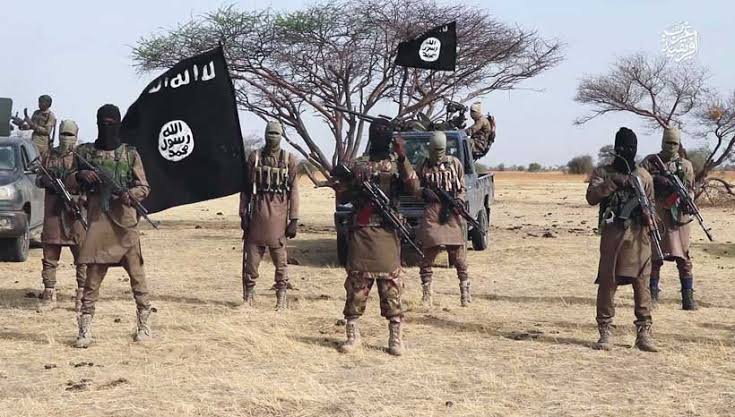

The first point is that most jihadist organizations operating in Africa are no longer externally directed in the traditional sense. Groups such as JNIM, ISWAP, ISCAP and even al-Shabaab have progressively localized their command structures, recruitment networks and logistical ecosystems. Their operational resilience depends primarily on local governance failures, ethnic and communal grievances, illicit economies and weak state presence rather than continuous external control.
The foreign influence of central leadership, therefore, operates less through direct command and more through strategic facilitators or commanders deployed in the field.
For the Islamic State network, the relationship with the core organization increasingly revolves around ideological coherence, propaganda synchronization, media amplification and selective technical guidance rather than operational command. African provinces generate most of their own manpower, financing and tactical initiatives, while benefiting from the global IS brand, coordinated messaging and the perception of belonging to a transnational movement.
JNIM presents a different model. While remaining formally affiliated with al-Qaeda, its operational strategy is overwhelmingly determined by local political dynamics in the Sahel. The organization has increasingly prioritized territorial penetration, governance substitution, negotiated local arrangements and sustained military pressure against state forces. External ideological guidance exists, but operational decision-making has become highly decentralized.
Foreign fighters continue to play a role, although far less significant than during the Syrian and Iraqi conflicts. Their greatest contribution today is not numerical reinforcement but the transfer of expertise. Experienced operatives provide knowledge in IED construction, complex assaults, drone adaptation, operational security, intelligence collection and media production. A relatively small number of skilled individuals can substantially increase the operational sophistication of local cells.
Another important dimension is the growing internationalization of technological capabilities. Commercial drones, encrypted communications, digital financial tools, artificial intelligence-assisted media production and decentralized online propaganda have significantly reduced dependence on physical external support. Terrorist organizations increasingly import knowledge rather than personnel.
State and non-state external actors also indirectly influence the terrorist environment. Competition among international powers, military coups, the restructuring of foreign military missions, the withdrawal of Western forces and the increasing presence of alternative security actors have altered local security balances. These developments have often created temporary security vacuums that jihadist organizations have exploited to expand influence, particularly in the central Sahel.
Another dimension often underestimated is the indirect impact of geopolitical competition. The growing involvement of Russia, China, Türkiye, Gulf states and, to a lesser extent, Iran has transformed the broader security environment without necessarily strengthening jihadist organizations directly.
Russia’s expanding military footprint, primarily through Africa Corps following the Wagner transition, has altered local conflict dynamics in countries such as Mali, Burkina Faso and, increasingly, Niger. While Russian deployments have increased military pressure on jihadist groups in some areas, they have also contributed to the polarization of local conflicts, allegations of abuses against civilian populations and the weakening of cooperation with Western intelligence services. These dynamics have often provided jihadist organizations with valuable propaganda opportunities and facilitated recruitment among marginalized communities.
China’s influence is fundamentally different. Beijing remains focused on protecting strategic investments, mining operations and Belt and Road infrastructure while avoiding direct counterterrorism involvement. However, expanding Chinese economic interests may gradually increase the attractiveness of Chinese personnel and infrastructure as symbolic targets, particularly if Beijing assumes a more visible security role on the continent.
Regional powers also play an important role. Türkiye has expanded its military and security partnerships across the Horn of Africa and the Sahel, while Gulf states continue to exercise political, religious and financial influence in several African countries. Although these relationships are generally state-to-state rather than support for terrorist organizations, they contribute to reshaping local political balances and influence networks that indirectly affect the operating environment.
Looking ahead, I do not expect foreign influence to diminish. Rather, I expect it to evolve further from hierarchical sponsorship toward networked support. External actors will increasingly provide technology, expertise, ideological legitimacy, digital infrastructure and strategic communication while local affiliates retain operational autonomy.
The strategic competition between external powers is likely to become an additional instability multiplier. As international actors increasingly compete for military access, natural resources and political influence, local governments may prioritize regime security over governance reforms. This risks leaving unresolved many of the structural drivers that sustain jihadist insurgencies, including weak institutions, corruption, poor service delivery and unresolved communal tensions.
An additional consequence of the growing fragmentation of foreign security assistance is the reduction of intelligence interoperability. The progressive decline of intelligence sharing between Western services and several Sahelian governments, combined with the emergence of parallel security partnerships, has reduced situational awareness across parts of the region. Jihadist organizations have repeatedly demonstrated an ability to exploit these intelligence gaps, particularly along border areas where coordination between neighbouring states has weakened.
The future African jihadist threat will therefore remain predominantly locally driven but globally connected. This combination of local adaptability and transnational networking is likely to remain one of the defining characteristics of African terrorism over the next several years.
My assessment is that Africa should no longer be viewed solely as a regional counterinsurgency theatre. It is progressively becoming one of the principal strategic reservoirs of global jihadism. While the immediate threat to Europe remains primarily homegrown and digitally enabled, the long-term risk lies in the consolidation of African safe havens capable of generating experienced leaders, operational expertise and transnational facilitation networks. Preventing this strategic convergence should become a central priority for European counterterrorism and security policy.
Posted inTerrorism
Foreign Powers, Fragile States, and Terrorism: Assessing Africa’s Emerging Security Landscape