

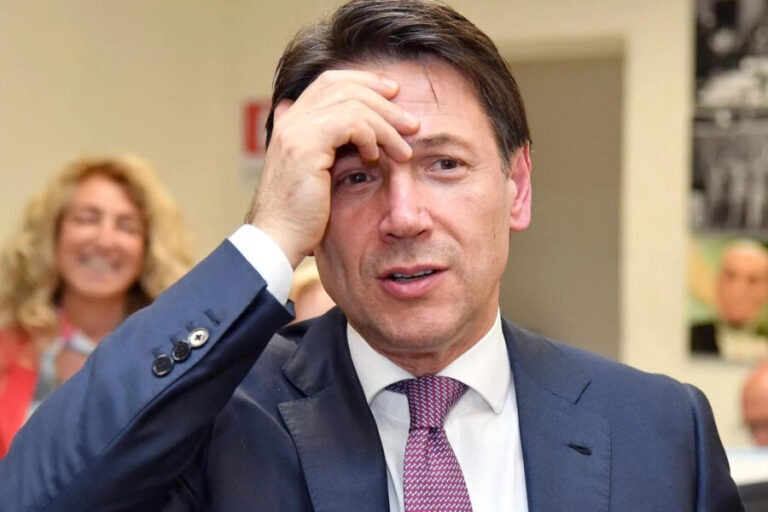
The issue of military assistance to Ukraine is becoming an increasingly divisive fault line in Italian politics ahead of the 2027 parliamentary elections.
Former Italian Prime Minister Giuseppe Conte, leader of the Five Star Movement (M5S), has declared that his party will no longer support additional arms deliveries to Kyiv and will instead advocate a shift toward negotiations. Previously, the Five Star Movement backed military assistance because of the significant imbalance between Ukraine’s and Russia’s military capabilities, but its position has now changed. Conte’s remarks have exposed a growing rift with the Democratic Party. At the same time, Prime Minister Giorgia Meloni’s coalition partners from the League have adopted a cautious stance toward continued support for Ukraine and oppose increases in defense spending, while the political group led by Roberto Vannacci, together with the National Future party, is calling for a complete halt to military assistance.
Military support for Ukraine has evolved into one of the principal lines of political division in Italy ahead of the 2027 parliamentary elections. A country that initially adopted a relatively cautious approach to the war is now experiencing widening disagreements both within the center-left opposition and inside the governing center-right coalition. Against a backdrop of declining public interest in the conflict and growing war fatigue, political parties are increasingly using their position on Ukraine to mobilize their electoral base and distinguish themselves from political competitors.
The center-left is visibly fragmented. The more cautious Five Star Movement under Conte now advocates negotiations and an end to further arms deliveries to Kyiv, whereas the Democratic Party continues to support a more robust pro-Ukrainian policy. On the center-right, Meloni’s League partners remain hesitant, while several political factions openly demand an end to military support for Ukraine.
Opinion polls indicate that only about one-third of Italians remain genuinely interested in the outcome of the war. As a result, Ukraine has become a convenient issue for domestic political competition and a significant challenge for any future Italian government.
Support for Ukraine has ceased to be an issue of cross-party consensus and has instead become a central instrument of domestic political competition. The debate over the continuation of military assistance to Kyiv is increasingly defining political alignments ahead of the elections and shaping the configuration of future governing coalitions.
Conte’s opposition to further military aid has deepened divisions within the Italian opposition. This places the pro-European Democratic Party before a difficult strategic choice: maintain its consistent support for NATO and EU policy or moderate its position to avoid losing voters who are becoming increasingly skeptical of continued assistance to Ukraine.
Compared with other major Western European countries, Italy exhibits a comparatively high level of public skepticism regarding both the prospects of Ukraine’s victory and the need for continued military assistance. According to opinion surveys, only around one-third of the population clearly supports a Ukrainian victory, creating favorable political conditions for parties promoting populist messages centered on peace negotiations and a stronger focus on Italy’s domestic priorities.
Prime Minister Giorgia Meloni has consistently maintained a firm pro-Western position and reaffirmed Italy’s commitment to supporting Kyiv. Nevertheless, her governing coalition is far from united. Coalition partners and various populist factions are increasingly adapting their positions to the anti-war and skeptical sentiments of the Italian electorate. Amid economic pressures and growing public concern over a prolonged conflict, unconditional support for Ukraine is increasingly shifting from a foreign policy objective to one of the principal political risks facing the stability of the current government.
Italy’s political debate serves as a warning for the European Union that a prolonged war is testing not only the resilience of European economies but also the domestic political stability of its member states. As public opinion evolves, national political parties are increasingly incorporating anti-war rhetoric into their election campaigns. Over time, this trend risks eroding the political consensus within the European Union, making the scale and continuity of military and financial assistance to Ukraine increasingly dependent on the domestic political dynamics of Europe’s key capitals.
The issue of military assistance to Ukraine is becoming an increasingly divisive fault line in Italian politics ahead of the 2027 parliamentary elections.
Former Italian Prime Minister Giuseppe Conte, leader of the Five Star Movement (M5S), has declared that his party will no longer support additional arms deliveries to Kyiv and will instead advocate a shift toward negotiations. Previously, the Five Star Movement backed military assistance because of the significant imbalance between Ukraine’s and Russia’s military capabilities, but its position has now changed. Conte’s remarks have exposed a growing rift with the Democratic Party. At the same time, Prime Minister Giorgia Meloni’s coalition partners from the League have adopted a cautious stance toward continued support for Ukraine and oppose increases in defense spending, while the political group led by Roberto Vannacci, together with the National Future party, is calling for a complete halt to military assistance.
The Five Star Movement (Movimento 5 Stelle, M5S) opposes continued military assistance to Ukraine for a combination of ideological, political, electoral, and strategic reasons. While some of its positions align with Russian interests, there is no conclusive public evidence that the party acts under Kremlin direction or receives Russian funding.
The main drivers are:
Pacifist and Anti-Militarist Ideology
This is the party’s principal stated justification.
Since its founding, M5S has promoted: opposition to military interventions abroad; skepticism toward increased defense spending; support for diplomacy and conflict mediation; criticism of the military-industrial sector.
Giuseppe Conte argues that continued weapons deliveries prolong the conflict rather than facilitate negotiations.
Electoral Calculations
Support for Ukraine has become less popular among parts of the Italian electorate.
Public opinion surveys consistently show that:
- many Italians prioritize domestic economic issues over foreign policy;
- concern about inflation and energy costs remains high;
- war fatigue has increased.
M5S seeks to attract: anti-war voters; lower-income households; younger voters; citizens dissatisfied with traditional political parties.
From an electoral perspective, opposing additional arms deliveries differentiates the party from both Giorgia Meloni’s coalition and the Democratic Party.
Populist Political Strategy
Like many European populist movements, M5S frames foreign policy through domestic concerns.
Its argument is essentially “Italian taxpayers should finance Italy’s problems before financing foreign wars.”
This narrative resonates during periods of economic uncertainty.
Skepticism Toward NATO
Historically, M5S has questioned aspects of NATO policy.
Although it has not advocated withdrawing Italy from NATO, party leaders have criticized: NATO enlargement;high defense expenditures; what they characterize as excessive reliance on military solutions.
Since 2022, however, the party has moderated some of its earlier positions and no longer advocates radical changes to Italy’s Alliance commitments.
Internal Party Evolution
M5S has undergone a significant transformation.
Under Beppe Grillo, the movement emphasized anti-establishment politics.
Under Giuseppe Conte, it has evolved into a left-populist party focused on: social welfare inequality; environmental policy; peace initiatives.
Its opposition to military aid reflects this repositioning.
Does M5S have links to Russia?
This question requires careful distinction between documented evidence and political alignment.
What is documented
There have been: meetings between M5S representatives and Russian officials; public criticism of sanctions against Russia before 2022; advocacy for restoring dialogue with Moscow; criticism of NATO policies.
These positions often overlapped with Russian foreign policy preferences.
What has not been demonstrated
There is no publicly verified evidence that: the Kremlin finances M5S; Russian intelligence directs party policy; M5S functions as a Russian proxy.
Unlike investigations involving alleged Russian outreach to some European political actors, no court or official Italian investigation has established that M5S is controlled by Moscow.
Why does the Kremlin benefit from M5S’s position?
Even without direct coordination, the party’s current policy objectively serves several Russian strategic interests.
If major European states reduce military assistance: Ukraine’s military capacity declines; NATO unity weakens; political disagreements inside the EU increase; negotiations become more likely on terms potentially more favorable to Moscow; public support for sanctions may erode.
From Moscow’s perspective, it is not necessary for European parties to be “pro-Russian.” It is often sufficient that they advocate policies—such as reducing military aid or prioritizing negotiations—that weaken Western cohesion.
Strategic Assessment
The Five Star Movement should be understood primarily as a left-populist, anti-establishment party whose foreign policy is driven by domestic political incentives rather than ideological affinity with Russia. Nevertheless, its opposition to continued military assistance, criticism of sanctions, and emphasis on negotiations objectively converge with several of the Kremlin’s strategic objectives.
For Italian national interests, however, this position carries potential costs. A reduction in support for Ukraine could diminish Italy’s influence within NATO and the EU, weaken its standing with key allies such as the United States, and increase long-term security risks if Russia emerged from the war with greater military and political leverage. Consequently, while M5S presents its policy as one of de-escalation and peace, critics argue that it could inadvertently undermine Italy’s strategic position within the Euro-Atlantic community.
Compared with other major Western European countries, Italy exhibits a comparatively high level of public skepticism regarding both the prospects of Ukraine’s victory and the need for continued military assistance.According to opinion surveys, only around one-third of the population clearly supports a Ukrainian victory, creating favorable political conditions for parties promoting populist messages centered on peace negotiations and a stronger focus on Italy’s domestic priorities.
Prime Minister Giorgia Meloni has consistently maintained a firm pro-Western position and reaffirmed Italy’s commitment to supporting Kyiv. Nevertheless, her governing coalition is far from united. Coalition partners and various populist factions are increasingly adapting their positions to the anti-war and skeptical sentiments of the Italian electorate. Amid economic pressures and growing public concern over a prolonged conflict, unconditional support for Ukraine is increasingly shifting from a foreign policy objective to one of the principal political risks facing the stability of the current government.
Italy’s political debate serves as a warning for the European Union that a prolonged war is testing not only the resilience of European economies but also the domestic political stability of its member states. As public opinion evolves, national political parties are increasingly incorporating anti-war rhetoric into their election campaigns. Over time, this trend risks eroding the political consensus within the European Union, making the scale and continuity of military and financial assistance to Ukraine increasingly dependent on the domestic political dynamics of Europe’s key capitals.
In 1011 Italy joined NATO’s operation in Libya but did so reluctantly, given its extensive economic interests, energy investments, and concerns over migration. Domestic coalition partners strongly contested the intervention, yet Rome ultimately aligned with NATO and the EU rather than blocking military action. The aftermath—including state collapse, migration pressures across the Mediterranean, and expanded Russian influence in Libya—directly affected Italian national security.
Kosovo (1999)
Although significant political opposition existed within Italy, successive governments did not ultimately block NATO operations. Italy provided bases and logistical support despite intense domestic debate, recognizing that its credibility within NATO outweighed internal political disagreements.
Strategic lesson for Italy
Instead, history suggests that when Rome distances itself from common Euro-Atlantic security initiatives, it often experiences greater long-term strategic costs than short-term political gains.
These include: Reduced influence within NATO and the EU. Countries making substantial contributions to collective security tend to wield greater influence over future European defense policy, procurement, and strategic planning. Less leverage in transatlantic relations. Italy has strengthened its position in Washington by demonstrating reliability as an ally since 2022. Sustained support for Ukraine reinforces that perception. Greater security risks in the Mediterranean. A Russian strategic success in Ukraine would likely free military, intelligence, and hybrid-warfare resources for increased activity in regions of direct concern to Italy, including Libya, the Balkans, and the Eastern Mediterranean. Economic opportunities. Continued participation in European defense initiatives benefits Italian companies such as Leonardo, Fincantieri, MBDA Italia, and numerous SMEs involved in European defense-industrial programs.
- Influence over postwar reconstruction. Remaining a leading supporter of Ukraine improves Italy’s prospects for participating in reconstruction, infrastructure, transport, energy, engineering, and financial projects after the war.
An additional strategic point worth emphasizing
One argument that is often underappreciated is that supporting Ukraine is less costly for Italy than confronting a stronger Russia after a Ukrainian defeat.
If Ukraine’s defense were significantly weakened: NATO would likely require substantially larger permanent force deployments along its eastern flank. European defense spending would almost certainly increase beyond current levels. Italy would face stronger pressure to contribute additional troops, naval assets, and air-defense capabilities.Russian hybrid activities—including cyber operations, political interference, and disinformation—could intensify across Southern Europe and the Mediterranean.From this perspective, military assistance to Ukraine can be viewed as a relatively cost-effective investment in Italy’s own long-term security, helping contain the conflict before it generates larger strategic and financial burdens for NATO member states. This framing is likely to resonate with U.S. and NATO policy audiences because it emphasizes burden-sharing, deterrence, and preventive security rather than presenting aid solely as an act of solidarity.