
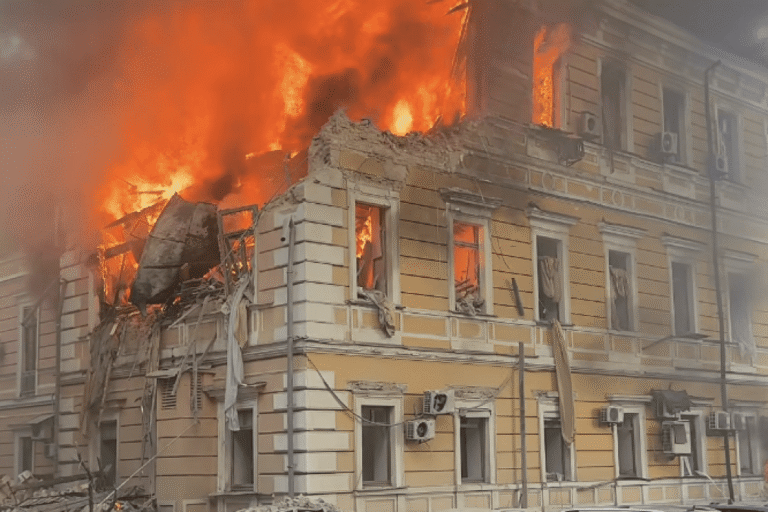
The Russian strikes on Kyiv on September 28, 2026, demonstrate a notable evolution in Russia’s air campaign. The National Academy of Sciences of Ukraine, the Dobrobut Medical Center, a pharmaceutical enterprise, gas stations, and other civilian facilities came under attack. One person was killed when the building of the National Academy of Sciences was hit; according to city authorities, at least 19 people were injured in Kyiv overall. Reuters notes that in recent weeks Russia has broadened the range of economic and civilian targets it attacks—from energy facilities and ports to logistics, telecommunications, data centers, and businesses.
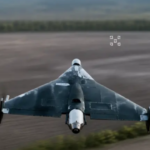
Of particular importance is the use of new jet-powered attack UAVs. During the first three weeks of September, Russia launched about 2,100 jet-powered drones and 136 missiles at Ukraine. According to the Ukrainian Air Force, air defenses intercept about 60% of the new jet-powered UAVs, compared with more than 90% of older propeller-driven models. This allows Russia to increase the number of systems penetrating defenses and reaching major cities, including Kyiv.
Against this backdrop, the significance of the Lindsey O. Graham Sanctioning Russia and Iran Act of 2026 changes fundamentally. The U.S. president signed H.R. 5334 on September 18, meaning the law is already in force. It expands U.S. sanctions authorities against Russian state entities, banks, the “shadow fleet,” foreign companies supporting Russia’s military-industrial complex, and also permits tariffs on the largest purchasers of Russian energy resources.
The law does not create a direct mechanism under which another strike on a hospital or university automatically triggers new sanctions. Its potential effect is different: to increase the economic cost of continuing the war and reduce the resources with which Russia finances the mass production of missiles, UAVs, and their components.
Thus, the key question after the strikes on Kyiv is not whether the Graham Act can immediately stop attacks on civilian facilities. It cannot guarantee that. The question is whether its full implementation can alter Russia’s cost-benefit calculation, under which mass strikes remain a militarily available and economically acceptable instrument of war for Moscow.
The Strike on Kyiv Shows a Shift in Russia’s Air Campaign
The September 28 attack is significant not only because of the scale of the damage inflicted.
A Russian jet-powered UAV struck the building of the National Academy of Sciences of Ukraine in central Kyiv. One person was killed. Fire engulfed the building, and people attempted to escape through the windows.
Another strike hit the Dobrobut Medical Center. Seven people were injured, six of them employees of the facility. The clinic premises, medical equipment, and upper floors of the building were damaged.
President Volodymyr Zelenskyy also reported damage to a pharmaceutical enterprise, gas stations, and other civilian facilities. In Dnipro, a strike on a business center killed three people.
These strikes must be viewed within a broader trend.
Reuters reports that Moscow has recently been systematically expanding its list of economic targets: ports, railways, metallurgy, logistics, warehouses, telecommunications, and other infrastructure. The strikes are already causing disruptions to supplies of food, medicines, and other everyday goods.
A pattern is therefore emerging:
**military-industrial facilities
- Energy, transport, logistics, communications, business, scientific institutions, and medical infrastructure.
The objective of such a campaign may extend beyond the physical destruction of individual military enterprises.
It is about gradually increasing the economic and social cost of the war for Ukraine.
Science, Medicine, and Education Have Particular Significance
The strike on the National Academy of Sciences has a distinct psychological effect.
A scientific institution is not merely a building. It is an element of the state’s human capital infrastructure.
Similarly, a hospital is more than physical infrastructure. Damage to it simultaneously creates direct casualties, reduces medical capacity, generates psychological effects, imposes additional costs on the state and businesses, creates reconstruction needs, and diverts resources from other priorities.
ACLED has previously recorded thousands of incidents involving damage to civilian infrastructure in Ukraine. In 2022–2024 alone, its database contains more than 4,200 incidents involving residential facilities, more than 650 involving educational facilities, more than 350 involving medical facilities, and about 1,000 involving energy infrastructure. ACLED cautions that not every such incident proves deliberate targeting of the civilian facility itself; some strikes are indiscriminate or connected to nearby military targets. At the same time, the aggregate data demonstrate the large-scale and sustained impact of Russia’s campaign on civilian infrastructure.
This distinction is important to preserve: the fact that a civilian facility was hit does not automatically prove that it was the intended target of a particular strike.
But the strategic result remains the same—the gradual erosion of Ukraine’s civilian resilience.
New Jet-Powered Drones Are Changing the Economics of Russian Strikes
The most dangerous trend of 2026 is technological.
Russia has begun using jet-powered attack UAVs on a large scale. They travel significantly faster than traditional Shaheds and can fly at altitudes of 4–7 km.
As a result, mobile fire groups that were highly effective against earlier models have far fewer opportunities to intercept them.
The result is already measurable statistically: more than 90% interception of older models → about 60% of new jet-powered UAVs.
For Russia, this creates favorable strike economics.
The new UAV is more expensive than an older Shahed but still cheaper than a cruise missile. Moscow gains a weapon capable of creating some of the same problems for Ukrainian air defenses as a cruise missile, at a lower cost.
An asymmetry emerges: a relatively inexpensive Russian drone versus an expensive Ukrainian interceptor missile + potentially millions of dollars in damage from a single penetration.
This is precisely why the economic component becomes critically important.
The Graham Act Does Not Attack the Drone- It Attacks the Financial Model Behind Its Production
On September 18, the U.S. president signed the Lindsey O. Graham Sanctioning Russia and Iran Act of 2026.
Its strategic logic is that Russia’s ability to continue the war depends to a significant extent on foreign-currency revenues from commodity exports.
Congress explicitly linked the law to this mechanism. During Senate debate, lawmakers noted that sales of Russian oil and gas, including through the “shadow fleet,” provide Moscow with resources to continue the war. The law gives the president authority to impose tariffs of up to 100% on the largest purchasers of Russian energy resources and provides for sanctions against officials, banks, enterprises, and vessels facilitating those operations.
The mechanism through which it could affect Russia’s strike campaign therefore looks as follows:
Russian oil and gas → export revenues → foreign-currency resources → procurement of foreign components → Russian military-industrial complex → engines / electronics / sensors / machine tools / UAV components → mass production of strike systems → attacks on Ukraine.
The law seeks to intervene at the upper end of this chain.
The Most Important Mechanism- Secondary Pressure
The main difference between the new law and many previous sanctions is its ability to increase costs not only for Russia, but also for third countries and companies that sustain its revenues.
If sanctions apply only to a Russian company, Moscow can create a new trader → a new bank → a new vessel → a new offshore company.
If the risk is transferred to the foreign buyer of Russian oil, however, the incentive structure changes.
The buyer faces a choice between cheaper Russian energy and the risk of losing access to the U.S. market or facing other economic restrictions.
The law allows the president to impose targeted tariffs on the largest importers of Russian oil or gas and on states that help circumvent energy sanctions.
This mechanism has the potential to create substantially greater pressure on Russian oil revenues.
Second Direction—Russian Banks
Oil revenues alone are not sufficient to produce UAVs.
They must be converted into international payments.
The law therefore extends pressure to Russian financial institutions and foreign entities conducting significant transactions with them. In supporting the legislation, the U.S. administration specifically emphasized that it provides for sanctions against Russian officials, financial institutions, and other entities connected to the Russian state.
This is important for sanctions evasion.
Even if Russia sells oil for yuan or dirhams, that money must be used to pay for microelectronics, optics, machine tools, bearings, sensors, engines, and industrial equipment.
Financial sanctions can therefore affect the conversion mechanism: oil revenue → usable procurement currency.
Third Direction—The “Shadow Fleet”
The law separately covers foreign vessels used to transport Russian energy resources and other goods for the purpose of circumventing sanctions.
Potential sanctions targets include not only the vessels themselves but also related entities. The legislation explicitly refers to vessels transporting Russian oil, gas, LNG, petroleum products, and other goods in circumvention of U.S. or other sanctions.
This creates another chain of effects: sanctions against tankers → more expensive insurance → more difficult financing → fewer available vessels → higher transportation costs → a larger discount on Russian oil → lower net Russian revenue.
Even if the physical volume of exports does not fall sharply, a reduction in netback can diminish Moscow’s real financial resources.
Fourth Direction-Suppliers to Russia’s Military-Industrial Complex
Another part of the law is particularly important in the context of strikes on Kyiv.
The U.S. sanctions framework covers foreign individuals and companies supplying Russia’s defense sector with goods and technologies. Explicitly identified categories include CNC machine tools, fiber optics, advanced sensors, and other components.
This potentially allows pressure on two sides of Russia’s war economy at once: the revenue side and the procurement side. In other words: less oil revenue + more expensive and difficult access to components = a higher marginal cost for each Russian strike system.
This is arguably the most important economic logic of the law in the context of attacks on civilian infrastructure.
Can This Actually Reduce the Number of Strikes?
Potentially yes, but the relationship will be indirect and delayed.
Sanctions cannot make a Shahed that has already been produced remain on the ground tomorrow.
Russia has weapons stockpiles, production lines, accumulated components, and alternative supply channels.
In the short term, the opposite effect is even possible: Moscow may continue or intensify strikes regardless of sanctions pressure.
The medium-term mechanism is different: reduced foreign-currency revenues, higher costs of sanctions evasion, greater difficulty importing components, higher financing costs, rising production costs across Russia’s military-industrial complex, and sharper competition for resources among missiles, UAVs, armored vehicles, artillery, and other programs.
This is where sanctions can affect the intensity of the strike campaign.
A Fundamental Limitation
The Graham Act is not an automatic mechanism for ending attacks on civilian facilities.
It gives the administration substantial tools, but some key measures involve presidential discretion, including tariff mechanisms and waiver authorities. In supporting the law, the White House separately emphasized the importance of presidential flexibility in applying and lifting sanctions.
It is therefore necessary to distinguish between the existence of a sanctions instrument and the scale of its actual application.
If Washington applies secondary pressure selectively, the largest purchasers of Russian oil may adapt.
If, however, the risk of U.S. restrictions becomes sufficiently high for banks, traders, shipowners, and major importers, the economic effect will be substantially stronger.
Why Attacks on Civilian Infrastructure Make Economic Pressure Especially Relevant
Russia’s air campaign is increasingly taking the form of a war of economic exhaustion.
Every strike on a hospital, enterprise, laboratory, warehouse, or transport hub creates additional financial requirements for Ukraine: reconstruction + air defense + generators + backup systems + insurance + evacuation + medical care + repairs + lost production.
Moscow is thus attempting to increase the cost of Ukraine’s continued existence under wartime conditions.
The economic logic of sanctions is the mirror image:
if Russia increases the cost of war for Ukraine, sanctions policy seeks to increase the cost of continuing the war for Russia.
The relationship between these two processes will matter more than the mere adoption of another sanctions package.
The Graham Act Can Change the Cost-Benefit Calculation of Russia’s Campaign
For the Kremlin, mass strikes remain a rational instrument as long as three conditions hold simultaneously: Russia can produce sufficient numbers of UAVs and missiles; their production cost remains acceptable; and the economic and political consequences of the strikes for Russia remain lower than the expected effect on Ukraine.
The Graham Act potentially affects primarily the second and third conditions.
If each subsequent wave of strikes occurs in parallel with:
stronger sanctions on energy revenues, new restrictions on the shadow fleet, sanctions on intermediary banks, pressure on component suppliers, and the risk of tariffs for major buyers of Russian oil, the economic cost of continuing the campaign gradually increases.
At the Same Time, Sanctions Cannot Replace Air Defense
This is arguably the most important practical limitation.
Sanctions operate over months and years.
A jet-powered Shahed covers the distance to Kyiv in hours.
Economic pressure and air defense therefore address two different tasks: air defense → reduces the number of successful strikes today. Sanctions → seek to reduce Russia’s capacity to generate such strikes tomorrow.
Reuters reports that financial resources are currently one of the main constraints on scaling up Ukrainian means of countering the new jet-powered UAVs.
Sanctions pressure will therefore have a much greater effect if combined with an expansion of Ukraine’s ability to intercept inexpensive Russian strike systems using lower-cost air-defense means.
Strategic Effect: Changing the Economics of War
The principal significance of the Graham Act lies not in punishing Russia after a specific strike.
Its potentially more important function is to change the financial model of the war.
Until now, Moscow has adapted to Western sanctions to a significant extent: oil → China/other buyers; tankers → shadow fleet; dollar → yuan/dirham; Western bank → intermediary; direct imports → third-country procurement.
The new law seeks to shift sanctions pressure precisely onto these adaptation mechanisms.
Its effectiveness should therefore not be measured by the number of Russian companies placed on sanctions lists.
Four indicators should be monitored: the volume of Russia’s net oil revenues,
the cost of sanctions evasion, the availability of foreign components for the military-industrial complex, and the production rate of Russian missiles and attack UAVs.
If these indicators begin to deteriorate simultaneously, the law will have a real military-economic effect.
First. The September 28 strikes on the National Academy of Sciences, the medical center, and other facilities took place against the backdrop of a broader expansion of Russia’s campaign against Ukraine’s economic and civilian infrastructure.
Second. The mass use of jet-powered UAVs allows Russia to create a new asymmetry: a relatively inexpensive means of attack is increasingly able to penetrate Ukrainian air defenses and cause disproportionately large economic losses.
Third. The Graham Act, signed on September 18, 2026, does not create an automatic sanctions response to every strike on a civilian facility. Its effect is systemic: it expands U.S. capabilities to pressure Russian energy revenues, banks, the shadow fleet, and foreign entities supporting Russia’s war economy.
Fourth. The most powerful potential instrument is secondary pressure on major purchasers of Russian energy. It can shift part of the cost of the war from Russia to the states and companies that provide Moscow with foreign-currency revenues.
Fifth. The law’s effect depends on implementation. Broad waiver authorities and presidential discretion mean that formal entry into force does not yet equal maximum economic pressure.
Sixth. Even the toughest sanctions will not produce an immediate result. Russia has stockpiles, production capacity, and extensive schemes for circumventing restrictions. The realistic mechanism is a gradual increase in the cost of producing and employing strike systems.
Seventh. Sanctions and air defense are therefore complementary rather than alternative instruments. Air defense affects the probability of a successful strike, while economic pressure affects Russia’s capacity to generate future strikes.
The strikes on the National Academy of Sciences of Ukraine, the Dobrobut Medical Center, a pharmaceutical enterprise, and other civilian infrastructure demonstrate that the problem is no longer limited to protecting individual strategic facilities. Russia’s air campaign is placing systemic pressure on Ukraine’s economic and social resilience.
It is in this context that the Lindsey O. Graham Sanctioning Russia and Iran Act should be assessed.
The law is not a “sanction for a strike on a hospital.” It is an attempt to affect the financial ecosystem that makes thousands of such strikes economically possible.
If its provisions are applied broadly, the mechanism can operate through three interconnected channels: reduced oil revenues → more difficult international payments → restricted access by Russia’s military-industrial complex to foreign components.
In the short term, this is unlikely to force Moscow to stop attacks on Kyiv. In the medium term, it can raise the cost of maintaining the current intensity of the missile-and-drone campaign and intensify competition for resources within Russia’s war economy.
The principal test of the Graham Act will therefore not be the number of new sanctions listings. The test will be whether the real flow of resources from Russian energy sales—through banks, traders, and the shadow fleet—to enterprises producing strike systems is reduced.If this link is broken or becomes substantially more expensive, the law may affect not only Russia’s macroeconomic indicators but also—with a time lag—its ability to sustain large-scale air strikes against Ukrainian cities.