
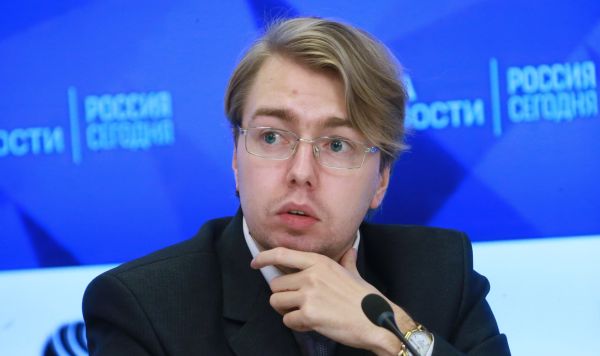
On September 25, 2026, the state agency RIA Novosti published a column by Alexander Nosovich titled “Russia Faces Another Special Military Operation. It Will Be Very Short.”
The publication by the Russian state agency RIA Novosti of Alexander Nosovich’s article “Russia Faces Another Special Military Operation. It Will Be Very Short,” which explicitly discussed a military attack on Lithuania and the possibility of a missile strike involving nuclear weapons, is a significant episode in Russian information policy toward the Baltic region. The piece appeared on September 25, 2026, and was removed roughly three hours later with an explanation that it did not reflect the editorial board’s position, its editorial policy, or the state policy of the Russian Federation. (Radio Free Europe/Radio Liberty)Радио Свобода
Available open-source information does not establish whether the publication was directly sanctioned by the Kremlin or Russian intelligence services. It therefore should not automatically be characterized as a centralized information operation. At the same time, the combination of three factors – the state platform, the author’s background, and the content of the message – provides grounds to view the incident as an indicator of a broader Russian system of strategic intimidation directed at the Baltic states.
Nosovich is editor-in-chief of RuBaltic.Ru and a member of the Council on Foreign and Defense Policy. The Dossier Center has previously linked him to the Kremlin’s influence infrastructure in the Baltic region. The article did more than criticize Vilnius: it normalized a scenario of war with a NATO member, using for a potential attack on Lithuania the same term – “SVO” (special military operation) – that Moscow uses for its war against Ukraine. (Meduza)Meduza
The most significant element is the shift from traditional Russian nuclear signaling to describing a nuclear strike as a practical means of avoiding a ground operation. This framing lowers the rhetorical threshold between nuclear deterrence and nuclear use: nuclear weapons are presented not only as a last resort in a large-scale war, but as a tool for rapidly resolving a localized military-political problem.
The context of the publication is also important. In 2026 Lithuania sharply increased defense spending to approximately €4.8 billion, or 5.38% of GDP; a German armored brigade is being deployed on its territory, while the total number of troops under NATO command had already exceeded 5,000 by the end of 2025. (Lithuania Finance Ministry)
From Propaganda to a Scenario for the Use of Force
The immediate trigger for the article was Lithuania’s debate over legal restrictions on the stationing of nuclear weapons. In September, the Lithuanian parliament considered changes related to the constitutional prohibition on weapons of mass destruction; in the spring, President Gitanas Nausėda had stressed that the current Article 137 of the Constitution establishes an absolute ban and that changing it requires a constitutional procedure. (E-Seimas)
In response, Nosovich called Lithuania a “suicidal country” and suggested a new Russian “SVO.” The most escalatory passage argued that Russia could forgo deploying ground forces and instead use missiles “with the appropriate warhead.” Independent Russian media interpreted this as a direct reference to a nuclear strike. (Meduza)
Russian nuclear rhetoric toward NATO traditionally contains warnings about “consequences,” a “response,” or the possible use of nuclear weapons under certain conditions. Here the construction is different: a Lithuanian political decision → a Russian “SVO” → no ground operation → missile strike → nuclear warhead → rapid termination of the conflict.
Why the Use of the Term “SVO” Matters
It seeks to portray a potential attack not as a Russian war against the Alliance, but as a limited local operation that Moscow supposedly could complete before the allies mounted a full-scale response.
This framing creates for Russian audiences the impression that the same mechanism can be applied sequentially: Ukraine → “SVO No. 1”; Lithuania → potential “SVO No. 2.”
It normalizes the very idea that a military operation against a NATO state can become a subject of public planning.
Nuclear Weapons as an Instrument of Psychological Coercion
Nosovich effectively argues that Russia need not deploy troops if it can immediately use nuclear-armed missiles.
In the classical model, nuclear weapons are supposed to raise the threshold for major war. In the RIA text, they are presented as a way to shorten the war.
The deeper Lithuania integrates into NATO nuclear and military planning, the higher a priority target it becomes for Russia.
This logic allows Moscow to portray its own potential aggression as an allegedly compelled response to the defensive decisions of a neighboring state.
This is a recurring feature of Russian strategic messaging: shifting responsibility for possible escalation onto the state that Russia is threatening to attack.
The Real Target May Be Lithuania’s Defense Transformation, Not Nuclear Weapons
The 2026 budget allocates approximately €4.8 billion to defense – 5.38% of GDP. The Lithuanian government directly links the additional spending to modernization of the armed forces, creation of a national division, weapons procurement, and infrastructure for the German brigade. (Lithuania Finance Ministry)Lithuania Finance Ministry
Accordingly, the structure of Russian forces in Kaliningrad Oblast is changing, although available evidence does not support the claim that these changes are exclusively, or even primarily, a direct response to the deployment of Germany’s 45th Armored Brigade in Lithuania. They are part of a broader reform of the Russian Armed Forces launched after the failures of 2022, but its implementation in Kaliningrad increasingly fits the requirement of countering a strengthened NATO grouping in Lithuania.
At present, Russia’s ground grouping in Kaliningrad remains temporarily weakened because a substantial share of personnel and equipment was transferred to the war against Ukraine. Existing ground units are staffed largely by conscripts and a limited number of contract soldiers.
At the same time, Moscow is already pursuing the opposite long-term process – increasing the region’s military potential. Lithuanian intelligence explicitly states that additional units are planned in the future, implying increases in personnel and equipment.
The current situation can therefore be summarized as: operational weakening because of Ukraine → structural reorganization → preparation for future expansion.
The Most Visible Reorganization – Naval Infantry
In Kaliningrad, the Baltic Fleet’s naval infantry brigade is being transformed into a naval infantry division. Lithuanian intelligence places this reform within Russia’s broader process of converting brigades into divisions near NATO’s eastern borders.
The transition from brigade → division means creating a larger command structure capable over time of integrating additional combat, artillery, reconnaissance, air-defense, UAV, and logistics components.
The Entire Leningrad Military District Is Changing
Kaliningrad must now be analyzed not in isolation but as part of the re-established Leningrad Military District.
Lithuanian intelligence records the creation of the 44th Army Corps, the conversion of a motor-rifle brigade of the 14th Army Corps into a division, the conversion of two motor-rifle brigades of the 6th Combined Arms Army into divisions, and the formation of a new missile brigade equipped with Iskander-M systems.
Russia’s response to NATO reinforcement may therefore consist not of mechanically moving several thousand additional troops directly into Kaliningrad, but of building a substantially larger military grouping across the Baltic theater.
The German Brigade Changes the Military Problem for Russia
Germany is deploying in Lithuania not a rotational battalion but the permanent 45th Armored Brigade “Litauen.”
It includes, among other units, the 203rd Tank Battalion and the 122nd Mechanized Infantry Battalion; in February 2026, NATO’s multinational battlegroup in Lithuania was integrated directly into the brigade structure. It is expected to reach full operational capability in 2027.
Previously, Russia’s A2/AD concept was largely designed to prevent or delay the arrival of NATO reinforcements after a crisis began.
Now a significant portion of heavy forces will already be in Lithuania before a potential conflict begins.
Russia’s task is therefore gradually shifting from interdict reinforcement to destroy/disrupt forces already deployed in theatre.
Hence the Growing Importance of Missiles, UAVs, and Intelligence
Recent IISS analysis indicates that Russia’s A2/AD system in the Baltic region is evolving under the influence of lessons from Ukraine.
Instead of a predominantly static S-400 + Iskander “bubble,” a more distributed system is emerging: ISR → UAVs → EW → long-range strikes → air defense → mobile command posts.
IISS reports the formation of a UAV regiment in the Leningrad Military District and the expected creation of additional UAV battalions in divisions of the 6th Combined Arms Army.
Potential military targets in a crisis would include not only combat units but also: Rūdninkai / Rukla → headquarters → depots → air defense → railways → bridges → logistics hubs → reinforcement routes.
The Bundeswehr confirms that the brigade’s main deployment areas will be Rūdninkai and Rukla, with supporting infrastructure also being developed elsewhere in Lithuania.
Kaliningrad Is Simultaneously Becoming an Intelligence Hub
Another important change is the construction of the 29B6 “Container” over-the-horizon radar.
Lithuanian intelligence reports that elements of the system are being built in several parts of Kaliningrad Oblast. The system is intended to detect aircraft and missiles at ranges of several thousand kilometers.
Kaliningrad increasingly functions not only as a forward strike base, but also as an ISR node + EW node + air-defense node + long-range strike node.
In August 2026, The Wall Street Journal, citing Western intelligence sources, reported a readiness check in Kaliningrad Oblast for the possible mobilization of the local population.
This episode alone does not prove preparation for war against Lithuania. Similar measures have been conducted in other parts of Russia.
The exclave cannot easily be reinforced by ground forces once a conflict begins. The ability to mobilize local manpower quickly therefore has considerably greater operational value.
What This Means for the German Brigade
The deployment of Germany’s 45th Armored Brigade in Lithuania is occurring in parallel with the structural reorganization of Russia’s military grouping on the Baltic axis. There is currently insufficient evidence that specific Russian reforms were adopted solely in response to the German brigade: many of the changes are part of the broader reform of the Russian Armed Forces launched after 2022. At the same time, their character increasingly corresponds to the task of countering a permanent heavy NATO presence in Lithuania.
Russia’s response to NATO reinforcement therefore probably does not consist only of increasing ground-force numbers in Kaliningrad itself. Moscow is building a broader theatre-denial system combining long-range missile strikes, air defense, electronic warfare, UAVs, intelligence, and ground forces. Its potential purpose is to complicate the concentration, maneuver, and sustainment of NATO forces in Lithuania and to create the capacity to strike military and logistics infrastructure before or at an early stage of a large-scale conflict.
This is particularly important because the nature of NATO’s military presence is changing. Once the 45th Armored Brigade is fully deployed, a substantial allied heavy force will remain permanently in Lithuania rather than arriving only after a crisis begins. Russia’s task is therefore shifting from preventing reinforcements from arriving to detecting, isolating, and striking forces already deployed and their logistics.
Kaliningrad currently remains relatively weakened: a substantial share of its professional ground forces and equipment is being used in the war against Ukraine. The greatest risk to Lithuania therefore lies less in the current composition of the Russian grouping than in its potential rapid restoration after the intensity of the war against Ukraine declines. Lithuanian intelligence explicitly warns that reduced Western pressure on Moscow and the release of Russian resources would accelerate Russia’s preparations for a potential conflict with NATO.
Germany has created the 45th Armored Brigade “Litauen,” whose full deployment is scheduled for completion by the end of 2027. The plan calls for about 5,000 German military personnel and civilian employees and approximately 2,000 pieces of military equipment. (LR Krašto apsaugos ministerija)LR Krašto apsaugos ministerija
By December 2025, NATO had reported that the total number of troops under Alliance command in Lithuania exceeded 5,000. (NATO)NATO
On September 22, 2026 – only three days before Nosovich’s publication – Lithuania’s president also announced the arrival of a new rotation of U.S. troops. The United States has traditionally maintained roughly 1,000 armored-battalion personnel in the country. (Reuters)Reuters
The nuclear debate may therefore have been only an information trigger, while the strategic context is much broader: rising defense spending → German brigade → U.S. presence → rearmament → stronger air defense → hardened critical infrastructure → potential integration into NATO’s broader nuclear-deterrence system.
Why the Claim of a “Very Short” War Matters
It creates the impression that Russia could conduct an operation so quickly that NATO would not have time to intervene effectively.
For Russian audiences, it projects an image of preserved military superiority and an ability to defeat even a NATO state.
For Lithuanian and wider European audiences, it sends the opposite message: your allies may not reach you in time.
This construction, however, ignores the fundamental difference between Ukraine in 2022 and Lithuania in 2026.
Lithuania has been a NATO member since 2004, allied troops are already stationed on its territory, and the German brigade is being integrated directly into the country’s defense. An attack on Lithuanian forces under these conditions would very likely also strike military personnel from other Alliance states.
Nosovich’s Article as Part of a Broader Information Ecosystem
The author’s background gives the publication particular significance.
Alexander Nosovich is editor-in-chief of RuBaltic.Ru and a member of the Council on Foreign and Defense Policy. Meduza, citing an investigation by the Dossier Center, notes that Nosovich had previously been linked to a Russian influence structure overseen by representatives of the Presidential Administration and the Foreign Intelligence Service. (Meduza)
This means the author should not be viewed as a random radical blogger.
The text appeared not on RuBaltic.Ru, a Telegram channel, or Nosovich’s personal page, but on the platform of a state news agency.
This substantially increased its potential political signaling value.
Roughly three hours after publication, RIA removed the article, stating that it “does not correspond to the opinion of the editorial board, editorial policy, or the state policy of the Russian Federation.” (Radio Free Europe/Radio Liberty)
This is unusually strong wording.
Particularly notable is the explicit distancing not only of the editorial board but also of Russian state policy.
The column may have passed editorial review without proper authorization, after which RIA’s management concluded that direct discussion of a nuclear strike on NATO created excessive diplomatic risk.
Scenario 2 – Exceeding the Permissible Level of Escalation
Scenario 3 – A Signal with Plausible Deniability
The model would then look like this: radical thesis → state channel → international dissemination → reaction → removal → official distancing.
This construction creates plausible deniability: the threat has already entered the information environment, but Moscow can claim that it does not reflect official policy.
The Main Target May Be the European Debate About Risk, Not Lithuania
Its potential value to Moscow lies primarily in shaping the perception of risk.
If European societies begin to believe that allied troop deployments → increase the risk of war; nuclear deployments → make a country a nuclear target; support for Ukraine → provokes Russia; and rearmament → brings conflict closer, then a military threat begins to influence political decisions without the actual use of force.
The objective may be not to persuade Lithuania’s military leadership, but to stimulate an internal debate: does strengthening NATO make the country less safe rather than more safe?
The Article Is Not Evidence of a Russian Decision to Attack Lithuania
Nosovich’s publication does not prove that the Russian leadership has decided to conduct a military operation against Lithuania.
Nor does it prove the existence of an approved scenario for using nuclear weapons against the country.
It demonstrates that a scenario of war with a NATO state – and even a nuclear strike – can appear on a Russian state information platform as a subject of practical political discussion.
This itself is an indicator that the informational threshold of acceptability is shifting.
What Lithuania’s NATO Membership Changes
Any actual Russian attack on Lithuania would be fundamentally different from the invasion of Ukraine.
Article 5 of the Washington Treaty provides that an armed attack against one or more allies in Europe or North America shall be considered an attack against them all. Each ally undertakes to assist, including through the use of armed force if it deems that necessary.
A Russian strike on Lithuania could therefore simultaneously strike Lithuanian, German, American, and other allied military personnel.
This is why the concept of a “very short SVO” contains a fundamental contradiction: the more deeply NATO integrates its presence in Lithuania, the harder it becomes for Russia to conduct a localized operation against the country without turning it into a conflict with several Alliance members.
Particular attention should be paid to the simultaneous appearance of:
systematic use of the term “SVO” for Lithuania and other Baltic states; a shift from abstract nuclear threats to specific targets, delivery systems, and scenarios; official statements by the Russian Defense Ministry or Security Council echoing Nosovich’s claims; changes in Russian force posture in Kaliningrad Oblast and Belarus; unusual activity by missile units and dual-capable systems; intensified intelligence collection against Lithuania’s military and transport infrastructure; sabotage, cyberattacks, or operations against critical infrastructure; information campaigns alleging persecution of Russian speakers; and attempts to portray Lithuania as a direct military or nuclear threat to Russia.
The RIA Novosti publication should be viewed not as evidence of an imminent Russian war against Lithuania, but as an indicator of increasingly aggressive Russian strategic messaging toward NATO’s eastern flank.
At the same time, RIA’s rapid removal of the piece shows that a boundary still exists between maximally aggressive public rhetoric and the position the Russian state is currently prepared formally to own. That boundary – and whether it continues to shift – is an important indicator for assessing Russian policy toward the Baltic region.
There is sufficient evidence to speak of a systematic and partly coordinated Russian information campaign aimed at undermining Lithuanian public trust in NATO and the state’s defense policy. Lithuanian intelligence confirms coordination of broader information activity, while specific messages portraying “NATO as a source of danger” are a persistent component.
In the National Threat Assessment 2026, the VSD and Lithuanian military intelligence state that Russia is intensifying information campaigns on social media and using them for long-term operations aimed at undermining trust in state institutions, creating social conflict, reducing trust in NATO, and discrediting support for Ukraine.
Another VSD observation is particularly important: Russian structures increasingly seek to conceal the origin of propaganda, creating the impression that the relevant views arise within Lithuanian society itself.
This marks a transition from the simple model Moscow → Sputnik/RT → Lithuanian audience to a much more complex one: Russian narrative → Telegram/TikTok/Facebook → local or pseudo-local account → influencer / alternative media → Lithuanian debate.
Strategically, this is more effective because the claim “NATO is making Lithuania a target” is received differently when it is voiced not by Russian state media but ostensibly by a Lithuanian citizen.
Central Narrative: “NATO Does Not Protect Lithuania – NATO Puts It in Danger”
Lithuania’s Ministry of Defense has documented information operations spreading claims that NATO’s presence itself creates a threat to allies and that Alliance military activity provokes Russia.
It can now be constructed as the following causal chain: NATO increases its presence
→ Germany deploys a brigade → Lithuania spends more than 5% of GDP on defense → a debate over nuclear deterrence emerges → Russia is forced to respond → Lithuania becomes a priority target → therefore NATO reduces rather than increases Lithuania’s security.
Nosovich’s article effectively adds a nuclear component to the campaign. Its psychological construction is more important than the literal threat.
The message is not simply that Russia can attack Lithuania. It establishes a causal link between Vilnius’s decisions and a possible Russian attack: you deploy/permit nuclear weapons → you make yourselves a nuclear target.
The construction can be extended: German brigade → Russian missiles; U.S. troops → additional Russian forces; 5.38% of GDP on defense → militarization of the region; potential nuclear deployment → nuclear strike.
The final message is: the more Lithuania invests in its own defense, the less safe it becomes.
The German Brigade Is an Especially Convenient Information Target
but rather: “Germany is turning Lithuania into the front line of a war with Russia.”
It is not the Russian threat that explains NATO’s presence; NATO’s presence is instead presented as the explanation for the Russian threat.
Lithuania increased its defense budget to €4.79 billion – 5.38% of GDP, roughly 43% more than in 2025. A substantial share is directed toward the national division, tanks, infantry fighting vehicles, air defense, ammunition, and infrastructure for the German brigade.
This makes it possible to combine a security narrative with economic grievance: “the government is taking money for tanks”; “those tanks will not save us from Russia anyway”; “more weapons only increase the risk of a Russian strike.”
The result is a psychologically powerful construction: you pay more → receive more foreign troops → become a more important military target → the risk of war increases.
Lithuanian intelligence describes a large coordinated network of Russian propaganda tools including state media, social networks, pro-Russian websites, Telegram channels, bots, and troll networks.
The mechanism described by the VSD is highly characteristic: provocative material appears on a little-known outlet → major pro-Russian Telegram channels pick it up → bots and trolls amplify its reach → the material is translated into other languages → the thesis enters the broader information space.
Nosovich’s article moved in the opposite direction: the radical message appeared immediately on a major state outlet, was then removed, but continued to circulate through secondary coverage.
Moscow therefore does not necessarily create an entirely new campaign. It adapts a recurring set of narratives to a new political event. The VSD identifies precisely this repetition of patterns as a defining feature of Russian propaganda.
It is enough to create doubt: “Russia may pose a threat, but our own policy is making that threat even greater.”
This can produce three political questions: Why spend more than 5% of GDP on defense? Why host the German brigade if it makes us a target? Why participate in nuclear deterrence if doing so creates a risk of nuclear attack?
Thus, the information operation is not necessarily aimed at creating pro-Russian sentiment, but at creating anti-risk sentiment.
Assessment of the Russian Information Campaign Against Lithuania’s Defense Policy
Available evidence supports with high confidence the assessment that Russia is conducting a systematic information campaign aimed at undermining Lithuanian public trust in NATO, state institutions, and Vilnius’s defense decisions. Lithuanian intelligence directly records Russian use of state media, pro-Russian information outlets, Telegram channels, social networks, bots, and troll networks to coordinate the dissemination of these narratives.
Russia’s information strategy is based on reversing the causal relationship between the Russian military threat and Lithuania’s defense buildup. The narrative holds that the more deeply Lithuania integrates into NATO’s military structure, the greater the likelihood of a Russian strike.
RIA Novosti’s publication of Alexander Nosovich’s article about a possible “very short SVO” against Lithuania logically adds a nuclear component to this narrative. Its psychological message is that Vilnius’s decisions to strengthen defense could turn the country into a target for a Russian missile-nuclear strike.The information effect should be assessed not by levels of support for Russia, but by other indicators: changes in public attitudes toward defense spending, the German brigade, the U.S. military presence, support for Ukraine, and Lithuania’s potential participation in NATO nuclear-deterrence mechanisms.
More on this story: Manufacturing Nuclear Panic: Russia’s “Dirty Bomb” Claims as Information Warfare
More on this story: Russia’s Nuclear Blackmail as a Tool to Pressure the West
More on this story: Kremlin Continues to Intimidate the West with Nuclear War Threats