

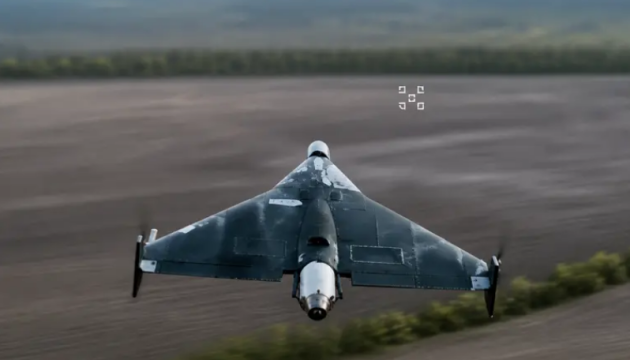
A Russian jet-powered UAV strike on September 28, 2026, approximately 2 km from the Polish border crossing at Dorohusk marked another episode in which Russia’s air campaign against Ukraine produced direct security consequences for Poland. Polish Defense Minister Władysław Kosiniak-Kamysz confirmed that Polish airspace had not been violated, but Polish aircraft and air-defense systems were placed on heightened readiness. Operations at Lublin and Rzeszów airports were also temporarily suspended because of the threat.
The significance of the incident lies not only in the proximity of the strike to NATO territory. More concerning is the recurrence of Russian activity specifically around the Yahodyn–Dorohusk cross-border transport hub. On September 28, Lt. Col. Jacek Goryszewski, spokesman for the Operational Command of the Polish Armed Forces, said this was already the third similar Russian strike in the area, although the specific target of the latest attack was still being determined at the time.
This makes it possible to view the situation not merely as a spillover effect of Russian attacks on western Ukraine, but as an emerging persistent zone of military risk directly along NATO’s border.
Russia Is Creating Risks for Poland Without Crossing Its Border
The key feature of such attacks is that Russia does not need to violate Polish airspace to create real operational and economic consequences for Poland.
A strike on Ukrainian territory just a few kilometers from the border can trigger an entire chain of responses: a Russian UAV approaches the border → Poland scrambles aircraft → air defenses are placed on heightened readiness → civilian aviation is restricted → border services shift to emergency procedures → the population receives an air-threat warning.
On September 28, this mechanism was particularly evident. In addition to activating military aviation, Polish authorities temporarily evacuated two road border crossings — Dorohusk and Zosin. Sirens sounded in Lublin Voivodeship, and residents received a government warning about the threat of an air strike.
Russia is therefore already capable of imposing operational costs on NATO without physically crossing the Alliance’s border.
This represents a fundamental shift in the perception of the threat. The war formally remains on Ukrainian territory, but some of its security and economic consequences are effectively spilling over into the territory of a NATO member state.
Border Infrastructure Is Becoming the Most Vulnerable
The Dorohusk–Yahodyn area matters not only because it lies on the state border. It is an important transport corridor between Poland and Ukraine.
The recurrence of Russian strikes in this area therefore creates several parallel risks.
First, it increases the likelihood that a Russian UAV could enter Polish airspace accidentally or because of a technical malfunction.
Even a strike on the Ukrainian side could cause debris damage or other effects on Polish territory if the flight path runs directly along the border.
A persistent threat could disrupt border crossings, railways, road routes and civilian aviation regardless of whether the Polish border is actually violated.
This is why the geography of the strikes is becoming no less important than their immediate targets.
Is Russia Testing Poland’s and NATO’s Response?
This possibility should not be excluded, but the available open-source information does not support a conclusion that strikes near the border are deliberately planned to probe NATO’s response procedures.
At the same time, each such episode objectively gives the Russian side an opportunity to observe Poland’s response.
Moscow can gather information on how quickly Polish aircraft are activated after a UAV approaches the border, which areas of airspace are restricted, how long heightened readiness lasts, when civilian warning systems are activated, and how military and civilian authorities coordinate their actions.
It is therefore important to distinguish between intent and effect.
There is insufficient evidence that testing NATO was the strike’s primary objective. But one of its secondary effects is the opportunity to observe Poland’s response cycle and accumulate data on it.
If similar incidents continue to recur systematically in the same border areas, this hypothesis will warrant substantially greater attention from Polish and allied intelligence services.
Russia Can Create a Cost Asymmetry
There is also an important economic dimension.
A single relatively inexpensive Russian UAV operating near the Polish border can potentially force NATO to employ far more expensive response systems: combat aircraft, radars, ground-based air-defense systems, airspace-management systems and personnel.
Even without an interception, indirect costs arise: rerouting civilian flights, temporarily closing airports, evacuating border crossings and placing services on heightened readiness.
The result is an asymmetry: a cheap UAV → an expensive military response + disruption of civilian infrastructure.
If such situations become routine, Poland and NATO will have to seek cheaper and more scalable counter-UAV capabilities rather than responding to every potential threat with costly crewed aircraft.
The Geography of Polish Security Is Changing
Before Russia’s full-scale invasion, the Polish-Ukrainian border was viewed primarily as NATO’s rear-area transport space.
That function is now changing.
Lublin, Chełm, Dorohusk, Rzeszów and the surrounding transport corridors simultaneously serve as civilian infrastructure, a logistics rear area, a transport hub and the eastern edge of NATO airspace.
Russian strikes on western Ukraine are effectively bringing the zone of military risk closer to this infrastructure.
It is particularly notable that on September 28, NATO Supreme Allied Commander Europe Gen. Alexus Grynkewich called on allies to counter Russian sabotage, cyberattacks and drone incursions more actively, linking such actions to a broader Russian strategy of pressure against states supporting Ukraine.
The Main Risk Is Not a Deliberate Strike on Poland, but the Accumulation of Conditions for an Incident
The most dangerous consequence of the current trend may not be a planned Russian attack on Poland, but the gradual narrowing of the geographic and temporal distance between Russia’s strike campaign and NATO’s defense system.
The more frequently Russian missiles and UAVs operate within a few kilometers of the Polish border, the greater the likelihood of a navigation error, technical malfunction, loss of control, incorrect trajectory assessment, or the need for Polish forces to make an emergency decision on intercepting a potential threat.
This is creating a kind of persistent contact zone between two military systems.
Russia strikes Ukraine. → Poland and NATO track Russian weapons. → Polish aircraft scramble. → Air defenses shift to combat readiness. → Civilian airspace is partially restricted.
All of this sometimes occurs only a few kilometers from the Alliance’s border.
Under such conditions, even a single error could turn another strike on western Ukraine into a security incident between Russia and NATO.
Assessment
The September 28 strike is not evidence that Russia is preparing an attack on Poland, nor does it by itself prove deliberate testing of NATO’s response system. However, the recurrence of Russian strikes near Dorohusk–Yahodyn indicates the emergence of a persistent zone of heightened military risk along the Polish-Ukrainian border.
The principal change is that Russian military activity in Ukraine is increasingly producing direct operational consequences for Poland even without violating Polish territory.
Warsaw is being forced to activate military aviation, place air defenses on heightened readiness, restrict civilian air traffic, evacuate border facilities and warn the population.
A dangerous pattern is therefore emerging: a Russian strike on Ukraine → a Polish military response → disruption of Polish civilian infrastructure → a higher risk of a Russia-NATO incident.
For Poland, this means that security on the eastern border can no longer be viewed solely as a matter of protecting against the direct penetration of Russian weapons. A broader cross-border threat zone must be taken into account, in which Russian operations on Ukrainian territory can affect the functioning of Poland’s military, transport and civilian infrastructure.At the strategic level, this is gradually blurring the boundary between the “war in Ukraine” and the security of NATO’s eastern flank: Russia may formally remain outside Polish territory, but the consequences of its military actions are already crossing the border.