
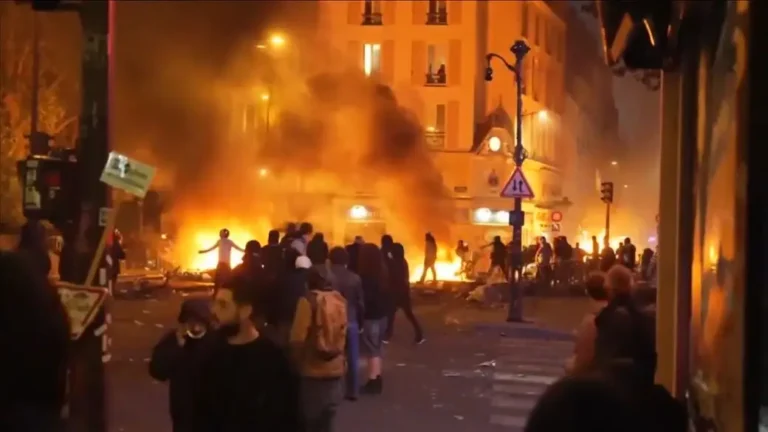
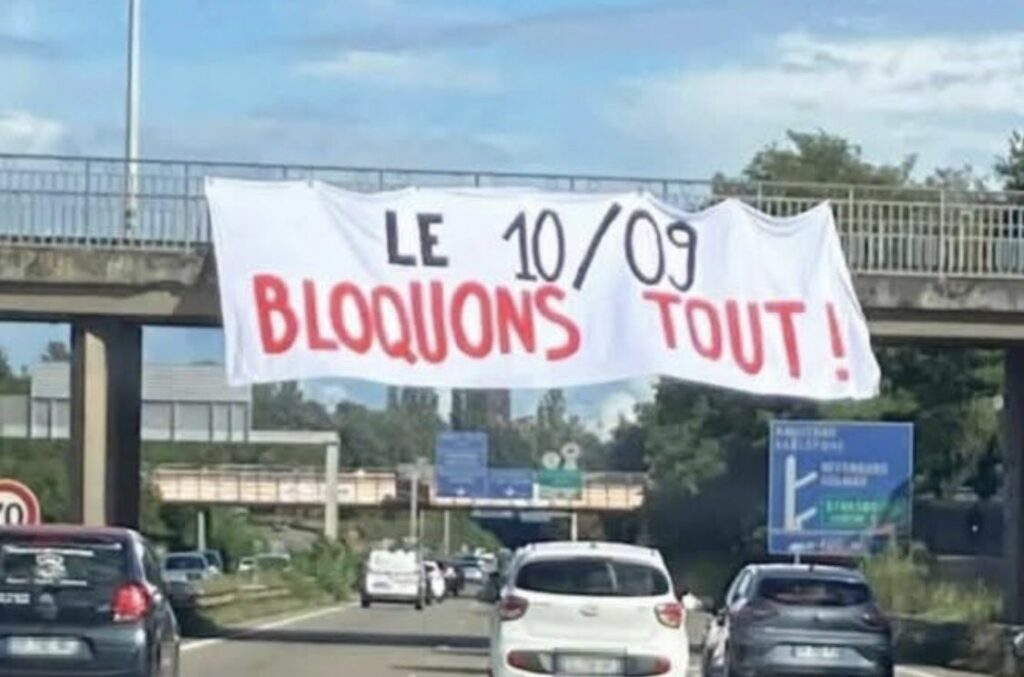
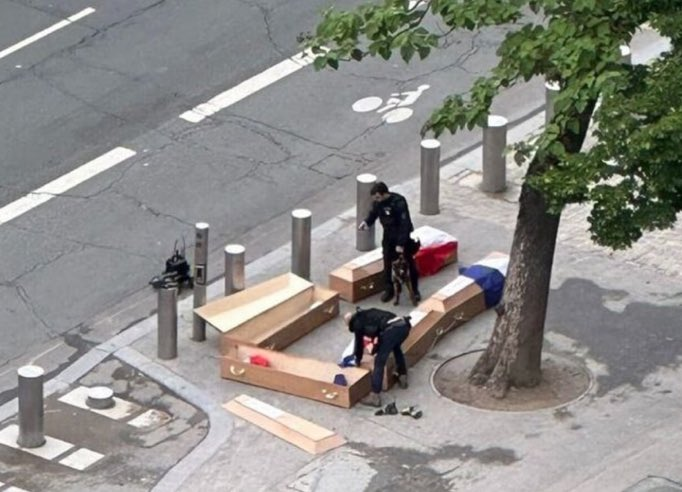
France witnessed its largest protests in recent years against the rising cost of living. Police estimated attendance at 550,000, while organizers put the figure at 800,000. The demonstrations brought together Yellow Vests, students, workers, climate activists and antifascist groups. In total, 1,750 rallies and demonstrations took place. Peaceful marches in several cities escalated into unrest, including the ransacking of shops, vehicle arson, attacks on public institutions and attempts to force entry into city halls. Limoges, where the town hall burned, was particularly badly affected, along with Lyon, Lille, Rennes, Bordeaux and Paris. Police reported approximately 1,800 arrests and about 500 injured officers.
Peaceful demonstrations by half a million French citizens against inflation escalated into violence when aggressive radical groups used the protests as an opportunity for rioting. More than 500 police officers were injured in clashes, and one person died. Law enforcement made 1,800 arrests, a record figure in recent times.
French Prime Minister Sébastien Lecornu formally blamed far-left radical groups and criminal elements for organizing the riots, attacking security personnel and setting fires. He emphasized that law enforcement would respond firmly to attempts to destabilize the situation and that all those responsible for attacks would face punishment.
A wave of protests among French secondary-school students began on September 18, 2026, in Créteil, a Paris suburb, and quickly spread to hundreds of educational institutions across the country. Major education unions backed the pupils and students, demanding increased funding for public secondary schools and better learning conditions. Demonstrations against teacher shortages and inadequate infrastructure involved widespread road blockades and barricades at schools. By October 17, 2026, the protests had escalated further with the backing of major trade unions and the opposition left-wing party La France Insoumise. Numerous riots erupted across French cities. In Limoges, a fire seriously damaged the town hall, built in 1883, while shops were looted in Bordeaux and Marseille. According to preliminary estimates, around 800,000 people participated. According to Reuters, more than 2,000 people had been arrested by October 17, 2026. In mid-October, demonstrations spread to Italy, Belgium and other countries, where youth organizations held solidarity rallies. As a result, an ordinary education strike has become a factor in wider European instability.
The protests and riots in France and other European countries serve the interests of Russia and Iran, which seek to destabilize Europe and provoke civil conflict. The Kremlin finances and supports pro-Russian left-wing activists, members of pro-Palestinian organizations, radicalized young people and European Muslims, attempting to turn local unrest into large-scale crises and exploit social divisions as an instrument of foreign policy, diverting attention from its own actions, including the war in Ukraine. This strategy forms part of a broader hybrid war in which information campaigns, financial support and manipulation of protest movements can trigger a chain reaction of disorder and undermine European unity. The next stage of this destabilization wave could involve mass demonstrations in Germany and the United Kingdom, both of which consistently support Ukraine against Russian aggression.
Iran acts in parallel with Russia, seeking to foment mass protests in Europe as a hybrid instrument of pressure on the West. Support for protests is reflected not only in covert activities but also in overt information attacks. Tehran accused France of ‘brutal treatment’ of demonstrators and ‘widespread and serious human rights violations’ during protests accompanied by clashes with security forces. In response, on October 7, 2026, the French Foreign Ministry summoned the Iranian ambassador, accusing Tehran of conducting a disinformation campaign about the protests. Paris stressed that the dissemination of false content through official Iranian Foreign Ministry accounts was wholly unacceptable and posed a threat to the country’s information security.
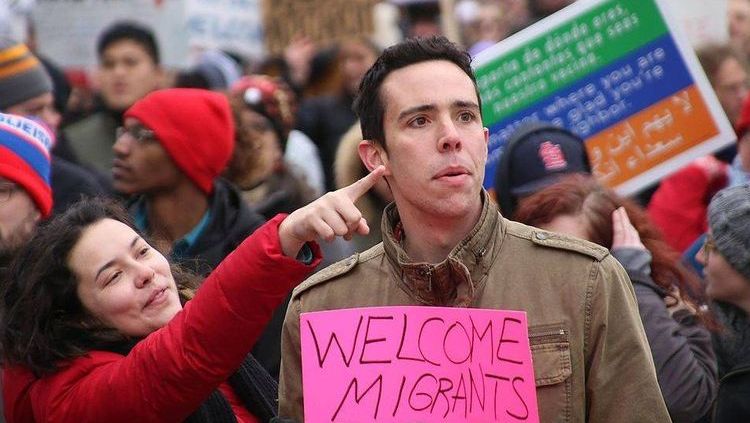
French authorities have officially documented attempts at foreign information interference in the protests. On October 13, 2026, Foreign Minister Jean-Noël Barrot, speaking at an OECD conference, directly accused Russia, China and Iran of exploiting French schoolchildren’s protests to spread hostile narratives and aggravate social tensions. According to him, foreign actors use social media to inflame conflicts over migration, religion and international events, seeking to deepen political polarization and destabilize France ahead of the 2027 presidential election. The Kremlin used the large-scale unrest to promote narratives about a crisis in European politics, migration and the consequences of anti-Russian sanctions. Russia actively exploits migration issues as an instrument of information influence on domestic politics in France and elsewhere in Europe. Moscow seeks to aggravate tensions between native-born populations and migrant communities, drawing on illegal migration, rising crime, social inequality, religious differences and discrimination. Kremlin-controlled media outlets, anonymous Telegram channels and networks of fake accounts circulate messages designed to generate fear of migrants among some groups and distrust of the French authorities and police among others. Particular attention is paid to high-profile incidents involving migrants, which are exploited to spread disinformation and incite ethnic and religious hostility. Moscow’s strategic objective is to exploit migration-related tensions to deepen social divisions, discredit French leaders and weaken European unity.
The Kremlin has previously interfered in France’s domestic affairs, seeking to exacerbate political and socioeconomic tensions and weaken the authorities. During the major Yellow Vest protests in late 2018, French intelligence services identified Russian interference. In December 2018, French authorities officially opened an investigation into the activities of approximately 600 Russia-linked social media accounts that used the hashtag #giletsjaunes (‘Yellow Vests’) to spread disinformation about government actions and sought to destabilize domestic politics by radicalizing peaceful citizens, turning public dissatisfaction into a protracted political crisis. Among the claims circulated was that France was ‘deeply divided and on the brink of civil war.’ Similar information-influence methods are once again being used by the Kremlin in its coverage of the protests.
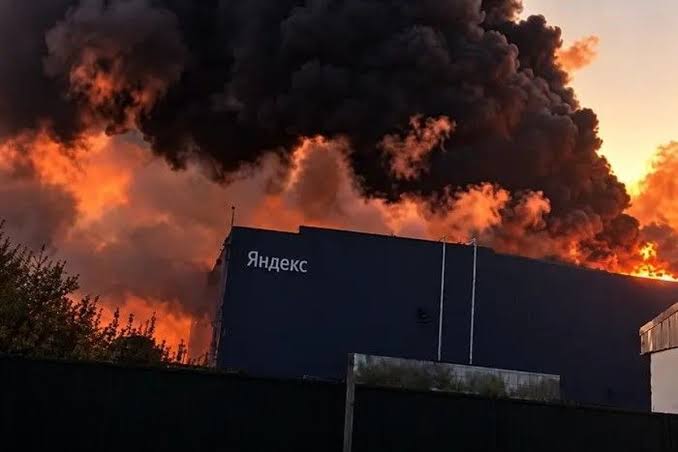
• In 2016, the Kremlin employed an extensive network of proxy accounts and financial instruments to support the campaign for Britain’s withdrawal from the European Union (Brexit), exploiting divisions in British society as the basis for a disinformation campaign. In 2020, the British Parliament’s Intelligence and Security Committee published a report on systematic Russian interference in British elections and referendums, illustrating Moscow’s consistent, long-term strategy to undermine democratic processes in the country. On October 12, 2026, British Prime Minister Andy Burnham confirmed Russian interference in the Brexit referendum and warned of similar Kremlin activities in France and Germany today.Russian disinformation support for the far-right Alternative for Germany (AfD) party indicates that the Kremlin systematically uses political forces and information networks to influence Germany’s domestic politics and advance an agenda consistent with Russian interests. In early October, for example, the parliament of Saxony-Anhalt adopted a resolution, with votes from AfD and the far-left Sahra Wagenknecht Alliance (BSW), calling for an end to military and financial assistance to Ukraine and the lifting of sanctions against Russia. Although recent Ukrainian strikes on Russian data centers (Yandex) temporarily disrupted Russia’s digital infrastructure and were accompanied by a reduction in automated traffic of up to 99.6% and an 83.6% decline in activity among certain networks of accounts exhibiting inauthentic behavior, Moscow’s deliberate efforts to destabilize European democracies remain a long-term threat, as Russia has an interest in sustaining political chaos in Europe.
More on this story: Russia intensifies subversive activity against France
More on this story: Russia breaks Europe’s border from within