

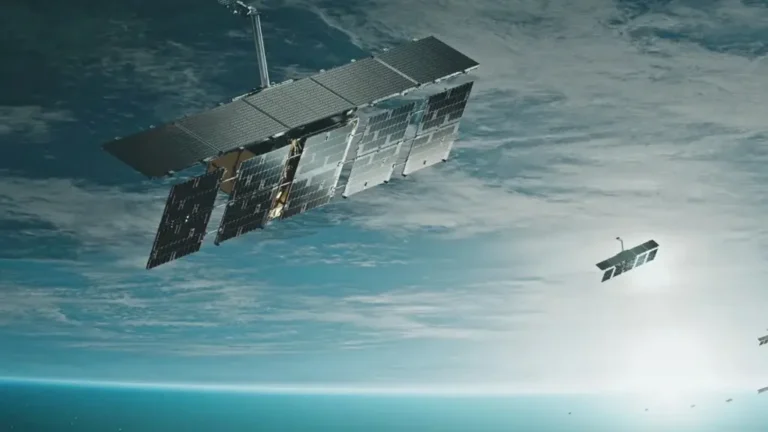
The close approach of the Russian military satellite Kosmos-2612 to the X36 radar satellite operated by Finland’s ICEYE in October 2026 may indicate a shift by Moscow from observing Western orbital infrastructure to practically testing its ability to physically disable it. If the reported maneuver data are confirmed, the incident will be an important indicator of Russia’s developing counterspace capabilities, directed not only against government military systems but also against commercial operators providing intelligence to Ukraine and NATO countries.
The principal threat lies not only in the potential destruction of an individual satellite but also in Russia’s development of a mechanism to coerce European states by threatening their critical space infrastructure. Moscow may seek to create conditions in which any private company supplying Ukraine with satellite imagery, communications, or other dual-use services must factor in the risk of Russian interference.
Three circumstances make the incident particularly significant:
- Choice of target. ICEYE is a European operator of synthetic aperture radar (SAR) satellites capable of obtaining imagery regardless of lighting and under many adverse weather conditions. These capabilities matter to Ukraine’s defense and military intelligence. Nature of the maneuvers. The reported approach to approximately one kilometer is consistent with testing navigation, relative maneuvering, and target-approach capabilities. By itself, however, it does not establish preparations for a kinetic strike. Repeated activity. Reports of several Russian spacecraft positioned near X36, followed by other satellites approaching X37’s orbit, may suggest a systematic operation rather than an isolated episode.
The incident should therefore be regarded as a potential intelligence and technical operation involving elements of counterspace testing and strategic intimidation. Additional orbital data are nevertheless needed to establish its actual purpose.
From Orbital Surveillance to Potential Counterspace Interference
The reported sequence of Kosmos-2612 maneuvers suggests that Russia may have been testing the spacecraft’s ability to make a controlled approach to a foreign satellite, maintain the required relative trajectory, and withdraw after completing the operation.
An approach to approximately one kilometer is particularly noteworthy because, at this distance, accurate relative positioning, trajectory prediction, and motion control become critical. Such technologies can serve legitimate inspection and servicing operations as well as military purposes, including interception or physical interference with another spacecraft.
Nevertheless, the conclusion that a kinetic attack was being rehearsed remains a hypothesis. A close approach may be used for optical inspection, determining a target’s technical characteristics, testing autonomous rendezvous systems, or demonstrating capabilities. Confirming an attack scenario would require additional indicators, including the nature of the final maneuvers, the spacecraft’s configuration, and information about its potential means of interference.
If Kosmos-2612 was indeed rehearsing elements of a counterspace operation, Russia may have pursued several interrelated objectives: testing the spacecraft’s technical readiness, assessing the response of ICEYE and Western space-surveillance systems, measuring the operator’s decision-making time, and demonstrating an ability to approach critical satellites without employing weapons.
The fundamental difference between this tactic and a conventional anti-satellite missile test is the ability to sustain a threat without actually destroying the target. A Russian spacecraft can serve as a surveillance platform, a show of force, or a potential interceptor while formally retaining its designation as an inspection satellite.
Technical problems aboard Kosmos-2612 could provide an alternative explanation for its maneuvers near ICEYE-X36, but the reported orbital activity makes this interpretation less persuasive than the hypothesis of a deliberate approach.
Three scenarios must be distinguished: emergency maneuvering, technical-system testing, and execution of a planned military mission.
Could a Technical Malfunction Have Caused the Close Approach?
In theory, several circumstances could explain it. Attitude and motion-control malfunction. Navigation or propulsion errors could have caused a deviation from the planned orbit. Software error. An incorrect command or failure of autonomous navigation could have caused an unintended approach. Engine testing after a malfunction. A series of corrective maneuvers could have been related to checking the propulsion system. Disruption of communications with ground control. Loss of control could have caused unexpected trajectory changes, although this alone would not explain a sequence of controlled maneuvers.
An uncontrolled satellite, however, normally continues along an orbit determined by its previous state rather than deliberately approaching another spacecraft. Additional evidence is therefore required to explain the entire reported episode as a technical malfunction.
Why the Accidental-Malfunction Explanation Raises Doubts
Three aspects of the reported sequence are important.
First, the prior change in orbital parameters. If the Russian spacecraft had indeed adjusted their orbits in advance to approach the orbital plane of ICEYE-X36, this would be more consistent with a planned operation than an accidental failure.
Second, the precision of the approach. Closing to approximately one kilometer is not, by itself, evidence of hostile intent. In combination with earlier maneuvers, however, it may indicate functioning navigation and control systems.
Third, the subsequent withdrawal to approximately 400 km. If this separation resulted from an active maneuver rather than natural orbital drift, it would further indicate that the spacecraft remained controllable.
The key technical question is whether independent monitoring systems recorded specific engine burns during the approach and withdrawal. Without such data, a malfunction cannot be definitively ruled out.
Alternative Explanations
| Hypothesis | Supporting evidence |
| Emergency malfunction | Irregular orbital changes, loss of stabilization, signs of uncontrolled drift |
| Control-system testing | Repeated controlled maneuvers, navigation-accuracy tests |
| Inspection operation | Deliberate approach to observe another spacecraft |
| Demonstration of military capabilities | Repeated approaches to foreign satellites and coordinated actions by several spacecraft |
| Rehearsal for an anti-satellite attack | Controlled interception of a target’s trajectory together with other indicators of an offensive purpose |
The Crucial Distinction: Technical Testing Does Not Mean Malfunction
The Russian satellite may indeed have been conducting technical tests—for example, checking autonomous navigation accuracy, the ability to maintain relative position, or propulsion-system performance.
This does not necessarily mean that an attack was being prepared.
Controlled-rendezvous technologies, however, are dual-use. They can be employed for satellite servicing and inspection, as well as for potential physical interference with another spacecraft.
Consequently, technical testing and the development of counterspace capabilities are not mutually exclusive explanations.
A technical malfunction remains possible, but the available description of events is more consistent with a controlled operation. The prior orbital adjustment, close approach to ICEYE-X36, and subsequent withdrawal favor an interpretation of deliberate maneuvering—provided these parameters are independently confirmed.
At the same time, there is insufficient basis to assert that the objective was to destroy the Finnish satellite. Russia may have been testing orbital inspection technologies, evaluating rendezvous capabilities, or demonstrating military potential.
The nature of the Russian Kosmos-2612 satellite’s maneuvers near ICEYE-X36 does not completely rule out a technical malfunction, but the sequence of approach and withdrawal is more consistent with controlled testing of orbital capabilities. This makes the incident a potentially significant indicator of Russia’s development of counterspace technologies, but it is not sufficient evidence of preparations for a kinetic attack.
Why Russia May Have Chosen ICEYE
The selection of ICEYE satellites as potential targets for counterspace interference carries military, political, and economic significance.
Unlike conventional optical satellites, SAR spacecraft can obtain radar imagery at night and through cloud cover. For Ukraine, this is particularly important for monitoring military equipment movements, changes at military installations, logistics hubs, and other elements of Russia’s military infrastructure.
Russia may regard these capabilities as a factor that reduces the effectiveness of concealment and complicates covert force redeployment.
ICEYE’s significance, however, extends beyond the Ukrainian theater of war. The company represents a model of European commercial space infrastructure integrated into Western defense-support systems.
Russia’s interest in the Finnish company’s satellites may be linked not only to a desire to limit intelligence support for Ukraine but also to an effort to reduce NATO’s ability to monitor the rebuilding of Russian military capabilities along the Finnish and Baltic axes.
Two assumptions must nevertheless be distinguished: Russia may seek to weaken Western space-based surveillance in general, or it may be preparing to conceal specific troop redeployments. The former is consistent with the reported orbital maneuvers; the latter requires confirmation through independent evidence of Russian military activity.
Why ICEYE Presents a Problem for Russian Military Planning
ICEYE satellites use SAR systems that permit observation regardless of daylight or cloud cover. This capability is particularly important in the northern theater because of long periods of darkness, cloudiness, and difficult weather conditions.
These satellites can help identify the restoration of military camps, training grounds, depots, and air bases near Finland and the Baltic states; growing inventories of military equipment at storage facilities and permanent bases; movements of large military convoys and railway trains; preparations of logistics infrastructure to receive additional units; and changes in the deployment of aircraft, air-defense assets, and missile systems.
At the same time, SAR imagery alone cannot always establish troop numbers, unit readiness, or command intentions. This requires combining satellite imagery with other intelligence sources.
The Link to the Rebuilding of Russian Forces Near Finland
Russia is already carrying out a long-term reorganization of its military structure in the northwest. The reestablishment of the Leningrad Military District, development of military infrastructure in Karelia, and increased attention to NATO borders provide grounds for considering countermeasures against Western space reconnaissance as a possible element of Russian planning.
According to the OCP monitoring system on November 2, 2026, satellite data indicate a partial replenishment of self-propelled artillery stocks near Petrozavodsk, approximately 185 km from Finland. At the same time, no assembled strike grouping indicating immediate preparations for an attack on Finland was detected.
This is a fundamental distinction: replenishing military reserves and preparing an offensive operation are different processes.
Three geographic axes can be identified where reducing the effectiveness of satellite surveillance would potentially benefit Moscow. Karelia and the Petrozavodsk area
Monitoring the restoration of equipment depots, military camps, logistics hubs, and the possible formation of new units along the Finnish axis.
Leningrad Region
Monitoring the reinforcement of military infrastructure, aviation forces, and ground units near Finland and Estonia.
Kaliningrad Region
Detecting changes in the deployment of missile systems, air defenses, aviation, and other forces relevant to the defense of Poland and the Baltic states.
These regions are analytically justified surveillance targets, but there is no public evidence that they motivated the maneuvers of Kosmos-2612.
Could Russia Be Preparing for a Covert Force Buildup?
Of particular interest is the possibility of synchronization between two processes: rebuilding military reserves on the western axis and developing counterspace capabilities.
Such synchronization could give Russia an advantage during a future military-political escalation. However, destroying one ICEYE satellite would be unlikely to conceal a large-scale troop deployment: ICEYE operates other spacecraft, while NATO uses numerous government and commercial surveillance systems.
By contrast, systematically disrupting several satellites or creating uncertainty about their availability could slow the delivery of intelligence during a critical period.
This would be particularly important if Russia sought to conceal not a major army movement but short-term changes in military readiness or the movement of individual units.
Evidence Supporting and Challenging This Hypothesis
| Arguments in favor | Limitations of the hypothesis |
| Russia is rebuilding military infrastructure in the northwest | No evidence links Kosmos-2612’s maneuvers specifically to that process |
| ICEYE possesses technology suitable for monitoring Russian forces | ICEYE observes many regions, not only Finland |
| The Russian satellite’s maneuvers were deliberate | A deliberate approach does not prove an intent to destroy the spacecraft |
| Russia may want to limit Western intelligence collection | Destroying one satellite would not eliminate NATO’s surveillance capabilities |
A CSIS analysis dated October 15 confirms the unusual nature of Russian orbital maneuvers, while Reuters reported on November 5 that other Russian spacecraft might be approaching ICEYE-X37. Neither report, however, establishes a link between the operation and preparations to deploy troops near Finland.
Russia’s interest in the Finnish company’s satellites may have a broader strategic purpose than countering intelligence support for Ukraine. Against the backdrop of the reestablishment of the Leningrad Military District, modernization of military infrastructure in Karelia, and growing Russian military capabilities along the Baltic axis, Moscow may wish to restrict NATO’s ability to monitor these processes continuously.
From this perspective, Kosmos-2612’s maneuvers may be viewed as a potential element in the development of Russian counterspace capabilities that could later complicate surveillance of troop redeployments.
Of particular concern is the possible use of such capabilities in a pre-crisis period, when timely detection of troop concentrations, logistics deployments, and changes in combat readiness is crucial to NATO.
Nevertheless, available information does not establish that the approach to ICEYE-X36 was directly connected to concealing any specific Russian troop deployment. The central intelligence task remains to determine whether Russian counterspace activity is linked to changes in military readiness along the northwestern strategic axis.
Key finding: Russia may be developing capabilities not only to counter Western intelligence during wartime but also to complicate NATO’s early warning of future military threats. This scenario warrants particular attention from Western intelligence services.
Potential pressure on ICEYE could therefore serve a broader purpose: demonstrating that private European businesses providing Ukraine with intelligence face risks extending beyond cyberspace or sabotage on the ground.
In this scenario, Moscow might seek to raise the cost of commercial space services for Ukraine through insurance, operational, and security risks; force operators to spend resources on defensive maneuvers, reducing their available fuel and potentially shortening satellite lifespans; create doubts among investors and customers about the security of European space systems; and test how willing NATO governments are to defend private satellites engaged in defense-related missions, politically and in practice.
Even without physically damaging a spacecraft, such activity can cause economic losses and additional operational burdens.
At the same time, destroying a single ICEYE satellite would not automatically deprive Ukraine of the corresponding intelligence capabilities. The consequences would depend on the availability of other spacecraft in the constellation, task allocation, and the system’s ability to reconfigure operations rapidly.
Indicators of a Deliberate Operation: What Open Sources Confirm
Additional material from Integrity ISR, LeoLabs, and Reuters helps refine the initial assessment.
According to Integrity ISR’s October 20, 2026 analysis, five Russian satellites in the Kosmos-2610–2614 series adjusted their orbital inclinations by approximately 0.8 degrees in May, bringing them closer to the orbital plane of ICEYE-X36. Such maneuvers required substantial fuel expenditure, indicating significant maneuvering capacity aboard the Russian spacecraft.
On October 12, Kosmos-2612 entered an orbit close to that of X36, and on October 17–18, according to space-surveillance operators, approached within several hundred meters. The Russian spacecraft subsequently withdrew.
Reuters reported on November 5 that two other Russian spacecraft were moving toward ICEYE-X37’s orbit. Expert Greg Hillinger suggested the approach might have been a rehearsal for an attack, while representatives of Germany’s military space command emphasized that orbital data do not permit Moscow’s intentions to be determined conclusively.
These circumstances strengthen the hypothesis that Russia deliberately tested its ability to approach foreign satellites. They do not, however, establish that Kosmos-2612 carries a specific anti-satellite weapon.
Space-Based Coercion as an Extension of Russia’s Hybrid Strategy
The ICEYE incident may fit a broader pattern of Russian activity intended to threaten Western infrastructure supporting Ukraine.
A common feature of such operations is the use of instruments allowing Moscow to affect European security without immediately entering open armed conflict with NATO.
In space, this model offers specific advantages.
First, ambiguity of intent. Even highly accurate orbital data do not always distinguish an inspection operation from preparations for an attack.
Second, the ability to exert selective pressure. Russia can focus on specific satellites or operators particularly important to Ukraine’s defense without directly threatening every Western space system at once.
Third, economic asymmetry. Even a relatively inexpensive Russian spacecraft capable of controlled approaches could force Western operators to spend resources on monitoring, protection, redundancy, and orbital adjustments.
Fourth, political ambiguity in the response. NATO must assess threats to commercial infrastructure that may fall under one state’s jurisdiction, be operated by a company from another, and support the military requirements of a third.
This last factor potentially allows Russia to test the limits of allied solidarity.
It would nevertheless be premature to claim that the Kremlin has already decided to extend the war to European satellite systems. Available facts indicate a demonstration of technical capabilities and potential preparations for a wider range of operations, but do not establish a decision to use force.
Why the Incident Matters to NATO and the United States
One distinctive feature of the ICEYE case is that X36, although associated with a Finnish company, is registered in the United States. This gives any potential crisis a transatlantic dimension.
If such a spacecraft were deliberately damaged, Washington, Helsinki, and other allies could simultaneously face questions about how to respond.
Three levels of consequences must be distinguished.
Military level. The loss of individual satellites or systematic interference with their operation could reduce intelligence availability, lengthen intervals between observations, and complicate operational planning. The scale of the consequences would depend on the relevant constellation’s backup capabilities.
Political level. Moscow may test whether allies treat an attack on a commercial spacecraft as a purely corporate incident, a national-security threat, or a matter of collective defense.
Strategic level. If force were used against commercial satellites with impunity, a dangerous precedent could emerge in which space operators fulfilling defense contracts become targets of systematic military coercion.
NATO recognizes space as an operational domain, and serious attacks in space may be considered by allies in the context of Article 5 of the Washington Treaty. Damage to a commercial satellite, however, does not automatically trigger Article 5. Any decision would depend on the nature of the attack, its consequences, attribution, and the North Atlantic Council’s political assessment.
For the United States, the incident has additional significance because it raises the question of protecting U.S.-registered space assets used to support allied security.
If Russia demonstrates that it can approach such spacecraft without obstruction and potentially disable them, this could affect assessments of the reliability of the commercial space architecture on which U.S. and European armed forces increasingly depend.
Most Likely Directions of Future Russian Activity
The scenarios below are analytical hypotheses, not confirmed plans of the Russian military leadership.
| Scenario | Possible Russian objective | Consequences for the West |
| Repeated approaches to ICEYE | Test operator responses and maneuvering accuracy | Higher costs for protection and monitoring |
| Prolonged satellite shadowing | Demonstrate a persistent threat | Greater operational uncertainty |
| Nonkinetic interference | Disrupt spacecraft operation without physical destruction | Temporary service degradation and attribution challenges |
| Physical damage to one satellite | Demonstrate anti-satellite capabilities | International crisis, potential debris, and escalation risk |
| Simultaneous pressure on several operators | Weaken commercial support for Ukraine | Need for extensive redundancy in space services |
Particular attention should be paid to a possible shift from isolated maneuvers to coordinated actions by several Russian satellites against different elements of a single commercial constellation.
If subsequent monitoring confirms deliberate approaches by other spacecraft to X37, this would provide another indicator that Russia is testing not merely the capabilities of an individual satellite but also methods of systematically affecting an orbital constellation.
Physically destroying a satellite also carries significant disadvantages for Russia. Debris could threaten Russian spacecraft, provoke an international response, and increase the risk of direct confrontation with the United States and NATO. Nonkinetic interference or demonstrative approaches may therefore be politically less costly tools for Moscow.
Implications for EU and NATO Defense Policy
The incident points to the need to reassess approaches to protecting commercial space infrastructure that effectively performs military-support functions.
The first priority should be integrating data from government and private space-surveillance systems. This would enable faster detection of dangerous approaches, assessment of their nature, and warnings to operators.
A second priority is strengthening the resilience of satellite constellations. European states should develop distributed observation systems, backup data-transmission channels, and mechanisms to restore lost capabilities rapidly.
A third element should be establishing coordinated political and legal mechanisms for responding to hostile actions against private space operators. Uncertainty about the status of these systems may be exploited by Russia to create crises below the threshold of open armed conflict.
At the same time, international space law does not impose a blanket ban on all satellite rendezvous operations. A close approach is not automatically proof of an unlawful attack. Deliberately creating danger, damaging a spacecraft, or using force may nevertheless violate international obligations depending on the circumstances.
Kosmos-2612’s approach to ICEYE-X36 is an important sign of Russia’s growing ability to conduct complex orbital operations near Western commercial satellites.
The central finding is that Russia has demonstrated a technical capacity to pose a direct threat to spacecraft forming part of the intelligence-support architecture of Ukraine and Western states. Available open-source evidence, however, does not yet justify concluding that Moscow has decided to physically destroy such satellites.
For Europe, the main challenge is ensuring that space services remain resilient to deliberate interference. For the United States, it is determining how to protect commercial space assets that support allies’ military needs while avoiding uncontrolled escalation.In the strategic longer term, the most dangerous outcome may not be a single attack on a satellite but the gradual normalization of a practice in which Russia uses the threat of orbital interference to constrain European states’ sovereign defense decisions.
More on this story: Space as a new NATO operational domain questions Article 5 using
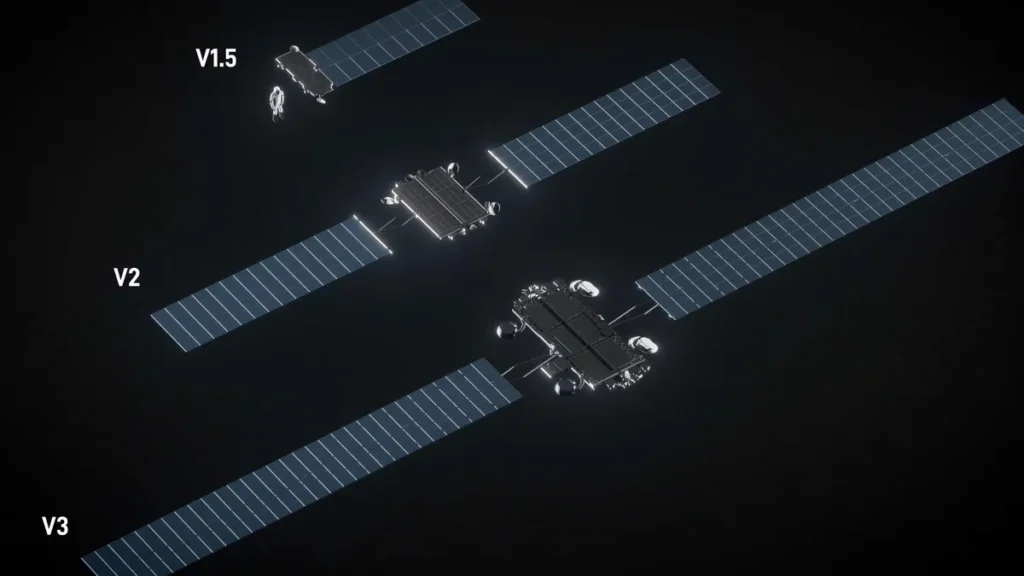
More on thus story: Hybrid War Goes Orbital: Russia’s Threats Against SpaceX and the United States

More on this story: Russia tests an anti-satellite missile and leaves a lot of trouble in space