
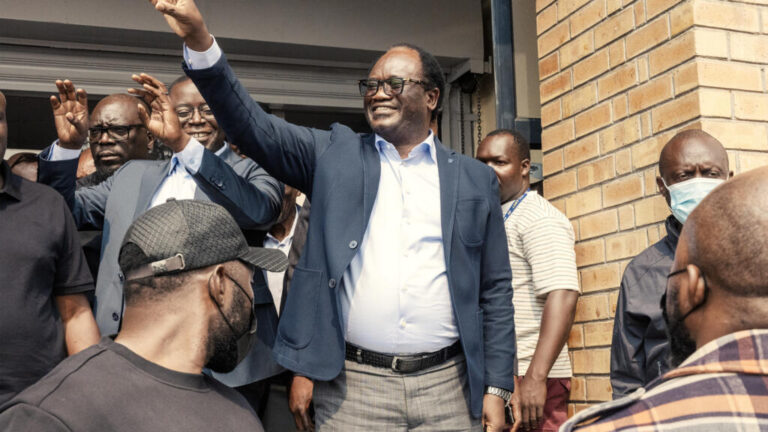
The indictment of opposition leader Brian Mundubile and other defendants on treason charges introduces a potentially significant foreign security dimension into Zambia’s post-election crisis. Prosecutors allege that Mundubile and a businessman financed military training in Russia in preparation for overthrowing President Hakainde Hichilema’s government.
If substantiated, the allegations could indicate an expansion of Russia-linked unconventional security activity into Southern Africa. However, military training on Russian territory does not establish Russian intelligence sponsorship. The case also raises the possibility that national security legislation is being used to suppress opposition following a disputed election.
Anatomy of the alleged conspiracy
On November 23, 2026, a Zambian court referred the case against Mundubile, his former running mate Makebi Zulu and 12 other defendants to the High Court. Prosecutors place the alleged conspiracy between April 1 and August 14, 2026, encompassing the August 13 presidential election. Businessman Harry Valden Findlay is identified as an alleged financier.
The charges concern recruitment of serving and retired security personnel, financial and logistical support for unconstitutional regime change, military training in Russia and possession of weapons allegedly intended for the operation. Court reporting identifies six individuals for whom travel to Russia was allegedly arranged and Colonel Mundubile Mwamba as an alleged recruitment intermediary.
Domestic drivers of the alleged coup
The election as a potential trigger
According to official results, Hichilema secured approximately 60% of the vote against Mundubile’s 38%. The opposition disputed the outcome, and international observers identified electoral shortcomings. The High Court reportedly closed for security reasons on August 24, the final day for submitting electoral challenges.
If the prosecution’s chronology is accurate, preparations began more than four months before voting. The alleged conspiracy could therefore have represented a contingency plan anticipating a disputed election or failure to obtain power through electoral means, rather than a spontaneous response to defeat. Timing alone cannot establish intent.
Political and economic marginalization
Hichilema’s accession in 2021 ended a decade of Patriotic Front (PF) government. Mundubile belongs to the political establishment associated with former President Edgar Lungu. The transfer of power potentially disrupted established political, administrative and commercial networks. Findlay’s alleged financing role introduces an economic dimension.
Possible motives include restoring political influence, protecting commercial interests, opposing institutional restructuring, concern over investigations and frustration with restrictions on opposition activity. These are hypotheses, not established motives of the defendants.
Democratic deterioration and social grievances
A September 2026 European Parliament draft resolution raised concerns about electoral transparency, incumbent advantages, opposition restrictions and the fatal shooting of former minister Mutotwe Kafwaya during a security operation. It called for credible evidence supporting the treason charges.
Unemployment, high food prices and electricity shortages also featured in the election campaign despite progress in debt restructuring. Mundubile advocated lower living costs, improved agriculture and democratic freedoms. Such grievances can deepen instability without implying popular support for military rule.
A loss of confidence in electoral institutions can encourage unconstitutional alternatives, but it can also facilitate politically motivated prosecutions. Hichilema himself faced treason charges in 2017 under Lungu; proceedings were later discontinued following international mediation.
Russia’s political and military footprint
Historical channels of influence
Moscow inherited Soviet-era political, educational and military relationships in Zambia. A 2022 South African Institute of International Affairs study identified military training, defense equipment and nuclear energy as major areas of cooperation. Zambia concluded a defense agreement with Russia in April 2017 under Lungu.
In 2016, the then-ruling Patriotic Front signed a cooperation memorandum with United Russia, institutionalizing contacts between the Russian ruling party and Zambia’s former governing establishment. These links provide channels for political engagement but do not demonstrate covert activity.
The Ukraine factor
On March 2, 2022, Zambia supported the UN General Assembly resolution condemning Russia’s invasion of Ukraine, unlike South Africa and Zimbabwe, which abstained. On March 9, Mundubile questioned this decision in Parliament, emphasizing historical ties with Russia and arguing for neutrality. This demonstrates a foreign policy disagreement with Hichilema, not an intelligence relationship.
Which Russian structures warrant examination?
Three levels of involvement must be distinguished: private commercial training without state direction; facilitation by state-linked actors; and deliberate covert sponsorship of regime change. None has been established in this case.
The Russian Defense Ministry, military intelligence (GRU/GU), Africa Corps, former Wagner networks, private security companies and the Foreign Intelligence Service (SVR) warrant examination according to their institutional responsibilities. The April 2026 Congressional Research Service assessment cited in the original report describes the restructuring of Wagner’s African activities under Africa Corps and military intelligence oversight.
No public evidence links any of these organizations directly to the Zambian case. A commercial arrangement, independent training program or mischaracterized legitimate activity cannot be excluded.
Why Zambia matters to Moscow
Competition with the United States and Europe
Under Hichilema, Zambia expanded Western economic and security engagement without abandoning relations with Russia and China. In April 2022, the United States established an Office of Security Cooperation in Lusaka, supporting military education and peacekeeping preparation.
A hypothetical change in Zambia’s leadership could offer Moscow opportunities to preserve historical defense relationships, limit American institutional influence, expand access to regional security elites and influence Zambia’s diplomatic position on Ukraine. These potential benefits are not evidence of an actual Russian operation.
Copper and the Lobito Corridor
Zambia’s copper reserves and participation in the US- and EU-supported Lobito Corridor increase its geopolitical significance. The corridor links mineral-rich areas of Zambia and the Democratic Republic of the Congo to Angola’s Atlantic coast, diversifying mineral supply chains and expanding Western economic engagement.
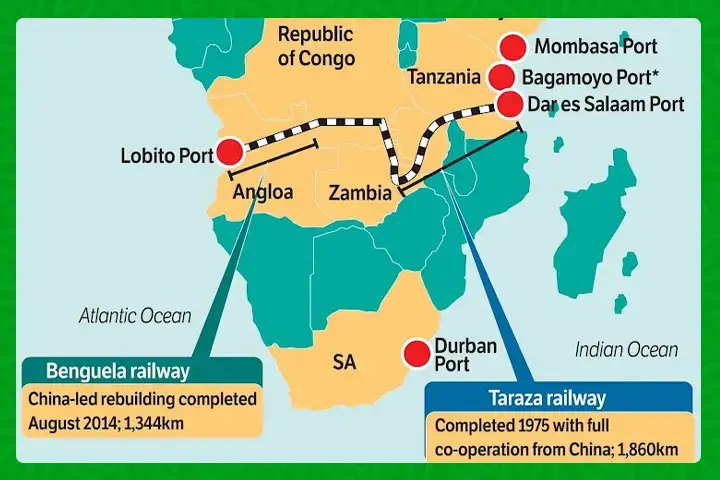
On August 6, 2026, the African Development Bank approved a $255 million loan and $10 million grant to advance Zambia’s participation. The project includes a planned 550-kilometer railway. Political destabilization could delay investment, weaken commercial confidence and complicate Western access to critical minerals.
Regional implications and African precedents
Zambia borders eight countries, including Angola, the DRC, Tanzania, Mozambique and Zimbabwe. Expanded Russian influence could affect both Southern and Central Africa. Yet Moscow already maintains relations with Hichilema, and sponsoring his overthrow would risk damaging established ties and provoking diplomatic retaliation.
Russia has provided regime protection in the Central African Republic, developed security partnerships with military authorities in Mali, Burkina Faso and Niger, and deployed Wagner in Mozambique in 2019. These precedents show how security cooperation can expand political influence, but do not prove Russian organization of African coups. If knowingly preparing Zambian conspirators were confirmed, it would represent a different model: assistance before, rather than after, an unconstitutional transition.
Competing hypotheses and coup risk
Human Rights Watch’s November 1, 2026 investigation documented 14 apparent enforced disappearances, 61 reported cases of violent abuse and 71 potentially politically motivated arrests or prolonged detentions (categories may overlap). Several treason defendants alleged torture or coercive interrogation. Lawyers accused security personnel of seeking statements incriminating Mundubile and Zulu. Authorities maintain that defendants have judicial protections.
Competing explanations
H1 — Russian-sponsored conspiracy. State-linked actors knowingly supported regime change. Requires evidence of authorization, communications and institutional involvement.
H2 — Domestic conspiracy with foreign assistance. Zambian actors independently sought Russian military assistance. Requires verified training and financial records.
H3 — Mischaracterized military contacts. Legitimate military or commercial activity was interpreted as treason. Requires verification of the actual purpose of travel and training.
H4 — Politically motivated prosecution. The Russian connection was exaggerated or fabricated to justify repression. Requires scrutiny of documentary authenticity and possible coerced testimony.
These explanations are not entirely mutually exclusive. A genuine security threat could coexist with abuses during investigation. Repression does not disprove conspiracy, and allegations of foreign interference do not excuse violations of defendants’ rights.
Risk outlook: December 2026–2027
Political polarization is documented, but organized military conspiracy and Russian sponsorship remain unproven. There is insufficient evidence of divisions within senior military leadership or institutional support for a takeover. A numerical coup probability would therefore be premature.
Four scenarios merit consideration: judicial containment with functioning constitutional institutions; a prolonged political crisis involving further repression and investment uncertainty; confirmation of Russian involvement leading to diplomatic and counterintelligence consequences; or wider military destabilization requiring regional engagement.
Policy implications and conclusions
Implications for the United States and European Union
Washington and Brussels face a dual challenge: protecting strategic interests against possible foreign interference while avoiding unconditional support for a government accused of suppressing political freedoms. A purely security-driven response could undermine Western credibility and reinforce Russian narratives about selective democratic commitments.
Diversified investment arrangements and regional cooperation could strengthen the resilience of the Lobito Corridor against political uncertainty. The African Union and Southern African Development Community can support constitutional governance, investigate credible threats of unconstitutional regime change and help prevent escalation.
Conclusion
The alleged coup should be examined as the intersection of domestic competition for power, tensions between political-economic elites and geopolitical competition over Zambia’s international orientation. The 2016 Patriotic Front–United Russia agreement and Mundubile’s 2022 parliamentary criticism of Zambia’s condemnation of Russia warrant further examination alongside the training allegations.
If Russian state-linked military preparation is corroborated, the case could indicate an evolution from exploiting political instability to actively facilitating unconstitutional political transitions. Moscow could potentially benefit from weaker Western security cooperation, greater Zambian neutrality on Ukraine and uncertainty surrounding strategic infrastructure without installing an explicitly pro-Russian government.
The decisive question remains whether Russia merely provided an environment in which Zambian actors sought assistance or whether Russian state-linked structures knowingly participated in preparations for regime change. As of November 25, 2026, this distinction remains unresolved.
Analytical confidence and limitations
More on this story: Zambian elections: scenarios and challenges
More on this story: Hichilema’s administration shows risks for democracy in Zambia