
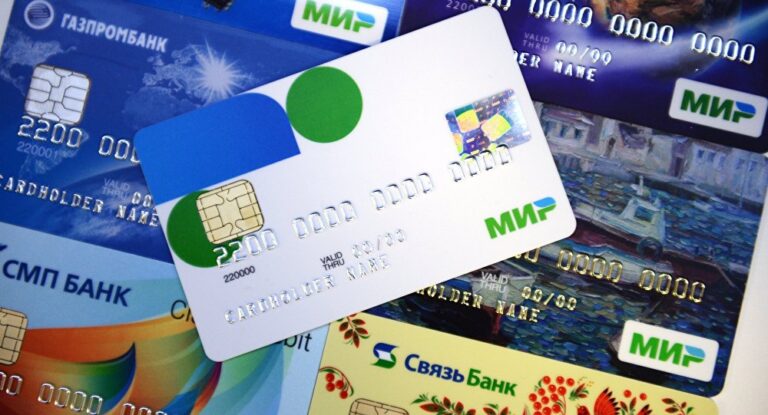
Russia is advancing the expansion of its payment infrastructure through the “National Payment Card System Mir,” positioning it as an alternative for use in Angola. The initiative is not merely technical or commercial; it represents a deliberate geopolitical effort to construct financial channels that bypass Western-dominated systems such as Visa, Mastercard, and the SWIFT network. In doing so, Moscow is seeking to reduce its exposure to sanctions while simultaneously offering partner states a pathway to operate outside U.S.-centric financial oversight. For Washington, this development introduces a structural risk: the gradual erosion of its ability to shape global financial flows through regulatory dominance and access control.
The strategic significance of Mir lies in its potential to create parallel payment corridors for countries that are either under sanctions or seeking to diversify away from Western financial systems. If successfully implemented, such corridors would weaken the effectiveness of sanctions as a foreign policy tool by enabling transactions beyond the reach of U.S. jurisdiction. This shift does not require immediate large-scale adoption to be impactful. Even limited use, particularly in politically aligned or economically vulnerable states, can create precedents that normalize alternative financial pathways. In this context, Angola becomes more than a test case; it serves as a potential gateway for broader expansion across the Global South.
The timing of this initiative is critical. Following sweeping Western sanctions imposed after Russia’s invasion of Ukraine, including the partial exclusion of Russian banks from SWIFT, Moscow has been forced to accelerate the development of indigenous financial instruments. The transformation of Mir from a domestic payment system into an external policy instrument reflects this adaptive strategy. Russia is no longer merely seeking resilience under sanctions; it is actively attempting to reshape the financial environment in which those sanctions operate.
At the same time, this effort intersects with a wider global trend toward financial multipolarity. China is promoting its own payment systems and cross-border settlement mechanisms, contributing to the emergence of parallel infrastructures that are not dependent on Western institutions. While these systems are not yet fully integrated or capable of replacing the existing global financial architecture, their cumulative expansion increases fragmentation. The more diversified the ecosystem becomes, the harder it is for any single actor—particularly the United States—to enforce compliance through centralized mechanisms.
For the United States, the implications extend beyond sanctions enforcement. Financial dominance has long underpinned broader geopolitical influence, enabling Washington to leverage access to dollar liquidity, banking networks, and payment systems as instruments of power. The spread of Mir and similar alternatives challenges this model by gradually reducing dependency on U.S.-controlled channels. Even incremental shifts away from dollar-denominated transactions can, over time, weaken the centrality of the U.S. currency in global trade and finance.
Angola’s role is particularly notable because it reflects a targeted strategy toward emerging markets with growing economic and geopolitical relevance. By integrating such states into alternative financial networks, Russia is not only expanding its own influence but also contributing to the creation of a financial bloc that operates with reduced Western oversight. This process, if replicated across Africa, Asia, and Latin America, could significantly dilute U.S. influence in regions where economic alignment often translates into political alignment.
The risks associated with this transformation are not limited to geopolitical competition. The proliferation of alternative payment systems also raises concerns about transparency and regulatory oversight. Systems operating outside established Western frameworks may be more susceptible to opaque transactions, illicit financial flows, and reduced compliance with international standards. This introduces additional challenges for U.S. financial authorities, which rely heavily on visibility within global networks to monitor and regulate cross-border activity.
In the long term, the expansion of Mir and similar systems contributes to a broader reconfiguration of the global financial order. Rather than a single, integrated system dominated by Western institutions, the world may move toward a more fragmented architecture composed of partially interconnected networks. Such fragmentation complicates global economic governance and reduces the effectiveness of coordinated policy responses. For the United States, this represents not an immediate loss of dominance, but a gradual dilution of influence that could, over time, alter the balance of power in the international system.Even if the Mir system achieves only modest penetration in Angola, the strategic implications should not be underestimated. Financial infrastructures operate cumulatively; each new node strengthens the network and increases its attractiveness to additional participants. In this sense, Russia’s initiative is less about immediate scale and more about long-term positioning. By institutionalizing mechanisms that enable sanctions evasion and financial autonomy, Moscow is laying the groundwork for a more pluralistic and contested global financial environment—one in which U.S. leverage is no longer assured.