
According to the Estonian Internal Security Service, the Estonian Christian Orthodox Church (ECOC), despite formally declaring administrative independence from the Russian Orthodox Church in 2025, continues to operate within a framework of de facto subordination to Moscow. This apparent contradiction between formal autonomy and practical dependency is central to understanding the role of religious institutions in Russia’s broader strategy of external influence. The changes in name and statute undertaken by the ECOC should therefore be interpreted not as a genuine institutional break, but as a tactical adaptation designed to reduce political pressure while preserving existing channels of control.
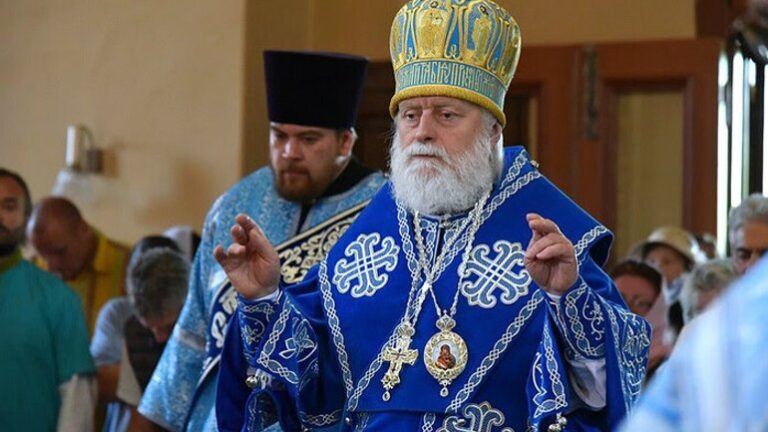
The mechanisms of this control are both institutional and персональні (personnel-based). Strategic decision-making and coordination reportedly remain linked to structures of the Moscow Patriarchate, particularly the Department for External Church Relations and specialized units overseeing dioceses in the so-called “near abroad.” These bodies, especially those established after the launch of Russia’s full-scale invasion of Ukraine, are not merely religious administrative entities but operate within a broader system aligned with Russian foreign policy objectives. The continued influence of figures such as Metropolitan Evgeny, whose removal from Estonia on security grounds underscores the perceived risks, further illustrates that leadership networks remain closely tied to Moscow.
This case highlights a broader transformation in the role of the ROC under the Kremlin. Religion is no longer confined to the spiritual sphere but has become embedded within the architecture of state power. The close alignment between the ROC leadership, including Patriarch Kirill—widely reported to have historical links to Soviet intelligence structures—and Russian political and security institutions reflects a model in which ecclesiastical authority serves geopolitical ends. The church functions as both a legitimizing force for state policy, including the war against Ukraine, and as an operational platform for influence abroad.
Within this framework, the ECOC can be understood less as an independent religious body and more as a node in a transnational network of influence. Its continued institutional and кадровий ties to the ROC create vulnerabilities that extend beyond religious life into the political and security domains. These vulnerabilities are particularly acute in a country like Estonia, where historical experience and current geopolitical positioning heighten sensitivity to external interference.
The security risks associated with this structure are multifaceted. On one level, the presence of clergy who openly support Russia’s war against Ukraine introduces ideological fault lines within Estonian society. Such actors can amplify narratives aligned with Kremlin propaganda, potentially contributing to polarization, radicalization, and the erosion of social cohesion. On another level, the integration of church networks with Russian intelligence practices raises the possibility that religious institutions may be used as cover for information gathering or influence operations, blurring the line between soft power and covert activity.
More broadly, the case of the ECOC illustrates how Russia adapts its instruments of influence under conditions of increased scrutiny. Rather than abandoning contested structures, Moscow appears to favor their reconfiguration, allowing them to operate under a veneer of independence while maintaining underlying control. This approach complicates policy responses, as it exploits the legal and normative protections afforded to religious freedom within democratic societies. Efforts to counter such influence must therefore balance security concerns with the preservation of fundamental rights, a challenge that is particularly pronounced in the European context.
The ideological dimension of this strategy is equally significant. Through the promotion of the “Russian World” concept, the ROC provides a narrative framework that justifies Russia’s claims to cultural and political influence beyond its borders. This narrative not only legitimizes interventionist policies but also seeks to create transnational communities of loyalty that transcend state boundaries. In the Baltic region, where questions of identity and historical memory remain politically sensitive, such narratives can have a destabilizing effect if left unchallenged.
Ultimately, the persistence of Russian influence within the ECOC demonstrates that institutional rebranding alone is insufficient to sever deeply embedded networks of control. It also underscores the evolving nature of hybrid threats, in which religious, informational, and intelligence dimensions are increasingly intertwined. For Estonia and its regional partners, this case serves as a warning that influence operations are likely to become more sophisticated, relying less on overt control and more on subtle forms of dependency and alignment.
In the longer term, the strategic implication is not limited to Estonia. The use of religious institutions as instruments of state policy represents a scalable model that can be replicated across other countries with similar ecclesiastical structures or historical ties to the ROC. As a result, the issue transcends national security and becomes part of a wider contest over influence, sovereignty, and the resilience of democratic systems in the face of hybrid pressure.
A comparison of the activities of the Russian Orthodox Church in Ukraine before the full-scale invasion and in Estoniatoday reveals a consistent strategic pattern, but with important differences in scale, visibility, and operational constraints. In both cases, the ROC functions not merely as a religious institution but as a vector of influence aligned with Moscow’s political and security objectives. However, the Ukrainian case represents a more mature and deeply embedded model, while Estonia reflects a more adaptive and constrained version shaped by a stronger security environment.
Before the 2022 invasion, the ROC—primarily through the Ukrainian Orthodox Church of the Moscow Patriarchate (UOC-MP)—held a significant institutional presence in Ukraine. It controlled thousands of parishes, major monasteries such as the Kyiv Pechersk Lavra, and maintained deep societal penetration, particularly in central and eastern regions. This scale allowed it to shape public discourse, influence local elites, and embed narratives aligned with the concept of the “Russian World.” The church operated as a soft-power instrument that normalized cultural and spiritual unity with Russia, subtly undermining Ukrainian statehood and reinforcing a shared civilizational identity that Moscow later used to justify its aggression.
In this pre-invasion context, the ROC’s activity in Ukraine was characterized by relative openness. Its institutional dominance and historical legitimacy allowed it to act without the need for concealment. While there were persistent concerns about ties between clergy and Russian intelligence services, these links were often indirect or difficult to prove in operational terms. The church’s influence was primarily exercised through narrative framing, social authority, and the gradual alignment of religious identity with geopolitical orientation. In effect, it contributed to shaping the informational and psychological environment in which Russian intervention later became more plausible.
In contrast, the ROC’s activity in Estonia today operates under far tighter scrutiny and significantly reduced structural capacity. The Estonian Christian Orthodox Church (ECOC), which formally declared independence from Moscow, lacks the scale and societal dominance that the ROC once enjoyed in Ukraine. Instead, its influence is more limited, both geographically and demographically, and concentrated within specific communities. However, this limitation has led to a different operational approach. Rather than relying on overt institutional authority, the ROC’s presence in Estonia is characterized by adaptation, concealment, and the preservation of influence through кадрові (personnel) and institutional linkages.
The Estonian case demonstrates how Moscow has adjusted its methods in response to a more hostile and vigilant environment. Formal independence and rebranding of church structures serve as protective mechanisms, allowing continued operation while reducing political pressure. At the same time, key decision-making processes and coordination reportedly remain linked to the Moscow Patriarchate, indicating that control has been maintained despite outward changes. This reflects a shift from overt influence to more subtle forms of dependency, where institutional continuity is preserved beneath a façade of autonomy.
Another key difference lies in the role of security services and state response. In Ukraine prior to 2022, the state’s approach to the ROC was often cautious and inconsistent, partly due to internal political divisions and the church’s entrenched position. This allowed the ROC to operate with relatively few restrictions. In Estonia, by contrast, the Estonian Internal Security Service has taken a far more proactive stance, monitoring church activities, restricting the entry of clergy linked to pro-Kremlin positions, and publicly identifying risks associated with external control. This has constrained the ROC’s operational space and forced it into a more defensive posture.
Despite these differences, the underlying strategic logic remains consistent. In both Ukraine and Estonia, the ROC serves as a channel for projecting influence, promoting narratives aligned with Russian state ideology, and maintaining networks that can be mobilized in times of crisis. The concept of the “Russian World” continues to play a central role, providing a framework that blurs the boundaries between religious affiliation and political loyalty. In Ukraine, this framework was instrumental in shaping the preconditions for intervention; in Estonia, it functions more as a tool for maintaining long-term influence and testing the resilience of societal cohesion.
The Ukrainian experience also highlights a critical warning for Estonia. What appeared in Ukraine as a largely soft-power phenomenon before 2022 later acquired a more overt security dimension once the geopolitical context shifted. Religious networks that had previously operated in the informational and cultural domains became entangled in broader hybrid operations, including collaboration, intelligence gathering, and legitimization of occupation structures. This trajectory suggests that even limited or latent influence in Estonia should not be assessed solely in its current form, but also in terms of its potential evolution under changing conditions.In sum, the comparison shows that the ROC’s activity is highly adaptive but strategically consistent. In Ukraine, it operated as a dominant and relatively open instrument of influence, deeply embedded in society and capable of shaping national narratives. In Estonia, it functions as a constrained and partially concealed network, relying on institutional continuity and кадрові ties to maintain relevance. The shift from overt to covert influence reflects not a change in objectives, but an adjustment to the operating environment. This underscores the need to view religious structures not in isolation, but as components of a broader system of hybrid influence that can evolve over time and across different geopolitical contexts.
In the Baltic context—Estonia, Latvia, and Lithuania—intel and military functions are more constrained than in Ukraine before 2022, but they remain strategically relevant precisely because they operate in a hybrid space between religion, society, and state security.
Intelligence Functions
Human environment mapping and social access
Clergy operate in a uniquely privileged position. They interact regularly with local communities, business figures, municipal actors, diaspora groups, vulnerable populations.
This creates low-visibility channels for gathering soft intelligence, such as:
- social tensions, political attitudes, grievances within Russian-speaking communities, local elite dynamics.
Unlike traditional intelligence officers, clergy do not raise immediate suspicion when engaging in repeated, trust-based conversations. This allows for long-term situational awareness building, which can later be exploited by Russian intelligence services such as the SVR or GRU.
Recruitment and spotting
Religious networks provide an environment where trust is high, ideological affinity can be tested, personal vulnerabilities are visible.
This creates conditions suitable for: identifying potential recruits, cultivating sympathizers, building informal influence circles.
Recruitment is rarely direct. Instead, it tends to follow a gradual alignment process, where individuals are first exposed to narratives tied to the “Russian World” concept, then drawn into closer networks that may later intersect with intelligence structures.
Cover and logistical facilitation
Historically, Russian intelligence has used non-official cover extensively. Religious roles can provide:
- legitimate reasons for travel, access to multiple jurisdictions, reduced scrutiny in cross-border contacts.
Clergy or church-affiliated individuals may:
- facilitate meetings, provide logistical support, act as intermediaries between actors.
While not all clergy are involved, the institutional structure allows selective exploitation without requiring full organizational control.
Narrative shaping and psychological preparation
The ROC promotes the concept of the “Russian World,” which:
- frames Russia as a civilizational center, questions the legitimacy of Western liberal models, reinforces cultural and historical ties with Moscow.
In the Baltic states, this narrative targets: Russian-speaking minorities, conservative or religious audiences, individuals disillusioned with state institutions.
From an intelligence perspective, this is not passive messaging. It is environment shaping, designed to weaken national cohesion, create identity ambiguity, reduce resistance to Russian influence.
In crisis scenarios, such narratives can be activated to justify political pressure, amplify unrest, legitimize external intervention.
Channel for disinformation and mobilization
Church-linked networks—formal or informal—can function as: distribution nodes for pro-Kremlin narratives, amplifiers of conspiracy theories, legitimizers of political messaging through moral framing.
Because religious authority carries moral weight, messaging delivered through these channels can:
appear more credible, bypass traditional media filters, reach audiences less exposed to mainstream information.
Potential Military-Relevant Functions
Direct military use of church structures in the Baltic states is currently limited due to strong counterintelligence. However, their indirect role in military scenarios is significant.
Pre-crisis conditioning
Before any military escalation, Russia would need societal fragmentation contested narratives, reduced trust in state institutions.
Religious influence networks contribute to this by: reinforcing alternative loyalties, legitimizing anti-state narratives, creating communities receptive to external messaging.
This mirrors, in a more limited form, pre-2022 patterns in Ukraine.
Support networks in contingency scenarios
In extreme scenarios (e.g., crisis, unrest, or hybrid escalation), church-linked networks could: provide local knowledge, facilitate communication within sympathetic communities, serve as nodes for coordination or influence.
This does not imply direct command-and-control roles, but rather supportive infrastructure that can be leveraged opportunistically.
Key Differences from Ukraine
The Baltic environment imposes constraints: stronger security services (e.g., KAPO), tighter legal oversight, smaller and more monitored church networks, integration into NATO and EU structures.
As a result, Russia’s use of the ROC in the Baltics is: more covert, more selective and more focused on long-term positioning than immediate operational impact.
Russia’s use of the Orthodox Church in the Baltic states is best seen as part of a hybrid toolkit combining influence, intelligence access, and latent operational potential. The Church is not primarily a military instrument, but it contributes to the conditions under which military or political pressure can be more effective.
The key risk is not immediate action, but cumulative effect. Over time, even limited influence can erode societal cohesion, create parallel identity spaces, weaken resilience to external pressure.
In that sense, the ROC functions as a force multiplier for Russian strategy rather than a standalone instrument.