
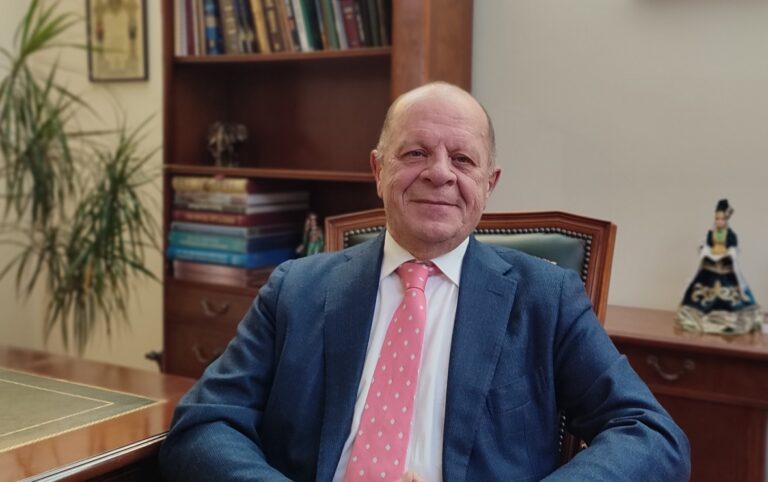
Well-known Russian lobbyist Vittorio Torrembini stated in an interview with Russian propagandists that Western sanctions are ineffective and that a new flourishing of trade and economic relations with Russia is supposedly inevitable.
The president of the Association of Italian Entrepreneurs in Russia, Associazione degli imprenditori italiani in Russia GIM-Unimpresa, Vittorio Torrembini, told the propaganda outlet RIA Novosti that he expects not merely a restoration, but a “new flourishing” of trade and economic ties between the Kremlin and Europe.
The businessman emphasized that the EU’s 20th sanctions package had been the “most difficult” in recent years. According to Torrembini, Italian businesses have lost approximately €8 billion due to sanctions. In his view, companies that left the Russian market are merely waiting for the right moment to return.
Torrembini also argued that shared culture, art, and literature form a mental and civilizational foundation that makes Russia inherently close to Europe and allows business relations to continue developing despite political conflicts.
Analytical Assessment
The statements made by the president of the Italian business association in Russia, GIM-Unimpresa, regarding a supposed “new flourishing” of economic relations between the European Union and Russia lack objective economic justification and contradict current market realities.
These narratives form part of a coordinated Kremlin information campaign and are deliberately disseminated through Russian lobbyists in the Western media space in order to create the illusion of “sanctions fatigue” in Europe; convince European societies that economic pressure on Russia allegedly harms Europe more than Russia itself.
Torrembini’s claims that Italian businesses are ready for an “immediate return” to the Russian market directly challenge European democratic values. European companies willing to re-enter the Russian market risk their reputation and global consumer trust by becoming de facto participants in financing Russia’s military aggression against Ukraine.
His references to €8 billion in losses for Italian business serve primarily as a manipulative instrument in the interests of a narrow group of old-generation entrepreneurs. Torrembini acts not as an independent economic analyst, but as a spokesperson for a pre-2022 economic model that no longer reflects geopolitical reality.
Since 2022, Russia has become a high-risk environment characterized by the absence of rule of law; political unpredictability; the risk of nationalization of foreign assets at the Kremlin’s discretion.
The very fact that Torrembini describes the EU’s 20th sanctions package as the “most difficult” indirectly confirms its effectiveness. Europe has increasingly succeeded in blocking the channels through which Russia’s military-industrial system obtained resources and technologies via “loyal” European intermediaries.
Torrembini also manipulates the issue of the “deteriorating living conditions of millions of people” while ignoring the fact that it was Russia’s aggression that destabilized global food and energy security.
His attempts to repeat Vladimir Putin’s rhetoric about the “harmfulness” of sanctions further expose him as a Kremlin lobbyist operating within the European information space.
Finally, Torrembini’s arguments regarding Russia’s return to Europe’s cultural sphere create risks of the gradual “normalization” of Russia without any genuine change in Kremlin behavior. Such a position undermines the logic of isolating Moscow and transforms sanctions from a tool of deterrence into a symbolic formality, using culture as a political cover.
Statements by Italian businessman and Russia-based lobbyist Vittorio Torrembini regarding the alleged “inevitability” of renewed EU–Russia economic cooperation should not be viewed as isolated commentary from a private entrepreneur. Rather, they reflect a broader Kremlin-linked influence operation designed to undermine Western sanctions policy, normalize renewed engagement with Russia, and shape European public opinion in favor of economic accommodation with Moscow.
The messaging promoted by Torrembini reproduces core Kremlin narratives almost verbatim: sanctions are ineffective; Europe suffers more than Russia; business is eager to return; cultural ties should transcend geopolitics; isolation of Russia is unsustainable.
Such narratives form part of a wider Russian strategy aimed at eroding political consensus within Europe, weakening long-term support for Ukraine, and rebuilding channels of economic and technological access despite ongoing war and sanctions.
Since the start of Russia’s full-scale invasion of Ukraine in 2022, the Kremlin has pursued a parallel information campaign targeting European economic elites.
The objective has evolved over time:
2022–2023: prevent implementation of sanctions; encourage “business pragmatism”; amplify fears of economic collapse in Europe.
2024–2026: create “sanctions fatigue” narratives; normalize discussions of reintegration with Russia; promote the idea that geopolitical confrontation is temporary and economically irrational.
The Kremlin increasingly relies on: business intermediaries; former executives;
- lobby groups; “economic pragmatists” in Europe to disseminate these narratives indirectly rather than through official Russian state channels.
Vittorio Torrembini as a Narrative Vehicle
Torrembini’s statements contain several recurring elements characteristic of Russian influence operations.
A. “Sanctions Hurt Europe More Than Russia”
This is one of Moscow’s central strategic narratives.
Purpose: weaken European public support for sanctions; create pressure on governments through economic anxieties; frame continued pressure on Russia as self-destructive.
However, the claim omits: Russia’s structural economic degradation; technological isolation; growing fiscal deficits; increasing dependence on China.
The Kremlin seeks not necessarily to prove sanctions failed, but to convince Europeans that continuing them is politically and economically unsustainable.
B. “Business Is Ready to Return”
This message serves several functions: signaling inevitability of normalization; encouraging wait-and-see behavior among corporations; weakening reputational barriers against re-entry into Russia.
The narrative attempts to portray withdrawal from Russia as: temporary; emotional; politically imposed rather than strategically necessary.
In reality, many international firms remain highly reluctant to return because Russia now represents: severe political risk; legal uncertainty; reputational toxicity; asset seizure risk.
C. “Shared Culture Beyond Politics”
The appeal to culture, literature, and shared civilization reflects another common Kremlin tactic: separating Russia’s cultural identity from its geopolitical behavior; using culture as a shield against isolation.
This strategy seeks to: preserve Russian soft power in Europe; delegitimize political distancing from Moscow; portray sanctions as irrational hostility toward “Russian culture.”
The approach is especially effective among: older European business elites; cultural institutions; parts of the intellectual left and right.
Influence Operation Structure
The messaging architecture visible in Torrembini’s interview resembles a classic Russian influence framework:
| Component | Function |
| Russian state media | amplification |
| European business figures | local legitimacy |
| Economic arguments | emotional pressure |
| Cultural rhetoric | moral justification |
| “Ordinary people suffer” framing | humanitarian manipulation |
This structure allows the Kremlin to avoid direct propaganda appearance; present narratives through “European voices”; create the illusion of independent Western criticism of sanctions.
Target Audiences
European business elites
Goal: encourage lobbying against sanctions; sustain commercial networks with Russia.
Politicians skeptical of confrontation
Goal: strengthen anti-sanctions coalitions inside the EU.
General public
Goal: create fatigue regarding Ukraine support; shift focus from war crimes to economic inconvenience.
Russian domestic audience
Goal: demonstrate that Europe supposedly “wants Russia back”; reinforce perception that sanctions are collapsing.
The normalization narratives promoted by Russia-linked lobbyists create several strategic risks.
A. Gradual erosion of sanctions consensus
Even without formal policy changes, repeated narratives can: weaken political resolve; increase pressure on governments.
B. Moral normalization of aggression
Reframing Russia as merely a “business partner” obscures war crimes; occupation policies; hybrid operations against Europe.
C. Reconstruction of influence networks
Business reintegration would likely restore: political lobbying channels; intelligence access opportunities; corruption and dependency mechanisms.
D. Fragmentation within the EU
Different levels of economic dependence create opportunities for: intra-European disputes; selective lobbying campaigns.
Italy historically represented one of Russia’s strongest economic entry points into Europe through: energy ties;industrial partnerships; elite political networks.
Segments of the Italian business establishment continue viewing Russia through a: pre-war economic framework; transactional lens detached from security realities.
This creates fertile ground for Kremlin-linked narratives emphasizing: “pragmatism”; “dialogue”; “economic realism.”
Russia’s objective is not immediate sanctions removal.
The more realistic Kremlin goal is: gradual weakening of unity; normalization of selective engagement; erosion of psychological resistance to reintegration. This is a long-term political warfare strategy.
The Torrembini case demonstrates how the Kremlin increasingly relies on non-state European intermediaries to conduct influence operations under the cover of economic expertise and cultural dialogue.
The core purpose is not economic analysis, but strategic persuasion weakening European cohesion; normalizing renewed engagement with Russia; reframing sanctions as irrational and unsustainable.
Kremlin-linked economic narratives in Europe increasingly operate through local business intermediaries who frame sanctions relief and normalization with Russia as economic pragmatism, while effectively advancing Moscow’s long-term objective of dismantling Western political cohesion and sanctions pressure.
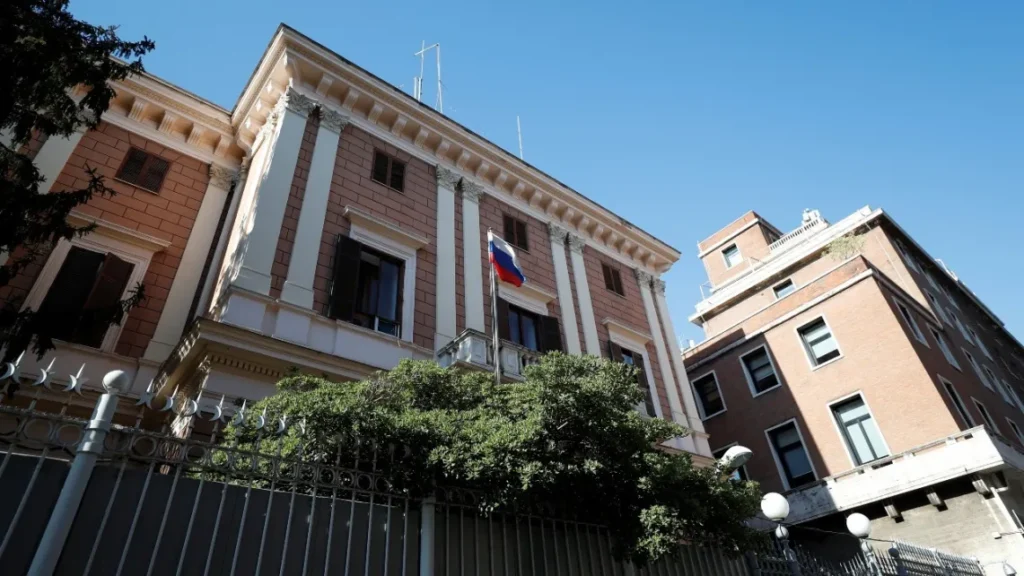
Russia’s influence in Italy has historically relied not only on formal diplomacy, but on a multilayered ecosystem of business elites, political intermediaries, energy partnerships, and regional commercial networks that cultivated long-term economic dependence and political access.
These networks became especially influential between the mid-2000s and 2022, when Moscow actively pursued a strategy of embedding itself into strategic sectors of major European economies.
Energy Networks and Strategic Partnerships
The backbone of Russia’s influence in Italy was built through energy cooperation.
Italian energy giants maintained extensive partnerships with Russian state-controlled corporations such as: ENI, Gazprom, Rosneft, Lukoil.
For years, Italy was among the largest importers of Russian gas in Europe, which created: political lobbying incentives, industrial dependency, and resistance to sanctions escalation.
The Kremlin used these partnerships not simply for profit, but as long-term strategic leverage aimed at: shaping elite perceptions, encouraging political pragmatism toward Moscow, and creating business constituencies opposed to confrontation with Russia.
Northern Italian Industrial Networks
Russia developed particularly strong commercial ties with industrial regions in northern Italy, including: Lombardy, Veneto, Emilia-Romagna, Piedmont.
These regions host thousands of export-oriented medium-sized enterprises active in: machinery, industrial automation, luxury goods, construction equipment, automotive supply chains.
Before 2022, Russia was viewed by many of these firms as a high-growth market, a strategic export destination, and a gateway to Eurasian markets.
This created a business culture highly supportive of economic engagement, sanctions moderation, and preservation of commercial channels with Moscow.
Italy–Russia Business Associations
Several bilateral structures played an important role in preserving Russia-oriented business ecosystems.
Among them: GIM-Unimpresa, Italy–Russia chambers of commerce, sectoral trade councils, informal entrepreneur networks.
These organizations often functioned as lobbying platforms, networking hubs, channels for influence narratives.
While formally economic in nature, many became increasingly aligned with Kremlin strategic messaging after 2022, especially regarding sanctions fatigue, “economic pragmatism,” and the inevitability of restoring ties with Russia.
Political Intermediaries and Informal Influence
Russia’s Italian influence model traditionally relied on: cultivating personal relationships, business diplomacy, elite access, and ideological overlap.
Over time, Moscow established links with Eurosceptic politicians, anti-globalist movements, business-oriented pragmatists, and segments of both the far right and far left.
These actors often shared: skepticism toward NATO, criticism of sanctions, and support for “strategic autonomy” from the United States.
Russia rarely needed direct control; instead, it benefited from convergence of interests, economic incentives, and anti-establishment narratives.
Financial and Real Estate Connections
Before sanctions intensified, Russian capital was deeply integrated into parts of the Italian economy through: luxury real estate, tourism, banking relationships, high-end consumer sectors.
Italian coastal regions and luxury markets became attractive destinations for Russian oligarch wealth, shell-company investments, elite networking.
This created an additional layer of informal influence and economic interdependence.
Post-2022 Transformation
The invasion of Ukraine fundamentally disrupted these networks.
Many companies: exited Russia, froze operations, or reduced exposure.
However, important remnants of the old ecosystem remain active advocating gradual normalization, opposing stricter sanctions, promoting narratives about “mutual losses.”
These networks increasingly operate through: media commentary, lobbying, economic forums, and cultural diplomacy.
The significance of these networks lies not only in trade volumes, but in their ability to influence public discourse, shape elite opinion, pressure policymakers, and weaken European unity on Russia policy.
The Kremlin’s strategy does not require controlling governments directly.
Instead, it seeks to: cultivate influential groups inside European societies that view confrontation with Russia as economically irrational and politically unsustainable.Italian business networks historically linked to Russia continue to function as an important soft-power and influence mechanism for Moscow by promoting sanctions-fatigue narratives, advocating economic normalization, and preserving channels of political and commercial engagement despite Russia’s ongoing war against Ukraine.
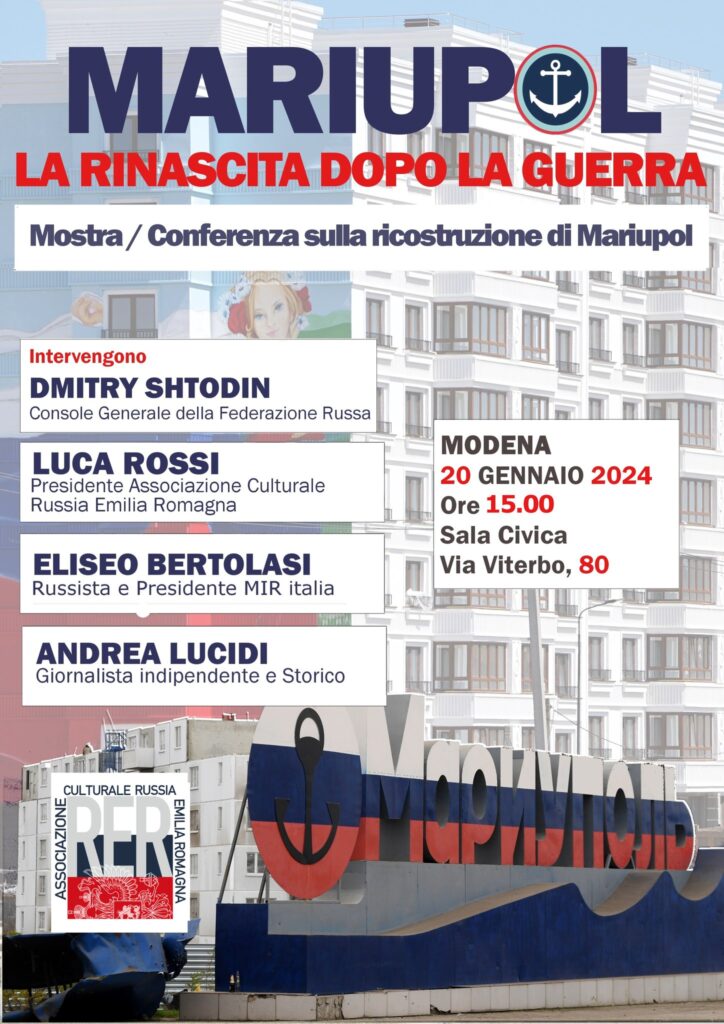
More on this story: Italy: Russia’s influence campaign dismantles vast network of Kremlin agents

More on this story: How does Russian undercover intelligence in Italy look like?
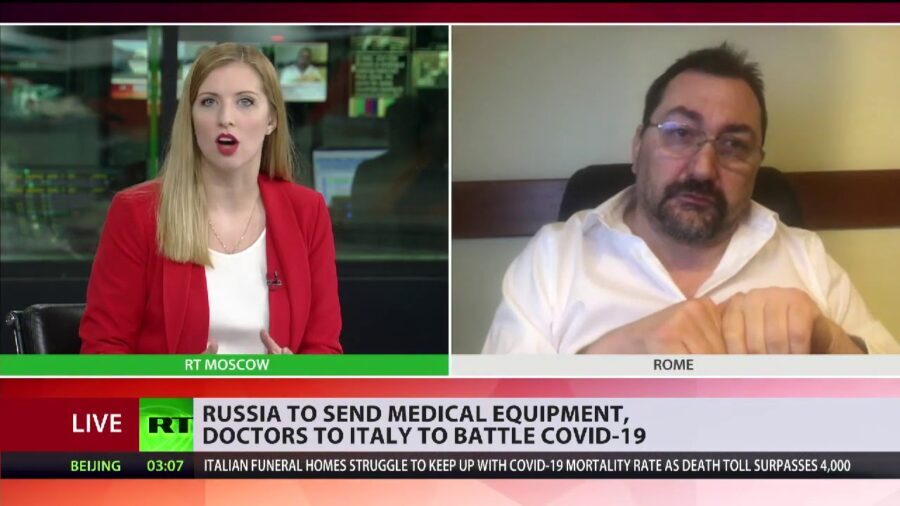
More on this story: Russian Intelligence proceeds with ops in Italy to lift sanctions
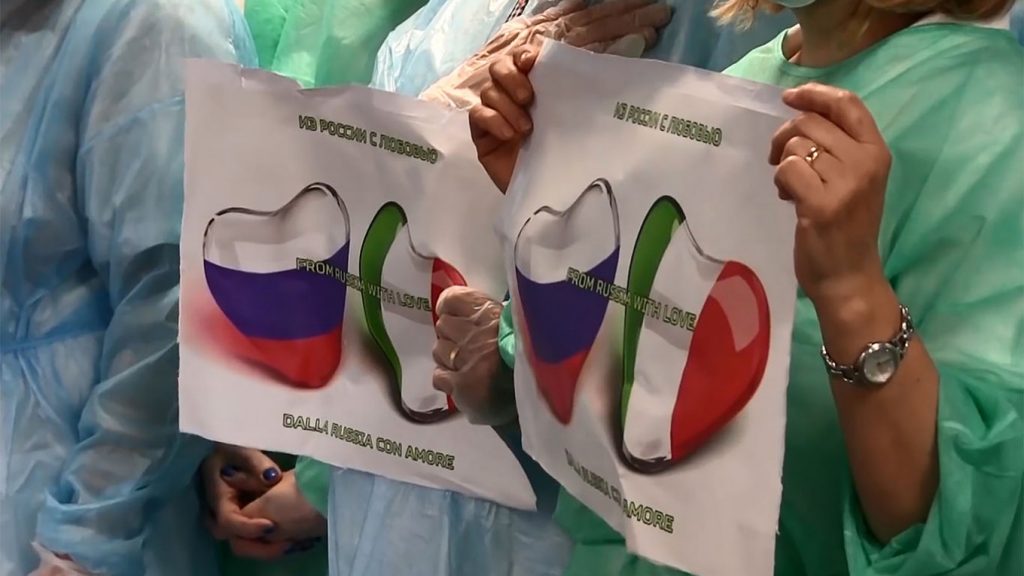
More on this story: The disinformation campaign in Italy is going on
Russian intelligence influence in Italy has historically operated less through direct espionage alone and more through a broad ecosystem of political, economic, media, and social relationships designed to shape the strategic environment in Moscow’s favor.
Unlike Soviet-era active measures focused primarily on ideological penetration, modern Russian influence in Italy combines intelligence operations, business leverage, energy dependency, disinformation, elite cultivation, and political networking.
Italy has long been viewed by Moscow as one of the most favorable environments for influence operations in Western Europe due to: relatively strong historical economic ties with Russia, political fragmentation, the presence of Eurosceptic currents, and sections of the business elite favoring pragmatic engagement with Moscow.
The Kremlin’s goals in Italy have generally focused on: weakening EU unity on sanctions; reducing Italian support for NATO hardline policies; slowing military assistance to Ukraine; preserving economic and energy ties; amplifying anti-American and anti-globalist narratives; increasing political fragmentation inside Europe.
Russian intelligence services traditionally exploit commercial ecosystems because:
business relationships provide lower-risk, long-term access to elite networks.
Russian influence historically targeted: Eurosceptic parties, anti-establishment movements, populist politicians, and pragmatic business-oriented factions.
The Kremlin’s objective was not ideological consistency, but weakening Atlanticist consensus.
Russian intelligence-linked influence ecosystems amplified narratives including:
D. Cultural and Academic Soft Power
Russia invested heavily in cultural diplomacy; academic partnerships; Orthodox religious networks; historical memory narratives.
This was particularly effective in Italy because cultural ties with Russia historically carried prestige, parts of the elite viewed Russia as a “European civilization partner.”
Russian services such as:
- GRU;
- SVR;
- FSB;
traditionally employ a hybrid operational model in Italy.
Historically, Russian intelligence has also used:
- corruption exposure,
- financial incentives,
- reputational vulnerabilities
to gain influence over decision-makers.
Several structural factors increased Italy’s vulnerability:
A. Political fragmentation
Frequent coalition governments create: unstable political environments, multiple access points for influence.
B. Business pragmatism
Italian economic culture often prioritized: trade continuity, pragmatic engagement, commercial diplomacy.
C. Energy dependence
Russian gas and oil created strategic leverage, lobbying incentives.
D. Historical cultural affinity
Russian culture historically enjoyed relatively positive perception among segments of Italian elites.
Post-2022 Changes
Russia’s invasion of Ukraine significantly damaged Moscow’s influence position in Italy.
Changes include reduction of Russian energy dependence; tighter intelligence monitoring; increased awareness of hybrid threats; reputational collapse of overtly pro-Russian positions.
However, influence networks did not disappear entirely.
Instead, they adapted shifting from openly pro-Russian rhetoric to narratives about “peace,” “economic pragmatism,” “sanctions fatigue,” and “strategic autonomy.”
Russian intelligence influence in Italy operates through a sophisticated hybrid ecosystem where: business, culture, energy, media, and political network intersect with long-term strategic objectives.
Moscow’s primary goal is not necessarily to control Italian policy directly, but to:
shape the environment in ways that reduce resistance to Russian geopolitical interests.
Russian intelligence influence in Italy relies less on classic espionage alone and more on the long-term cultivation of political, economic, media, and cultural networks capable of weakening European cohesion, amplifying sanctions-fatigue narratives, and encouraging strategic accommodation with Moscow.