
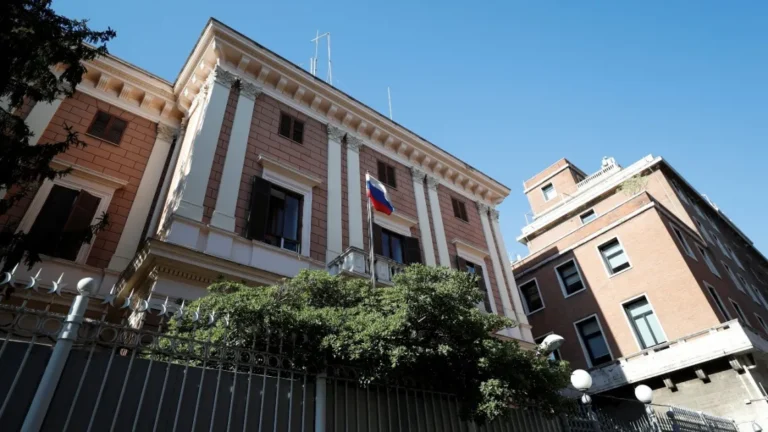
Italy remains the leading country in the Schengen Area in terms of the number of visas issued to Russian citizens (152,000 in 2025), which enabled the visa operator VMS to increase its revenue by 4.1% last year. Despite the suspension of the simplified visa regime, the rise in fees to €80, and a shortage of available appointment slots due to reduced consular staff, the Italian track continues to rank among the most accessible. Together with France and Spain, it accounts for up to 65% of all Schengen visas issued to Russian citizens.
At the same time, in line with new requirements from the European Commission, there has been a shift toward issuing single-entry visas strictly tied to travel dates. This has reduced the share of multiple-entry visas from 42% to 10%, but has not halted the growth of tourist flows or the activity of the Italian visa business in Russia.
Italy’s large-scale issuance of Schengen visas to Russian citizens overlooks the growing risks of hybrid threats originating from Russia and undermines European Union security measures in other areas related to the international isolation of the Kremlin regime.
The Italian visa operator VMS continues to generate substantial profits, benefiting from the absence of a ban by the European Commission on issuing short-term visas to Russian citizens.
Intelligence Penetration Risks
The scale and continuity of visa issuance provide a permissive environment for Russian intelligence services—particularly the SVR and GRU—to embed operatives under legal cover. Short-term Schengen visas, even when restricted to single entry, remain sufficient for:
- Insertion of “clean-skin” operatives with no prior intelligence flags
- Use of tourism, business, or cultural exchange as cover mechanisms
- Establishment of temporary logistical nodes for follow-on operations in other EU states
Italy’s relatively high approval rates, combined with administrative bottlenecks that limit deep vetting, increase the probability that hostile actors can exploit the system. Once admitted, Schengen mobility enables rapid onward movement to more sensitive targets across the EU, including critical NATO states.
Sabotage and Hybrid Operations
The risk is not limited to intelligence collection. Russia’s evolving doctrine of hybrid warfare—demonstrated through sabotage, infrastructure disruption, and covert action across Europe—relies on pre-positioned assets. Visa channels such as Italy’s facilitate:
- Insertion of technical specialists capable of targeting energy, transport, or telecommunications infrastructure
- Reconnaissance of critical nodes, including ports, pipelines, and logistics hubs in Southern Europe
- Coordination with diaspora networks or criminal intermediaries, lowering operational visibility
Recent patterns of suspected Russian-linked sabotage in Europe suggest a preference for decentralized, deniable operations. High-volume visa issuance increases the pool of individuals who can be tasked or recruited for such missions, complicating counterintelligence efforts.
Systemic EU-Level Implications
Italy’s approach, while legally compliant with current European Commission guidelines, creates a mismatch between visa policy and strategic threat perception. While other EU measures aim to isolate the Kremlin, the continued facilitation of travel:
- Undermines collective deterrence by preserving access routes into the EU
- Creates asymmetry among member states, where stricter countries bear downstream security risks
- Strains intelligence-sharing systems, as tracking short-term entrants across borders remains uneven
Commercial Incentives vs. Security Trade-offs
The role of the visa operator VMS highlights a structural tension. The profitability of processing large volumes of applications incentivizes throughput over scrutiny, especially in the absence of an EU-wide prohibition. This creates a quasi-market dynamic in which security risks are externalized to the broader European system.
Strategic Assessment
Italy’s visa policy toward Russian nationals has effectively become a soft-access corridor into the EU’s internal space. While not designed as such, it is functionally exploitable by Russian intelligence and hybrid warfare actors. Without tighter coordination at the EU level—particularly in screening, intelligence integration, and visa issuance thresholds—the current model risks enabling Persistent intelligence penetration;Expansion of sabotage networks, Gradual erosion of EU internal security coherence.
In this context, visa policy is no longer a purely administrative or economic instrument—it has become a frontline variable in Europe’s confrontation with Russian hybrid threats.
Russia’s support for separatism in Italy is not about creating a classic territorial breakaway (as in Ukraine or Georgia). Instead, it is a low-intensity, influence-based strategy designed to weaken state cohesion, amplify internal divisions, and undermine the EU from within.
Political Influence and Proxy Engagement
Russian actors—linked to the Kremlin—have historically cultivated ties with fringe regionalist and secessionist movements in northern Italy (e.g., Veneto, Lombardy). This includes Symbolic recognition efforts (e.g.“referendums” or declarations of independence promoted by activists), contacts with pro-Russian political figures within or adjacent to parties like the Lega Nord, Narrative alignment: portraying Brussels as oppressive and central governments as illegitimate The goal is not necessarily independence, but political fragmentation and weakening of national consensus.
Information and Media Operations
Russian state-linked media such as RT and Sputnik amplify:
- Regional grievances (taxation, migration, economic disparities); Anti-EU sentiment and distrust in Rome; Narratives of “self-determination” mirroring Russian justifications in Crimea or Donbas; These narratives are then recycled through Italian-language fringe media and social networks, creating echo chambersthat legitimize separatist discourse.
Financial and Informal Support Channels
While direct funding is difficult to prove publicly, investigations have pointed to Opaque financial links and attempted deals involving Italian political actors and Russian intermediaries (e.g., energy-linked discussions), Use of business networks and NGOs as intermediaries and support through conferences, forums, and “observer missions” that give legitimacy to separatist activists
These mechanisms provide soft support without formal attribution, consistent with Russian hybrid tactics.
Cyber and Social Media Amplification
Russian-linked online ecosystems (including actors associated with the GRU) have Amplified hashtags and campaigns tied to regional autonomy, Promoted disinformation about EU policies harming Italian regions, Targeted local audiences with tailored narratives (economic injustice, identity politics). This creates a perception of broader support for separatism than actually exists.
Strategic Objective
Russia’s aim is not to break Italy apart, but to Weaken Italy’s role within NATO and the EU, Create internal political friction that limits coherent foreign policy, Undermine sanctions unity against Russia. Encouraging separatist or regionalist sentiment is a force multiplier in this strategy.
Russian support for separatism in Italy operates through influence, not insurgency—leveraging media, political ties, and covert networks to exploit existing divisions. It is less about redrawing borders and more about eroding state cohesion and EU unity from within.
Confirmed / widely reported property ownership in Italy
Vladimir Solovyov( Kremlin propagandist).
- Owned villas on Lake Como (Menaggio area).
- Properties were frozen/seized by Italian authorities in 2022 under EU sanctions
Case became a symbol of Russian propaganda figures’ assets in Italy
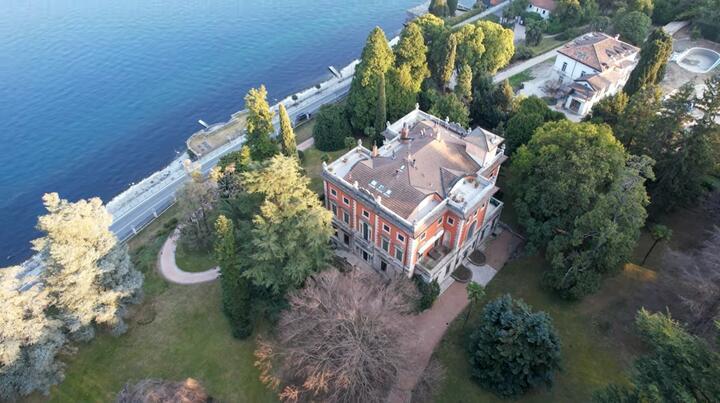
Andrey Melnichenko
- Reported ownership of luxury real estate in Italy;
- His assets (including villas and yachts) were targeted by sanctions;
- Connected to broader EU asset-freeze mechanisms.
Arkady Rotenberg and Boris Rotenberg
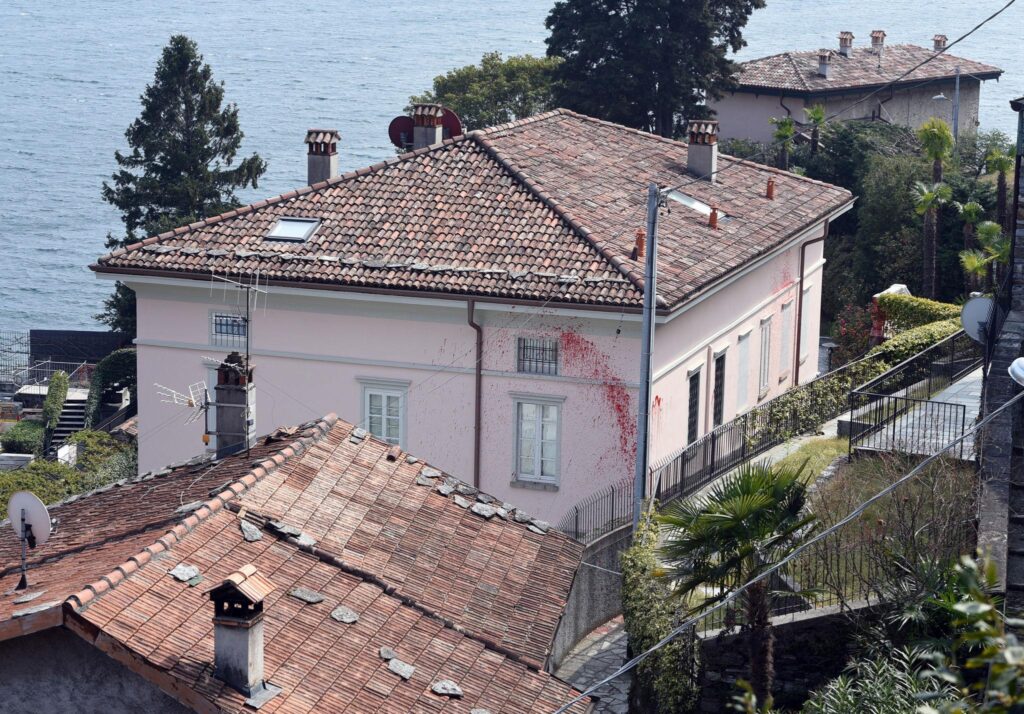
- Long associated with high-end property holdings in Italy;
- Italian authorities froze multiple assets linked to sanctioned individuals;
- Part of a broader network close to the Vladimir Putin.
Alisher Usmanov
- Owned property in Sardinia (Costa Smeralda);
- Villa and yacht seized/frozen by Italian authorities after 2022 sanctions.
Oleg Savchenko (reported cases)
- Linked in investigative reporting to property in Italy
- Represents a broader category of mid-tier elites using Italian real estate
Residency / long-term presence (less visible but significant)
Beyond high-profile oligarchs, a wider group includes:
- Business elites and family members using Italy as a lifestyle base
- Individuals with residence permits (permesso di soggiorno) rather than citizenship
- People linked to state corporations, media, or regional political elites
These cases are less transparent but arguably more relevant for influence and intelligence risks.
Key analytical takeaway
- Real estate = financial shelter + EU foothold
- Residency = mobility within the Schengen Area
- Legal opacity = difficulty distinguishing lifestyle from operational use
This creates a gray zone where sanctioned individuals are visible, but a broader layer of politically connected Russians remains embedded with lower scrutiny and higher deniability.
Regional map of Russian elite property hubs
Lake Como
Lake Como is the clearest example of a prestige-asset zone tied to Russian visibility in Italy. Reuters reported that pro-Kremlin TV host Vladimir Solovyov had two Lake Como properties seized by Italian authorities, and more broadly noted that post-2022 seizures hit assets around Lake Como, Sardinia, and Tuscany.
Network significance: Lake Como is less important as an industrial-financial node than as a status, hospitality, and meeting environment. It offers elite privacy, social legitimacy, and a convenient setting for informal relationship-building with lawyers, fixers, brokers, media personalities, and local intermediaries. That does not prove covert activity at each property, but it does show why the area is useful for soft-access influence operations. This is an inference based on the pattern of asset concentration and Italy’s role as a permissive social environment for Russian-linked wealth.
Tuscany
Tuscany appears in the sanctions record as another landed-asset zone. Reuters identified Oleg Savchenko, a Russian lawmaker, as having a 17th-century Tuscan villa seized by Italian authorities.
Network significance: Tuscany is especially suited to low-visibility embedding. It combines luxury real estate, tourism cover, agricultural and hospitality investment, and access to professional services. In practice, such regions can host not only owners themselves but also relatives, nominees, advisers, or shell-company representatives. Again, the property ownership is documented; the broader network utility is an analytic inference grounded in how sanctions-evading or influence ecosystems tend to function.
Sardinia
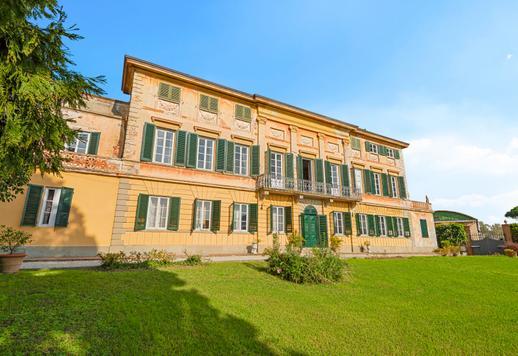
Sardinia is the most important of the three from a capital concentration standpoint. Reuters reported the seizure of a Sardinian building complex worth about €105 million belonging to Alexey Mordashov, and separately reported the seizure of a Sardinian villa and six firms holding property and luxury cars linked to Alisher Usmanov. Reuters also noted Usmanov’s villa in Golfo del Pevero.
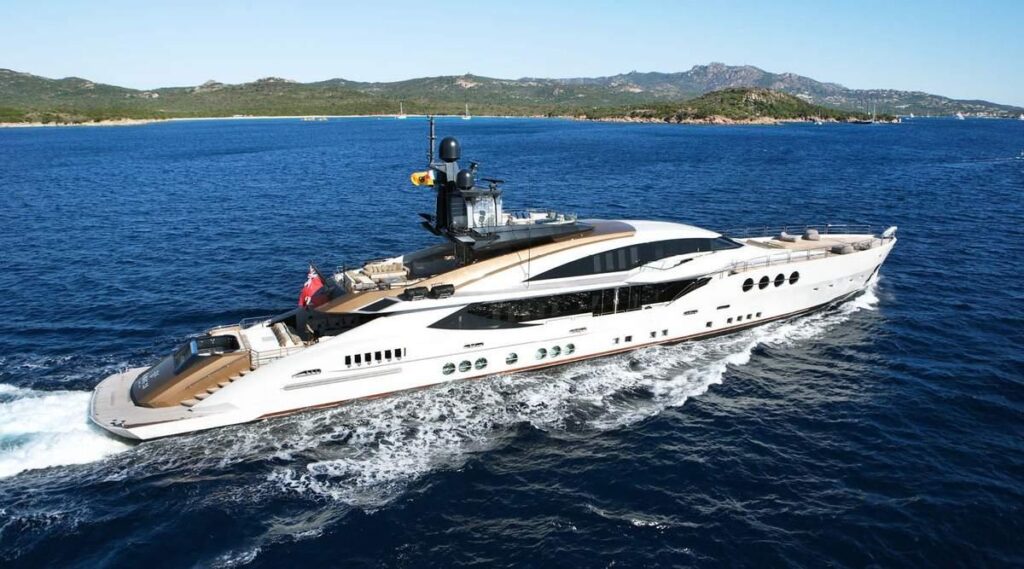
Network significance: Sardinia is not just symbolic. It combines luxury property, resort infrastructure, maritime access, and company vehicles/entities. That makes it a stronger candidate for asset parking, nominee ownership structures, hospitality-based networking, and legal-financial shielding than Lake Como alone. Reuters’ reporting on the Usmanov case explicitly mentions the companies tied to the property structure, which is important because influence rarely moves through a villa alone; it moves through associated firms, trusts, lawyers, and service providers.
2. The core network architecture
The best way to understand the Italy map is as a three-layer system:
Layer 1: Asset nodes
These are villas, yacht berths, resort complexes, and associated holding companies in Lake Como, Tuscany, and Sardinia. They provide legitimacy, residence, prestige, and fixed points of contact. Reuters says Italy had frozen more than €2.3 billion in Russian-linked assets by late 2024/2025, including villas, bank accounts, yachts, and cars.
Layer 2: Financial-service connectors
These include trusts, property firms, lawyers, accountants, concierge operators, and corporate vehicles. The Usmanov litigation is especially revealing because Reuters names firms such as Sardegna Servizi, Delemar, Punta Capaccia, and Machina, and describes an ownership dispute involving a Bermuda trust. That shows how Italian real estate can sit inside a wider offshore-corporate architecture rather than existing as simple personal property.
Layer 3: Influence conduits
These are the channels through which Russian-linked actors can shape Italian discourse or politics: party relationships, sympathetic public figures, cultural events, “independent journalism,” and propaganda-adjacent media ecosystems. The property layer does not automatically merge with the propaganda layer, but both operate in the same permissive environment.
3. Links to financial influence channels inside Italy
The strongest documented link between Russian elite property and Italian financial influence is not a single bank or party donation trail, but the broader service ecosystem around sanctioned wealth.
Reuters reported that Italy’s anti-money-laundering authorities counted roughly 80 individuals tied to frozen financial holdings, and that the state has had to manage substantial maintenance costs for frozen non-liquid assets. That indicates a large installed architecture of asset management, beneficial ownership questions, and legal contestation.
The Sardinia cases are especially important because they show how ownership can be buffered through firms and trusts, which complicates enforcement and gives wealthy Russian-linked actors opportunities to preserve influence through intermediaries even when direct control is challenged.
A separate but relevant case is the Artem Uss escape affair. Reuters reported that Dmitry Chirakadze, a Russian businessman, was arrested in Italy over alleged assistance in Uss’s escape from house arrest, and noted Chirakadze owned a luxury resort in Sardinia. That does not prove Sardinia is a Russian covert hub, but it does show that elite Russian-linked networks in Italy can intersect with logistics, mobility, and evasion, not just passive wealth storage.
Links to media and propaganda channels inside Italy
This is where the map shifts from oligarch assets to narrative infrastructure.
An ECFR brief says Italy has long been seen as one of Europe’s more Russia-understanding environments, notes enduring ties between some Italian politicians and businesses and Russian counterparts, and warns that Russian talking points have been amplified in Italy via bots and false accounts.
ISD’s 2025 investigation found that RT-branded propaganda continued to reach Italian audiences despite EU sanctions, including through documentary screenings across Italy promoted by networks including Donbass Italia, ControNarrazione, and InfoDefense. ISD says these networks included Italian “independent journalists,” former anti-lockdown groups, and both Italian and Russian officials, and that their content reached almost two million users in a 60-day period.
. Their role can be indirect they provide stable Italian footholds for high-status Russian-linked individuals; they normalize Russian elite presence inside the country; they help sustain a broader social climate in which pro-Kremlin narratives can travel through “culture,” “independent journalism,” tourism, and business contacts rather than overt state channels.
Links to political influence channels inside Italy
The most documented formal political link is the old relationship between Lega and United Russia. Reuters reported that Lega disavowed its 2017 accord with United Russia only in 2024, and noted that the agreement had automatically renewed in 2022. Reuters also described Matteo Salvini as a longtime Putin admirer, even though he later backed sanctions and military support for Kyiv.
This does not prove that Russian property owners in Sardinia, Tuscany, or Lake Como were directly steering Italian politics. But it does show that the political environment in Italy has included channels historically open to Russian influence. When that political permissiveness exists alongside elite property concentration and active propaganda networks, the result is a layered ecosystem of access.
A cautious analytic formulation would be Property nodes give Russian-linked elites endurance and local embedding; Financial-service nodes help preserve and mask control; Media-proxy nodes diffuse Kremlin narratives. Political relationship nodes make parts of the system more receptive.
That is not the same as a centrally directed conspiracy, but it is consistent with how Russian influence often works in Europe: through overlapping, semi-formal networks rather than one visible chain of command.
A practical network map
Lake Como
→ Solovyov properties;
→ prestige access, social hosting, reputational normalization
→ soft links to media personalities, local brokers, luxury-service intermediaries
Tuscany
→ Savchenko villa;
→ quieter long-term embedding, tourism/agro-hospitality cover
→ low-visibility legal and local commercial relationships
Sardinia
→ Mordashov property complex; Usmanov villa and associated companies; Chirakadze resort connection;
→ strongest financial-service architecture, maritime and resort access, nominee-company shielding
→ best candidate for overlap between wealth preservation, mobility logistics, and influence brokerage
Cross-cutting Italian channels
→ party ties historically involving Lega and United Russia
→ pro-Kremlin documentary circuits and sanctions-evasion media networks
→ business/legal service ecosystem around frozen or contested assets
Italy’s Russian-elite geography is not just a map of villas. It is a map of embedded access points. The hard evidence shows Russian-linked wealth concentrated in places like Lake Como, Tuscany, and especially Sardinia. The broader risk picture is that these asset nodes sit inside an Italian environment where Russian propaganda networks have continued to operate and where parts of the political class historically maintained unusually permissive relations with Moscow.
The strongest region for a deeper investigation is Sardinia, because that is where the reporting most clearly shows the overlap of luxury real estate, corporate vehicles, legal contestation, and mobility-linked cases. Lake Como is the most visible media symbol; Tuscany is the quieter residency model; Sardinia is the most structurally important node.
Russian criminal activity in Italy exists, but it is more discreet and financially oriented than in some other European countries. It tends to overlap with money laundering, sanctions evasion, and logistics support, rather than visible street-level crime.
Core structure: “low-visibility, high-value” model
Russian-linked criminal activity in Italy typically operates through Shell companies and real estate (especially in Sardinia, Tuscany, Lombardy); Financial intermediaries (lawyers, accountants, fiduciaries); Cross-border networks rather than local gangs. Unlike traditional mafias (e.g., Cosa Nostra or ‘Ndrangheta), Russian actors rarely dominate territory. Instead, they plug into existing systems.
Money laundering and asset shielding
Italy is attractive for laundering due to Large real estate market, Tourism and luxury sectors, Complex corporate ownership structures.
Key patterns:
- Use of front companies to purchase villas, hotels, or resorts; Conversion of funds into “clean” EU assets; Movement of money via offshore structures linked to EU-based firms.
The cases of Alisher Usmanov and Alexey Mordashov (asset freezes in Sardinia) illustrate how legal and illicit financial flows can overlap, even if not all activity is criminal.
Sanctions evasion networks
After 2022, Italy became part of sanctions circumvention routes: Use of intermediaries to maintain control over frozen assets; Re-registration of companies under non-sanctioned proxies; Continued operation of businesses via complex ownership chains
The involvement of business intermediaries in the escape of Artem Uss from house arrest in Italy highlights how elite networks can mobilize logistics, transport, and safe channels when needed.
Organized crime cooperation
Russian criminal actors often cooperate rather than compete with Italian mafias:
- With ‘Ndrangheta: Links in drug trafficking and financial laundering; Use of established global routes; With Balkan networks;
- Arms trafficking, smuggling, and logistics; Access to Adriatic routes.This creates hybrid criminal ecosystems where Russian actors provide capital and international reach, while local groups provide infrastructure.
Cybercrime and financial fraud
Italy is also a target and base for:
- Cyber fraud and phishing networks linked to Russian-speaking groups
- Cryptocurrency laundering channels. Business email compromise (BEC) schemes targeting Italian firms. Some actors have indirect or overlapping links with services like the GRU, though this is often blurred between state and criminal domains.
Use of “legal cover” environments
Russian-linked criminal activity benefits from Residency permits and visas; Ownership of legitimate businesses (restaurants, hotels, logistics firms); Cultural and diaspora networks.
This allows actors to blend into normal economic life, reducing detection.
Strategic overlap with state interests
The most important feature is the gray zone between crime and state:
- Some criminal networks can be tasked or tolerated by Russian intelligence
- Criminal infrastructure (transport, money movement, documents) can support:
- Espionage, Sabotage logistics, Influence operations.
This does not mean all Russian criminals in Italy are state-controlled—but the potential for overlap is structurally high.
Russian criminal activity in Italy is:
- Financial, transnational, and discreet; Embedded in legal sectors like real estate and tourism; Interconnected with Italian and Balkan organized crime; Potentially usable as infrastructure for hybrid operations.
Italy is not a hotspot of violent Russian mafia activity—but it is a critical node for money, access, and operational support inside the EU.
Russian and post-Soviet criminal groups are involved mainly in three specific layers:
A. Trafficking pipelines (historical + ongoing)
- Since the 1990s, Russian/CIS networks helped transport women from Eastern Europe into Italy
- Italian investigations documented cases where Russian-linked groups Organized illegal entry of women from former Soviet states
- Maintained prostitution networks in Northern and Central Italy
👉 Today, this role is shared with Balkan and Ukrainian networks, not exclusively Russian.
B. High-end / escort segment
Russian-speaking networks are more present in Escort agencies,
- Elite prostitution tied to:nightlife; private events; business environments.
This segment is Smaller but More profitable and Less visible.
This aligns with the broader Russian criminal model: low visibility, high-value operations.
C. Cooperation with Italian mafias
Russian groups rarely operate independently. Instead:
- They cooperate with Italian mafias who control territory
- Provide Italian mafias then Control distribution (streets, brothels, protection).
Recent reporting shows Italian organized crime increasingly works in partnerships across borders, including trafficking and prostitution networks.
Key structural pattern: hybrid networks
The most important reality is network integration:
- Russian / post-Soviet groups → supply + finance
- Italian mafias → territory + enforcement
- African / Balkan groups → street control
This creates multi-ethnic criminal ecosystems, not isolated “Russian mafia zones.”
Human trafficking dimension
Russia is a source country for trafficking:
- Women from Russia and former Soviet states are trafficked to Europe. Russia is identified as a major origin point for victims of sexual exploitation globally
However:
- In Italy today, Balkan, and African victims are more numerous
- Russian nationals are a smaller share of exploited populations
Links to broader criminal and state-adjacent networks
This is where it becomes strategically relevant:
Russian criminal structures involved in prostitution:
- Often overlap with:
- money laundering
- document fraud
- migration smuggling
And in some cases:
- These networks can be used opportunistically by actors linked to services like the GRU
Not for controlling prostitution—but for:
- Logistics; movement of people; financial flows
Analytical bottom line
Level of Russian involvement:
Most accurate characterization:
Russian involvement is networked and supportive, not territorial or hegemonic.
Strategic interpretation
Russia-linked criminal actors don’t need to control prostitution in Italy. Their value lies in cross-border mobility; financial infrastructure; connections to Eastern European trafficking pipelines.
That makes them enablers inside a larger system, rather than the main operators.If you want, I can map which Italian regions (Milan, Rome, Naples) show the strongest Russian-linked activity in these networks—that’s where the operational geography becomes clearer.
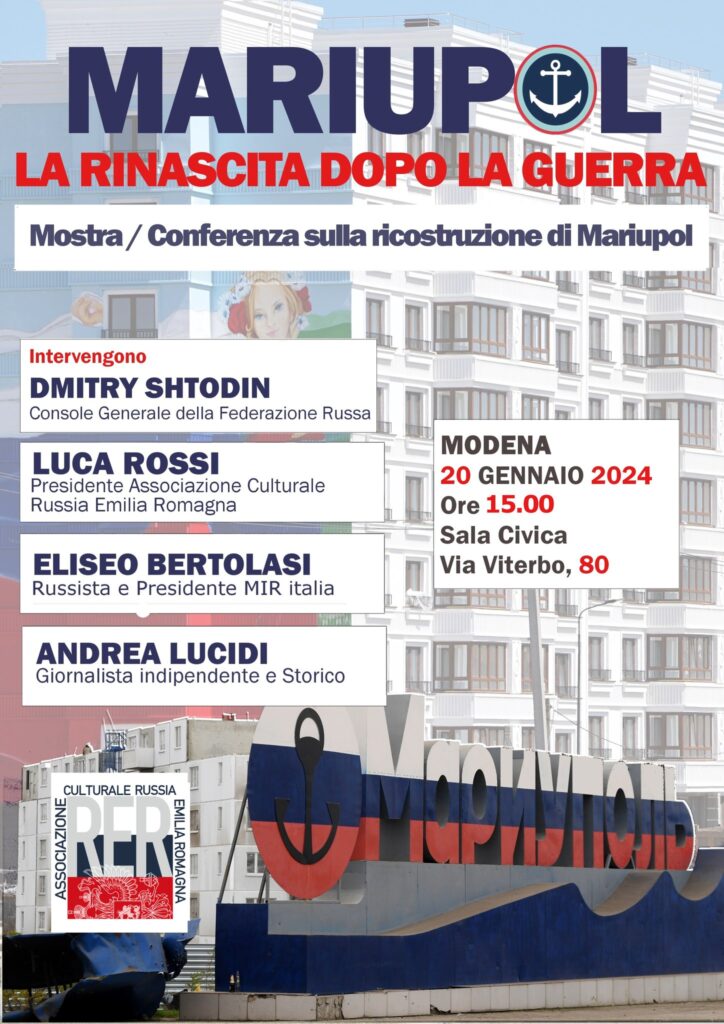
More on this story: Italy: Russia’s influence campaign dismantles vast network of Kremlin agents
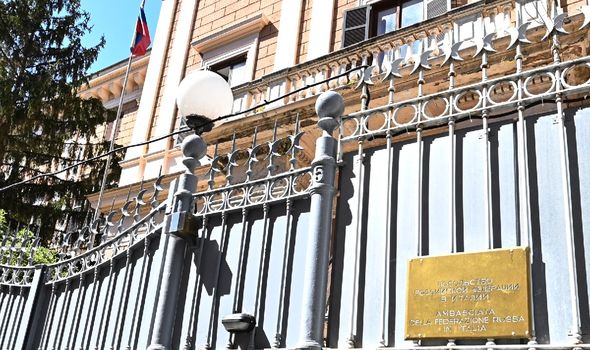
More on this story: How does Russian undercover intelligence in Italy look like?
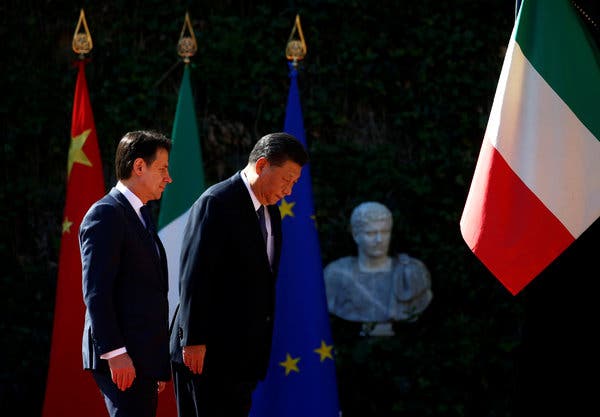
More on this story: COVID-19 crisis: An Alternative Explanation Of The Russian Engagement In Italy