
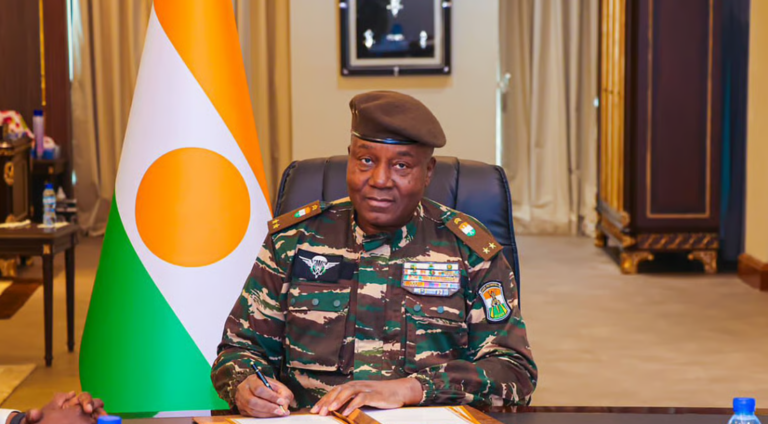
The decision by Abdourahamane Tiani to formalize a five-year transitional presidency marks a decisive transformation of Niger from a coup-led transitional state into a consolidated military regime with long-term geopolitical ambitions. Far from representing a temporary stabilization mechanism, the newly adopted “Refoundation Charter” institutionalizes military authority, restructures the political system around the junta, and embeds Niger more deeply into the emerging anti-Western security architecture of the central Sahel.
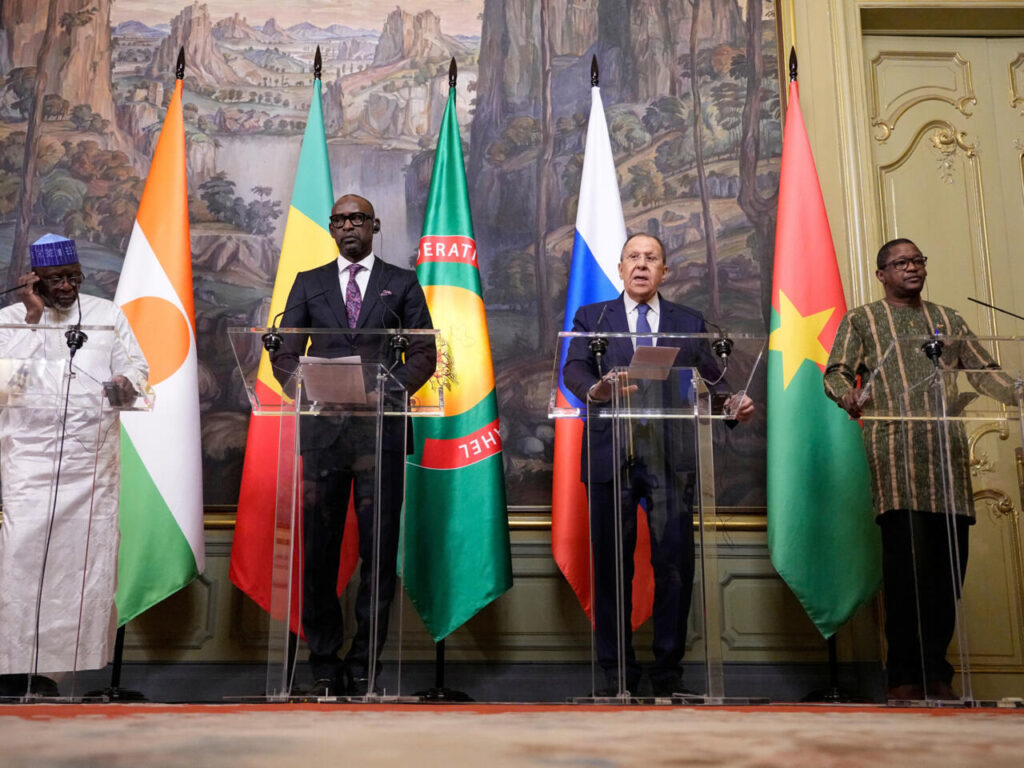
The move places Niger alongside Mali and Burkina Faso as part of a new generation of military-led Sahelian regimes that increasingly reject Western political models, distance themselves from ECOWAS, and cultivate alternative partnerships centered on sovereignty rhetoric, militarized governance, and strategic cooperation with Russia.
The adoption of a five-year “flexible” transition period effectively removes the illusion that Niger’s junta intends to rapidly restore civilian democratic governance. The new charter gives constitutional status to military rule, elevates Tiani from junta leader to formal president, and permits the extension of the transition depending on the “security situation” and the agenda of the Alliance of Sahel States.
This language is strategically important because it creates a permanent justification for prolonging military governance indefinitely. By tying the transition timeline to security conditions — conditions that remain highly unstable due to jihadist insurgencies across the Sahel — the regime acquires a self-sustaining legal mechanism to maintain power for years beyond the formal deadline.
The precedent closely mirrors developments in Mali and Burkina Faso, where transitional military authorities gradually evolved into entrenched ruling systems rather than temporary administrations.
The dissolution or suspension of political parties further reinforces this trajectory. Rather than preparing competitive political pluralism, the junta appears to be constructing a tightly controlled political environment designed to eliminate rival civilian power centers before any future electoral process.
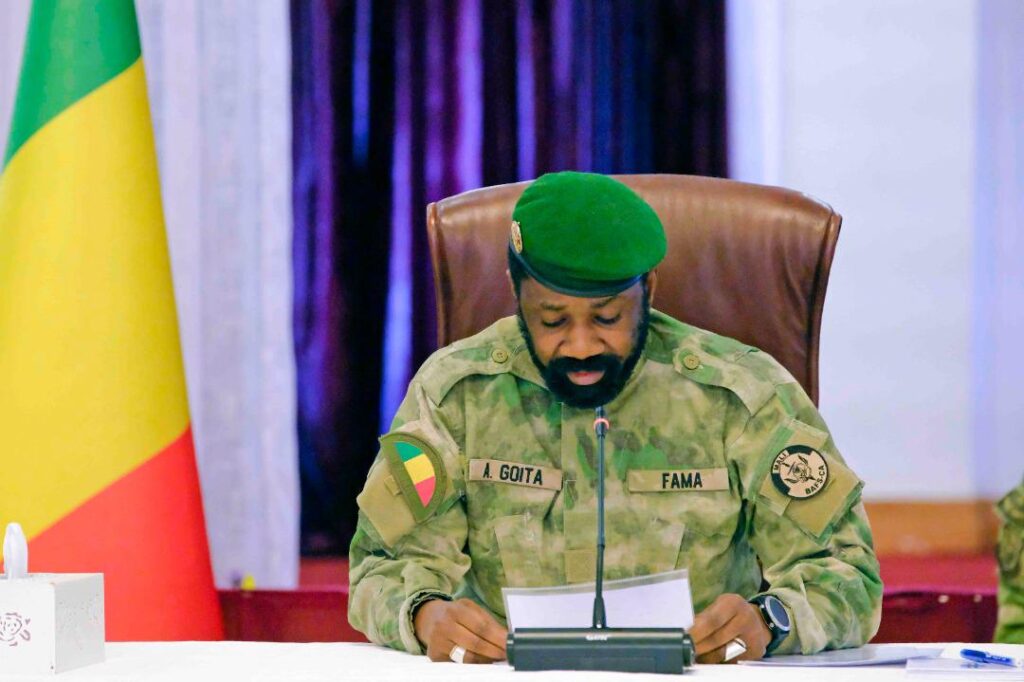
Tiani’s elevation to the rank of army general carries symbolic and institutional significance beyond military protocol. It signals the personalization of the state around the junta leader and the fusion of military hierarchy with political legitimacy.
Historically, military rulers in the Sahel often justified coups as corrective interventions against corruption, insecurity, or weak governance. However, the Nigerien case increasingly resembles the construction of a durable praetorian state in which the military becomes the primary governing institution; political authority derives from security control; legitimacy is rooted in nationalist and anti-Western rhetoric rather than elections.
The “Refoundation Charter” effectively replaces the constitutional order established after Niger’s democratic transition in 2010. This represents not merely a suspension of democracy but a broader ideological rejection of the post-Cold War liberal governance framework promoted by Western states and regional organizations.
One of the most consequential aspects of Tiani’s consolidation of power is the demonstration of ECOWAS’s declining capacity to shape political outcomes in West Africa.
Following the 2023 coup, ECOWAS initially threatened military intervention and imposed sanctions intended to pressure the junta into restoring constitutional order. However, these measures ultimately failed. Instead of isolating the junta, external pressure accelerated regional fragmentation.
Niger, Mali, and Burkina Faso subsequently withdrew from ECOWAS and deepened cooperation through the Alliance of Sahel States (AES). This development represents one of the most serious institutional crises in the history of West African regional integration.
The implications extend beyond Niger itself: ECOWAS deterrence credibility has been weakened; military actors elsewhere may perceive coups as survivable; regional democratic norms have suffered structural damage; anti-Western military regimes now possess a parallel geopolitical bloc.
The failure to reverse the Niger coup therefore carries continent-wide consequences for civil-military relations in Africa.
The consolidation of military rule in Niger also creates substantial geopolitical opportunities for Russia. Since the coup, Niger has progressively reduced security cooperation with Western powers, expelled French forces, and moved closer to Moscow.
For Russia, Niger offers several strategic advantages: geographic positioning in the central Sahel; access to uranium and strategic minerals; political leverage against France and the EU; expansion of Russian security influence in Africa; opportunities for military, intelligence, and economic penetration.
The deterioration of Western influence across the Sahel has already enabled Russia to present itself as an alternative security partner. Although Russian involvement may not yet fully replicate the earlier Wagner model seen in Mali, Moscow increasingly benefits from the political vacuum left by the withdrawal of Western forces.
The ideological framing used by Sahelian juntas also aligns closely with Russian narratives: anti-colonial sovereignty; resistance to Western interference; security-first governance multipolar geopolitics.
This convergence creates favorable conditions for long-term Russian strategic entrenchment.
Despite the consolidation of political power, the central challenge facing Tiani’s government remains unresolved: insecurity.
The junta initially justified the coup by arguing that the civilian government of Mohamed Bazoum had failed to contain jihadist violence. Yet since the coup, security indicators across parts of the Sahel have remained unstable or deteriorated.
This creates a structural legitimacy problem for the regime.
The military leadership derives much of its political justification from promises of restoring sovereignty and improving security. If insurgent violence persists despite the concentration of military power, the junta may gradually lose public credibility.
The risk is particularly acute because military governments often centralize authority around coercive institutions while weakening civilian governance capacity. Over time, this can: reduce institutional resilience; deepen economic stagnation; fuel corruption inside military networks; intensify regional grievances.
Thus, while the regime appears politically stronger in the short term, its long-term stability remains uncertain.
The continued detention of former president Mohamed Bazoum remains one of the most sensitive unresolved issues in Niger’s political crisis.
Bazoum’s symbolic importance extends beyond domestic politics: he remains internationally recognized by many Western actors as the legitimate elected leader; his detention complicates normalization with external partners; he serves as a constant reminder of the unconstitutional nature of the regime.
As long as Bazoum remains effectively imprisoned, full diplomatic rehabilitation of Niger with Western governments will remain difficult.
At the same time, releasing him could create internal risks for the junta by reopening political competition or exposing fractures within the military establishment.
This leaves Tiani trapped between international pressure and domestic regime security considerations.
Niger increasingly appears to be part of a broader emerging governance model in the Sahel characterized by: military-led nationalism; anti-Western political identity; weakened democratic institutions; prolonged transitional governance; regional military solidarity; external balancing toward Russia and non-Western partners.
This model challenges long-standing assumptions that coups necessarily produce short-lived transitional arrangements. Instead, Sahelian juntas are progressively constructing alternative systems of legitimacy based on sovereignty, security, and resistance to foreign influence.
The danger for the broader region is that this model may become politically attractive elsewhere, particularly in fragile states experiencing: jihadist violence; weak governance; economic crises; and public frustration with civilian elites.
General Tiani’s formalization of a five-year presidential transition is not simply an administrative adjustment — it is the institutionalization of a new political order in Niger.
The regime is transforming from a temporary military authority into a structured long-term power system that seeks to redefine state legitimacy; regional alliances; security governance; relations with the West.
At the same time, Niger’s trajectory highlights the broader geopolitical transformation underway across the Sahel: the erosion of Western influence, the weakening of ECOWAS, the rise of militarized sovereignty narratives, and the expansion of Russian strategic opportunities.The key question is no longer whether Niger will quickly return to civilian rule. The more important question is whether the Sahel is entering a prolonged era in which military regimes become the dominant political model — and whether external actors retain the capacity to shape that outcome.

More on this story: Niger coup: Russia likely behind
More on this story: Manufactured Enemies: The Strategic Logic Behind Niger’s War Talk with France”
More on this story: Moscow in the Sahel: The Strategic Erosion of U.S. Influence in West Africa