
The arrest of prominent Pan-African activist Kémi Séba in South Africa adds a new dimension to the investigation into the failed December 2025 coup in Benin and highlights the increasingly blurred boundary between indigenous anti-Western movements, Sahelian military regimes and Russia-linked influence networks operating across West Africa.
Séba, whose legal name is Stellio Gilles Robert Capo Chichi, is wanted by Beninese authorities after publicly supporting soldiers who attempted to overthrow President Patrice Talon on December 7, 2025. Benin subsequently issued an international warrant accusing him of offenses including incitement to rebellion and violence.
South African authorities arrested Séba in Pretoria in April 2026. His detention does not establish Russian involvement in the attempted coup. However, Séba’s political trajectory, connections with Niger’s military government and longstanding relationships with figures associated with Russian influence operations make his role strategically significant.
The case suggests that Russia does not necessarily need to directly organize coups to benefit from them. Moscow has developed an ecosystem of local political actors, activists, information platforms and security partners capable of exploiting domestic crises and rapidly reframing them around anti-French, anti-Western and pro-Russian narratives.
The Benin coup attempt
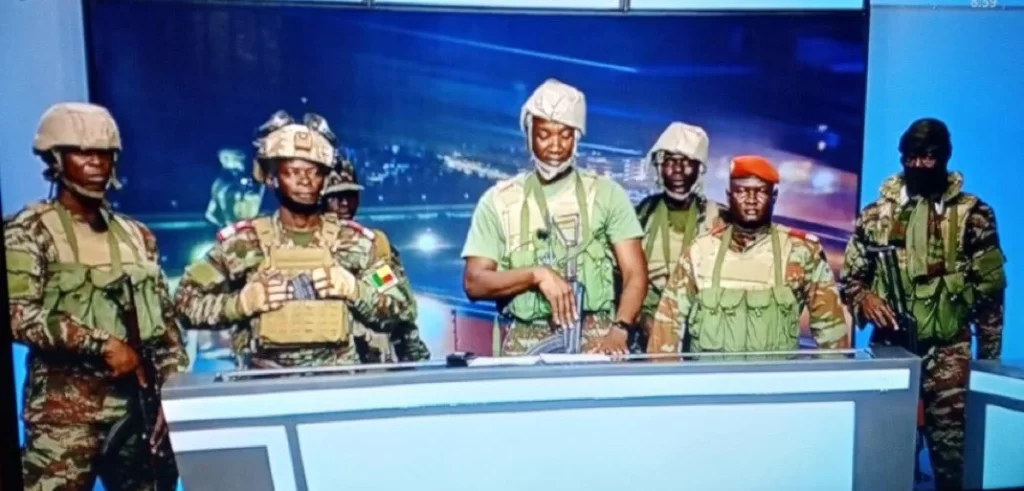
On December 7, 2025, mutinous soldiers calling themselves the Military Committee for Refoundation attempted to remove President Patrice Talon. The group seized state television and announced the suspension of government institutions, accusing Talon’s administration of political repression, poor governance and failure to contain worsening jihadist violence in northern Benin.
Lieutenant Colonel Pascal Tigri emerged as the principal leader of the attempted takeover.
The rebellion initially represented a serious threat. Mutineers attacked senior military commanders and temporarily controlled strategic locations in Cotonou. However, loyalist forces reorganized rapidly. Benin subsequently received assistance from Nigeria and other regional partners, while France reportedly provided support requested by the government.
The coup collapsed within hours.
The speed of the regional intervention was strategically important. A successful takeover would have extended the belt of military regimes running through Mali, Burkina Faso and Niger southward toward the Gulf of Guinea.
It would also potentially have weakened one of the remaining West African governments maintaining close security cooperation with France and other Western partners.
Kémi Séba: from radical activist to geopolitical intermediary
Kémi Séba is considerably more important than the description “social-media influencer” suggests.
Born in Strasbourg in 1981 to Beninese parents, Séba first became prominent in France through radical Black nationalist activism. He founded Tribu Ka, a movement dissolved by the French authorities in 2006. His political trajectory subsequently shifted increasingly toward Pan-African sovereignty, opposition to French influence and rejection of the CFA franc.
Kémi Séba’s Tribu Ka was a small but highly controversial French Black-nationalist movement that operated from 2004 to 2006. Understanding it is useful because it shows that Séba’s current Pan-Africanist politics emerged from a much more explicitly racial-separatist and antisemitic ideological environment.
What was Tribu Ka?
Séba, born Stellio Gilles Robert Capo Chichi, founded Tribu Ka in late 2004. The organization combined Black nationalism, Afrocentrism and Kemetism—an ideological current emphasizing ancient Egypt as a foundational Black African civilization—with racial separatism. Membership was restricted to Black people, and the movement opposed racial mixing and integration into French society. (Wikipedia)
Its worldview was therefore considerably more radical than the contemporary Pan-Africanist rhetoric with which Séba is now primarily associated.
The French government’s eventual dissolution decree provides an unusually authoritative description of the organization. It concluded that Tribu Ka’s statements, website and activities propagated ideas encouraging racial discrimination, hatred and violence, particularly against non-Black people, and that the group also promoted antisemitism. (Légifrance)
The Rue des Rosiers incident
The decisive event occurred on May 28, 2006, when roughly 20 Tribu Ka members entered Rue des Rosiers in Paris, an area historically associated with the city’s Jewish community.
The group said it was responding to alleged attacks against Black people and sought confrontation with Jewish extremist groups including the Ligue de Défense Juive and Betar. The episode generated accusations of antisemitic intimidation and prompted calls from organizations including SOS Racisme and the Union of Jewish Students of France for Tribu Ka to be banned. (Le Monde.fr)
This incident was subsequently cited by France’s highest administrative court as an organized antisemitic action. (Légifrance)
Why France dissolved it
President Jacques Chirac’s government formally dissolved Tribu Ka by decree on July 28, 2006, using legislation permitting the dissolution of organizations promoting discrimination, racial or religious hatred, or violence. The decree specifically cited the group’s racist and antisemitic ideology and threatening actions against Jewish people. (Légifrance)
Tribu Ka challenged the decision, but the Conseil d’État rejected its appeal in November 2006, finding sufficient evidence that its statements, publications and collective actions had incited discrimination, hatred or violence on racial or religious grounds. (Légifrance)
The organization therefore did not disappear merely because it became politically controversial; it was legally dismantled by the French state on public-order and racial-hatred grounds.
Séba subsequently created successor organizations. French authorities later described Jeunesse Kémi Séba as having effectively taken over from Tribu Ka while continuing to disseminate racist and antisemitic ideology. That organization was itself dissolved in 2009. (Ministère de l’Intérieur)
Séba’s political positioning subsequently evolved significantly. He moved his activities increasingly toward Africa and recast himself around Pan-African sovereignty, opposition to Françafrique, rejection of the CFA franc and resistance to Western influence in Africa. He eventually developed relationships with the military governments of Mali, Burkina Faso and Niger and with Russia-linked networks. (Le Monde.fr). Tribu Ka demonstrates that Séba’s current geopolitical activism did not originate simply as an anti-colonial movement. His earlier politics contained a strong racial-separatist component. Over time, that framework was transformed into a broader sovereignty/anti-imperialist narrative that could appeal to a much larger Francophone African audience.
It also helps explain the otherwise surprising connection with François van der Merwe and the Afrikaner nationalist milieu. Séba’s historical emphasis on separate ethnic identities can, at least conceptually, intersect with ethnonationalists of entirely different racial backgrounds: the groups can profoundly disagree about race while sharing opposition to multicultural integration, liberal universalism and Western political structures.
Tribu Ka is the ideological precursor to Séba’s contemporary influence network rather than merely an embarrassing episode from his youth. The significant transformation was from explicit Black racial separatism in France toward a geopolitically more effective Pan-African sovereignty narrative in Africa. That evolution substantially expanded his potential utility to governments and external actors seeking to mobilize anti-French and anti-Western sentiment.
His profile in Africa increased dramatically in 2017 after he publicly burned a 5,000 CFA-franc banknote in Dakar as a protest against what he characterized as French monetary colonialism.
Séba later founded and led Urgences Panafricanistes, building a transnational activist network and a substantial online following. By 2026 he had approximately 1.5 million Facebook followers.
His messaging consistently combines several themes: French influence represents continuing colonialism, Western military presence undermines African sovereignty, the CFA monetary system represents economic subordination, military governments confronting France should be supported and Russia represents a useful counterweight within an emerging multipolar international system.
This ideological framework makes Séba particularly valuable to Moscow’s influence strategy because his legitimacy among supporters derives from an African sovereignty narrative rather than an explicitly Russian identity.
He can therefore communicate themes compatible with Russian geopolitical objectives without appearing to audiences simply as a Russian state propagandist.
Séba’s relationship with Russian actors appears to have developed gradually rather than through a single recruitment event. The best-supported chronology places the decisive convergence in the late 2010s, when Séba’s anti-French Pan-African activism increasingly overlapped with Yevgeny Prigozhin’s expanding influence infrastructure in Africa.
How the relationship developed
Séba’s ideological trajectory preceded his Russian connections. By 2017 he had become prominent across Francophone West Africa through his campaign against the CFA franc, including the highly publicized burning of a CFA banknote in Dakar. His central themes—opposition to Françafrique, French military presence, the CFA system and Western political influence—were therefore already established independently of Moscow.
That distinction matters because Russia did not need to manufacture Séba’s ideology. It encountered an activist whose existing agenda was unusually compatible with Moscow’s emerging African strategy.
During roughly 2018–2019, the overlap became more operational. Prigozhin’s network was simultaneously expanding across Africa, combining Wagner security deployments with political consulting, media operations, demonstrations and influence campaigns. U.S. authorities subsequently described Prigozhin as running an international network intended to expand Russian political and economic influence, alongside the Internet Research Agency and Wagner structures.
Séba acknowledged having contacts with Prigozhin, while rejecting the characterization that he was controlled by Russia. Subsequent French reporting has stated that some of Séba’s African activities received financing from Wagner-linked structures.
The relationship therefore appears to have been transactional and ideologically complementary: Russian-linked actors gained access to an authentic African political communicator with an existing audience, while Séba gained resources, international connections and backing from a power willing to challenge France.
Why Prigozhin would have been interested in Séba
Séba offered something difficult for Russian operatives to manufacture: local legitimacy.
A Russian diplomat, Wagner representative or RT journalist arguing that France was exploiting Africa could easily be dismissed as advancing Moscow’s interests. Séba could make essentially the same argument while presenting it as an indigenous Pan-African position.
That fits the broader Prigozhin model. His African infrastructure did not rely exclusively on overt Russian propaganda. It cultivated local journalists, activists and political intermediaries capable of carrying narratives compatible with Russian objectives. Evidence from the Central African Republic, for example, shows Wagner-linked personnel paying local journalists, organizing demonstrations and recruiting local media figures to disseminate pro-Russian and anti-Western narratives.
Séba was potentially much more valuable than an ordinary paid propagandist because he already possessed ideological credentials and a transnational following.
What was Séba’s motive?
Ideology was probably the primary entry point. Séba’s hostility toward French influence substantially predates his documented Russian relationships. He sees the post-colonial political and economic architecture of Francophone Africa as a continuation of colonial domination. Russia presents itself as an opponent of precisely that system.
Second, Russia offered geopolitical leverage. Séba’s objective is not simply replacing one foreign partner with another; his public rhetoric favors a “multipolar” international system in which African governments have alternatives to France, the EU and the United States. His public support for Vladimir Putin fits this worldview. AP describes him as openly supportive of Putin and associated with Wagner-linked figures.
Third, the relationship increased Séba’s political access. His evolution from street activist to an individual connected with governments is striking. Niger’s military authorities eventually appointed him a special adviser. This gave him considerably greater political relevance than his earlier activist organizations had possessed.
Fourth, material support almost certainly mattered. Russian-linked financing could finance travel, demonstrations, organizations, media production and political campaigning. But the available evidence does not justify concluding that money alone explains Séba’s alignment. The ideological convergence existed beforehand.
The relationship changed after Prigozhin’s death
This is perhaps the most interesting intelligence indicator.
Prigozhin died in August 2023, yet Séba did not become less pro-Russian. His relationships instead continued as Russia dismantled or absorbed portions of Prigozhin’s African infrastructure.
That suggests Séba’s relationship was ultimately larger than a personal Prigozhin connection.
His political environment also became more favorable. The coups in Mali, Burkina Faso and Niger produced governments that simultaneously rejected French influence, embraced sovereignty rhetoric and expanded relations with Russia. Séba’s ideological agenda consequently moved from the political margins toward the policies of actual governments.
His appointment as an adviser to Niger’s junta is especially significant because it potentially transforms him from an influence actor into a bridge between activist networks and state power.
The relationship should therefore be understood in phases
Russia probably did not create Kémi Séba’s anti-Western worldview; it identified, cultivated and amplified an already compatible political actor. Séba’s cooperation with Russian-linked networks appears to have emerged from an alignment of interests: Moscow gained an influential African voice capable of legitimizing anti-French and pro-Russian narratives from within the Pan-African movement, while Séba gained financial resources, political access and the backing of a major power capable of challenging France.
This also explains why one would avoid simply calling him a “Russian agent.” A more analytically useful characterization is “Russia-aligned influence intermediary” or “indigenous influence multiplier.” The available evidence demonstrates convergence, contacts and reported financing, but not enough publicly available evidence to establish a formal Russian intelligence command relationship.
The KIQ Séba’s relationship with Russian actors appears to have developed gradually rather than through a single recruitment event. The best-supported chronology places the decisive convergence in the late 2010s, when Séba’s anti-French Pan-African activism increasingly overlapped with Yevgeny Prigozhin’s expanding influence infrastructure in Africa. Public evidence supports contacts and financial/political links, but it does not establish that Séba was formally recruited as a Russian intelligence asset.
Séba’s ideological trajectory preceded his Russian connections. By 2017 he had become prominent across Francophone West Africa through his campaign against the CFA franc, including the highly publicized burning of a CFA banknote in Dakar. His central themes—opposition to Françafrique, French military presence, the CFA system and Western political influence—were therefore already established independently of Moscow.
That distinction matters because Russia did not need to manufacture Séba’s ideology. It encountered an activist whose existing agenda was unusually compatible with Moscow’s emerging African strategy.
During roughly 2018–2019, the overlap became more operational. Prigozhin’s network was simultaneously expanding across Africa, combining Wagner security deployments with political consulting, media operations, demonstrations and influence campaigns. U.S. authorities subsequently described Prigozhin as running an international network intended to expand Russian political and economic influence, alongside the Internet Research Agency and Wagner structures.
Séba acknowledged having contacts with Prigozhin, while rejecting the characterization that he was controlled by Russia. Subsequent French reporting has stated that some of Séba’s African activities received financing from Wagner-linked structures.
The relationship therefore appears to have been transactional and ideologically complementary: Russian-linked actors gained access to an authentic African political communicator with an existing audience, while Séba gained resources, international connections and backing from a power willing to challenge France.
Why Prigozhin would have been interested in Séba
Séba offered something difficult for Russian operatives to manufacture: local legitimacy.
A Russian diplomat, Wagner representative or RT journalist arguing that France was exploiting Africa could easily be dismissed as advancing Moscow’s interests. Séba could make essentially the same argument while presenting it as an indigenous Pan-African position.
That fits the broader Prigozhin model. His African infrastructure did not rely exclusively on overt Russian propaganda. It cultivated local journalists, activists and political intermediaries capable of carrying narratives compatible with Russian objectives. Evidence from the Central African Republic, for example, shows Wagner-linked personnel paying local journalists, organizing demonstrations and recruiting local media figures to disseminate pro-Russian and anti-Western narratives.
Séba was potentially much more valuable than an ordinary paid propagandist because he already possessed ideological credentials and a transnational following.
Prigozhin died in August 2023, yet Séba did not become less pro-Russian. His relationships instead continued as Russia dismantled or absorbed portions of Prigozhin’s African infrastructure.
That suggests Séba’s relationship was ultimately larger than a personal Prigozhin connection.
His political environment also became more favorable. The coups in Mali, Burkina Faso and Niger produced governments that simultaneously rejected French influence, embraced sovereignty rhetoric and expanded relations with Russia. Séba’s ideological agenda consequently moved from the political margins toward the policies of actual governments.
His appointment as an adviser to Niger’s junta is especially significant because it potentially transforms him from an influence actor into a bridge between activist networks and state power.
Russia probably did not create Kémi Séba’s anti-Western worldview; it identified, cultivated and amplified an already compatible political actor. Séba’s cooperation with Russian-linked networks appears to have emerged from an alignment of interests: Moscow gained an influential African voice capable of legitimizing anti-French and pro-Russian narratives from within the Pan-African movement, while Séba gained financial resources, political access and the backing of a major power capable of challenging France.
This also explains why one would avoid simply calling him a “Russian agent.” A more analytically useful characterization is “Russia-aligned influence intermediary” or “indigenous influence multiplier.” The available evidence demonstrates convergence, contacts and reported financing, but not enough publicly available evidence to establish a formal Russian intelligence command relationship.
The KIQ I would pursue next is who initially connected Séba to Prigozhin’s network around 2018–2019. Identifying that intermediary could reveal whether the relationship originated through Wagner/Prigozhin political consultants, African partners, Russian diplomatic channels, or another influence structure—and would help distinguish ideological cooperation from deliberate Russian cultivation.
is who initially connected Séba to Prigozhin’s network around 2018–2019. Identifying that intermediary could reveal whether the relationship originated through Wagner/Prigozhin political consultants, African partners, Russian diplomatic channels, or another influence structure—and would help distinguish ideological cooperation from deliberate Russian cultivation.
Séba’s links with Russian networks predate the Benin crisis by years.
The U.S. State Department has associated Séba with pro-Russian influence networks connected to Yevgeny Prigozhin, the late founder of the Wagner Group. Séba has acknowledged contacts with Prigozhin while rejecting allegations that he acts as a Russian agent.
Reporting has also linked Russian/Wagner-associated structures to financing some of Séba’s activities in Africa, including efforts to organize anti-Western demonstrations and cultivate local actors capable of amplifying narratives favorable to Moscow.
Séba should not automatically be described as a Russian intelligence operative. Publicly available evidence does not establish that.
He is better understood as a political influence multiplier whose ideological objectives substantially overlap with Russian strategic interests.
That model is characteristic of Moscow’s African influence operations. Rather than creating political grievances from nothing, Russian-linked structures identify existing resentment—against France, Western governments, economic inequality or political elites—and provide amplification, networks, media support and sometimes financial resources.
Séba offers precisely that combination of ideological authenticity and transnational reach.
Yevgeny Prigozhin: architect of Russia’s African influence ecosystem
Prigozhin’s relevance extends beyond Wagner’s military deployments.
Before his death in August 2023, his network developed an integrated African model combining security assistance, political consulting, disinformation, media operations, election interference and access to natural resources.
The approach was particularly visible in the Central African Republic and Mali.
Prigozhin-linked structures cultivated journalists, activists, political intermediaries and online personalities who could promote anti-Western narratives while presenting Russia as a defender of African sovereignty.
Following Prigozhin’s death, much of this infrastructure did not disappear. Moscow progressively absorbed elements of Wagner’s African operations into more directly state-controlled structures, including Africa Corps.
Séba’s continued access to Russian-aligned governments after Prigozhin’s death therefore suggests that his value was not limited to a personal relationship with the Wagner founder.
Abdourahamane Tiani: the critical Niger connection
The most strategically important relationship surrounding Séba may now be with Niger rather than directly with Moscow.
General Abdourahamane Tiani seized power in Niger in July 2023, overthrowing President Mohamed Bazoum. His government subsequently severed major elements of security cooperation with France and the United States and moved closer to Russia.
In 2024, Tiani appointed Séba as a special adviser.
Niger also provided Séba with a diplomatic passport after France revoked his citizenship.
The relationship gives Séba something more consequential than ideological sympathy: access to a state structure belonging to the Alliance of Sahel States (AES).
Niger, Mali and Burkina Faso have increasingly coordinated their security and foreign policies while rejecting the traditional influence of France and distancing themselves from ECOWAS.
The geographical significance is considerable. Benin sits immediately south of Niger and provides potential access to the Gulf of Guinea.
Relations between Cotonou and Niamey have deteriorated sharply since the Niger coup.
Tiani has accused Benin of facilitating hostile French activities against Niger, allegations rejected by Benin and France. Benin, meanwhile, supported regional pressure on the Nigerien junta after the overthrow of Bazoum.
This makes the December 2025 coup attempt potentially relevant to the wider competition between the AES bloc and the remaining ECOWAS-aligned coastal states.
Pascal Tigri: the military dimension
Lieutenant Colonel Pascal Tigri was identified as the principal leader of the attempted coup.
The available evidence indicates that the plot emerged from genuine grievances within Benin’s security establishment, including frustration over government policy and deteriorating security in the country’s north.
That domestic dimension should not be underestimated.
Northern Benin has faced increasing pressure from jihadist organizations operating from neighboring Burkina Faso and the wider Sahel. Military casualties and dissatisfaction within sections of the armed forces created conditions that coup plotters could exploit.
Following the failed takeover, Tigri escaped capture and remained at large.
Reports have suggested that Beninese authorities investigated whether the plotters received assistance or sanctuary from neighboring states, particularly within the AES orbit.
However, evidence publicly available so far does not establish that Tigri operated under Russian direction.
The distinction is essential: Russian geopolitical benefit from a coup does not prove Russian orchestration of the coup.
Patrice Talon: why Benin matters
President Patrice Talon has governed Benin since 2016.
His administration has faced criticism over democratic backsliding, restrictions on opposition activity and increasing concentration of political power. These domestic vulnerabilities provide genuine grievances that hostile influence networks can exploit.
At the same time, Talon’s government represents an important component of the remaining Western-oriented security architecture in coastal West Africa.
Benin cooperates with Western partners against jihadist groups expanding southward from the Sahel and maintains close relations with Nigeria.
Consequently, destabilizing Talon’s government would have implications extending beyond Benin.
A military regime in Cotonou modeled on Mali, Burkina Faso or Niger could potentially reduce Western security access, weaken ECOWAS and create opportunities for Russia to expand toward the Atlantic coast.
Nigeria’s intervention changed the strategic equation
Nigeria’s rapid reaction was arguably the decisive external factor in the coup’s failure.
Abuja had strong incentives to prevent another military takeover on its western frontier.
A successful coup in Benin would have placed another potentially anti-ECOWAS military regime adjacent to Nigeria and could have encouraged further challenges to constitutional governments across coastal West Africa.
The intervention therefore represented more than assistance to Talon.
It demonstrated that Nigeria remains prepared, under certain circumstances, to act as a regional security guarantor against unconstitutional changes of government.
For Moscow and the AES governments, the failed coup simultaneously demonstrated the limits of the political momentum generated by the sequence of successful military takeovers in Mali, Burkina Faso and Niger.
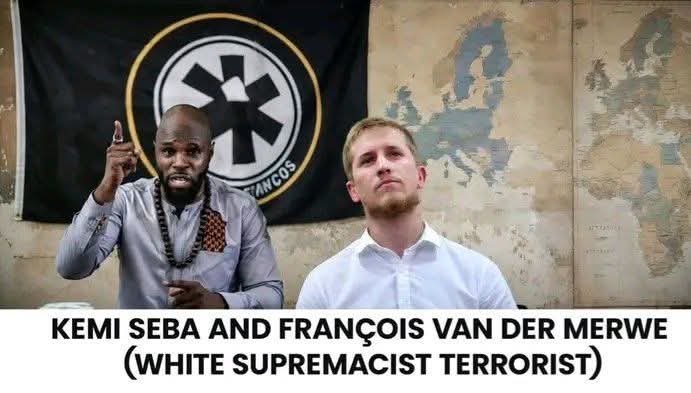
François van der Merwe: an unusual South African connection
Séba’s arrest produced another unexpected dimension.
South African authorities detained him while investigating an alleged attempt to leave the country illegally for Zimbabwe. He was reportedly accompanied by his 18-year-old son and South African François van der Merwe.
Van der Merwe has been associated with the Bittereinders, a white nationalist Afrikaner movement.
rançois van der Merwe is a South African far-right activist and leader associated with the Bittereinders movement. Reporting in April 2026 identified him as about 27 years old and as a leader, or youth-wing leader, of the Bittereinders.
The Bittereinders is a small contemporary Afrikaner far-right/nationalist movement in South Africa advocating Afrikaner/Boer self-determination and, according to recent reporting, a separate white Afrikaner/Boer state. They became internationally relevant in 2026 because François van der Merwe, described as a leading figure in the movement, was arrested alongside Kémi Séba. (The Washington Post)
Where the name comes from
“Bittereinder” literally means someone who fights “to the bitter end.” Historically, the term referred to Boer commandos who refused to surrender to Britain during the final phase of the Second Anglo-Boer War (1899–1902) and continued guerrilla resistance until the war ended. The term consequently carries strong symbolism of resistance to external rule and refusal to compromise. (Financial Times)
The contemporary movement appropriates that historical symbolism for a very different political environment: post-apartheid South Africa.
What the modern Bittereinders believe
Recent reporting describes the group as far-right, Afrikaner nationalist and opposed to multiculturalism. Its political objective is associated with the concept of a Volkstaat—an autonomous or independent Afrikaner/Boer homeland. The version attributed to the Bittereinders is considerably more radical than mainstream Afrikaner cultural or political organizations because it envisages an ethnically defined political entity. (The Washington Post)
This is important because the Bittereinders should not be treated as representative of Afrikaners generally. Afrikaner politics encompasses mainstream conservative parties and civil-society organizations as well as liberal and integrationist currents. Indeed, there is even an unrelated organization called Betereinders (“better-enders”) that deliberately uses the historical pun while promoting racial reconciliation—the ideological opposite of the Bittereinders. (The Guardian)
François van der Merwe’s role
François van der Merwe, 27, has been described by Le Monde as the head of the Bittereinders and by other reporting as a prominent figure in the organization. He came to wider attention after South African authorities arrested him with Séba in April 2026. Prosecutors allege that Van der Merwe accepted approximately R250,000 ($15,000) to facilitate Séba’s clandestine departure from South Africa through Zimbabwe. These remain allegations rather than established guilt. (The Washington Post)
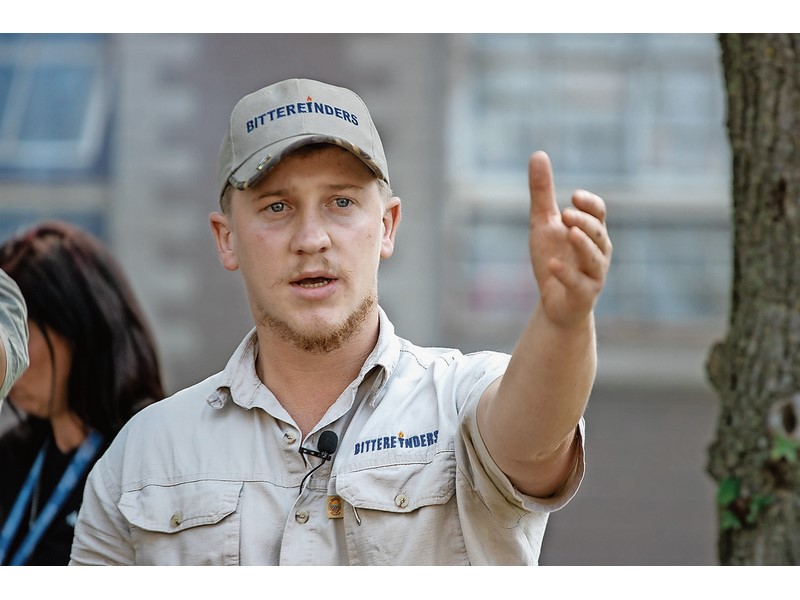
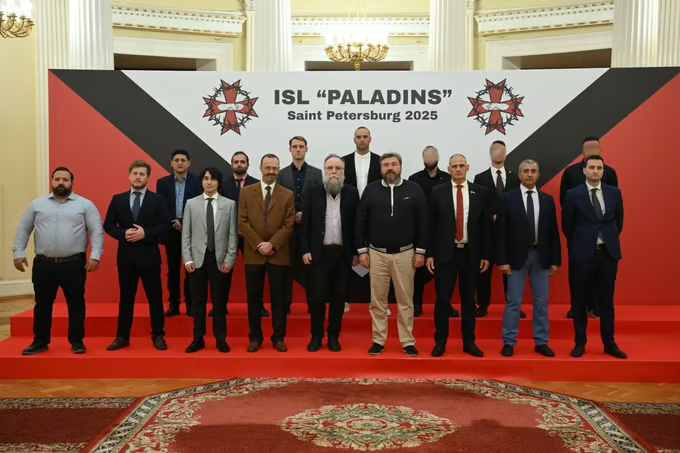
The Russian dimension makes his profile considerably more interesting. Le Monde subsequently reported that Van der Merwe had appeared at a September 2025 gathering of European neo-fascist figures in St. Petersburg, where Russian ultranationalist ideologue Alexander Dugin was among those present. (Le Monde.fr)
Why would Bittereinders cooperate with Kémi Séba?
Séba: Black radical Pan-Africanist → anti-colonial → anti-French → pro-multipolar/pro-Russian.
Bittereinders: white Afrikaner nationalism → ethnic separatism → opposition to multiculturalism → elements receptive to Russia.
But underneath their racial politics is a potentially important ideological overlap.
Both can embrace what political scientist Christophe Premat describes in this context as ethno-differentialism: rather than advocating racial integration, different ethnic/racial communities should maintain separate identities and political spaces. AP’s reporting specifically identifies this ideological intersection as one explanation for the apparently contradictory Séba–Bittereinders relationship. (The Washington Post)
There is also a second intersection: Russia.
Researchers studying Russian influence in South Africa have found Moscow cultivating contacts with elements of the country’s far right, including actors focused on Afrikaner and Boer identity. At the opposite racial/ideological pole, Russia and Prigozhin/Wagner-linked networks cultivated Pan-Africanists such as Séba. (The Washington Post)
This should not be interpreted as evidence that Moscow controls the Bittereinders. The public evidence supports contacts and ideological convergence, not Russian command and control.
Why the movement matters for the Benin investigation
the Bittereinders themselves are probably less important than the network revealed by Van der Merwe.
If Séba needed help leaving South Africa and ultimately obtained assistance from an Afrikaner nationalist with previous Russian contacts, the intelligence question becomes: who provided the bridge between them?
Le Monde reports an especially significant detail: Séba said he contacted Alexander Dugin while trying to leave South Africa. According to Séba’s account, Dugin directed him toward people capable of helping him; Van der Merwe subsequently became involved. The reported plan envisaged moving Séba through Zimbabwe and ultimately by aircraft toward Moscow. (Le Monde.fr)
If investigators corroborate that chain, the significance would extend far beyond the Bittereinders. It could indicate the existence of a Russian-centered transnational facilitation network capable of connecting ideologically very different political extremists when their strategic interests converge.
Thus Bittereinders are not evidence of a large pro-Russian Afrikaner movement; Van der Merwe is potentially evidence of Moscow’s ability to build bridges between otherwise incompatible radical networks.
The Bittereinders are an Afrikaner nationalist movement advocating a separate white Afrikaner/Boer state and rejecting multiculturalism. AP described the group as far-right and said Van der Merwe was accused of taking roughly R250,000, about $15,000, to facilitate Kémi Séba’s movement across South Africa’s Séba’s relationship with Russian actors appears to have developed gradually rather than through a single recruitment event. The best-supported chronology places the decisive convergence in the late 2010s, when Séba’s anti-French Pan-African activism increasingly overlapped with Yevgeny Prigozhin’s expanding influence infrastructure in Africa. Public evidence supports contacts and financial/political links, but it does not establish that Séba was formally recruited as a Russian intelligence asset.
How the relationship developed
Séba’s ideological trajectory preceded his Russian connections. By 2017 he had become prominent across Francophone West Africa through his campaign against the CFA franc, including the highly publicized burning of a CFA banknote in Dakar. His central themes—opposition to Françafrique, French military presence, the CFA system and Western political influence—were therefore already established independently of Moscow.
That distinction matters because Russia did not need to manufacture Séba’s ideology. It encountered an activist whose existing agenda was unusually compatible with Moscow’s emerging African strategy.
During roughly 2018–2019, the overlap became more operational. Prigozhin’s network was simultaneously expanding across Africa, combining Wagner security deployments with political consulting, media operations, demonstrations and influence campaigns. U.S. authorities subsequently described Prigozhin as running an international network intended to expand Russian political and economic influence, alongside the Internet Research Agency and Wagner structures.
Séba acknowledged having contacts with Prigozhin, while rejecting the characterization that he was controlled by Russia. Subsequent French reporting has stated that some of Séba’s African activities received financing from Wagner-linked structures.
The relationship therefore appears to have been transactional and ideologically complementary: Russian-linked actors gained access to an authentic African political communicator with an existing audience, while Séba gained resources, international connections and backing from a power willing to challenge France.
Séba offered something difficult for Russian operatives to manufacture: local legitimacy.
A Russian diplomat, Wagner representative or RT journalist arguing that France was exploiting Africa could easily be dismissed as advancing Moscow’s interests. Séba could make essentially the same argument while presenting it as an indigenous Pan-African position.
That fits the broader Prigozhin model. His African infrastructure did not rely exclusively on overt Russian propaganda. It cultivated local journalists, activists and political intermediaries capable of carrying narratives compatible with Russian objectives. Evidence from the Central African Republic, for example, shows Wagner-linked personnel paying local journalists, organizing demonstrations and recruiting local media figures to disseminate pro-Russian and anti-Western narratives.
Séba was potentially much more valuable than an ordinary paid propagandist because he already possessed ideological credentials and a transnational following.
What was Séba’s motive?
I would separate his motivation into four layers, rather than reduce it to Russian money.
First, ideology was probably the primary entry point. Séba’s hostility toward French influence substantially predates his documented Russian relationships. He sees the post-colonial political and economic architecture of Francophone Africa as a continuation of colonial domination. Russia presents itself as an opponent of precisely that system.
Second, Russia offered geopolitical leverage. Séba’s objective is not simply replacing one foreign partner with another; his public rhetoric favors a “multipolar” international system in which African governments have alternatives to France, the EU and the United States. His public support for Vladimir Putin fits this worldview. AP describes him as openly supportive of Putin and associated with Wagner-linked figures.
Third, the relationship increased Séba’s political access. His evolution from street activist to an individual connected with governments is striking. Niger’s military authorities eventually appointed him a special adviser. This gave him considerably greater political relevance than his earlier activist organizations had possessed.
Fourth, material support almost certainly mattered. Russian-linked financing could finance travel, demonstrations, organizations, media production and political campaigning. But the available evidence does not justify concluding that money alone explains Séba’s alignment. The ideological convergence existed beforehand.
This is perhaps the most interesting intelligence indicator.
Prigozhin died in August 2023, yet Séba did not become less pro-Russian. His relationships instead continued as Russia dismantled or absorbed portions of Prigozhin’s African infrastructure.
That suggests Séba’s relationship was ultimately larger than a personal Prigozhin connection.
His political environment also became more favorable. The coups in Mali, Burkina Faso and Niger produced governments that simultaneously rejected French influence, embraced sovereignty rhetoric and expanded relations with Russia. Séba’s ideological agenda consequently moved from the political margins toward the policies of actual governments.
His appointment as an adviser to Niger’s junta is especially significant because it potentially transforms him from an influence actor into a bridge between activist networks and state power.
Russia probably did not create Kémi Séba’s anti-Western worldview; it identified, cultivated and amplified an already compatible political actor. Séba’s cooperation with Russian-linked networks appears to have emerged from an alignment of interests: Moscow gained an influential African voice capable of legitimizing anti-French and pro-Russian narratives from within the Pan-African movement, while Séba gained financial resources, political access and the backing of a major power capable of challenging France.
This also explains why one would avoid simply calling him a “Russian agent.” A more analytically useful characterization is “Russia-aligned influence intermediary” or “indigenous influence multiplier.” The available evidence demonstrates convergence, contacts and reported financing, but not enough publicly available evidence to establish a formal Russian intelligence command relationship.
The KIQ I would pursue next is who initially connected Séba to Prigozhin’s network around 2018–2019. Identifying that intermediary could reveal whether the relationship originated through Wagner/Prigozhin political consultants, African partners, Russian diplomatic channels, or another influence structure—and would help distinguish ideological cooperation from deliberate Russian cultivation.
, apparently via Zimbabwe.
What makes Van der Merwe particularly relevant analytically is his Russia connection. Africa Intelligence reported as early as November 2024 that he publicly displayed increasingly close ties with Russia on social media, in the broader context of Moscow cultivating South African far-right networks. More recent South African court reporting says prosecutors allege that both Van der Merwe and Séba had links to Russia, creating an unusual bridge between a white Afrikaner nationalist and a Black Pan-Africanist activist.
That ideological contradiction is probably the most important part of his profile. Séba comes from radical Black nationalist and anti-colonial politics; Van der Merwe comes from Afrikaner ethno-nationalism. Yet both can converge around several themes: hostility to liberal multiculturalism, anti-Western narratives, sovereignist politics and sympathy toward Russia as a counterweight to Western influence. This does not establish that Van der Merwe is a Russian agent, but it makes him a useful example of Moscow’s ability to cultivate relationships with ideologically incompatible movements when they share anti-Western objectives.
François van der Merwe is a South African Afrikaner nationalist activist associated with the far-right Bittereinders movement. He emerged as a significant figure in the Kémi Séba case after South African authorities accused him of accepting approximately R250,000 to help Séba move clandestinely across the border. His relevance extends beyond the alleged smuggling operation: open-source reporting had already identified Van der Merwe as cultivating ties with Russia and participating in a broader milieu of South African far-right actors receptive to Moscow. His cooperation with Séba illustrates how Russian-linked influence ecosystems can connect ideologically contradictory actors—white ethno-nationalists and radical Pan-Africanists—through shared hostility toward Western liberal institutions and a common preference for a multipolar order in which Russia acts as an alternative geopolitical patron.
The key intelligence question is therefore less “Why would a white nationalist help Kémi Séba?” and more “Who or what network connected them?” That intermediary layer—financial, political, ideological or operational—could be much more revealing than either man individually.
According to investigators cited by AP, van der Merwe was allegedly offered approximately $15,000 to help Séba leave South Africa through Zimbabwe.
At first glance, cooperation between a radical Black Pan-Africanist and an Afrikaner white nationalist appears contradictory.
The relationship nevertheless illustrates an important characteristic of contemporary anti-liberal networks: actors with radically different racial or nationalist ideologies can cooperate when they share hostility toward Western liberal political structures.
Both circles have been associated with forms of “ethno-differentialism”—the idea that ethnic or racial communities should develop separately rather than within multicultural political systems.
The episode therefore demonstrates how networks built around opposition to the liberal international order can create tactical alliances across apparently incompatible ideological movements.
Russia’s role: influence environment rather than proven coup command
There is currently insufficient evidence to conclude that Moscow planned or directed the December 2025 coup.
The stronger assessment is that Russia helped create and exploit an information and political environment favorable to military regime change.
Russian influence operations across the Sahel repeatedly amplify several narratives:
Western governments are responsible for African insecurity, France retains colonial control over supposedly independent African states, democratic governments aligned with the West are illegitimate elites, military governments represent authentic national sovereignty, and Russia offers security cooperation without political conditionality.
These narratives contributed to the political environments surrounding the coups in Mali, Burkina Faso and Niger.
Séba operates within the same narrative ecosystem.
His intervention during the Benin coup attempt is therefore significant even if no operational link between him and the mutineers is ultimately established.
He provided something politically useful to the coup leaders: rapid civilian legitimation of a military seizure of power framed as Pan-African liberation.
Why Benin represents a strategic target
The geopolitical competition is gradually shifting south from the central Sahel toward the Gulf of Guinea.
Mali, Burkina Faso and Niger already form a contiguous bloc of military regimes cooperating increasingly closely with Russia.
Benin, Togo, Ghana and Côte d’Ivoire constitute the next geographical layer.
Expansion of Russian political or security influence into one of these coastal states would provide several advantage: access toward Atlantic ports, greater leverage over regional trade corridors, additional pressure on ECOWAS, new markets for Russian military cooperation;
political isolation of remaining Western partners and opportunities to challenge French, European and U.S. influence beyond the Sahel.
Benin is especially important because of its position between Nigeria and Togo and because it provides a natural commercial corridor for landlocked Niger.
The conflict between Niamey and Cotonou therefore has both political and economic dimensions.
Assessment
The Séba case demonstrates an evolution in Russia’s African influence model.
The Kremlin does not need formal control over every activist who advances narratives favorable to Moscow. Nor does it need to organize every military coup from the outside.
A more efficient strategy is to cultivate an ecosystem in which local grievances, military dissatisfaction, anti-colonial ideology, social-media amplification and Russian geopolitical interests become mutually reinforcing.
Kémi Séba represents a particularly effective node in that ecosystem because he combines four characteristics rarely found in one actor: a laindigenous African audience, strong ideological credentials within radical Pan-African circles, access to AES political leadership and longstanding relationships with Russian-linked influence networks.
His public support for the Benin coup therefore matters regardless of whether investigators eventually establish direct operational involvement.
It demonstrates how rapidly Russia-compatible influence networks can mobilize when a political crisis emerges.The central intelligence question is no longer simply whether Russia directly participated in the December coup attempt. The more important question is whether Benin represents the beginning of an effort by AES-aligned and Russia-friendly political networks to export the Sahelian regime-change model toward the Gulf of Guinea.
Several indicators should therefore be monitored: movement of Pascal Tigri and other fugitive coup leaders through Niger, Burkina Faso or Togo, financial or logistical connections between coup participants and AES-linked actors, communications between Séba’s organization and individuals associated with the December mutiny, coordinated amplification of anti-Talon narratives by Russia-linked African media networks, expansion of Russian diplomatic, security or political-consulting activity in Benin and neighboring Togo, attempts to frame future military unrest in coastal West Africa as part of a broader Pan-African “sovereignty” struggle and the extent to which Séba’s networks continue operating if he is extradited or otherwise removed from active political campaigning.
. I Kémi Séba should consequently be viewed less as an isolated influencer than as an intermediary connecting ideological mobilization, digital influence and state-level geopolitical competition.
If this model expands from the Sahel into the Gulf of Guinea, Benin may prove to have been an early test rather than an isolated case.
AP confirms Séba’s legal name, roughly 1.5 million Facebook following, leadership of Pan-Africanist Emergency, public praise for Putin, association with Prigozhin-linked networks, appointment as an adviser to Niger’s junta and the unusual François van der Merwe connection. (AP News) Carnegie, meanwhile, explicitly cautions that there is no concrete evidence of Russian involvement in the coup itself, although it identifies Séba as part of the Russia-linked information environment and assesses that Moscow could have exploited a successful destabilization of Benin. (Carnegie Endowment)
There is credible open-source evidence that François van der Merwe had direct links with Russian ultranationalist networks before his arrest with Kémi Séba, although the evidence does not establish that he was a Russian intelligence officer or formally controlled by Moscow.
The clearest documented connections are: Van der Merwe acknowledged in a sworn statement that he had traveled to Russia several times. Reporting indicates that in September 2024 he traveled to Moscow to meet an organization connected to Konstantin Malofeev, the sanctioned Russian ultranationalist oligarch and founder of the Tsargrad network (GUR affiliated)
- Le Monde reports that Van der Merwe appeared at a major gathering of European neo-fascist/far-right figures in St. Petersburg. A photograph from the event showed Alexander Dugin, the Russian ultranationalist ideologue, among the participants. (Le Monde.fr)
- Van der Merwe was a prominent figure in the Bittereinders, an Afrikaner nationalist/separatist movement. Researchers cited by AP say the Kremlin has actively courted South African far-right organizations defending Afrikaner and Boer identity. (AP News)
The Malofeev connection is particularly important
Konstantin Malofeev is more consequential than simply being a wealthy Russian conservative.
Malofeev has for years been involved in building transnational networks linking Russian ultranationalism, Orthodox conservatism, European far-right movements and pro-Russian political actors abroad. Western governments sanctioned him over his role connected to Russian activities in Ukraine.
If the reporting that Van der Merwe met a Malofeev-linked organization in Moscow is accurate, it places him within a recognizable Russian transnational influence environment, rather than merely demonstrating ideological sympathy for Russia. (Ahraminfo)
Dugin provides another possible bridge
Alexander Dugin is potentially even more interesting in the Séba case.
Le Monde reports that Van der Merwe attended the September 2025 St. Petersburg conference where Dugin appeared. Separately, Séba has said that he contacted Dugin while attempting to arrange his departure from South Africa. According to Séba’s account, Dugin connected him with people who could assist with the operation; intermediaries then allegedly turned to Van der Merwe. (Le Monde.fr)
That produces a potentially significant chain:
Séba → Dugin/Russian contacts → intermediaries → Van der Merwe → South African security/logistics network.
This remains an investigative hypothesis, not proof of a Russian intelligence operation. But it would explain the otherwise puzzling appearance of an Afrikaner white nationalist in an operation involving a Black Pan-Africanist with longstanding Russia/Wagner connections.
The planned destination makes the Russian dimension more significant
There is an additional detail that strengthens the analytical case.
According to Le Monde’s July investigation, the alleged plan was not simply to get Séba across the Limpopo River into Zimbabwe. A second security team was reportedly supposed to move him onward, after which a military aircraft would take him to Moscow. Séba reportedly said he intended to spend five days there giving interviews before returning to Niamey, Niger. (Le Monde.fr)
If accurate, this means Russia was not merely an ideological backdrop to the case. Moscow was allegedly part of the intended travel chain.
The evidence currently supports three different confidence levels.
High confidence: Van der Merwe had established contacts with Russian ultranationalist circles before meeting Séba. His Russia travel, reported Malofeev-network contact and participation in the St. Petersburg gathering provide multiple indicators. (Le Monde.fr)
Moderate confidence: Russian ideological networks may have provided the intermediary environment through which Séba and Van der Merwe became connected. Séba’s claim regarding Dugin makes this particularly plausible, although investigators would need communications and financial records to establish the chain.
Low confidence / unproven: Van der Merwe was recruited, financed or tasked by Russian intelligence, probably GRU.
Thus, François van der Merwe is an Afrikaner nationalist activist associated with the Bittereinders who had established contacts with Russian ultranationalist networks before becoming involved in the attempted movement of Kémi Séba out of South Africa. His reported contacts with structures associated with Konstantin Malofeev, participation in a 2025 St. Petersburg gathering attended by Alexander Dugin, and the alleged plan to move Séba ultimately to Moscow raise the possibility that Russian ideological networks served as an intermediary connecting two otherwise politically and racially antagonistic movements. Available evidence, however, does not establish that Van der Merwe operated under the direction of Russian intelligence.
This actually makes Van der Merwe more important to the Benin investigation than he initially appears. The critical KIQ is: who introduced Van der Merwe to the people arranging Séba’s extraction, who provided the R250,000 allegedly paid for the operation, and whether that network overlaps with the Russian contacts Van der Merwe had cultivated since at least 2024.The regional dimension is stronger than the original “pro-Russian influencer” framing suggests. Reporting after the coup identified Beninese suspicions concerning Niger’s junta under Abdourahamane Tiani and reported that investigators were examining Séba’s role; coup leader Pascal Tigri remained at large. (lemonde.fr) That makes the Séba–Tiani–AES relationship more analytically important than simply cataloguing Séba’s contacts in Moscow.
More on this story: Nature Reserves Provide a Strategic Advantage for Insurgents in Benin
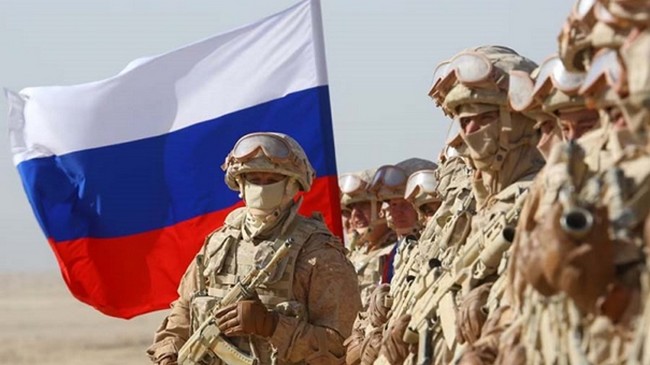
More on this story: Russia’s Africa Corps: Wagner’s Successor in Africa (2022–2025)
More on this story: French Troop Withdrawals and Africa’s Geopolitical Realignment