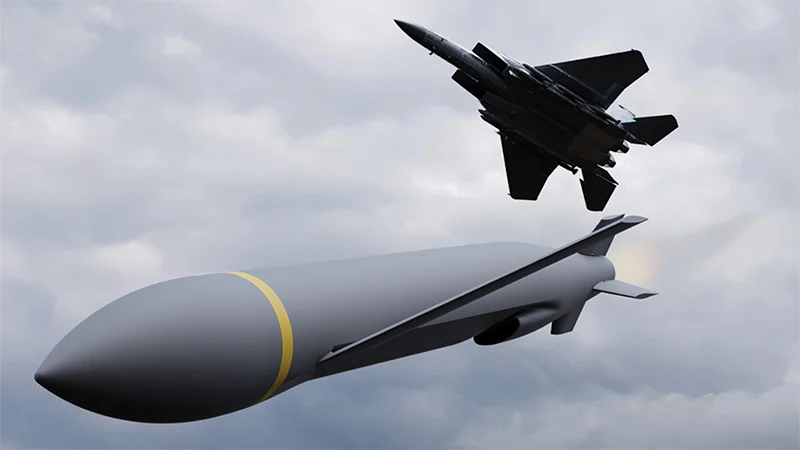

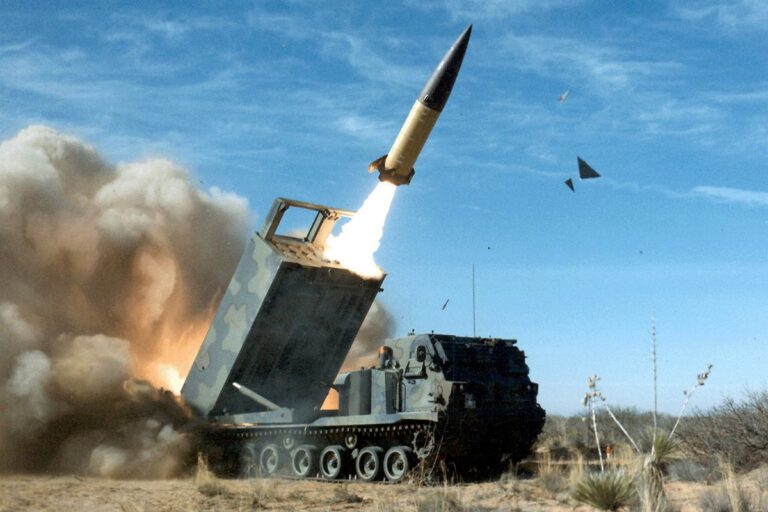
Human Rights Watch (HRW) has opposed the transfer of cluster munitions to Ukraine. This is not the first instance in which the organization’s position has coincided with Russian interests in restricting the military capabilities of Ukraine’s Defense Forces. Since the beginning of Russian aggression in 2014, HRW has repeatedly issued statements concerning Ukrainian actions that were subsequently used extensively by Russian state institutions and media outlets to criticize Kyiv.
During the first five months of Russia’s full-scale invasion, hundreds of Russian cluster-munition attacks were documented across 10 of Ukraine’s 24 regions. Between February and July 2022 alone, 689 civilian casualties—deaths and injuries—were recorded as a result of cluster-munition attacks.
Russia’s use of cluster munitions has been systematic rather than isolated, as investigations conducted by HRW itself have confirmed. In Ukraine, the greatest casualties caused by these weapons have resulted from strikes against civilian infrastructure. Since the beginning of the full-scale invasion, more than 1,200 victims of cluster munitions have been recorded in Ukraine, with all confirmed casualties being civilians.
Against this background, the transfer to Ukraine of additional stocks of U.S.-origin cluster munitions could have substantial operational value in 2026, particularly given the character of the war, in which Russia continues to rely on numerical superiority, dispersed infantry assaults, artillery, and the gradual accumulation of manpower.
The urgency of the issue has increased following Ukrainian intelligence assessments indicating that Moscow may be preparing another wave of mobilization after Russia’s parliamentary elections in the fall of 2026. On August 11, President Volodymyr Zelensky said internal Russian documents obtained by Ukraine indicated that Russia could rapidly mobilize several hundred thousand people before the end of 2026, in addition to ongoing contract recruitment. Reuters confirmed that this is how Kyiv has characterized the intelligence it received, although Moscow publicly denies the need for another mobilization.
For Ukraine, this creates not only a manpower problem but also a mathematical problem concerning the ratio of available firepower to the number of attacking Russian troops.
In such an environment, area-effect munitions have particular military value: a single delivery system can engage a larger number of dispersed, unprotected, or lightly protected military targets than a single conventional high-explosive fragmentation munition. The Pentagon cited precisely this military logic when explaining the first transfer of DPICM to Ukraine in 2023, while also emphasizing their role in maintaining the necessary intensity of Ukrainian artillery fire.
The issue should therefore not be viewed merely as a debate over one category of ammunition. It should be considered within the context of a broader U.S. strategic choice: whether it is preferable to impede the regeneration of Russian military power while Russia remains engaged in Ukraine, or to allow that process to continue when U.S. intelligence assessments already contemplate the possibility of Moscow eventually testing NATO’s collective-defense commitments.
New U.S. intelligence assessments disclosed in early August 2026 suggest that Vladimir Putin could eventually attempt to test NATO’s willingness to fulfill its Article 5 commitments, with scenarios ranging from cyberattacks or sabotage to a limited military incursion on NATO’s eastern flank. This represents a change from previous assessments under which Moscow was considered unlikely to risk direct confrontation with NATO before the end of the war against Ukraine.
In this context, preserving Ukraine’s ability to impose heavy losses on Russia constitutes an element of NATO’s forward deterrence rather than merely an issue of bilateral assistance to Kyiv.
The Firepower Requirement
The war has entered a phase in which the outcome of many operations is determined not by a single sophisticated weapons system but by the ability of each side to sustain a large and continuous volume of fire.
When the United States decided to provide DPICM in 2023, U.S. military officials emphasized that these munitions could rapidly expand the artillery ammunition available to Ukraine. The Pentagon stated that their transfer was intended to provide Ukraine with sufficient artillery capability for many months while the U.S. and allied defense industries increased production of conventional artillery shells.
That logic remains relevant.
Cluster munitions are particularly effective against military targets distributed over an area, including infantry, artillery positions, and light vehicles such as motorcycles and buggies used during assault operations. CSIS has identified precisely these categories of targets as a major reason for the high military utility of this class of weapon for Ukraine.
Their principal advantage is the relationship between one munition and a substantial area of effect. Under conditions in which artillery barrels, ammunition, and personnel are all scarce resources, this provides a significant firepower multiplier.
The practical effect is not limited to potentially increasing Russian casualties. Increasing the danger associated with concentrating forces compels Russian units to disperse more extensively, spend more time preparing attacks, increase the distances between elements of their formations, complicate logistics and command-and-control, and reduce the density of infantry that can be committed simultaneously.
The effect is therefore both kinetic and behavioral.
The Russian Mobilization Factor Increases the Urgency
The principal risk in the fall of 2026 is not merely another localized Russian offensive but a potential shift in the manpower balance.
Military-assistance planning should therefore be based not only on the most likely scenario but also on scenarios that could produce particularly serious consequences.
If Russia mobilizes even a portion of the projected number of personnel, the Kremlin would gain the ability to compensate for current losses, establish operational reserves that it has repeatedly lacked, sustain pressure on several sectors simultaneously, and increase the number of assault units without having to improve their quality dramatically.
This is particularly relevant to the assessment of cluster munitions.
Russia does not necessarily need to produce hundreds of thousands of highly trained soldiers. It only needs to generate sufficient manpower to sustain a high frequency of attacks and force Ukraine to expend scarce ammunition and personnel.
Area-effect munitions represent one means of reducing the military return Russia derives from its quantitative manpower advantage.
The Possibility of an Autumn Offensive
The current battlefield situation does not indicate that Russia can easily achieve a strategic breakthrough. A significant proportion of Russia’s territorial gains in recent years have been achieved slowly and at very high cost.
In July, the Institute for the Study of War noted that Russian recruitment programs were already experiencing difficulties compensating for rising casualties incurred during costly offensive operations.
For precisely this reason, mass mobilization may be required by Moscow not to change its tactics immediately or radically, but to restore its capacity to wage an attritional war for several more years.
For Ukraine, the optimal moment to neutralize this advantage is before new Russian manpower can be transformed into sustainable combat formations.
Increasing Ukrainian firepower in the fall of 2026 would therefore have disproportionately greater value than providing comparable assistance after Russian reserves have already been generated.
The Humanitarian Argument: Risk Can Be Reduced Substantially, but It Cannot Be Described as Zero
The weakest possible argument in favor of transferring cluster munitions would be to claim that they “pose no risk to civilians.”
That would be factually incorrect.
Unexploded submunitions can remain dangerous after hostilities end. This is the central concern raised by critics of cluster munitions and forms the basis of the Convention on Cluster Munitions. The United States, Ukraine, and Russia are not parties to the convention.
When the United States first transferred DPICM to Ukraine, the Pentagon stated that Kyiv had provided written assurances that it would not use them in civilian-populated urban areas; would record the geographical areas in which the weapons were employed; would use these records for subsequent demining operations; and would conduct postwar clearance of unexploded remnants.
The U.S. DPICM transferred in 2023 were also selected on the basis of a stated dud rate below 2.35%, whereas the Pentagon estimated dud rates for some Russian cluster munitions at between 30% and 40%.
This does not eliminate the humanitarian risk, but it substantially changes its scale.
A rational condition for any new transfer would therefore be the introduction of an even more stringent framework: no-use zones surrounding densely populated areas; digital registration of every area in which the munitions are employed; transmission of coordinates to Ukrainian humanitarian demining organizations; prioritization of munitions with the best verified reliability characteristics; and U.S. financing for subsequent clearance operations.
Under such a framework, the humanitarian issue becomes a problem of risk management rather than an argument for absolute prohibition.
The Particular Problem of Older Turkish Stocks
The 2026 debate contains an additional complication: the proposed Turkish package of U.S.-origin weapons includes older systems.
The package, valued at approximately $256 million, includes M39 systems containing 66,500 submunitions, 2,524 M26 rockets containing more than 1.625 million submunitions, 70 M39 ATACMS, and 47,000 M509A1 203-mm artillery shells.
A rational policy could therefore require mandatory sample testing of older stocks before transfer. Munitions for which an acceptable reliability level cannot be demonstrated should be excluded regardless of their potential military value.
The policy decision on whether cluster munitions can be transferred should therefore be separated from the technical decision concerning whether a specific batch is sufficiently reliable for transfer.
Strategic Effect: Ukraine as NATO’s Forward Defensive Line
In early August 2026, U.S. intelligence assessments described by American officials indicated that Putin could eventually attempt to test NATO’s political and military cohesion through a limited operation against an Alliance member.
Potential scenarios range from cyberattack and sabotage to a small-scale ground incursion.
The U.S. assessment does not mean that such an attack is imminent. A ground operation is considered less likely precisely because of the danger that it would activate Article 5.
Nevertheless, the strategic implication is significant:
Russian military power that is neither expended nor destroyed in Ukraine could potentially be used to exert pressure on NATO after the war.
The outcome of the war will therefore influence the size of Russia’s postwar ground forces, the amount of combat experience retained within those forces, the speed at which Moscow can replenish its military stocks, the Kremlin’s confidence in the West’s ability to sustain a prolonged confrontation, and Moscow’s assessment of NATO’s political willingness to respond to limited aggression.
This produces a central strategic proposition:
Military attrition imposed on Russia in Ukraine is part of NATO deterrence.
Every additional Russian corps that Moscow cannot form or preserve because of losses sustained in Ukraine is a corps that cannot subsequently be used to exert military pressure against Poland, the Baltic states, or another sector of NATO’s eastern flank.
Negative Consequences of Russian Success in Ukraine
Russian operational success would have consequences extending well beyond Ukraine.
First — restoration of Russian military freedom of action. If the front stabilizes on terms favorable to Moscow, Russia could gradually redirect resources from the war against Ukraine toward rebuilding forces intended for other strategic theaters.
Second — erosion of deterrence. The Kremlin could conclude that prolonged warfare, high casualties, and nuclear coercion ultimately force Western democracies to reduce their support for allies.
Such a perception could be no less dangerous than the actual numerical strength of Russia’s armed forces.
Third — higher costs of NATO defense. From a strategic perspective, containing Russian military expansion in Ukraine is less costly than deterring a regenerated Russian army directly along the borders of Poland, Lithuania, Latvia, Estonia, or Finland.
Fourth — the requirement for a larger U.S. military presence. A stronger postwar Russia would increase pressure on precisely those U.S. forces that Washington seeks to free for other theaters.
This is particularly important as the United States seeks to shift a greater share of its strategic attention toward the Indo-Pacific, while NATO is already discussing the need for European allies to assume a larger share of the burden of continental defense.
Counterargument: Preserving U.S. Stockpiles
The strongest U.S. military counterargument is not humanitarian but concerns America’s own military readiness.
Recent U.S. intelligence assessments concerning Russia have emerged alongside concerns over inventories of certain American missiles following years of assistance to Ukraine and other operations. The Wall Street Journal, citing U.S. officials, has reported shortages involving certain types of precision-guided missiles.
Transfers should therefore not be automatic.
The best candidates for transfer are systems that simultaneously satisfy three conditions: High military value for Ukraine, Limited critical importance to current U.S. contingency plans, Acceptable and verified technical reliability.
In particular, transferring older systems that the United States itself is gradually replacing with newer munitions could convert a stockpiled asset of diminishing future value into an immediate strategic effect against NATO’s principal land-based military adversary.
Strategic Assessment of Benefits and Risks
Under conditions of controlled employment, the balance of benefits and risks can be assessed as follows.
Military utility — high.
The munitions are optimized for area targets characteristic of the Russian model of warfare.
Urgency — high.
There are indications of a possible new Russian mobilization in the fall of 2026.
Potential strategic effect for NATO — high.
U.S. intelligence has already revised previous assumptions that Russia would necessarily avoid directly testing NATO while the war in Ukraine continues.
Conclusions
From a military-strategic perspective, there is a strong argument for continuing transfers of selected categories of cluster munitions to Ukraine, provided that they undergo technical verification and are subject to strict rules governing their employment.
The principal argument is not that these munitions are irreplaceable. Rather, it is that they make it possible to convert existing U.S. and allied inventories into a disproportionately large military effect against Russia’s advantage in manpower.
This factor becomes particularly important ahead of a possible new Russian mobilization cycle.
The most dangerous scenario for the United States would be the convergence of three processes:
reduction in military assistance to Ukraine → reduction in Russian losses → regeneration of Russian ground combat power.
Over time, this could increase rather than reduce U.S. defense expenditures because Washington would then have to deter a substantially stronger Russia directly along NATO’s eastern frontier.
The utility of transferring cluster munitions should therefore not be evaluated in isolation. It should be assessed through a broader strategic question: Where would the United States prefer to contain and degrade Russia’s offensive military potential—today in Ukraine alongside the Ukrainian Armed Forces, or tomorrow directly on NATO territory?Under the conditions outlined above, the military and strategic advantages of transferring appropriate cluster munitions to Ukraine may outweigh the associated humanitarian and material risks.