

German and French lawmakers have drafted a joint resolution calling for more concrete measures against Russia’s “shadow fleet.” The document is expected to be adopted on June 22 during a session of the Franco-German Parliamentary Assembly (DFPV).
According to German and French legislators, stronger monitoring mechanisms and the detention of vessels found to be violating existing laws are necessary. The draft also calls for intensified diplomatic efforts targeting countries whose flags are used by vessels associated with the Russian shadow fleet.
The document emphasizes that Russia’s shadow fleet represents not only a geopolitical challenge but also a significant security and environmental threat. Many of the tankers involved are aging, poorly maintained, and fail to meet international safety standards. In addition, some vessels are suspected of being used for sabotage and intelligence-gathering activities.
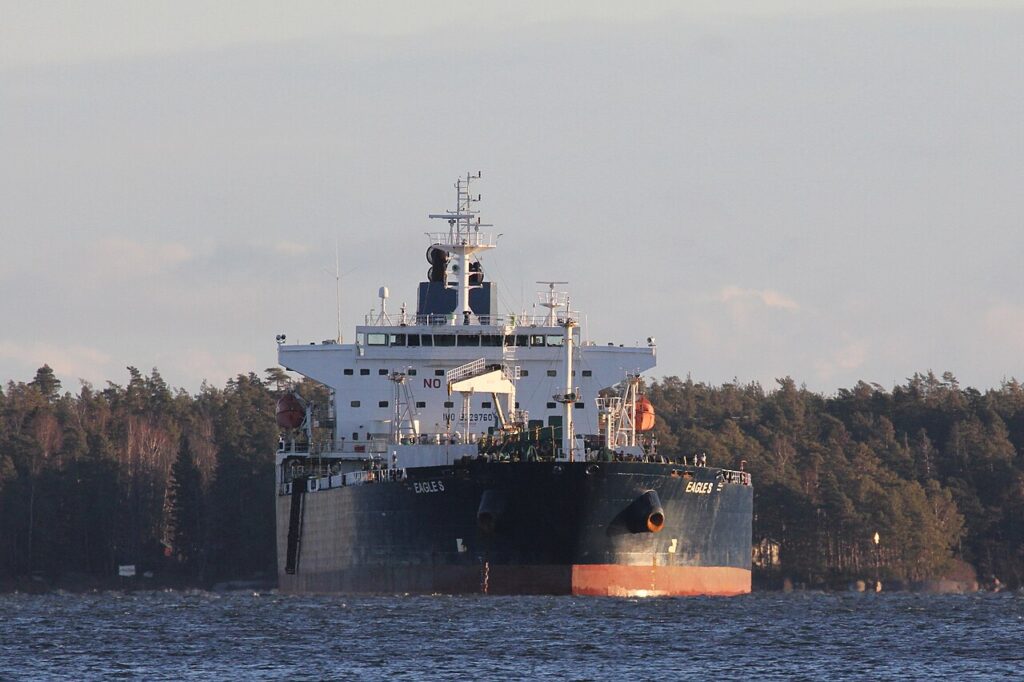
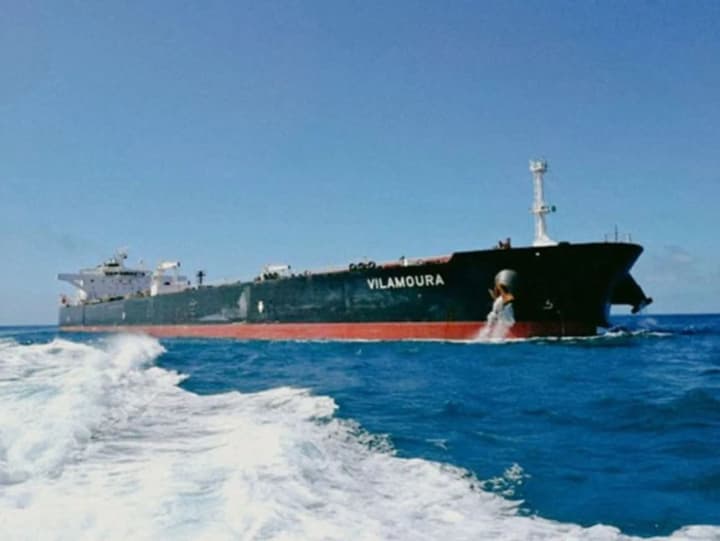
Russia’s shadow fleet is a vast network of aging tankers established by the Kremlin to circumvent Western sanctions and facilitate illicit oil exports. According to expert estimates, the fleet consists of approximately 1,500 vessels, representing nearly 17 percent of the global tanker fleet. Most of these ships are between 15 and 25 years old, operate through opaque ownership structures, and sail under flags of convenience. To conceal the origin of their cargo, vessel operators routinely disable automatic identification systems (AIS) and conduct ship-to-ship oil transfers in international waters.
As part of sanctions packages targeting Russia—including the 20th EU sanctions package adopted in April 2026 and additional restrictions introduced in June—the European Union imposed sanctions on hundreds of tankers linked to the shadow fleet. International pressure on the fleet has intensified significantly in recent months, with European states increasingly detaining vessels for fraudulent registration, forged documentation, or unlawful use of national flags.
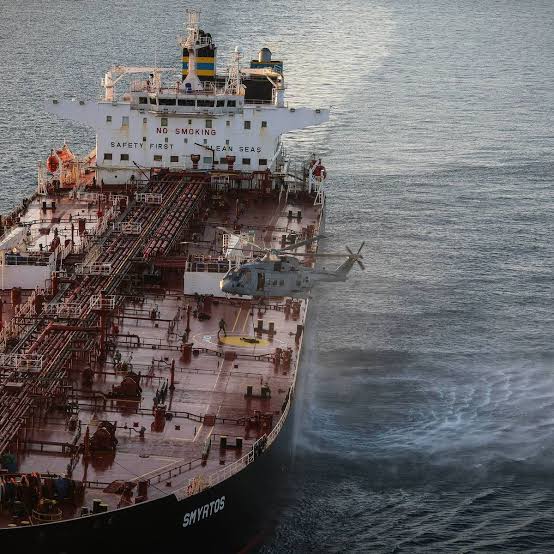
On June 14, British Royal Marines and officers from the United Kingdom’s National Crime Agency boarded the tanker MV Smyrtos. According to British officials, the vessel had entered UK territorial waters without a valid national flag.
The initiative by German and French lawmakers demonstrates that the issue of Russia’s shadow fleet has moved beyond the realm of sanctions enforcement and is increasingly being viewed as a broader European security challenge. Paris and Berlin are effectively signaling their readiness to shift from passive monitoring toward more robust mechanisms for vessel inspection, detention, and enforcement.
The continued operation of Russia’s shadow fleet enables the Kremlin to maintain substantial revenues from oil exports and sustain financing for its war against Ukraine despite international restrictions. Every successful voyage by a shadow-fleet tanker not only undermines the effectiveness of sanctions but also contributes indirectly to the continuation of Russia’s military aggression against Ukraine, with direct implications for European security.
Developments over the past year indicate that several European countries—including France, Sweden, and the United Kingdom—are gradually abandoning the de facto immunity previously enjoyed by vessels associated with the Russian shadow fleet. The detention of tankers for forged documentation or unlawful flag use is creating legal and operational precedents that could form the foundation of a new maritime containment strategy aimed at increasing the costs of sanctions evasion for Moscow.
For Europe, the Russian shadow fleet represents a dual challenge, as commercial shipping activities are increasingly being used as cover for hybrid operations targeting EU member states. Certain vessels may be employed for intelligence collection, surveillance of critical infrastructure, or sabotage activities, transforming civilian shipping into another instrument of Russian pressure against European countries.
Particularly concerning is the fact that a significant portion of Russia’s shadow fleet consists of aging vessels that fail to meet international maritime safety standards. The absence of adequate technical oversight and internationally recognized insurance coverage effectively turns many of these ships into floating environmental hazards. A major accident involving one of these tankers could trigger a large-scale ecological disaster affecting coastal states in the Baltic, North, Black, or Mediterranean Seas.
The challenge posed by Russia’s shadow fleet extends well beyond the war in Ukraine. At stake is the credibility of international law and the effectiveness of Western sanctions regimes. If the Kremlin succeeds in operating the world’s largest sanctions-evasion maritime network with impunity, it could send a powerful signal to other authoritarian regimes that economic pressure imposed by democratic states can be systematically circumvented.
Russia’s shadow fleet also creates additional risks for Europe’s critical infrastructure, much of which is located in the maritime domain. Against the backdrop of recent incidents involving undersea cables, pipelines, and other strategic assets, the European Union is increasingly compelled to strengthen the protection of maritime communications and view European waters as a potential theater of confrontation with Russia.
Because tankers departing Russian ports must transit narrow European maritime chokepoints—including the Danish Straits—EU member states should develop legal mechanisms enabling the inspection and detention of vessels lacking adequate environmental insurance coverage. Such an approach would strengthen sanctions enforcement while reducing the risk of catastrophic oil spills whose consequences would affect the entire region.
An equally important line of effort should involve diplomatic pressure on countries whose flags are used to shield Russia’s shadow fleet. Large-scale revocations of vessel registrations by countries such as Gabon, Panama, Cameroon, and others could effectively render many shadow-fleet tankers stateless, making them significantly easier to detain, inspect, and seize under international maritime law.
The initiative by German and French lawmakers reflects the emergence of a growing transatlantic and European coalition advocating a significantly tougher approach toward Russia’s shadow fleet. What began as a sanctions-enforcement issue is increasingly being framed by policymakers as a matter of national security, maritime security, environmental protection, and strategic competition with Russia.
Within Germany, support for stronger measures against the shadow fleet has gained momentum among lawmakers from parties backing a more assertive Russia policy. Members of the Bundestag’s foreign affairs, defense, and European affairs committees have increasingly argued that sanctions enforcement cannot remain effective if Moscow continues to operate a parallel maritime logistics network largely beyond the reach of Western regulators. German proponents of stronger enforcement view the shadow fleet as one of the Kremlin’s most important instruments for financing the war against Ukraine and sustaining Russia’s ability to absorb the economic impact of sanctions.
In France, a similar position is emerging among parliamentarians who advocate a stronger European strategic role in maritime security. French policymakers increasingly argue that the shadow fleet should not be viewed solely through the lens of sanctions evasion but as part of a broader Russian hybrid warfare ecosystem. French security officials and lawmakers have repeatedly expressed concerns that vessels associated with the shadow fleet could be used for intelligence collection, surveillance of critical infrastructure, electronic reconnaissance, or support activities linked to sabotage operations in European waters.
The most influential advocates of increased pressure are no longer limited to politicians from frontline states bordering Russia. Support for tougher action has expanded to major European powers, particularly Germany, France, the United Kingdom, and Nordic countries. This development is strategically significant because previous efforts to tighten enforcement were often driven primarily by Eastern European states such as Poland, Lithuania, Latvia, and Estonia. The involvement of Berlin and Paris signals that concerns regarding the shadow fleet have entered the mainstream of European security policy.
Particularly influential have been policymakers associated with maritime security, sanctions enforcement, and support for Ukraine. Among the most active political advocates are members of the European Parliament from northern and eastern Europe, several French and German parliamentary committees, and political leaders in Nordic and Baltic countries who have consistently called for stricter vessel inspections, expanded sanctions designations, and greater legal authority to detain vessels suspected of sanctions violations.
The United Kingdom has emerged as one of the most proactive states in operational enforcement. British officials increasingly frame the shadow fleet as a direct threat to UK national security, especially following incidents involving suspicious vessel movements near critical maritime infrastructure. The June boarding of the tanker MV Smyrtos illustrates a growing willingness among British authorities to move beyond sanctions declarations and employ direct law-enforcement and maritime-security measures.
A particularly important development is the convergence of environmental and security arguments. Traditionally, support for sanctions enforcement and support for environmental protection have been driven by different political constituencies. The shadow fleet increasingly unites both camps. Security-focused policymakers emphasize the role of shadow-fleet revenues in financing Russia’s military activities, while environmental advocates warn that aging, uninsured tankers pose a significant risk of catastrophic oil spills in European waters. This convergence broadens the political coalition supporting stronger action and makes opposition to tougher enforcement increasingly difficult.
The political debate is also being influenced by a series of maritime incidents involving undersea cables, pipelines, and critical offshore infrastructure. Many European lawmakers now view Russia’s shadow fleet through the broader prism of hybrid warfare. The concern is not merely that these vessels transport sanctioned oil, but that they provide Moscow with a persistent maritime presence near strategically important infrastructure throughout the Baltic Sea, North Sea, Mediterranean, and potentially the Atlantic.
As a result, a growing number of policymakers are advocating a shift from sanctions compliance toward active maritime containment. Their objective is not only to restrict Russian oil revenues but also to deny Moscow freedom of maneuver in European waters. This approach includes expanded vessel inspections, stricter insurance requirements, enhanced intelligence-sharing among maritime authorities, diplomatic pressure on flag-of-convenience states, and the development of new legal mechanisms permitting the detention of vessels operating without valid registration or adequate environmental coverage.
The emergence of this political coalition suggests that the future debate surrounding Russia’s shadow fleet will increasingly focus on security and deterrence rather than purely economic sanctions. If current trends continue, the European Union and its partners may gradually establish a de facto maritime containment regime designed to raise the operational and financial costs of sanctions evasion while limiting Russia’s ability to use commercial shipping networks as instruments of hybrid warfare.
Main Threats to the European Union from Russia’s Shadow Fleet
The most immediate threat is a major oil spill in European waters.
Many shadow fleet tankers: Are 15–25+ years old; Operate with questionable maintenance records; Frequently change ownership and flag registration; Lack reliable insurance from recognized Western providers.
High-risk areas include: Baltic Sea; North Sea; Danish Straits; English Channel
A large spill could disrupt fishing, tourism, shipping, and coastal economies for years.
2. Threat to Critical Undersea Infrastructure
The shadow fleet increasingly overlaps with concerns regarding: Subsea telecommunications cables; Power interconnectors; Gas pipelines; Offshore wind infrastructure.
Following incidents involving Baltic Sea cables and pipelines, several European intelligence agencies have warned that civilian vessels could be used for: Reconnaissance; Mapping infrastructure; Sabotage preparation.
The challenge is that many shadow fleet vessels operate in a legal gray zone, making attribution difficult.
Some European security services suspect certain vessels may serve dual purposes.
Potential intelligence functions include: Monitoring naval movements; Collecting electronic emissions; Tracking commercial shipping; Observing military exercises.
Such activity would mirror historical Soviet maritime intelligence practices.
The shadow fleet undermines one of the EU’s principal tools against Russia.
By enabling Russian oil exports above the intended restrictions, it:
- Generates revenue for the Russian state;
- Weakens the effectiveness of sanctions;
- Reduces economic pressure on Moscow.
The result is a challenge to EU credibility and enforcement capacity.
Many shadow fleet vessels: Operate with reduced transparency; Use complex ownership structures; Engage in ship-to-ship transfers; Sometimes disable or manipulate AIS tracking systems.
These practices increase collision risks in crowded waterways.
Particularly vulnerable areas include: Baltic Sea Mediterranean Sea; North Sea
European security officials increasingly view the shadow fleet as part of Russia’s broader hybrid warfare architecture.
Potential functions include:
- Economic coercion;
- Intelligence gathering;
- Influence operations;
- Logistical support for covert activities.
This places the fleet alongside cyber operations, disinformation campaigns, and political influence networks as part of a broader pressure campaign against Europe.
Most shadow fleet vessels: Sail under flags of convenience; Change ownership frequently; Operate through offshore shell companies.
Common registries include entities in: Comoros; Cameroon; Gabon
This complicates: Vessel inspections; Detentions; Insurance verification; Criminal investigations.
The most serious scenario would involve a shadow fleet vessel being linked to: Damage to a submarine cable;Sabotage of an energy asset; A collision causing mass casualties; An environmental disaster.
Such an incident could trigger consultations under Article 4 of the North Atlantic Treaty and potentially create pressure for a coordinated NATO response.
- Are some ships pre-positioned for sabotage missions?
- Which registries knowingly facilitate sanctions evasion?
- Could a future maritime incident be used as a coercive tool against the EU?
Strategic Assessment
The shadow fleet is no longer merely an oil-export mechanism. For the EU, it represents a multi-domain security threatcombining:
- sanctions evasion,
- environmental risk,
- intelligence collection,
- critical infrastructure vulnerability,
- and hybrid warfare potential.
The greatest long-term risk is that Europe continues treating the shadow fleet primarily as a customs and sanctions issue, while Moscow increasingly integrates it into a broader strategy of maritime hybrid operations against European interests.
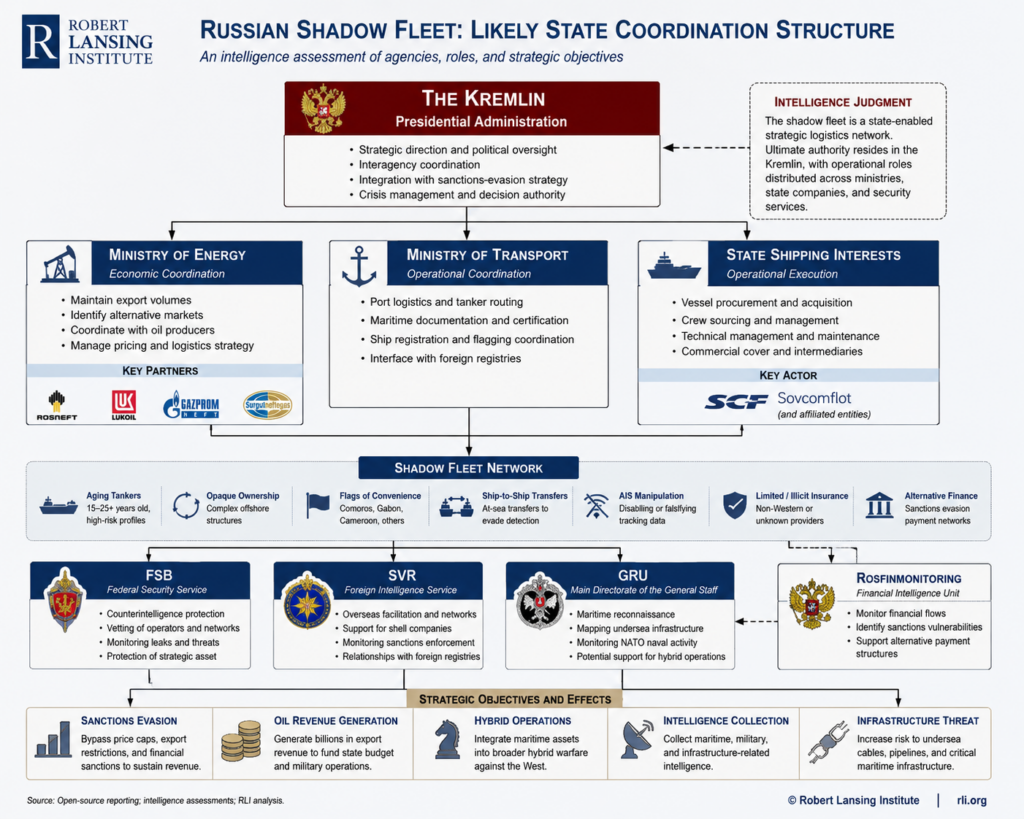
There is no publicly available evidence that a single Russian agency exercises complete control over the shadow fleet. Most intelligence assessments suggest it is a state-enabled ecosystem involving government ministries, state-owned energy firms, intelligence services, maritime regulators, and private intermediaries.
The most likely model is a multi-agency coordination structure supervised at the Kremlin level.
The most likely strategic coordinator is the Presidential Administration of Russia.
The shadow fleet is not simply a commercial operation; it is central to: Russian oil export revenues; Sanctions resilience; Foreign policy objectives; Hybrid influence operations.
Because oil exports generate a substantial share of federal revenues, strategic decisions are unlikely to be delegated solely to commercial actors.
There is a High confidence that major shadow fleet policy decisions ultimately require Kremlin approval.
Ministry of Energy
Ministry of Energy of the Russian Federation is likely the primary economic coordinator.
- It likely Maintaining export volumes; Identifying alternative shipping channels;mCoordinating with oil producers; Managing export destinations.
Key Partners could be: Rosneft, Gazprom Neft, Lukoil, Surgutneftegas
Ministry of Transport
Ministry of Transport of the Russian Federation likely coordinates operational maritime issues.
Responsibilities: Port logistics; Tanker routing; Maritime documentation; Ship registration support; Interaction with foreign registries.
The fleet depends upon: vessel transfers, technical certifications, maritime compliance documentation.
Russian State Shipping Interests
Several Russian maritime actors likely play operational roles.
Most frequently cited include: Sovcomflot. Former Sovcomflot subsidiaries; Networks of intermediary ship-management companies.
Role:Vessel procurement; Crew sourcing; Technical management; Commercial cover arrangements.
Federal Security Service (FSB)
The Federal Security Service likely plays a protective and counterintelligence role.
Possible Tasks: Vetting operators; Protecting networks from infiltration; Monitoring leaks; Investigating sanctions enforcement threats.
The shadow fleet represents a strategic national asset generating billions in revenue.
Main Directorate of the General Staff (GRU)
The Main Directorate of the General Staff may be involved in selected operations.
Potential Activities: Maritime reconnaissance; Monitoring NATO naval activity; Mapping undersea infrastructure;Facilitating dual-use maritime operations.
No public proof indicates GRU controls the fleet. However, intelligence agencies across Europe increasingly examine whether certain vessels support hybrid operations.
Foreign Intelligence Service (SVR)
The Foreign Intelligence Service likely assists external facilitation.
Possible Functions: Supporting overseas shell companies; Monitoring sanctions enforcement; Maintaining relationships with foreign registries; Facilitating access to friendly jurisdictions.
Rosfinmonitoring and Financial Networks
Federal Financial Monitoring Service likely helps shield financial flows.
Possible Role: Monitoring transactions; Identifying sanctions vulnerabilities; Supporting alternative payment structures.
The shadow fleet requires: insurance payments, vessel purchases, offshore ownership structures.The shadow fleet is best understood not as a collection of rogue commercial tankers but as a state-enabled strategic logistics network. The most likely leadership resides within the Kremlin and economic ministries, while the FSB, SVR, and GRU provide security, facilitation, and potentially intelligence support. The key unresolved intelligence question is not whether Russian state structures are involved, but the extent to which intelligence services use specific shadow fleet vessels for hybrid operations beyond sanctions evasion, including surveillance, infrastructure mapping, or covert logistics support.
More on tis story: The Greek Connection: How Shipowners Sustain Russia’s Shadow Oil Fleet