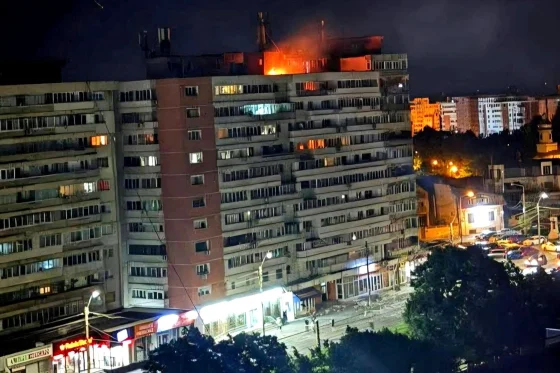

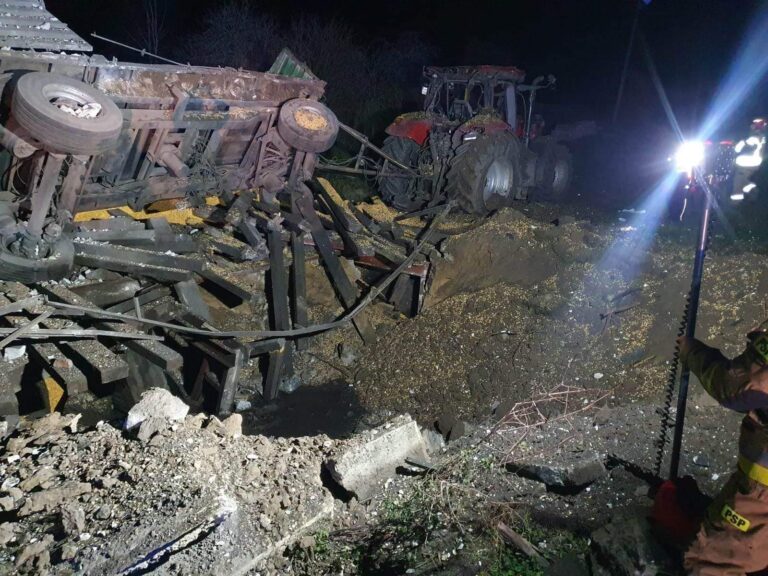
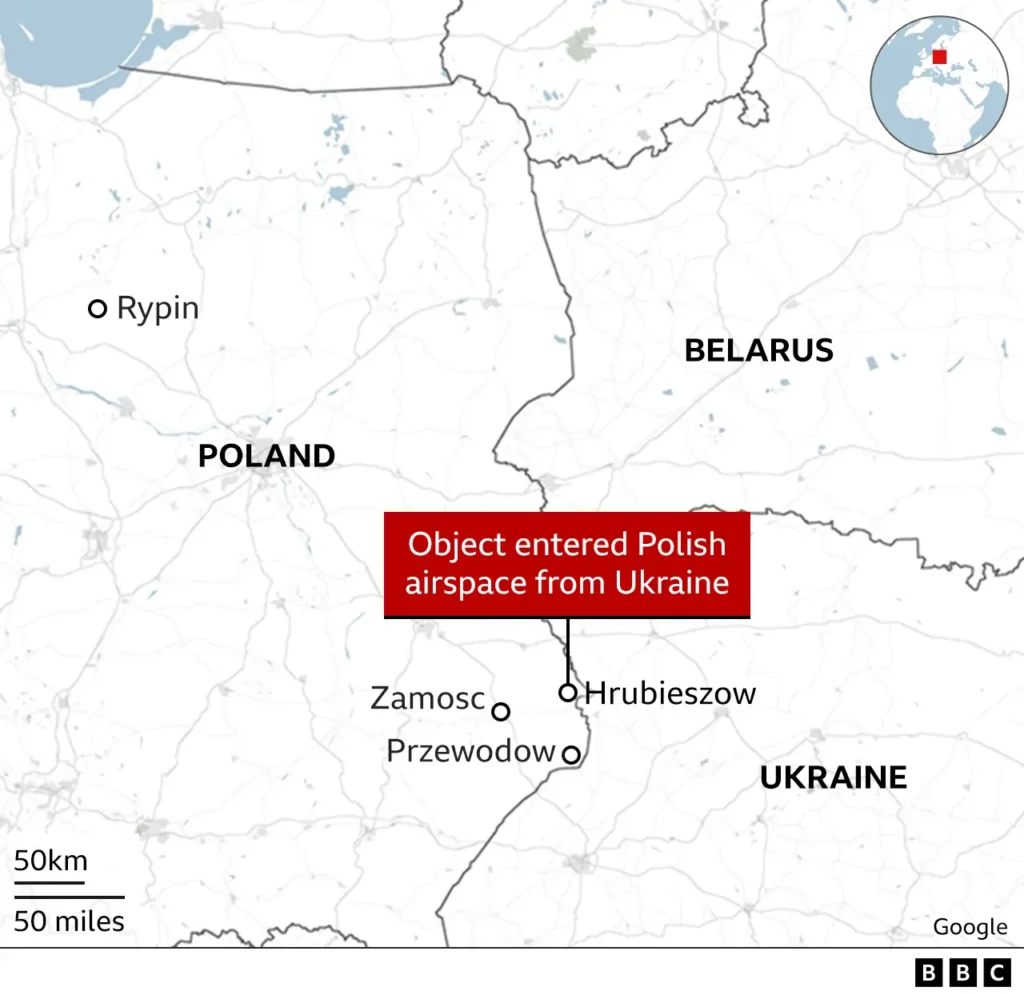
During Russia’s overnight mass missile strike against Ukraine on 30 July 2026, a Russian cruise missile—preliminarily identified by Polish authorities as a Kh-101—crossed Polish airspace and crashed near Tarnawa-Kolonia in Lublin Voivodeship, approximately two kilometers from residential buildings. Polish Prime Minister Donald Tusk stated that all available evidence indicates the projectile was Russian. No casualties were reported. Polish fighters had been scrambled, and NATO surveillance assets were already monitoring the attack.
Although the incident is unlikely to represent a deliberate military attack on Poland, it constitutes one of the most serious violations of NATO territory since Russia’s full-scale invasion of Ukraine. It reinforces a broader pattern of Russian military operations increasingly generating direct security risks for Alliance members.
The incident will likely accelerate discussions regarding NATO rules of engagement, expansion of integrated air-defense coverage over eastern Europe, and the possibility of intercepting Russian missiles before they reach NATO airspace.
According to Polish military reporting:
- At approximately 03:40 CET, Polish air-defense systems detected an unidentified object entering national airspace.
- Fighter aircraft were scrambled while AWACS surveillance assets monitored the situation.
- The object disappeared from radar before a helicopter later located a crater and missile debris near Tarnawa-Kolonia.
- Preliminary assessments indicate the object was most likely a Russian Kh-101 air-launched cruise missile.
- The missile penetrated roughly 100 km into Polish territory before impact.
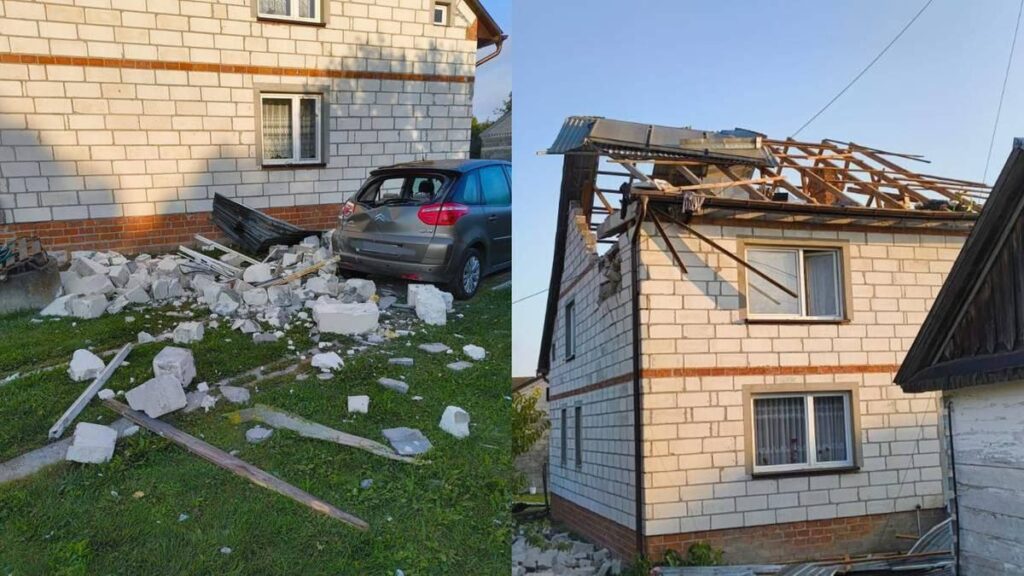
- Air raid sirens were activated in parts of eastern Poland, but no civilian casualties occurred.
Russian planners almost certainly anticipated the general risk that missiles launched against western Ukraine could enter NATO airspace. However, there is currently no public evidence that they deliberately programmed or exploited this specific penetration of Poland.
These probabilities are provisional pending recovery of the missile’s navigation components, radar reconstruction, and identification of its intended Ukrainian target.
Why prior anticipation is highly likely
Russian planners cannot reasonably treat the Polish border as an unexpected feature of the operational environment. The overnight attack concentrated partly on Lviv and western Ukraine, immediately adjacent to Poland, while Poland had already activated aircraft and air-defence systems in anticipation of possible spillover. (Reuters)
Russia also has extensive precedent showing that strikes near NATO territory can produce airspace violations. In September 2025, Poland reported numerous Russian drone-type objects entering its airspace, leading NATO aircraft and ground-based systems to respond; Poland subsequently invoked Article 4 consultations. (NATO)
Therefore, even if the July 30 incident was caused by a technical failure, Russian mission planners should have understood that: cruise-missile routes near Lviv carried a non-negligible risk of deviation into Poland, Polish and NATO radars would monitor the strike, aircraft could be scrambled, an accidental impact could create casualties and an Alliance political crisis.
The most defensible conclusion is thus not that Moscow necessarily intended the penetration, but that it knowingly conducted an operation in which such penetration was foreseeable.
Could Russia have exploited the incursion?
Exploitation may have occurred after or during the event, without the missile having been intentionally routed into Poland.
Russian electronic-intelligence and military command structures could use the incident to observe: when Polish radars first detected the missile, which radar stations illuminated or tracked it, how quickly fighters and helicopters were deployed, whether ground-based air-defence batteries activated targeting radars, which communications, warning procedures, and command levels were triggered, the circumstances under which Poland chose not to fire.
Polish authorities said the object was detected entering Polish airspace at approximately 03:40 local time, tracked until it disappeared from radar, and later located near Tarnawa-Kolonia. Prime Minister Donald Tusk said Polish forces were preparing to intercept it but that it crashed before engagement became necessary. (Reuters)
That response generated operational information potentially valuable to Russia. However, obtaining such information does not prove that intelligence collection was the missile’s original purpose. Militaries routinely exploit unplanned events for lessons learned.
Indicators that would support deliberate probing
The intentional-probe hypothesis would become stronger if investigators establish one or more of the following: The missile remained fully functional. An intact engine, navigation system and control surfaces would weaken the malfunction explanation.
- Its programmed waypoints led into Poland. Recovered mission data showing a deliberate western route would be the strongest evidence.
- The missile changed course before reaching the border. A controlled turn inconsistent with damage, terrain-following error or interception would be significant.
- The route passed near a Polish military or radar facility. This could indicate reconnaissance, provocation or deliberate strategic signaling.
- Russian surveillance assets were unusually active. Elevated Russian airborne, space-based or ground-based collection directed at eastern Poland could suggest a planned test.
- Other missiles followed comparable routes. A coordinated pattern would be harder to explain as a single technical anomaly. Russian information operations were prepared in advance. Rapid, synchronized narratives blaming Ukraine or ridiculing NATO air defence could indicate prior planning—though propaganda alone would not be conclusive.
Indicators favoring an accidental deviation
The accidental explanation would be strengthened by: evidence of engine or control-system failure, accumulated inertial-navigation error, damage from Ukrainian air defence, GNSS jamming or spoofing, a trajectory that originally pointed toward a plausible Ukrainian target, abrupt altitude loss or irregular maneuvering before the Polish border, lack of Russian intelligence-collection activity tailored to the incident.
Because the object crashed in a rural area and Poland presently says there is no reason to believe Polish territory was the intended target, the available evidence currently favors risk acceptance or technical deviation, not a deliberate attack. (Reuters)
Strategic interpretation
The most important distinction is between intent to strike Poland and willingness to expose Poland to danger.
Russia may not have intended to hit NATO territory, but it appears willing to conduct large, complex missile operations close to NATO borders without creating a sufficiently wide safety margin. That approach can serve Moscow in three ways: it keeps military pressure on western Ukraine, it normalizes recurring violations and tests NATO restraint, it produces intelligence about Alliance responses at relatively low immediate cost.
This resembles calculated operational recklessness: Moscow may not order a missile to land in Poland, but it may accept a foreseeable probability that one will cross the border, while remaining prepared to exploit the resulting NATO response.
The likelihood that Russia anticipated the possibility of temporary NATO airspace penetration is high. The likelihood that it deliberately planned this particular missile’s Polish route is materially lower and remains unproven. The leading assessment should therefore be:
Russian planners probably accepted the risk of an incursion and may have exploited the Polish response for intelligence, but current evidence does not establish that the incursion itself was a preplanned reconnaissance or provocation operation.
Yes—but probably not through a formal, Alliance-wide rewrite of NATO’s Rules of Engagement (ROE).
The more likely outcome is a combination of national Rules of Engagement (ROE)adjustments, updated operational guidance, and lower tactical thresholds for interception in frontline states such as Poland, Romania, Finland, and the Baltic countries.
Why NATO Is Likely to Change
The Polish incident exposed three operational problems: Detection is no longer the problem. Poland detected the missile almost immediately after it entered national airspace.
The issue was decision-making:When should commanders engage? How certain must they be? Is a missile merely crossing Poland or threatening it? Does interception create greater danger than allowing continued flight? These are policy and command questions rather than technical ones.
Existing ROE Were Designed for Different Threats. Traditional NATO air-defense doctrine assumed: Soviet bombers; ballistic missiles; deliberate attacks against NATO.
Today’s reality is different Russia regularly launches: hundreds of drones; dozens of cruise missiles; ballistic missiles; decoys; electronic warfare support.
Some inevitably approach NATO borders.
The distinction between “attack on Ukraine an “threat to NATO” has become increasingly compressed.
. Political Costs of Inaction Are Growing
If another missile causes casualties inside Poland or Romania after commanders decline to engage, governments will face difficult questions.
Public pressure could become:
“Why did NATO detect the missile but not destroy it?”
That political risk alone encourages more permissive engagement policies.
What Will Probably Change
Earlier Engagement Authority
Instead of waiting until impact appears imminent, commanders may receive authority to intercept when: the missile cannot be positively confirmed as leaving NATO airspace; projected trajectories remain uncertain; sufficient intercept geometry exists.
This would shorten decision cycles considerably.
Greater Delegation to National Commanders
Political approval may increasingly shift to pre-authorized military commanders.
Instead of waiting for national political consultation:
Current process: Radar detects missile
↓ Assessment
↓ Political consultation
↓ Military authorization
↓ Possible intercept
Future process:
Radar detects missile
↓Pre-authorized military commander engages immediately
↓ Political notification afterward
Expanded “Protective Bubble”
Several Allied governments have previously debated engaging Russian missiles headed toward western Ukraine if they present an imminent risk to NATO territory. Such proposals have not become Alliance policy, but the Polish incident is likely to revive discussion about whether defending NATO airspace sometimes requires acting before a missile physically crosses the border. Any such step would involve major political and legal questions and has not been adopted by NATO.
Why NATO Will Not Publicly Rewrite ROE
Rules of Engagement remain highly classified.
Publicly announcing: “We now shoot first”
would: reveal military doctrine; reduce strategic ambiguity; provide Russia with information about NATO decision thresholds.
Instead, NATO is more likely to revise: classified tactical instructions; air-defense contingency plans; command authorities; interoperability procedures.
These changes could occur without any public declaration.
Strategic Drivers Behind Change
Deterrence
Russia must believe that:Any future missile entering NATO airspace may be destroyed immediately.
This reduces incentives for risky operations.
Protection of Civilians
A Kh-101 carries a warhead of roughly 400–450 kg.
If one strikes a populated Polish city: dozens of deaths become plausible; Article 4 consultations become almost certain; Article 5 debate becomes unavoidable.
Reducing that risk strengthens the case for earlier interception.
Intelligence Protection
Every missile that crosses NATO territory provides Russia with opportunities to observe: radar activation;interceptor readiness; fighter response; command timelines.
Earlier interception reduces the amount of operational information that can be collected during a prolonged flight.
Obstacles to ROE Changes
Despite strong incentives, NATO faces several constraints.
Debris Risk. Destroying a cruise missile over populated territory can scatter burning fuel and explosive fragments.
Sometimes allowing controlled impact in an unpopulated area may still be judged safer.
Escalation Risk
Intercepting Russian missiles—even within NATO airspace—could be portrayed by Moscow as direct NATO participation in the conflict.
While international law generally supports a state’s right to defend its own airspace, Allies will weigh the military benefits against the political consequences.
Interceptor Availability
Patriot and similar interceptors remain scarce and expensive, while NATO leaders have recently emphasized the need to expand production of interceptors and other air-defense capabilities.
Indicators That NATO Has Quietly Changed ROE
Analysts should monitor for: Increased Patriot deployments in eastern Poland.
More frequent NATO AWACS patrols near the Ukrainian border. Additional standing combat air patrols over eastern Europe. Official statements emphasizing “immediate response” or “active defense.” Joint NATO–Poland–Romania missile-defense exercises focused on cross-border threats. Public references to streamlined command authorities or faster engagement decisions. Procurement of larger interceptor inventories and expanded integrated air-defense networks.
Intelligence Assessment
The Polish missile incident is unlikely to produce a headline announcement that “NATO has changed its Rules of Engagement.” Instead, it is more likely to trigger quiet operational evolution.The Alliance has historically adapted its procedures after repeated operational lessons rather than through highly public doctrinal shifts. Recent emphasis from NATO leadership has been on strengthening the eastern flank, increasing interceptor production, and improving readiness rather than announcing new public engagement doctrines.

More on this story: Russian Drone Incursion into Poland – Analytic Overview