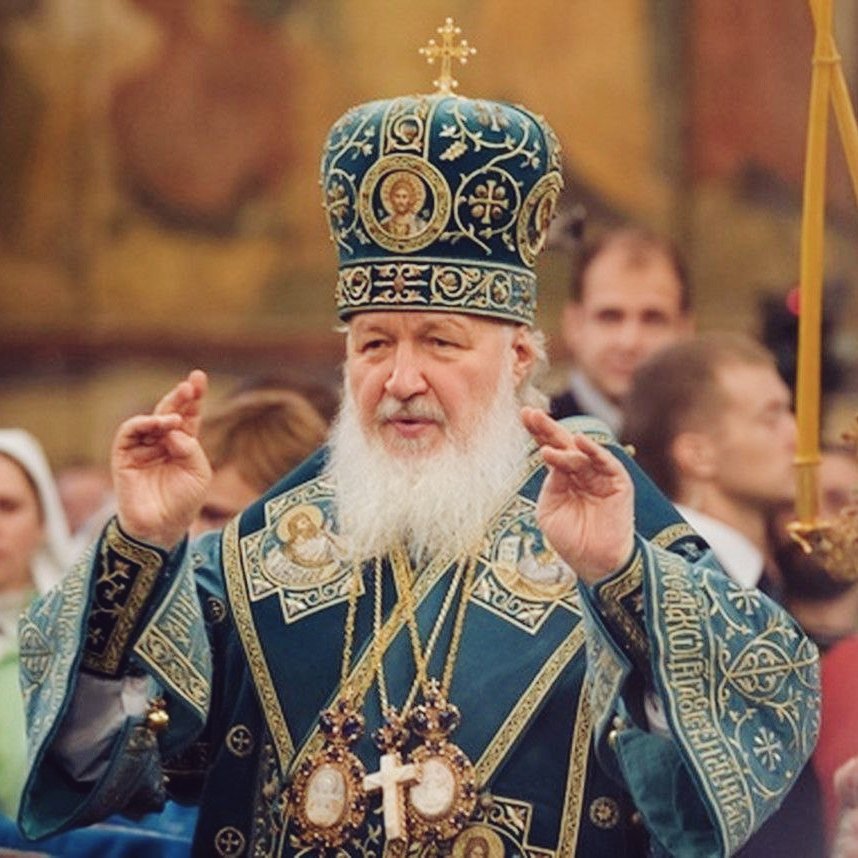

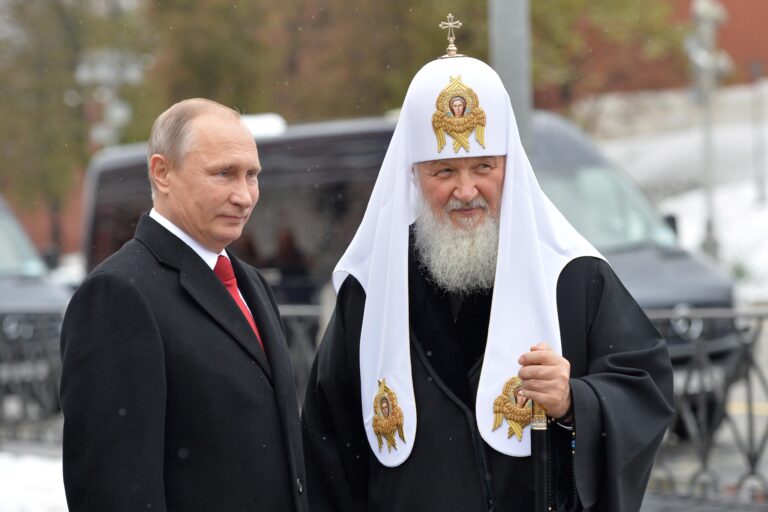
Patriarch Kirill (Vladimir Gundyayev), the 79-year-old head of the Russian Orthodox Church (ROC), remains one of the most influential pillars of the Russian political system. However, recent reports regarding possible cognitive decline, combined with a growing number of corruption and misconduct scandals within the ROC, have raised questions about the future leadership of the Church and its relationship with the Kremlin.
While there is no publicly verified medical diagnosis confirming dementia, multiple observers of church affairs have reported signs of age-related cognitive deterioration. Simultaneously, the ROC has faced renewed scrutiny over financial misconduct, luxury lifestyles among senior clergy, and criminal investigations involving prominent bishops.
The key question is no longer whether scandals will damage the Church’s reputation—they already have—but whether Kirill’s eventual departure could trigger a struggle among competing factions within the Russian elite seeking to control one of the country’s most important ideological institutions.
Health Concerns and Dementia Rumors
Evidence Behind the Rumors
Speculation intensified in April 2026 after Kirill reportedly confused major Orthodox holidays during a public service, speaking about Christmas and Epiphany during Holy Week before aides intervened and corrected him.The incident was widely discussed among Russian religious observers and fueled longstanding rumors of cognitive decline.
Russian church analyst Ksenia Luchenko reported that discussions among clergy and insiders have increasingly included references to: Cognitive difficulties; Age-related personality changes; Memory lapses; Reports from sources describing “rapidly progressing dementia.”
Importantly, none of these claims have been independently confirmed by medical documentation. The Moscow Patriarchate continues to publish evidence of Kirill’s regular participation in church activities, international correspondence, and public appearances.
Why the Health Issue Matters
Unlike many religious leaders, Kirill occupies a position that is simultaneously: Spiritual; Political;Ideological; Geostrategic.
Since 2022, the ROC has become one of the principal institutions legitimizing Russia’s war against Ukraine and promoting the ideology of the “Russian World” (Russkiy Mir). Kirill personally endorsed narratives portraying the war as a spiritual struggle and even described it as a form of sacred mission.
Consequently, any deterioration in his health has implications not only for church governance but also for the Kremlin’s ideological apparatus.
Corruption and Bribery Scandals Inside the ROC
The Hilarion Affair
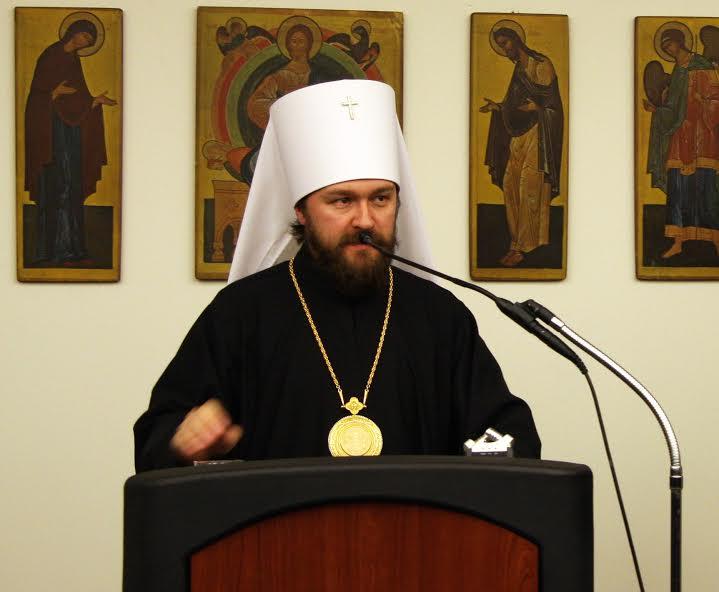
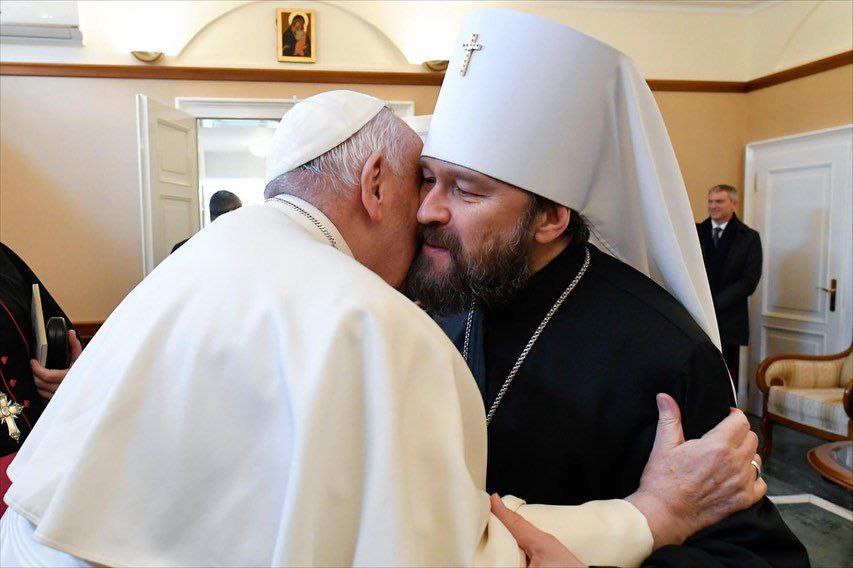
Perhaps the most significant recent scandal involves Metropolitan Hilarion (Alfeyev), formerly one of the Church’s most prominent international representatives and long viewed as a potential successor to Kirill.
In June 2026, reports emerged that narcotics had allegedly been discovered in a vehicle linked to Hilarion. Following the controversy, he was reassigned to relatively obscure parishes in Brazil while criminal investigations reportedly continued.
The case has damaged one of the most recognizable figures within the ROC hierarchy and reduced the number of obvious successors available to the Kremlin.
Longstanding Financial Controversies
The ROC has repeatedly faced allegations involving: Real estate holdings; Luxury residences;
Although many accusations remain difficult to verify due to the opaque nature of church finances, the perception of corruption has steadily grown among parts of Russian society.
Kirill himself has been associated with earlier controversies involving:
Secret Family Allegations
In late 2025, investigative journalists published claims alleging that Kirill maintained a long-term secret relationship with a woman identified as Lidia Leonova despite the Orthodox requirement of episcopal celibacy. The reports also examined extensive real-estate assets allegedly connected to the relationship.
Although the Church did not substantively address these allegations, they reinforced perceptions among critics that the senior hierarchy increasingly resembles a privileged political elite rather than a spiritual institution.
The Succession Problem
Why Succession Matters to the Kremlin
The Russian Orthodox Church functions as more than a religious body.
It provides: Legitimization of state policy; Mobilization narratives for wartime; nfluence operations abroad; Networks inside Russian society; Soft-power instruments throughout the post-Soviet space.
A leadership transition therefore represents a national-security issue for the Kremlin.
Potential Successor Factions
Three broad factions appear visible:
1. Hardline Ideological Faction
Associated with supporters of the “Holy War” doctrine and close cooperation with state security structures.
Likely priorities:
- Continued support for the war;
- Expansion of Russkiy Mir ideology;
- Further integration with state institutions.
2. Administrative-Technocratic Faction
Focused on preserving institutional stability and church finances.
Likely priorities:
- Damage control;
- Improving relations with foreign Orthodox churches;
- Maintaining Kremlin support without excessive ideological activism.
3. Security-State Faction
Potentially supported by elements within the Presidential Administration and security services.
Likely priorities:
- Ensuring complete political reliability;
- Preventing independent church influence;
- Tightening state supervision over religious structures.
Consequences for the Russian Orthodox Church
Scenario 1: Controlled Transition (Most Likely)
Probability: High
Kirill remains nominal head while authority gradually shifts to advisers and senior bishops.
Characteristics: Continuity of pro-Kremlin policies.
This resembles late-stage leadership transitions seen elsewhere in Russia’s political system.
Scenario 2: Sudden Incapacitation
Probability: Medium
A rapid deterioration in health forces an immediate succession process.
Consequences:
- Elite competition inside the Church;
- Increased Kremlin intervention;
- Temporary disruption of international church diplomacy.
Scenario 3: Institutional Crisis
Additional scandals combine with leadership uncertainty to produce:
- Falling public trust;
- Greater fragmentation among clergy;
- Further erosion of Moscow’s authority within global Orthodoxy.
Strategic Implications for Russia
The Russian Orthodox Church has become one of the principal ideological pillars supporting Vladimir Putin’s political system. Patriarch Kirill’s declining health—whether the dementia rumors prove accurate or not—creates uncertainty around a key institution responsible for legitimizing Russia’s war effort, promoting the “Russian World” doctrine, and reinforcing the Kremlin’s conservative civilizational narrative.
The most likely outcome is not a dramatic collapse of the Church but a carefully managed transfer of influence to a successor approved by the Presidential Administration. However, recent corruption scandals, criminal investigations involving senior clergy, and persistent allegations regarding wealth and privilege have weakened the moral authority of the ROC and may complicate the Kremlin’s efforts to use the Church as a source of political legitimacy.
There are three separate issues that are often conflated:
1. Dementia rumors
Since 2025–2026, Russian religious commentators and some opposition media have claimed Kirill has exhibited: memory lapses; confusion during public appearances; difficulty following liturgical sequences.
These observations fueled speculation about dementia but have never been medically confirmed.
Several Russian Telegram channels and émigré publications claimed that individuals associated with Kirill’s entourage were seeking access to anti-Alzheimer therapies available through Swiss medical networks.
Leqembi (lecanemab) is an anti-amyloid monoclonal antibody developed for early-stage Alzheimer’s disease. It is intended for patients with mild cognitive impairment or mild dementia and is administered under strict neurological supervision.
Interestingly, Switzerland did not ultimately approve Leqembi itself. In January 2026, manufacturer Eisai withdrew its Swiss authorization application, while Swiss regulators approved the competing drug Kisunla (donanemab).
Intelligence Assessment
From an intelligence-analysis perspective, there are four possibilities:
| Scenario | Assessment |
| No illness, rumors are political | Possible |
| Mild age-related cognitive decline | Plausible |
| Genuine neurodegenerative disease and foreign treatment search | Plausible but unproven |
| Active treatment with Leqembi in Switzerland | No verified evidence |
Why the rumors matter
Whether true or not, the rumors are strategically significant because they emerge during an increasingly visible succession struggle inside the Russian Orthodox Church.
Historically, in Russia, rumors concerning the health of major figures often precede elite maneuvering. Similar information campaigns surrounded:
- Boris Yeltsin in the late 1990s;
- Leonid Brezhnev during the late Soviet period;
- discussions surrounding the health of Ramzan Kadyrov in recent years.
In this context, stories about dementia and expensive foreign treatment may be less important medically than politically. They can serve as signals that factions within the ROC, the Presidential Administration, or security services are preparing for a future leadership transition.
Based on currently available open-source information, the claim that Patriarch Kirill ordered or received Leqembi in Switzerland should be treated as unconfirmed intelligence reporting rather than established fact. The evidence supporting the claim is substantially weaker than the evidence supporting the broader assessment that concerns about his health are increasingly becoming a factor in ROC elite politics.
At present, there is no publicly available, verified evidence that Patriarch Kirill personally ordered, received, or used Leqembi (lecanemab) in Switzerland.
The story appears to originate from a mixture of: Rumors circulating among Russian church and political insiders regarding Kirill’s alleged cognitive decline; Reports that individuals close to the Patriarch allegedly explored access to advanced anti-dementia therapies abroad; The fact that Switzerland has become one of the European centers discussing access to new Alzheimer’s treatments, including Leqembi (lecanemab) and Kisunla (donanemab).
There are three separate issues that are often conflated:
1. Dementia rumors
Since 2025–2026, Russian religious commentators and some opposition media have claimed Kirill has exhibited: memory lapses; confusion during public appearances; difficulty following liturgical sequences; increasing dependence on aides.
These observations fueled speculation about dementia but have never been medically confirmed.
Several Russian Telegram channels and émigré publications claimed that individuals associated with Kirill’s entourage were seeking access to anti-Alzheimer therapies available through Swiss medical networks.
However: no prescription records have surfaced; no Swiss medical institution has confirmed treatment; no investigative outlet has produced documentary evidence.
Therefore, these claims remain unverified.
Leqembi (lecanemab) is an anti-amyloid monoclonal antibody developed for early-stage Alzheimer’s disease. It is intended for patients with mild cognitive impairment or mild dementia and is administered under strict neurological supervision.
Interestingly, Switzerland did not ultimately approve Leqembi itself. In January 2026, manufacturer Eisai withdrew its Swiss authorization application, while Swiss regulators approved the competing drug Kisunla (donanemab).
That detail weakens some of the rumors claiming Kirill was specifically obtaining Leqembi through Switzerland.
Intelligence Assessment
From an intelligence-analysis perspective, there are four possibilities:
| Scenario | Assessment |
| No illness, rumors are political | Possible |
| Mild age-related cognitive decline | Plausible |
| Genuine neurodegenerative disease and foreign treatment search | Plausible but unproven |
| Active treatment with Leqembi in Switzerland | No verified evidence |
Why the rumors matter
Whether true or not, the rumors are strategically significant because they emerge during an increasingly visible succession struggle inside the Russian Orthodox Church.
Historically, in Russia, rumors concerning the health of major figures often precede elite maneuvering. Similar information campaigns surrounded: Boris Yeltsin in the late 1990s; Leonid Brezhnev during the late Soviet period; discussions surrounding the health of Ramzan Kadyrov in recent years.
In this context, stories about dementia and expensive foreign treatment may be less important medically than politically. They can serve as signals that factions within the ROC, the Presidential Administration, or security services are preparing for a future leadership transition.
Based on currently available open-source information, the claim that Patriarch Kirill ordered or received Leqembi in Switzerland should be treated as unconfirmed intelligence reporting rather than established fact. The evidence supporting the claim is substantially weaker than the evidence supporting the broader assessment that concerns about his health are increasingly becoming a factor in ROC elite politics.
Is the circulation of dementia rumors part of an influence campaign aimed at weakening Patriarch Kirill’s authority before a controlled transition?
Assessment
There is a credible possibility, though currently no publicly available conclusive evidence, that persistent rumors regarding the health and cognitive decline of Patriarch Kirill are being amplified by actors seeking to shape the succession environment within the Russian Orthodox Church (ROC). Given the central role of the Patriarchate in supporting the Kremlin’s ideological agenda, narratives questioning Kirill’s fitness to govern should be viewed not merely as gossip but as potentially significant instruments of elite political competition.
Why the Rumors Matter
The Russian Orthodox Church is one of the few institutions in Russia possessing nationwide organizational infrastructure and significant influence over public opinion. Since the beginning of Russia’s full-scale invasion of Ukraine, Kirill has become closely associated with the Kremlin’s wartime narrative, effectively linking the Church’s legitimacy to the state’s geopolitical project.
Consequently, any perception that Kirill is physically or mentally unable to continue performing his duties raises critical questions regarding: succession planning within the ROC; continuity of Church support for Kremlin policies;redistribution of financial and administrative resources within the Patriarchate; influence of Russian security services over future Church leadership.
Historically, rumors regarding the health of senior Russian leaders have often emerged during periods of elite uncertainty, serving as signals of internal competition rather than purely medical concerns.
Indicators Suggesting a Coordinated Information Campaign
Several indicators are consistent with a deliberate effort to weaken Kirill’s position:Timing of the Rumors.The increase in speculation about Kirill’s cognitive health coincides with: his advanced age (approaching 80); increasing public scrutiny of Church finances; corruption scandals involving clergy and diocesan officialsж mounting social dissatisfaction with the ROC’s support for the war.
The convergence of these factors creates an environment in which health-related narratives can be used to justify leadership change.
Elite Succession Dynamics The Patriarch controls:
- appointments of bishops;
- distribution of Church revenues;
- foreign Church relations;
- access to Kremlin decision-makers.
Any future succession would affect numerous interest groups, including: senior bishops; business patrons; security-service-linked networks; Kremlin political managers.
Rumors about dementia may therefore function as a tool to accelerate discussions about a post-Kirill era.
Russian Political Tradition. Russian elite politics has repeatedly witnessed the use of health-related narratives against influential figures. Questions regarding a leader’s physical or cognitive condition often emerge before major personnel changes, allowing stakeholders to prepare public opinion for a transition while avoiding direct political confrontation.
Possible Actors Behind the Narrative. Several actors could benefit from spreading such rumors: Certain bishops may view Kirill’s departure as an opportunity to advance preferred successors or gain greater influence over Church assets and personnel appointments.
Kremlin Political Managers. The Kremlin may eventually conclude that Kirill’s public image has become a liability due to: sanctions; association with the war; declining trust in religious institutions; international isolation of the ROC.
Under this scenario, health concerns could provide a politically acceptable justification for an orderly replacement without openly acknowledging political motives.
Russian intelligence and security structures traditionally maintain close relations with Church leadership. If succession planning has begun, controlled leaks regarding health issues could help test reactions among clergy, regional elites, and foreign Orthodox churches.
Ukrainian, Western, and anti-Kremlin media outlets also have incentives to highlight signs of weakness within institutions supporting the Russian state. However, these actors are more likely to amplify existing rumors than generate them independently.
At present, the most likely assessment is that dementia rumors represent a mixture of genuine speculation about Kirill’s age and health, opportunistic amplification by various actors, and possibly early-stage positioning by factions interested in a future succession struggle.
If evidence emerges that the Kremlin is preparing a controlled transition within the next 1–3 years, health-related narratives would likely become the preferred mechanism for facilitating leadership change while preserving institutional stability. In the Russian political tradition, citing medical necessity has often proven more acceptable than openly acknowledging political disagreements or elite rivalries.
Analytic Confidence: Moderate. The existence of rumors is well documented, but direct evidence linking them to a coordinated influence operation remains limited. The assessment is based primarily on known patterns of Russian elite behavior, succession politics, and the strategic importance of the Russian Orthodox Church.
Recent disciplinary and rehabilitation-related decisions that could indicate succession struggles under Patriarch Kirill, the following timeline is useful:
| Date | Bishop/Cleric | Decision | Significance |
| 11 Jun 2025 | Bishop Kallinik | Higher Church Court imposed administrative sanctions and banned him from holding senior church positions pending compensation for alleged financial damage. | Demonstrates willingness of the Patriarchate to discipline bishops over governance and financial issues. |
| 16 Jul 2025 | Patriarch Kirill | Approved sanctions against Bishop Kallinik. | Shows personal involvement of Kirill in episcopal disciplinary matters. |
| 24 Jul 2025 | Holy Synod | Confirmed disciplinary measures and reassigned Kallinik to monastic obedience rather than diocesan administration. | Indicates demotion rather than rehabilitation. |
| 30 Oct 2025 | Multiple episcopal appointments | Several new bishops elected and reassigned. | Suggests gradual renewal of the episcopal corps. |
| 26 Dec 2025 | ROC and ROCOR bishops | Confirmation of several new episcopal elections in North America. | Expansion of younger episcopal cadre. |
| 12–13 Mar 2026 | Bishop Serafim | Removed as chairman of the Synodal Youth Department and transferred to another position. | Administrative downgrade but not defrocking. |
| 14 May 2026 | Holy Synod | Additional personnel decisions and diocesan adjustments. | Continues management of episcopal appointments before any visible succession process. |
Cases Often Mentioned in Discussions of “Restoration”
The best-known restoration cases are actually older and involve clergy outside normal ROC disciplinary procedures:
| Year | Figure | Event |
| 2018 | Filaret Denysenko | The Ecumenical Patriarchate restored Filaret’s ecclesiastical status; Moscow rejected the decision as uncanonical. |
| Various years | Former ROCOR clergy | Some clergy previously suspended or separated from Moscow were later reconciled following the 2007 reunification process. |
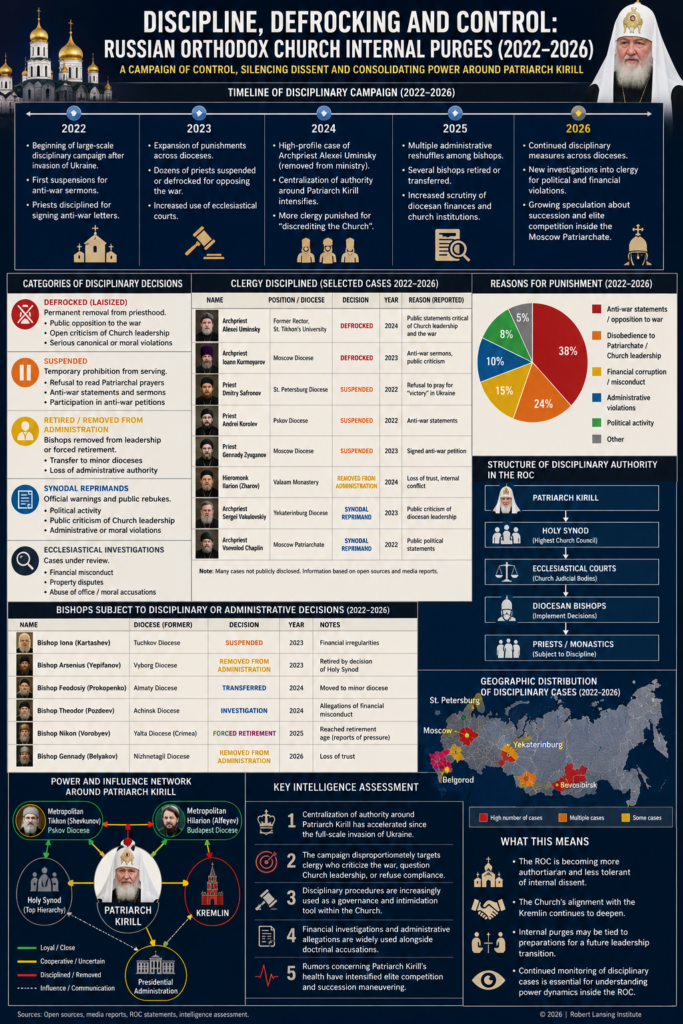
Analytical Significance
If your broader question concerns Kirill’s authority and succession, the notable pattern is not restoration but selective disciplining, reassignment, and circulation of new bishops into important posts. This is often a precursor to succession management in hierarchical institutions:
- Removal of controversial bishops.
- Promotion of younger loyal hierarchs.
- Increased role of the Holy Synod in personnel decisions.
- Centralization of disciplinary authority around Kirill and a small circle of senior metropolitans.
For an intelligence assessment, we would watch especially:
- Metropolitan Antony,
- Metropolitan Grigory,
- Metropolitan Veniamin,
because their increasing visibility in Synodal governance could provide early indicators of a managed post-Kirill transition. A deeper intelligence question is whether recent disciplinary actions are primarily anti-corruption measures or part of a broader effort to remove bishops associated with older patronage networks before a future succession contest.