
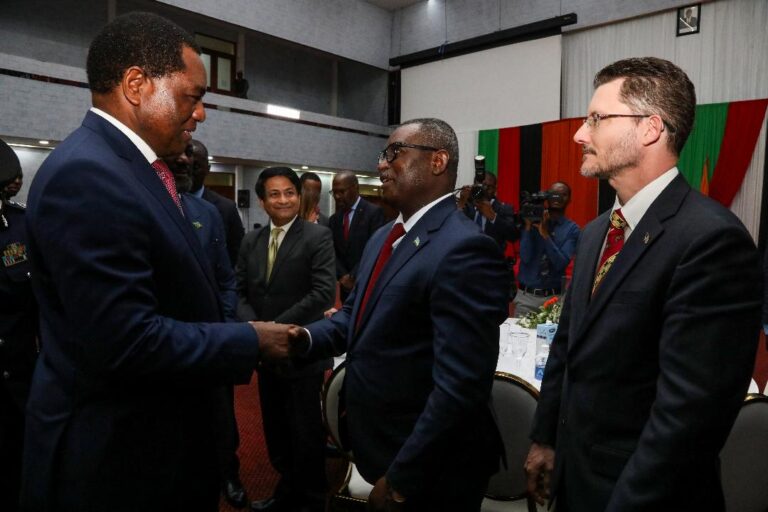
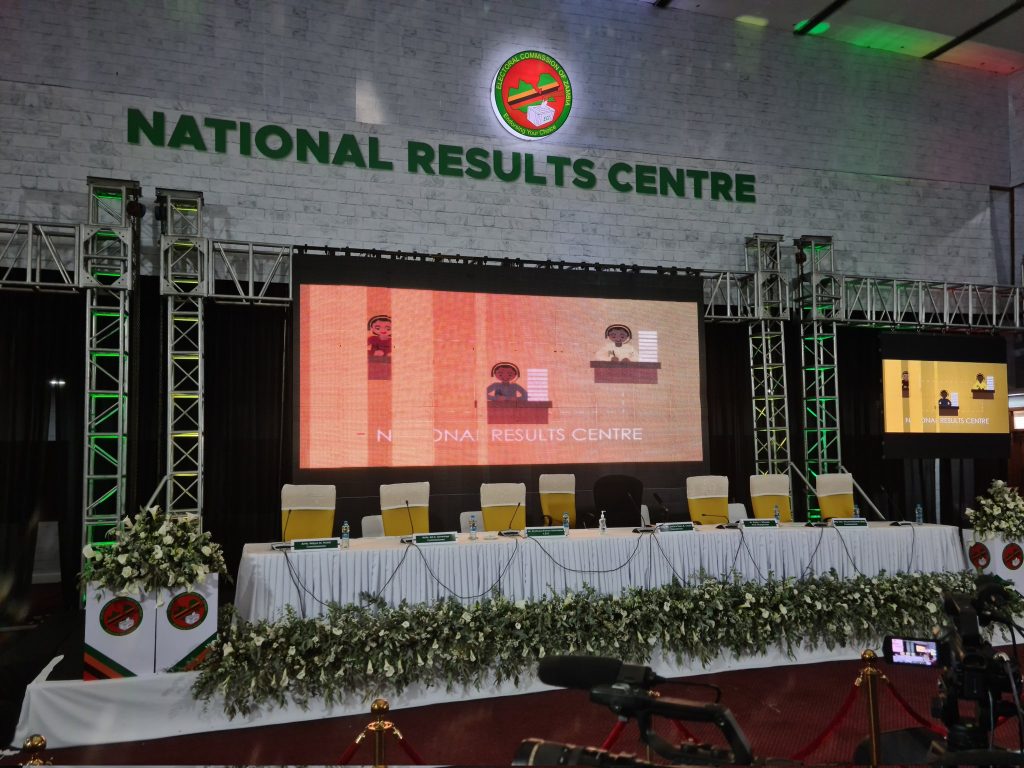
Zambia’s parliamentary and presidential elections, scheduled for 13 August 2026, represent one of Southern Africa’s most consequential political contests this year. The vote is expected to determine whether President Hakainde Hichilema and the ruling United Party for National Development (UPND) consolidate their reform agenda or whether a revitalized opposition led by Brian Mundubile can capitalize on persistent economic grievances despite improving macroeconomic indicators.
Although Zambia remains one of Africa’s more resilient democracies, the election is increasingly viewed as a referendum on three competing narratives: macroeconomic recovery versus deteriorating living standards; democratic reform versus accusations of growing executive centralization; Western-oriented economic integration versus renewed populist nationalism.
The probability of large-scale nationwide electoral violence remains low to moderate (25–35%), although localized clashes in Lusaka, Copperbelt Province, and several urban constituencies remain plausible.
Political Background
Since defeating former President Edgar Lungu in 2021, President Hichilema inherited a country suffering from sovereign default, high inflation and declining investor confidence.
His administration has subsequently achieved several notable successes: sovereign debt restructuring; renewed IMF and international financial institution support; falling inflation increased foreign investment; recovery in copper production; stronger foreign exchange reserves.
However, these improvements have not translated into proportional gains in household incomes.
Consequently, many Zambians continue to prioritize: unemployment; food prices; electricity shortages; youth opportunities; cost of living.
The election therefore represents less a judgment on macroeconomic management than on whether ordinary citizens perceive tangible improvements.
Electoral System
The 2026 elections are the first conducted under Zambia’s amended constitutional framework.
Changes include: expansion of the National Assembly; introduction of proportional representation seats alongside constituency members; reserved parliamentary seats for women, youth and persons with disabilities.
The revised system increases representation while simultaneously strengthening the governing party’s opportunities to convert nationwide vote share into parliamentary seats.
Major Political Actors
United Party for National Development (UPND)
Leader: President Hakainde Hichilema
Campaign themes: economic recovery; debt restructuring; attracting foreign investment; copper production; infrastructure; IMF credibility; governance reforms.
Strengths: incumbency; superior campaign organization; international support; improving economic indicators;growing investor confidence.
Weaknesses: cost-of-living dissatisfaction; electricity shortages; unemployment; allegations of increasing executive power; criticism over cyber legislation
Opposition
Brian Mundubile / Tonse Alliance
The opposition has largely coalesced around Brian Mundubile, who emerged after divisions within the Patriotic Front and broader Tonse Alliance. His campaign focuses on the disconnect between macroeconomic recovery and everyday hardship.
Campaign themes: high food prices; unemployment; poverty; government arrogance; democratic freedoms; criticism of IMF-backed reforms.
The opposition seeks to transform the election into a referendum on living standards rather than macroeconomic performance.
Principal Drivers of the Election
Economy
This remains the dominant issue.
Positive indicators include: lower inflation; rising GDP growth; recovering mining investment; improved sovereign creditworthiness.
Negative perceptions include: stagnant household purchasing power; youth unemployment; increasing inequality; rural poverty.
The governing party must convince voters that macroeconomic stabilization will soon produce personal prosperity.
Copper
Copper remains Zambia’s strategic economic asset.
Mining accounts for: over 10% of GDP; approximately 70% of export earnings.
The election outcome will influence: foreign mining investment; Chinese investment; Western mining companies; energy infrastructure; industrial policy.
Investors are watching whether a second Hichilema administration can translate increased mining investment into sustainable growth.
Democratic Governance
Opposition parties increasingly accuse the government of: restricting political activity; expanding executive authority; using cyber legislation against critics; favouring the ruling party through constitutional reforms.
While Zambia’s democratic institutions remain comparatively robust, governance has become a central campaign issue.
Foreign Interests
United States
Washington views Zambia as: a democratic partner; an important supplier of critical minerals; a regional example of economic reform.
US priorities include: democratic stability; secure copper supply; limiting Chinese strategic influence.
European Union
EU priorities include: democratic governance; election observation; mining investment; green transition minerals; regulatory stability.
China
China remains Zambia’s largest infrastructure financier.
Beijing’s priorities include: protecting mining investments; Belt and Road projects; debt management; continued political stability.
China is expected to work pragmatically with whichever government emerges.
Russia
Russian influence in Zambia remains considerably smaller than Chinese or Western influence.
Nevertheless Moscow may seek to: exploit anti-Western narratives; criticize IMF reforms; amplify economic grievances through information operations; expand security cooperation if relations with the West deteriorate.
No public evidence currently suggests major Russian operational interference in the election, though information influence remains a possibility.
Election Scenarios
| Scenario | Probability | Assessment |
| UPND wins parliamentary majority | 60% | Most likely outcome given incumbency and fragmented opposition |
| Reduced UPND majority | 25% | Opposition gains in urban areas due to cost-of-living concerns |
| Hung parliament | 10% | Coalition negotiations required |
| Opposition victory | 5% | Requires major consolidation and significant swing in urban vote |
Risks
Moderate Risks: isolated electoral violence; protests over disputed constituency results; online disinformation;localized ethnic tensions.
Low Risks: military intervention; constitutional crisis; nationwide unrest; state collapse.
Zambia continues to possess stronger democratic institutions than many regional peers.
The most likely outcome is the re-election of President Hakainde Hichilema and the retention of a UPND-led parliamentary majority, although likely with a reduced margin due to persistent cost-of-living concerns and a more unified opposition. Economic stabilization has strengthened Zambia’s international standing, but many households have yet to experience the benefits of recovery, making affordability and employment the central electoral issues.
For external stakeholders, the election is less about geopolitical realignment than about policy continuity. A second Hichilema administration would likely preserve close cooperation with the IMF, Western partners and international investors while maintaining pragmatic relations with China. Although Russia’s direct leverage remains limited, Moscow could seek to exploit social dissatisfaction and anti-Western narratives through information operations. Overall, Zambia is expected to remain one of Southern Africa’s more stable democracies, but the vote will test whether macroeconomic recovery can be converted into durable political legitimacy.
The introduction of proportional representation (PR) seats alongside Zambia’s traditional first-past-the-post (FPTP) constituencies is one of the most strategically significant institutional changes in the 2026 elections. Although intended to improve inclusiveness, the reform is likely to alter coalition dynamics, parliamentary arithmetic, and the distribution of political influence.
Intelligence Assessment
Assessment: The new PR system is likely to strengthen the governing party’s ability to secure a working parliamentary majority, while increasing representation for smaller parties and underrepresented groups. However, it could also reduce the opposition’s ability to translate concentrated regional support into legislative influence.
Greater Advantage for National Parties
Under the previous FPTP system, parliamentary outcomes depended almost exclusively on winning individual constituencies.
The addition of PR seats rewards parties with broad national vote shares, even where they narrowly lose constituency contests.
Likely beneficiaries: UPND; well-organized national opposition parties.
Likely losers: regional parties; independent candidates; localized political movements.
If UPND maintains a nationwide vote advantage, proportional seats will likely enlarge rather than diminish its parliamentary presence.
Reduced Electoral Distortion
Historically, Zambia’s FPTP system occasionally produced disproportional outcomes in which a party receiving around 50% of the vote secured a much larger share of parliamentary seats.
PR will partially correct this imbalance.
Consequently: parliamentary representation should more closely reflect national voting patterns; opposition parties are likely to secure additional seats despite losing many constituency races.
This may enhance the perceived legitimacy of election results.
Higher Probability of Coalition Politics
PR generally reduces the dominance of the two largest parties.
Even if UPND wins the election, smaller parties could become more influential by negotiating legislative support; joining governing coalitions; influencing committee leadership.
Coalition bargaining is therefore expected to become more important than in previous Zambian elections.
Increased Representation of Women and Youth
Reserved proportional seats for: women, youth, persons with disabilities will significantly diversify Parliament.
Strategically, this may: improve institutional legitimacy; reduce criticism regarding political exclusion; broaden the governing party’s social support.
Much depends on whether these representatives exercise genuine legislative independence or remain closely aligned with party leadership.
Potential Consolidation of Executive Power
One concern raised by opposition parties is that the constitutional reforms—including PR and reserved seats—could indirectly reinforce executive dominance if the ruling party controls candidate selection and list placement.
If UPND secures both a plurality of constituency seats and a substantial share of PR seats, it could achieve a more comfortable governing majority, greater control over parliamentary committees, easier passage of government legislation.
From the opposition’s perspective, the reforms could therefore make electoral competition more challenging unless they increase their nationwide vote share.
Strategic Implications for Campaigning
The mixed electoral system is likely to alter campaign strategy.
Political parties will need to compete on two levels: Constituency campaigns, aimed at winning local seats; National vote campaigns, designed to maximize proportional representation.
This shift encourages broader policy platforms and nationwide messaging rather than narrowly targeted regional appeals.
Overall Assessment
The introduction of proportional representation is unlikely to produce a fragmented parliament comparable to those seen in many European democracies. Instead, it is more likely to moderately reinforce the position of whichever party wins the national popular vote, while ensuring that smaller parties and historically underrepresented groups gain a more meaningful parliamentary presence. If the UPND retains its nationwide electoral advantage, the new system is likely to increase its legislative resilience and reduce the opposition’s ability to capitalize on localized electoral strongholds. Conversely, should the opposition significantly narrow the national vote gap, proportional allocation could prevent a dominant parliamentary majority and encourage coalition-building, making post-election negotiations a more important feature of Zambian politics than in previous electoral cycles.
Although Zambia has 10 provinces, only a handful are expected to determine which party secures a parliamentary majority. The ruling UPND enters the election with strong support in its traditional southern heartland, while the opposition is expected to retain influence in parts of the north and east. Consequently, the election will be decided primarily in competitive swing provincesand densely populated urban areas.
Lusaka Province (Highest Strategic Importance)
Highest concentration of urban constituencies after Copperbelt.
Lusaka combines: urban middle class; informal settlements; civil servants; university students; unemployed youth; growing business community.
The province is highly sensitive to: inflation, food prices, unemployment, electricity shortages, governance issues.
Unlike traditional party strongholds, Lusaka’s electorate is highly volatile.
Winning Lusaka is likely to provide momentum toward securing a parliamentary majority.
Copperbelt Province
Copperbelt remains Zambia’s industrial and mining centre.
Political preferences here are strongly influenced by: mining employment; wages; electricity supply; copper investment; relations with foreign mining companies.
The province historically supported the Patriotic Front but became more competitive after 2021.
If UPND maintains gains in Copperbelt, opposition chances decline significantly.
Copperbelt may become the single most competitive province in the election.
Central Province
Central Province increasingly resembles a swing province.
It contains: commercial agriculture; mining; transport corridors; rapidly growing towns.
Its electorate is generally pragmatic and economically focused rather than ideologically aligned.
A narrow victory here could translate into multiple additional parliamentary seats.
Eastern Province
Eastern Province has historically been a Patriotic Front stronghold.
However: internal opposition fragmentation; demographic changes; economic dissatisfaction; agricultural issue could reduce opposition margins.
Even modest UPND gains would substantially affect parliamentary arithmetic.
The opposition cannot afford significant losses here.
Muchinga Province
This province traditionally favoured the former Patriotic Front.
Nevertheless: declining PF unity; new political alliances; local development issues have increased electoral uncertainty.
Although not the largest province, several marginal constituencies may prove decisive.
Southern Province
UPND’s strongest traditional base.
The governing party is expected to dominate.
The key issue is not whether UPND wins—but turnout.
High turnout could offset opposition victories elsewhere.
Western Province
Another UPND stronghold.
Local issues include: infrastructure, decentralisation, Barotseland autonomy debates.
Unless turnout declines significantly, major electoral surprises appear unlikely.
Northern Province
Traditionally supportive of the opposition.
UPND hopes to improve performance through: infrastructure projects; agricultural investment; youth employment initiatives.
Large opposition margins here could partially offset UPND gains in Lusaka.
North-Western Province
Although smaller electorally, North-Western Province has become increasingly important because of: expanding copper mining; foreign investment; infrastructure development.
Growing urbanisation has made voting behaviour less predictable.
Luapula Province
Generally favourable to the opposition.
Economic hardship and migration remain major issues.
While unlikely to determine the election independently, Luapula contributes to the opposition’s parliamentary base.
The parliamentary majority is most likely to be decided in Lusaka and Copperbelt, where economic performance, employment, and the cost of living dominate voter preferences and electoral margins are expected to be narrow. Central and Eastern provinces constitute the second tier of strategically important battlegrounds, capable of tipping the balance if either party overperforms expectations. By contrast, Southern and Western provinces are expected to remain reliable UPND strongholds, while Northern and Luapula are likely to continue favouring the opposition. The party that combines strong turnout in its traditional bases with incremental gains in the urban and mining provinces will have the highest probability of securing a governing majority in the National Assembly.
There is no credible public evidence that Zambia’s major political parties are systematically organizing armed informal militias comparable to groups seen in countries such as Zimbabwe, Kenya (2007–08), or Nigeria. However, both the ruling UPND and opposition alliances rely on youth mobilization networks for campaigning, political rallies, voter outreach, and event security. These networks could become focal points for localized political violence if electoral tensions escalate.
Current Situation
Zambia has historically experienced competitive but generally peaceful elections, although previous electoral cycles have seen: clashes between party supporters; destruction of campaign materials; intimidation of candidates; confrontations with police; politically motivated assaults in urban centres.
Violence has typically been localized, spontaneous, and youth-driven, rather than directed by formal armed organizations.
UPND Youth Structures
The ruling party maintains an active youth wing responsible for: campaign mobilisation; voter registration drives; rally organisation; social media campaigning; neighbourhood outreach.
There is no verified evidence that the UPND youth wing functions as an armed militia. However, opposition figures have accused some supporters of intimidation and harassment during local political events. These allegations remain politically contested and should be treated cautiously.
Intelligence Indicators
Monitor whether UPND youth activists begin: coordinating security at campaign events beyond normal stewarding; establishing local “protection committees”; conducting organised patrols around rallies; engaging in coordinated intimidation of rival campaigners.
Opposition Youth Networks
The opposition, including elements of the Tonse Alliance and supporters linked to the former Patriotic Front (PF), also maintains youth mobilisation structures.
Their activities include: campaign rallies; neighbourhood canvassing; protest mobilisation; election-day monitoring.
Fragmentation within the opposition may reduce its ability to coordinate nationally but could increase the likelihood of independent local confrontations.
Criminal Gangs and Political Patronage
A greater concern than formal militias is the possible use of criminal youth groups.
Historically in Zambia, political actors have occasionally been accused of recruiting:
- unemployed urban youth; football supporter groups; local gangs; transport-sector associations.
These actors may be used to: disrupt rallies; intimidate opponents; remove campaign materials; provoke confrontations; influence voting through coercion.
There is currently no public evidence of systematic nationwide recruitment, but this remains an intelligence priority in densely populated urban constituencies.
Provinces of Greatest Concern
Lusaka Province
Highest probability of political youth mobilisation because of: large unemployed youth population; intense party competition; numerous informal settlements; concentration of political rallies.
Copperbelt Province
Mining communities possess strong organisational networks.
Potential flashpoints include: labour disputes; campaign rallies; demonstrations linked to economic grievances.
Central Province
Competition between major parties could produce localised mobilisation of youth supporters.
Eastern Province
Traditional opposition stronghold.
Any perception of electoral manipulation could rapidly mobilise local supporters into protests.
Role of Social Media
Youth mobilisation increasingly occurs through:Facebook, WhatsApp; TikTok; X (formerly Twitter).
Key risks include: rapid organisation of protests; dissemination of rumours; calls for confrontation; coordinated misinformation campaigns.
Monitoring digital mobilisation may provide early warning of planned unrest.
Security Forces
The Zambia Police Service remains the principal institution responsible for election security.
Public confidence in police impartiality will significantly influence post-election stability.The principal security risk in Zambia’s 2026 elections is not the emergence of organised militias, but the politicisation of youth mobilisation networks in highly competitive constituencies. Both the ruling UPND and opposition parties possess active youth organisations capable of rapid mobilisation, yet there is no credible evidence that they currently function as armed paramilitary forces. The greater concern is that unemployed urban youth, local gangs, or transport-sector groups could be recruited for intimidation, rally disruption, or street confrontations, particularly inLusaka, Copperbelt, Central, and Eastern provinces. Localised violence remains a plausible scenario if the election result is disputed, but the probability of coordinated nationwide militia activity remains low.
More on this story: Zambian elections: scenarios and challenges
More on this story: Hichilema’s administration shows risks for Mdemocracy in Zambia