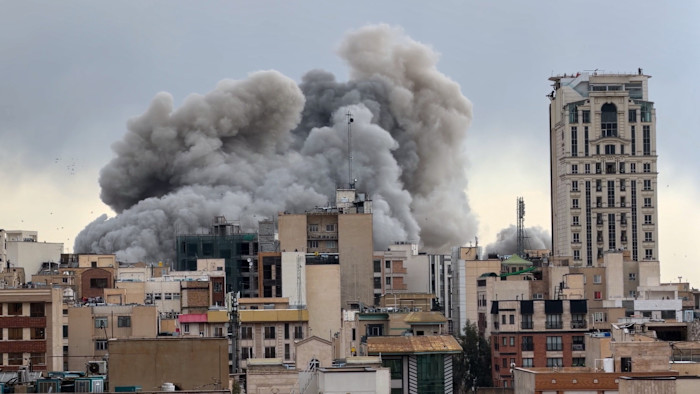

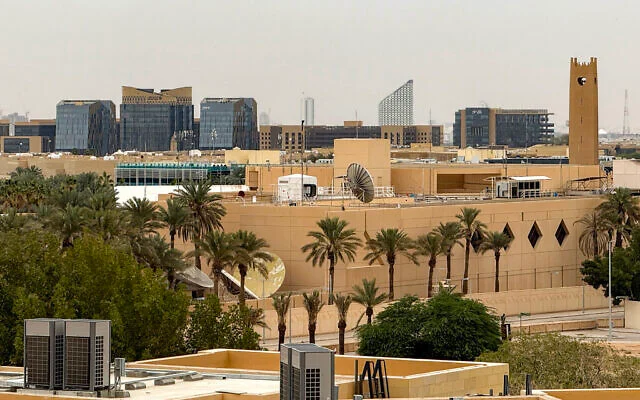
Iranian drone attacks on CIA facilities in the Persian Gulf have prompted U.S. intelligence analysts to investigate whether Russia may have assisted Iran by providing targeting data or advanced drone technology, four people familiar with U.S. intelligence told Reuters.
The sources said U.S. intelligence officials have not yet reached firm conclusions about possible Russian involvement in the attacks on CIA facilities. However, they pointed to the effectiveness and apparent precision of the strikes, as well as the broader technical assistance Russia has provided to Iran, as potential indicators of Moscow’s involvement.
Reuters and other news organizations have previously reported — and U.S. officials have acknowledged — that Russia has provided Iran with targeting data and other forms of assistance for strikes against American targets in the Gulf region. However, the intelligence community’s investigation into possible Russian involvement in attacks specifically targeting CIA facilities has not previously been reported.
An internal memorandum prepared by a Western intelligence agency concluded that Russia most likely played a role in targeting CIA facilities in the region, according to a regional official with access to the document.
Two Western officials in the Gulf who were briefed on intelligence reporting said analysts believe that a pair of Russian-enhanced versions of Iranian Shahed drones were used in the attack in Saudi Arabia. According to the officials, one drone punched a hole through a vulnerable section of the embassy’s outer wall, while the second flew through the opening and detonated inside.
Although Russian assistance to Iran has a long history, reflecting the close relationship between the two countries, deliberate targeting of sensitive CIA facilities would suggest that Moscow is prepared to go significantly further in disrupting and undermining U.S. operations — just as Washington is seeking to bring its war with Iran to an end.
Concerns that Russia may be supplying Iran with targeting intelligence intensified over the weekend following strikes on a U.S. air base in Jordan, where Iran hit military barracks with ballistic missiles, killing two service members.
Two Western officials in the region said Russia has helped Iran improve the ability of its Shahed drones to accurately reach their intended targets. According to one source, Moscow helped Tehran increase the drones’ precision by providing the Kometa-M satellite-navigation system, which experts assess to be significantly more accurate and more resistant to electronic jamming.
I can also rewrite this into a more polished intelligence/analytical-paper style, emphasizing the implications of potential Russian targeting support, the Kometa-M technology, and what the attacks could indicate about Moscow’s willingness to directly facilitate Iranian strikes on U.S. intelligence infrastructure.
Below is a strengthened analytical version that incorporates the latest reporting and separates confirmed facts from intelligence judgments.
Russian Support for Iranian Strikes on U.S. Intelligence Facilities May Signal a New Level of Moscow–Tehran Military Cooperation
Recent Iranian drone strikes against CIA-linked facilities in the Persian Gulf have raised a more consequential question than Iran’s demonstrated ability to penetrate U.S. defenses: whether Russia has moved from supplying Tehran with military technology and general intelligence to directly enabling precision attacks against sensitive American intelligence infrastructure.
According to Reuters, U.S. intelligence analysts are examining whether Moscow provided Iran with targeting intelligence or advanced drone technology used in attacks against CIA facilities. American officials have not reached a definitive conclusion regarding direct Russian participation. Nevertheless, the precision of several attacks, Russia’s documented intelligence support to Iran, and evidence of Russian-origin navigation technology in Iranian strike systems have strengthened suspicions that Moscow may have played an enabling role. (Reuters)
A Western intelligence memorandum cited by Reuters reportedly assessed that Russia most likely contributed to the targeting of CIA facilities in the region. If substantiated, this would represent an important escalation in Russian behavior: Moscow would no longer merely be strengthening Iran’s military capabilities but potentially helping Tehran identify and strike particularly sensitive components of the U.S. intelligence presence.
The Riyadh attack is the strongest indicator
The most significant evidence concerns the Iranian attack against the U.S. Embassy compound in Riyadh.
Western officials briefed on intelligence reporting told Reuters that two apparently Russian-enhanced Shahed drones were involved. According to the assessment, the first drone penetrated a vulnerable section of the embassy’s external structure, while the second subsequently entered through the opening and detonated.
This sequence matters analytically. A successful follow-on strike through an opening created by the first drone could indicate unusually accurate navigation, detailed knowledge of the target’s physical configuration, or both. Reuters notes, however, that U.S. analysts have not excluded a less alarming explanation: Iran may have been targeting the embassy compound rather than deliberately striking a CIA office whose precise location it knew. (Reuters)
The distinction is critical.
If Tehran merely achieved an unusually accurate strike against a known diplomatic compound, the incident demonstrates an improvement in Iranian precision-strike capabilities. If Iran possessed detailed knowledge of the location and vulnerabilities of a CIA facility within that compound, the attack potentially points to access to intelligence that is considerably more difficult to obtain.
Russia would be one plausible source of such intelligence, although it would not be the only one.
Kometa-M may be the technological link
One potentially important component of the Russia-Iran technology relationship is the Kometa-M satellite-navigation system.
According to officials cited by Reuters, Russia has assisted Iran in improving the ability of Shahed drones to reach their intended targets, including through navigation technology designed to increase accuracy and resistance to electronic warfare. (Reuters)
This is operationally significant because conventional satellite-navigation receivers can become unreliable when exposed to GNSS jamming or spoofing. Russian military development has therefore placed considerable emphasis on improving navigation resilience for long-range strike weapons.
The transfer of such technology could change the operational role of Iranian Shahed-type systems. Originally optimized primarily as relatively inexpensive long-range one-way attack drones, improved navigation and guidance could make modified variants more suitable for attacks against smaller or better-protected targets.
The Russia-Iran technology relationship has also increasingly become bidirectional. Iran initially provided Russia with Shahed-family drones and associated expertise for the war against Ukraine. Russia subsequently established domestic production and accumulated extensive combat experience involving navigation, electronic warfare, route planning and modifications to the Shahed/Geran family.
The result is potentially a feedback loop:
Iranian drone design → Russian mass production and battlefield adaptation → Russian navigation/EW improvements → transfer of improved technologies or operational lessons back to Iran.
That would make the Russia-Iran UAV relationship substantially more dangerous than a conventional arms-transfer arrangement.
Russian intelligence support is no longer hypothetical
The broader intelligence context strengthens the hypothesis of Russian involvement.
In March 2026, U.S. officials told The Washington Post that Russia was providing Iran with targeting information concerning American military assets in the Middle East, including the locations of U.S. warships and aircraft. (The Washington Post)
This changes the analytical baseline.
The question is therefore no longer simply:
Would Russia provide Iran intelligence for attacks against U.S. forces?
There is already reporting indicating that it has.
The more important question is whether Moscow has expanded this assistance from locating relatively observable military assets—ships, aircraft and bases—to identifying sensitive intelligence facilities and vulnerabilities within diplomatic compounds.
That would represent a qualitatively different level of intelligence cooperation.
The Jordan strike reinforces the warning
The July 17 Iranian attack against a U.S.-used military base in Jordan provides additional evidence that Iranian precision-strike capabilities are becoming increasingly consequential.
Two U.S. soldiers were killed during Iranian ballistic-missile and drone attacks, while another service member was initially reported missing. The incident demonstrated Tehran’s continuing ability to inflict casualties despite substantial American and allied missile-defense capabilities in the region. (PBS)
The important analytical issue is not that every successful Iranian strike necessarily depends on Russian assistance. Iran possesses substantial indigenous ballistic-missile, UAV, reconnaissance and targeting capabilities.
Rather, Russian intelligence and navigation support could improve the probability of successful strikes against specific high-value targets, particularly where Tehran requires accurate geolocation or updated information.
This distinction prevents overstating Russia’s role while recognizing the potential force multiplier provided by Moscow.
Strategic partnership created an institutional framework
Russia and Iran have also constructed a more formal framework for security cooperation.
Their Comprehensive Strategic Partnership Treaty, signed in January 2025 and entering into force in October that year, provides for expanded security, defense and military-technical cooperation. The agreement nevertheless stops short of creating a NATO-style mutual-defense alliance or requiring either country to enter a war on behalf of the other. (Carnegie Endowment)
The treaty specifically institutionalizes military-technical cooperation and consultation regarding common security threats. (Tasnim News)
This arrangement gives Moscow considerable flexibility.
Russia can assist Iran through intelligence, technology, electronic warfare expertise, satellite-derived information or technical advisers while avoiding overt deployment of Russian forces against the United States.
That ambiguity may be precisely what makes the relationship strategically useful.
Why Moscow could be willing to accept the risk
Russia has several incentives to facilitate Iranian pressure against American forces without becoming a formal belligerent.
First, a prolonged U.S.-Iran confrontation absorbs American military resources, particularly air-defense interceptors, aircraft, ISR platforms and naval assets that might otherwise support European or Indo-Pacific contingencies.
Second, attacks against American regional infrastructure increase the cost of maintaining the U.S. military presence across the Middle East.
Third, assisting Iran provides Moscow with an opportunity to impose indirect costs on Washington in response to Western military and intelligence assistance to Ukraine.
There is therefore a possible element of reciprocal proxy logic:
Western intelligence and weapons enable Ukrainian strikes against Russian military targets; Russian intelligence and technology enable Iranian strikes against American targets.
Such a strategy would allow Moscow to retaliate asymmetrically while attempting to remain below the threshold likely to provoke direct U.S.-Russian military confrontation.
CIA facilities would represent a particularly important escalation
The deliberate targeting of CIA infrastructure would nevertheless cross an important threshold.
Military bases, warships and aircraft are overt components of American power projection. Intelligence facilities are different because their precise locations, internal layouts, communications systems and vulnerabilities are deliberately concealed.
If Iran demonstrated accurate knowledge of such facilities, investigators would need to determine whether the intelligence originated from Russian: satellite or airborne imagery; signals intelligence; human intelligence; cyber reconnaissance; diplomatic or technical surveillance; historical intelligence holdings on U.S. diplomatic facilities; or fusion of Russian intelligence with Iranian reconnaissance.
Russia has decades of intelligence collection experience against U.S. diplomatic and intelligence facilities. Consequently, access to Russian intelligence archives or current collection could potentially provide Iran with information substantially beyond what commercial satellite imagery alone could reveal.
Alternative explanations remain important
The Russian-assistance hypothesis should not yet be treated as established fact.
Iran itself has invested heavily in surveillance, cyber operations, proxy networks and intelligence collection across the Gulf. Iranian intelligence services could potentially identify sensitive facilities independently through long-term surveillance, compromised personnel, cyber penetration or local sources.
Commercial satellite imagery can also reveal considerable information about diplomatic and military compounds.
Finally, precision alone does not prove external targeting assistance.
The strongest assessment therefore remains that Russian involvement is plausible and increasingly supported by circumstantial and intelligence reporting, but direct Russian participation in selecting individual CIA targets has not been publicly established. Reuters explicitly reports that U.S. intelligence has not reached a firm conclusion.
Assessment
The emerging evidence suggests that Russia-Iran military cooperation may be transitioning from an arms-transfer relationship into an integrated intelligence-technology partnership.
Three layers should be distinguished:
Level 1 — Technology transfer: HIGH confidence.
Russia has substantial experience modifying Iranian-origin UAV systems and possesses technologies capable of improving their navigation and resistance to electronic warfare.
Level 2 — Targeting intelligence against U.S. military assets: HIGH confidence.
Multiple U.S. officials have reported Russian provision of targeting information concerning American military assets in the Middle East. (The Washington Post)
Level 3 — Direct Russian assistance in selecting or targeting CIA facilities: MODERATE confidence / under investigation.
Western intelligence reporting cited by Reuters supports the hypothesis, but U.S. intelligence has not publicly reached a definitive attribution. (Reuters)
The third level is strategically the most important.
If confirmed, it would indicate that Moscow has become willing to use Iran as an indirect platform for attacking the U.S. intelligence architecture itself, while maintaining plausible deniability about Russian operational involvement.
This would amount to an expansion of the Russia-West confrontation beyond Ukraine into a geographically distributed proxy intelligence conflict.
There is a credible possibility that Russia is evolving from a supplier of technology and general targeting intelligence to Iran into an operational intelligence enabler for Iranian precision strikes against high-value U.S. facilities.
The critical intelligence requirement is therefore not simply to establish whether Russian technology was present in Iranian weapons. It is to determine whether Russian intelligence participated in the targeting cycle — target identification, geolocation, vulnerability analysis, mission planning or post-strike assessment.
Evidence of Russian participation at those stages would represent a substantially more serious escalation than the transfer of Kometa-M or other drone technologies alone. It would suggest the emergence of a Russian-Iranian intelligence-strike architecture capable of targeting U.S. and potentially allied strategic infrastructure throughout the Middle East.
The strongest next step for this paper would be to develop KIQs and indicators specifically designed to test the “Russian-Iranian intelligence-strike architecture” hypothesis—including which Russian intelligence service is most likely involved, what satellite/ISR capabilities could provide the targeting data, and what evidence would distinguish Russian assistance from Iran’s indigenous targeting.
on July 22, 2026 that two Western officials briefed on intelligence assessments believed the Riyadh embassy strike used a pair of Russian-enhanced Shahed variants. One drone reportedly breached a vulnerable portion of the embassy structure and a second entered through the opening before detonating. Analysts are examining both Russian targeting assistance and Russian technological assistance as possible explanations for the accuracy.
The most specific technological connection reported so far is Kometa-M. Reuters says Russia had helped Iran improve Shahed-136 accuracy by supplying this satellite-navigation technology, which is designed to remain usable in a heavily jammed GNSS environment.
That is significant because Kometa-family systems are extensively documented in Russian long-range weapons used against Ukraine. Russia has fitted multi-element CRPA—controlled reception pattern antenna—systems to Geran/Shahed drones, glide-bomb kits, cruise missiles and other weapons.
Navigation: strongest potential Russian fingerprint
Russian Geran-2
The Russian Geran family has evolved through several navigation configurations.
Earlier Russian-produced Geran-2s used Russian Kometa/Kometa-M anti-jamming satellite-navigation modules, generally combined with inertial navigation. Later examples recovered in Ukraine showed increasingly complex multi-element CRPA arrays. By 2025, Ukraine was documenting 8-, 12- and 16-element configurations, including both Russian and Chinese-origin antenna systems.
Russia has also adopted Chinese GNSS hardware. Ukrainian intelligence identifies, for example, a Unistrong Phantom P34 navigation module in a Russian Geran-2 K-series airframe.
This is important analytically: finding Chinese navigation electronics would not exclude Russian modification. Russia increasingly substitutes Chinese electronics for Western and Iranian parts.
Iranian Shahed
Traditional Iranian Shahed-136 navigation systems were considerably simpler. But newer Iranian models have themselves evolved. Ukraine recovered an Iranian-produced MS-series Shahed-136 in June 2025 whose architecture showed substantial modernization; Ukrainian intelligence assessed that some of the changes might reflect joint Russian-Iranian engineering work.
Therefore, a Kometa-derived navigation architecture in a Gulf wreckage sample would be a major indicator of Russian assistance, but it would not necessarily prove that the entire drone had been manufactured in Russia.
Antennas and EW resistance
This is probably the most useful forensic category.
Russian Geran-2s recovered in Ukraine have employed multi-element CRPA arrays whose purpose is to maintain satellite-navigation reception despite electronic warfare. Ukrainian reporting documented:
| Feature | Russian Geran/Shahed in Ukraine | Significance for Gulf debris |
| Russian Kometa-M | Documented | Strong Russian technical indicator |
| 8-element CRPA | Documented by 2025 | Moderate indicator; not uniquely Russian |
| 12-element Kometa | Documented on newer Geran variants | Stronger indicator |
| 16-element CRPA | Documented in Russian weapons/Shaheds | Strong EW-resilience indicator |
| Chinese circular CRPA | Increasingly used by Russia | Russian link possible, but attribution weaker |
Russian 2025 Shaheds were observed with Chinese-labelled 8-element CRPAs, apparently intended to improve resistance to Ukrainian GNSS jamming.
By mid-2025, 16-element CRPA systems were also appearing on Russian Shahed-family UAVs.
Ukrainian intelligence further found that newer Russian CRPAs had sharply reduced dependence on U.S.-origin parts: in one documented antenna, only two of fifteen identified components were American, while most were Chinese.
Assessment
Should Gulf investigators recover a Kometa-derived multi-element CRPA, particularly one matching known Russian Geran PCB layouts or manufacturing markings, this would be substantially more probative than merely finding ordinary GNSS receivers.
Flight controller and processors
Russian Geran-2 avionics remain heavily dependent on commercial electronics.
Ukraine’s War & Sanctions database documents a Geran-2 flight-control architecture incorporating components including:
- STM32F405 ARM Cortex-M4 microcontroller; MEMS gyroscopes; Analog Devices accelerometers; assorted signal-processing, power-management and communications electronics.
These parts alone cannot establish Russian provenance because they are commercially available and appear across many UAV designs.
The important forensic evidence would instead be:
PCB layout + firmware + component combination + wiring architecture + manufacturing marks.
A single STM32 or GNSS chipset means little. A board matching a known Alabuga or Russian Geran avionics layout would be considerably stronger evidence.
Inertial navigation
Russia’s Geran-2s combine satellite navigation with inertial sensors so that temporary GNSS degradation does not immediately cause loss of navigation.
The Ukrainian component database has identified Chinese MEMS gyroscopes and Western-origin accelerometers in Russian Geran airframes.
The newer Iranian MS-series Shahed recovered in Ukraine also contains an Iranian SADRA inertial-navigation system, illustrating that Iran retains an indigenous navigation architecture alongside imported or jointly developed improvements.
This creates a particularly useful discriminator:
Iranian SADRA INS + Russian/Kometa CRPA could indicate a hybrid Iranian-Russian architecture.
That combination would be more consistent with technology transfer than with simple delivery of a complete Russian Geran.
Communications and real-time control
This is one of the clearest areas where Russia has radically expanded the original Shahed concept.
By 2025–26, Russian Geran variants recovered in Ukraine were carrying:
Chinese Xingkay Tech XK-F358 mesh-network modems, cameras and bidirectional communications equipment. Ukrainian intelligence documented this system on Geran-2 variants equipped with R-60 missiles and later MANPADS.
The R-60 variant also contained: two network cameras; a Raspberry Pi 4 computer; GSM modems; telemetry equipment; a 12-channel Kometa navigation system.
By September 2025, Ukrainian wreckage analysis indicated that cameras and mesh-networking were becoming systematically integrated into Russian Geran drones rather than remaining isolated experiments.
This matters enormously for the CIA-facility hypothesis.
Traditional Shaheds are principally pre-programmed one-way attack weapons. A drone incorporating a camera, datalink and operator-control capability could theoretically receive mission corrections much later in flight.
Therefore, investigators should regard any recovered:
camera + mesh modem + GNSS/Kometa combination
as a highly significant Russian-development signature.
AI/video-processing architecture
Iran is also moving in this direction independently—or jointly with Russia.
The Iranian MS-series Shahed recovered in Ukraine in June 2025 carried an Nvidia Jetson Orin computer and infrared imagery equipment. Ukrainian intelligence explicitly assessed that aspects of this modernization suggested possible Russian-Iranian joint engineering.
This demonstrates how blurred attribution has become.
A sophisticated Shahed used in 2026 may be:
Iranian-manufactured + Russian-designed navigation + Chinese communications + Western commercial processors.
Nationality of the airframe is therefore no longer synonymous with nationality of the capability.
Structural changes
Russian Geran-2 production has diverged significantly from the original Iranian Shahed-136.
Conflict Armament Research physically examined Russian-produced Geran-2 remnants as early as July 2023 and concluded that Russia had begun producing its own domestic version rather than merely assembling imported Iranian systems.
By early 2025, additional Russian modifications documented in Ukraine included: relocation of avionics and batteries; altered internal architecture; heavier warheads, including a reported 90-kg configuration; different balance/ballast arrangements; new navigation antennas.
Such structural details are potentially more valuable for attribution than generic commercial microelectronics.
Software may be the decisive evidence
Public reporting provides far less detail on Geran software than on hardware.
But forensic exploitation of the Gulf drones should concentrate on:
flight-controller firmware, waypoint formats, navigation algorithms, datalink protocols and programming interfaces.
This could distinguish an Iranian Shahed that merely carries Russian navigation hardware from a drone operating a substantially Russian-derived mission architecture.
There is already evidence that Russian-built Geran variants can use different mission-programming interfaces from Iranian Shaheds. Reporting on a Russian Geran fragment allegedly associated with Iran noted differences in onboard electronics and flight-mission programming ports between Russian and Iranian production lines. That particular Gulf-related evidence should be treated cautiously because some circulated material surrounding Kometa finds has proved unreliable.
Comparison matrix
| Subsystem | Original/older Iranian Shahed | Russian Geran evolution documented in Ukraine | CIA-strike relevance |
| GNSS | Conventional Iranian GNSS/CRPA | Kometa/Kometa-M; Chinese multi-element GNSS | Very high |
| EW resistance | More limited | 8/12/16-element CRPA architectures | Very high |
| INS | Iranian architecture | Commercial MEMS + Russian integration | Medium |
| Flight controller | Iranian configuration | Russian-built boards / altered architecture | High |
| Processor | Commercial imported electronics | STM32, Raspberry Pi and other COTS | Low individually |
| Camera | Not standard on classic Shahed-136 | Increasingly documented | High |
| Datalink | Limited | Mesh networking/GSM on advanced variants | Very high |
| Real-time control | Primarily pre-programmed | Present on some Russian variants | Very high |
| AI processing | Limited in classic variants | New Russian/Iranian variants increasingly sophisticated | High |
| Structural layout | Iranian standard | Russian redesign/repositioning of components | High |
| Firmware | Iranian | Russian-derived software possible | Potentially decisive |
Assessment
Were the CIA-strike Shaheds modified in Russia?
Probably Russian-enhanced, but not yet publicly proven to have been physically manufactured or modified inside Russia.
I would assign:
Russian-origin technology present: 70–80% probability
because Reuters specifically reports Western intelligence assessments describing the Riyadh drones as Russian-enhanced and separately reports Russian provision of Kometa-M to Iran.
Complete drones manufactured in Russia and transferred back to Iran: 30–45% probability
because Russia unquestionably manufactures its own Geran variants, but the public evidence from the CIA attacks does not establish Russian production.
Iranian-manufactured Shaheds incorporating Russian navigation/EW improvements: 60–75% probability
This is currently the hypothesis that best fits both the Reuters reporting and the documented evolution of Iranian-Russian Shahed cooperation.
Direct Russian mission programming or targeting involvement: 40–60% probability, pending forensic and intelligence confirmation.
The extraordinary precision described in Riyadh makes this plausible, but precision by itself cannot distinguish Russian targeting assistance from Iranian reconnaissance and improved guidance.
The most important forensic test
The investigation should not ask simply:
“Is there a Russian component?”
That would be too weak.
It should look for a cluster of Russian signatures:
Kometa/Kometa-derived CRPA
- Russian Geran avionics architecture
- Russian-style flight controller or mission interface
- Russian firmware characteristics
- Russian/Chinese mesh communications architecture
- manufacturing/serial markings consistent with Russian Geran production.
Finding several of these together in the Riyadh or Iraqi wreckage would move the assessment from Russian technological assistance toward evidence that the weapons themselves belonged to a Russia-developed Shahed/Geran configuration.The most strategically important possibility is therefore not that Russia simply “gave Iran Kometa-M.” It is that Russia may have returned to Iran an evolved version of the weapon Iran originally supplied to Russia—hardened through several years of combat experience against Ukrainian electronic warfare. That would represent a genuine Russia–Iran battlefield technology feedback loop rather than a conventional one-way arms transfer.
More on this story: Behind Iran’s Strikes: Russia’s Covert Role in Targeting the Gulf”