
Africa is rapidly evolving from a transit corridor for Latin American cocaine into a major logistics, distribution, and methamphetamine production hub. Latin American cartels are expanding their partnerships with African criminal organizations, while European networks increasingly exploit African routes to access lucrative consumer markets.
Libya’s growing importance as a trafficking corridor, combined with rising cocaine seizures in Tunisia, indicates that drug trafficking is expanding beyond traditional West African routes toward North Africa and the Mediterranean.
The principal strategic threat is the growing integration of organized crime into African political institutions, security structures, and armed-group financing. This development threatens regional stability while creating new security vulnerabilities for Europe and the United States.
Expansion of the Global Narcotics Economy
Global cocaine production has reportedly reached approximately 4,100 metric tons, four times the level recorded a decade earlier. The global cocaine economy is valued at an estimated $218–374 billion, while annual cocaine seizures in West Africa have increased from approximately one metric ton in 2018 to around 30 metric tons in recent years.
Three factors explain Africa’s growing importance: expanding European demand, intensified interdiction along traditional Atlantic routes, and weak governance in parts of Africa.
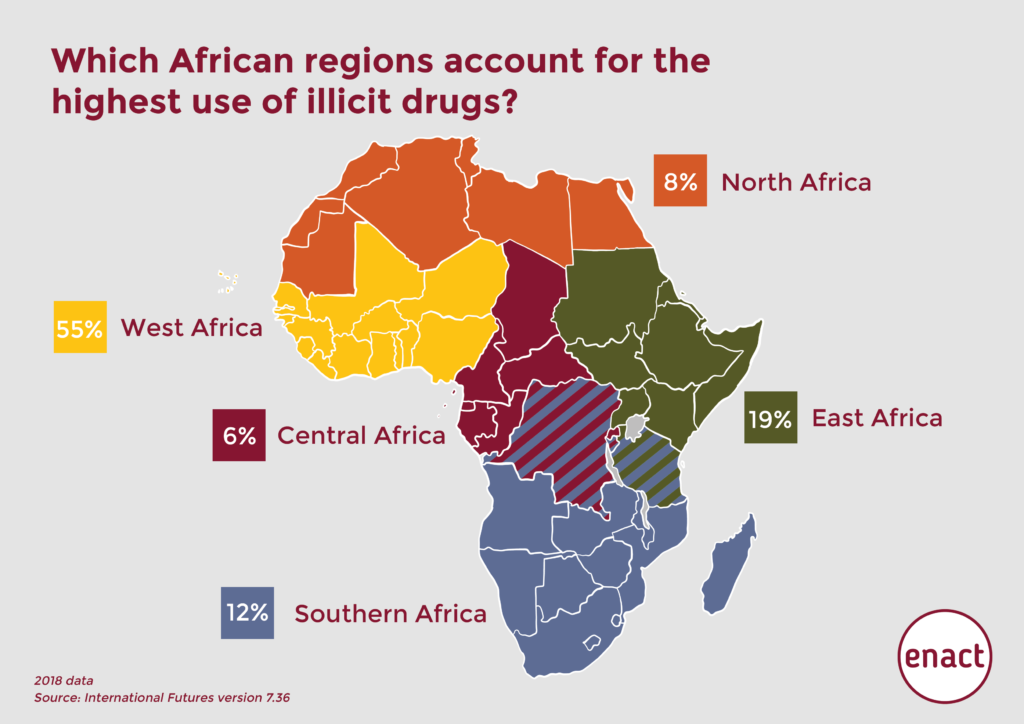
Latin American criminal organizations are diversifying their operations by using African partners for transportation, storage, financial transactions, and local protection. This decentralized model reduces their dependence on individual trafficking routes and makes international law-enforcement operations more difficult.
Libya and Tunisia: An Emerging Mediterranean Corridor
Libya is becoming an increasingly attractive location for narcotics transit, storage, and redistribution. Its fragmented security institutions, competing armed groups, and connections to the Sahel create opportunities for trafficking networks.
Tunisia’s cocaine seizures increased from 33 kilograms in 2024 to 94 kilograms in 2025 and more than 101 kilograms during the first nine months of 2026. Its approximately 460-kilometer border with Libya represents an important vulnerability.
However, increasing seizures may also reflect stronger law enforcement rather than trafficking growth alone.
Libya’s significance lies in its potential to connect established West African trafficking networks with North African and Mediterranean markets. This does not mean that Libya has replaced traditional Atlantic routes, but rather that criminal organizations are developing additional logistical options.
The emergence of cocaine shipments from European ports toward Tunisia also suggests that North Africa is becoming a consumer and redistribution market, rather than functioning exclusively as a transit corridor to Europe.
Latin American Cartels and African Criminal Partnerships
Several major criminal organizations are expanding their African operations.
Brazil’s Primeiro Comando da Capital (PCC) has developed relationships with Nigerian criminal networks and reportedly operates through several West African countries. Its influence over transportation and distribution makes it an important actor in transatlantic cocaine trafficking.
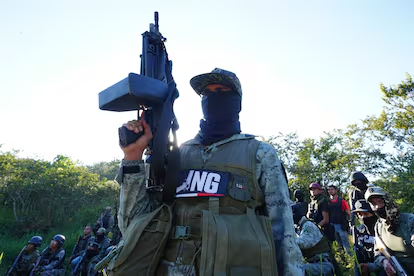
Mexico’s Sinaloa Cartel and Jalisco New Generation Cartel (CJNG) are associated with the international expansion of synthetic-drug markets. Mexican nationals have been implicated in methamphetamine laboratories discovered in African countries, although their involvement does not necessarily establish direct cartel ownership.
Colombian organizations, including Clan del Golfo, maintain international trafficking relationships involving African and European intermediaries.
European criminal organizations, particularly Italy’s ‘Ndrangheta, Dutch-Belgian networks, and Western Balkan groups, play important roles in wholesale cocaine distribution.
The resulting system is increasingly interconnected: Latin American organizations provide access to drug supplies, African networks facilitate local operations, and European criminal groups control important distribution markets.
Africa is therefore becoming an operational component of global organized crime rather than merely a geographic transit point.
Methamphetamine Production and Criminal Expansion
The emergence of methamphetamine laboratories in South Africa, Nigeria, Kenya, and Mozambique represents a significant change in Africa’s role in the international narcotics economy.
Unlike cocaine, methamphetamine can be manufactured wherever criminal organizations obtain the necessary chemicals, technical expertise, and facilities.
The Africa Center for Strategic Studies reports that Mexican nationals were arrested in 11 of 12 raids on African methamphetamine laboratories supported by U.S. intelligence.
The financial incentives are substantial. Methamphetamine reportedly manufactured in Africa at approximately $1,500 per kilogram can command much higher prices in Asian and Oceanian markets.
The strategic danger is that manufacturing requires durable local infrastructure and relationships. These can create opportunities for criminal organizations to corrupt officials, establish protection arrangements, and penetrate legitimate businesses.
Drug Trafficking, Armed Groups, and Political Corruption
The expansion of narcotics trafficking may strengthen armed groups operating across the Sahel and North Africa.
Criminal networks can pay armed intermediaries for territorial access and protection, potentially generating revenues that sustain conflict economies. However, such payments do not necessarily demonstrate that entire militant organizations directly control trafficking operations.
Guinea-Bissau illustrates the long-standing relationship between narcotics trafficking, political corruption, and institutional weakness. Sierra Leone has also faced allegations concerning political protection of internationally wanted traffickers.
In South Africa, reported organized crime-related assassinations increased to 78 during the first nine months of 2026, compared with 44 throughout 2025. Although this increase cannot be attributed directly to Latin American cartels, it highlights the broader risks associated with expanding criminal economies.
The central concern is state capture: trafficking organizations may acquire influence over law enforcement, financial institutions, and political decision-making, allowing criminal activities to become increasingly resistant to government intervention.
Implications for European and U.S. Security
For Europe, expanding African trafficking networks create additional challenges for maritime security, border enforcement, and financial intelligence. North African corridors may provide alternatives to established Atlantic routes, while cooperation between African and European criminal groups strengthens international distribution networks.
For the United States, the expansion of Latin American cartels into Africa increases their operational resilience and complicates counternarcotics efforts focused primarily on the Western Hemisphere.
Washington and Brussels should prioritize financial investigations, intelligence-sharing, anti-corruption measures, and cooperation with African law-enforcement agencies. Particular attention should be directed toward Libya, Tunisia, Nigeria, Sierra Leone, and Guinea-Bissau.
Strategic Outlook, 2027–2030
Three developments appear particularly likely: Diversification of trafficking corridors: North Africa will become increasingly important alongside established West African routes. Expansion of criminal partnerships: Latin American, African, and European organizations will deepen their cooperation in cocaine distribution and synthetic-drug production. Growing institutional vulnerability: Trafficking revenues will increase pressure on weak governments and may strengthen corrupt political networks and armed groups.
The most dangerous scenario involves the consolidation of trafficking networks within state institutions, allowing criminal organizations to operate with sustained political protection.
Conclusion
Africa’s transformation into a major operational hub for international drug trafficking represents a growing challenge to regional and international security.
The emergence of Libya as an important trafficking environment, the expansion of Latin American criminal networks, and the development of African methamphetamine production indicate that the continent is becoming increasingly integrated into the global narcotics economy.
For the EU and United States, the principal threat extends beyond narcotics imports. The institutionalization of organized crime within vulnerable African states could strengthen armed groups, undermine governance, and establish durable criminal networks capable of destabilizing Europe’s southern neighborhood.
Countering this threat will require targeting the financial, political, and organizational structures sustaining trafficking rather than relying primarily on drug seizures.
More on this story: From Narcos to Networks: How CJNG Is Tapping Global Arms Supply Chains