

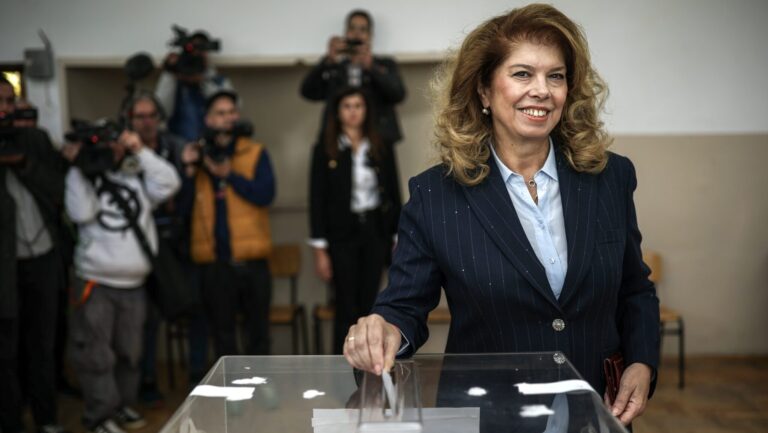
According to the reported results of the second round of the presidential election on November 1, 2026, Iliana Iotova’s victory with approximately 58% of the vote creates conditions for closer political alignment between the presidency and Rumen Radev’s government. If both centers of power pursue renewed dialogue with Moscow, restrictions on military assistance to Ukraine, and greater national sovereignty in EU decision-making, Bulgaria could become a source of further disagreements over European policy toward Russia.
The principal strategic risk for the United States and NATO is not Bulgaria’s potential withdrawal from the Alliance, but a gradual decline in the predictability of its positions on Russia, Ukraine, and Black Sea security.
At the same time, three distinct phenomena must be distinguished: Iotova’s political positions, which may coincide with Kremlin interests; her documented contacts with Russian representatives; and possible coordination with Russian state structures. The first does not automatically prove the second or third.
Electoral Victory and the New Configuration of Power
The election results confirm Iotova’s victory, although the final figures differ from preliminary exit polls.
Iliana Iotova — 57.58% (1,093,564 votes),
Andrey Gyurov — 39.46% (749,543 votes). Data from Bulgaria’s Central Election Commission after 99.95% of protocols had been processed. Turnout was approximately 27%.
Low turnout matters when assessing Iotova’s political mandate. Her victory provides constitutional legitimacy but does not mean that a majority of all Bulgarian voters support her foreign-policy views.
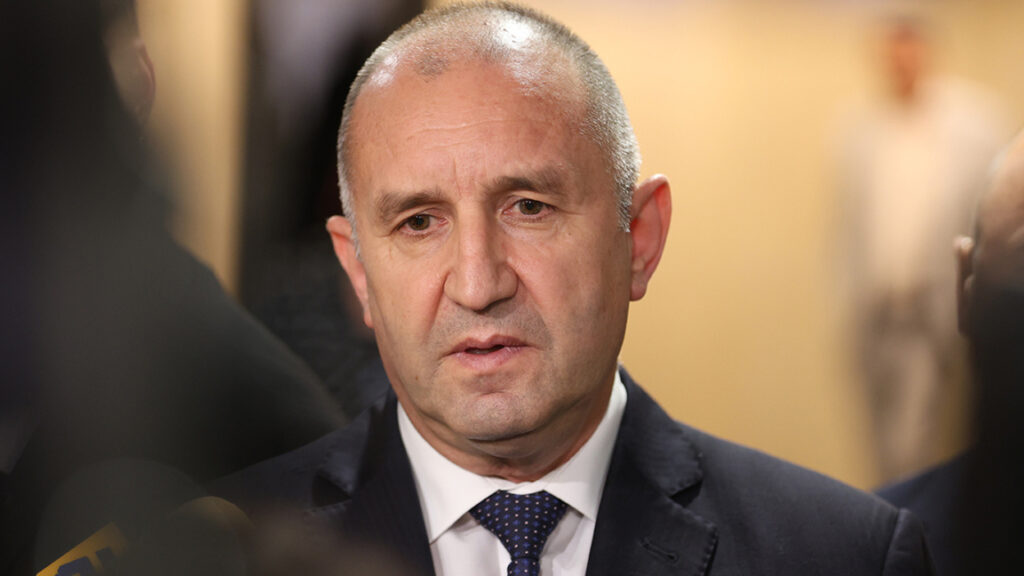
The election’s political significance is heightened by the president’s long-standing alliance with Prime Minister Rumen Radev. Following the victory of his Progressive Bulgaria party in the April 2026 parliamentary elections, both key offices came under the control of politically aligned figures.
Reuters+1
This creates an opportunity for a coordinated foreign-policy line between the government and the president, without eliminating parliamentary oversight, judicial independence, or the constitutional separation of powers.
The Russian Factor: Political Affinity or Actual Ties to the Kremlin?
Political Continuity with Rumen Radev
Iotova’s most important established political connection is her long-standing partnership with Radev.
They share skepticism toward a military resolution of the war in Ukraine, emphasize diplomatic negotiations, and criticize certain European security decisions.
Iotova opposes further military assistance to Ukraine and supports dialogue with Moscow. Reuters and Deutsche Welle have reported these positions.
Such views may align with certain Russian strategic interests, particularly reducing Western military assistance to Ukraine and weakening Kyiv’s negotiating position.
However, political alignment with Moscow’s interests does not prove intelligence, financial, or operational links to Russian security services.
Are There Direct Links Between Iotova and Russian Structures?
The reviewed election reporting contains no confirmed evidence that Iotova received Kremlin funding, acted on instructions from Russian officials, or maintained covert contacts with the FSB or SVR.
It is therefore more accurate to describe a political course potentially favorable to certain Kremlin objectives than to assert that Iotova is demonstrably dependent on Moscow.
How Does Iotova’s Policy Diverge from EU Priorities?
The disagreements primarily concern how to respond to Russian aggression, rather than necessarily Bulgaria’s membership in the European Union itself.
| Issue | Main EU Policy | Position of Iotova and Radev |
| War in Ukraine | Support for Ukraine’s sovereignty, military and financial assistance | Emphasis on diplomatic settlemen,; criticism of military assistance |
| Relations with Russia | Sanctions pressure and reduced strategic dependencies | Renewed dialogue and a more conciliatory approach |
| Energy security | Diversification of supplies and reduced dependence on Russia | Priority for national economic interests; specific energy decisions require separate verification |
| European integration | Coordination of common foreign and security policy | Greater emphasis on national sovereignty and independent decision-making |
Importantly, calls for negotiations do not in themselves contradict EU policy. European institutions also support a diplomatic end to the war on terms consistent with Ukrainian sovereignty.
A substantive divergence arises when diplomacy is proposed as an alternative to military support for Ukraine or sanctions pressure without corresponding concessions from Russia.
For the EU, the crucial issue will not be Iotova’s individual statements but whether they translate into government decisions capable of changing common EU policy.
4. Why Could Iotova’s Political Course Create Risks for the United States?
Bulgaria’s importance to Washington extends beyond its NATO membership. The country borders the Black Sea, Turkey, Romania, Greece, Serbia, and North Macedonia and plays a role in supporting the military presence of the United States and its allies in Southeastern Europe.
Reduced Predictability in U.S.–Bulgarian Defense Cooperation
Bulgaria participates in allied deterrence in the Black Sea region. Its territory is important for military training, logistics, force movements, and regional coordination.
If government priorities change, disagreements could emerge over the scale of joint exercises, military infrastructure development, defense program funding, and political support for U.S. initiatives.
The risk primarily concerns a possible change in political priorities, not an established reduction in cooperation.
Complications for U.S. Policy Toward Ukraine
Washington has an interest in predictable European partners when coordinating assistance to Ukraine and deterrence of Russia.
If the Bulgarian government limits its participation in military support for Ukraine, this could create additional difficulties for coordinating allied efforts.
Bulgaria’s defense industry is particularly important, including its production of Soviet-caliber ammunition used by the Ukrainian armed forces.
However, decisions on government deliveries, export licenses, and production contracts largely fall within the authority of the government and relevant agencies, rather than the president alone.
Potential Expansion of Russian Political Influence in the Balkans
Russia has historically maintained cultural, religious, political, and economic ties with Bulgaria.
Renewed interstate dialogue can be a legitimate diplomatic instrument. Nevertheless, without transparency and adequate oversight, expanded contacts could create opportunities for lobbying Russian economic interests, political influence, and information operations.
For the United States, the central question will be whether Bulgaria can maintain diplomatic relations with Moscow without weakening its NATO commitments.
How Could Iotova’s Presidency Pose Risks to NATO?
Black Sea security is the most sensitive area.
Since Russia’s full-scale invasion of Ukraine, the Black Sea has become a key theater of military confrontation, risks to shipping, and threats to critical infrastructure.
During Bulgaria’s presidential campaign, these problems intensified amid drone attacks on merchant vessels near the Bulgarian coast. Reuters reported the deaths of at least 24 sailors. Both candidates condemned the attacks, while Radev stated that their consequences benefited Russia.
However, reports that Iotova refrained from directly blaming Russia do not prove that she supported the attacks. Attribution of specific incidents requires separate evidence.
Principal Risks for NATO
Political disagreements over the Russian threat. If Sofia insists on softer language concerning Moscow, this could complicate agreement on certain joint Alliance statements and political decisions.
Restrictions on participation in certain defense initiatives. The Bulgarian government can influence the scale of national participation in military exercises, defense funding, and regional programs. Such a change, however, does not automatically follow from the presidential election result.
Weakening political support for Ukraine. Differences among allies over military assistance could complicate long-term planning and the allocation of defense resources.
Information-security risks. Expanded contacts with Russian structures would require appropriate counterintelligence safeguards. Iotova’s presidency alone is not evidence of a threat of NATO classified-information leaks.
Impact on Black Sea deterrence. Political differences among Bulgaria, Romania, Turkey, and other allies could complicate joint responses to maritime incidents.
At the same time, Bulgaria’s president has no unilateral authority to change the country’s NATO membership or determine every aspect of defense policy. The constitution assigns substantial powers to parliament and the government.
Could Bulgaria Undergo “Orbánization”?
The comparison with Hungary primarily concerns a potential pattern of political conduct: emphasis on national sovereignty, criticism of supranational EU decisions, and an intention to maintain dialogue with Moscow despite the Union’s sanctions policy.
However, the two countries have significant institutional differences.
In Bulgaria, the president has limited executive powers. Decisions on sanctions, defense policy, and positions in the Council of the EU are largely shaped by the government.
Therefore, assessing the risk of “Orbánization” requires examining not only Iotova’s statements but also the actual conduct of Radev’s cabinet, the parliamentary majority, and state institutions.
It is especially important to distinguish a state’s right to disagree with its partners from the systematic use of blocking mechanisms. The latter could create practical problems for common European policy.
Possible Scenarios for 2027–2028
| Scenario | Policy Characteristics | Consequences for the EU, United States, and NATO |
| Pragmatic cooperation | Iotova maintains rhetoric of dialogue with Moscow, while the government fulfills allied commitments | Political differences remain manageable |
| Selective distancing | Sofia limits support for certain sanctions and military initiatives | More difficult coordination on Ukraine and the Black Sea |
| Systematic obstruction | The government regularly uses EU mechanisms to impede decisions concerning Russia. | Persistent differences in European policy and additional costs for allied coordination. |
These scenarios describe possible directions of policy development, not forecasts of their probability.
Strategic Conclusion
Iotova’s victory creates a new political situation in Bulgaria, as the presidency and the parliamentary-governmental majority are influenced by politically aligned figures.
Their support for diplomatic dialogue with Moscow and criticism of military assistance to Ukraine could deepen differences with certain EU and NATO priorities. However, the extent of the consequences will be determined not by rhetoric but by concrete decisions on sanctions, defense cooperation, energy, and Ukraine.
For the United States, the most sensitive issues are the stability of military cooperation with Bulgaria, Black Sea security, and the predictability of allied decisions. For NATO, the issue is maintaining political and operational cohesion on its southeastern flank.
The key distinction is between political rapprochement with Moscow and the actual weakening of allied commitments. The former is already visible in Iotova’s foreign-policy rhetoric; the latter requires confirmation through concrete actions.
It would therefore be premature to assert that Bulgaria will inevitably become a “new Hungary.” Nevertheless, the concentration of political power, disagreements over Russia, and Bulgaria’s strategic location make its future foreign policy an important subject of attention for Washington, Brussels, and NATO.
More on this story: Between NATO Protection and Kremlin Accommodation: Bulgaria’s Radev Doctrine


More on this story: Is Bulgaria in the verge of crisis and can this spread to EU?