
Zhejiang Chouzhou Commercial Bank as Part of the Financial Infrastructure for Sanctions Evasion and an Indicator of the Limits of U.S. Economic Pressure
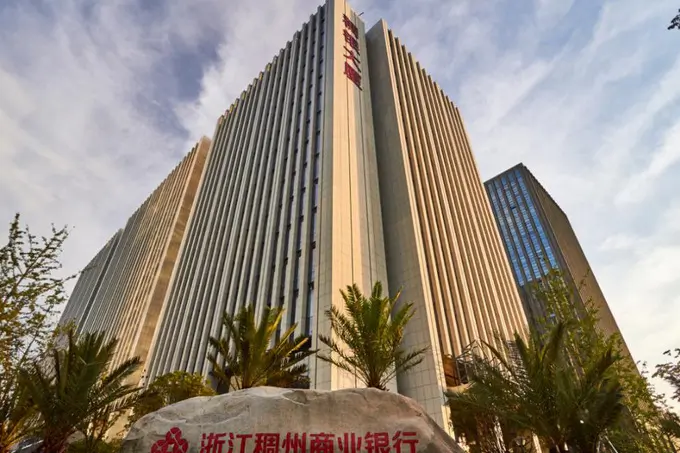
The Wall Street Journal investigation into the Chinese Zhejiang Chouzhou Commercial Bank (ZCCB) highlights a systemic problem in U.S. sanctions policy: Washington may possess information about financial institutions processing Russian and Iranian trade transactions yet refrain from blocking them because of the risk of economic and diplomatic confrontation with China.
What distinguishes ZCCB is not its size but its function. According to the investigation, the regional Chinese bank, historically associated with the trading center of Yiwu, became a prominent recipient of payments in transactions conducted through the Russian A7 system, which was established to facilitate international settlements under sanctions.
This suggests five preliminary conclusions.
Chinese banking infrastructure remains critically important to Russian foreign trade. Even small regional banks can play a significant role in payments for goods that Russian companies cannot easily purchase through traditional international financial channels.
The United States may deliberately separate its sanctions policy toward Russia from its broader relationship with China. Measures against a Chinese bank could provoke retaliation from Beijing, complicate trade negotiations, and create risks for American companies.
A7 illustrates a transition from circumventing individual sanctions to creating an alternative payments ecosystem. It connects Russian financial institutions, digital settlement mechanisms, and foreign banking intermediaries.
The absence of sanctions against a particular bank may weaken the deterrent effect of U.S. secondary sanctions. Other financial institutions may interpret selective enforcement as evidence that the political importance of their home country affects the risk of penalties.
The ZCCB issue extends beyond Russia–China trade. If the bank does indeed process transactions linked to both Russia and Iran, it may form part of a broader network of financial intermediaries serving countries under U.S. sanctions.
ZCCB: Why a Small Chinese Bank Became Important for Russian Payments
Zhejiang Chouzhou Commercial Bank developed as a financial institution focused on trade transactions in Yiwu, one of China’s largest wholesale trading centers.
This specialization makes it attractive to foreign companies purchasing Chinese products.
According to the WSJ, among approximately 3,500 A7 transactions from late 2024 to mid-2025, ZCCB appeared most frequently as the receiving bank. The documents refer to payments for cars, clothing, electronics, and goods that may have dual uses.
Separate document leaks relating to Iranian payments included information on approximately 240 ZCCB accounts among more than 900 Chinese bank accounts listed in payment instructions. However, these documents do not confirm that all planned transfers were completed.
This concentration of payments may indicate the emergence of a stable financial channel between Russian intermediaries and Chinese suppliers.
At the same time, ZCCB says it complies with applicable laws, manages sanctions risks, and reviewed transactions associated with A7. The available materials do not prove that the bank’s management knew the origin of all funds.
A7: From a Russian Payment System to an International Shadow Financial Network
A7 was established in 2024 with the participation of Russia’s Promsvyazbank (PSB), which serves the Russian defense sector, and Ilan Shor, a Moldovan businessman subject to Western sanctions.
Its original purpose was to enable international settlements for Russian companies after their access to traditional banking infrastructure was restricted.
By 2026, however, A7’s activities had expanded beyond servicing Russian imports.
On October 1, 2026, the U.S. Treasury Department announced new measures against the A7 network as part of Operation Economic Outcast.
According to FinCEN estimates, A7 subagents conducted more than $17 billion in U.S.-dollar-denominated transactions between January 2025 and June 2026.
The U.S. agency linked the network to financial transactions benefiting sanctioned Russian entities, Iranian organizations including the Islamic Revolutionary Guard Corps, and other participants in illicit financial schemes.
The strategic significance of A7 lies in its creation of financial infrastructure that can be used by various sanctioned actors.
A Russian system designed to sustain foreign trade during the war against Ukraine became a tool also used by Iranian entities, according to the U.S. Treasury Department.
This demonstrates a convergence of Russian and Iranian financial interests in sanctions-evasion mechanisms, although it does not establish unified centralized control over all their operations.
Why Is Washington Not Imposing Sanctions Directly on ZCCB?
Reason One: Reluctance to Trigger a New Financial Conflict with China
The most important explanation is the geopolitical cost of such a decision.
According to the WSJ, U.S. officials considered sanctions against ZCCB but weighed the potential deterioration of relations with Beijing and risks to the Chinese financial system.
Although ZCCB is not among China’s largest banks, cutting it off from international financial channels could affect numerous trading companies.
Beijing could also regard the sanctions as U.S. interference in the functioning of China’s banking system.
This creates a dilemma for Washington: increasing pressure on Russian and Iranian financial operations could complicate relations with one of the world’s most important trading powers.
The United States likely evaluates sanctions against ZCCB not only by their effectiveness against Russia but also by the scale of their potential consequences for relations with China.
Reason Two: Insufficient Evidence to Sanction the Bank Itself
It is important to distinguish between two circumstances:
The use of accounts at a Chinese bank by participants in a sanctioned network;
The bank’s knowing participation in organizing or concealing transactions that violate applicable sanctions restrictions.
The first circumstance can be substantiated by payment documents. The second requires additional information about the nature of the transactions, their ultimate participants, the bank’s actions, and the legal grounds for sanctions.
According to the WSJ, uncertainty about ZCCB’s knowledge of the origin of the funds remains one of the factors restraining U.S. authorities.
At the same time, U.S. law in certain circumstances allows sanctions against foreign financial institutions for significant transactions involving sanctioned persons. Proving intent is therefore not always a universal legal prerequisite.
The issue may consequently involve a combination of evidentiary, legal, and political considerations rather than a lack of authority.
Reason Three: Concerns About Collateral Effects on Legitimate Trade
ZCCB serves companies engaged in ordinary international trade.
Full blocking sanctions could affect not only suspicious transactions but also payments by businesses unrelated to the Russian defense sector or sanctioned Iranian entities.
This could lead to the termination of correspondent banking relationships, payment delays, and additional costs for importers.
U.S. legislation on special anti-money-laundering measures explicitly provides for consideration of the possible systemic impact of restrictions on international payments and legitimate commercial activity.
GovInfo
Reason Four: Washington Chose to Target the A7 Network Rather Than Immediately Block the Chinese Bank
This is a crucial distinction.
On October 1, 2026, the U.S. Treasury designated the A7 network as a significant transnational criminal organization, while FinCEN proposed special restrictions on transfers associated with its subagents.
An advisory was also issued to financial institutions on identifying suspicious A7 transactions.
Thus, Washington is already seeking to restrict the financial infrastructure that uses foreign bank accounts without immediately imposing full sanctions on every bank appearing in payment documents.
The advantage of this approach is the ability to affect a broad network of intermediaries. Its disadvantage is that participants who have not yet been identified, or who continue operating through other legal entities, may retain access to banking services.
4. Does This Mean China Has Gained De Facto Immunity from Secondary Sanctions?
No. However, the ZCCB case demonstrates that the application of U.S. secondary sanctions depends not only on the nature of financial transactions but also on the political and economic consequences of a particular decision.
Washington may have greater freedom of action against small banks in countries with limited economic influence. In China’s case, a sanctions decision could become the subject of a broader interstate confrontation.
This creates an asymmetry in sanctions deterrence.
For Russia, this situation has practical significance. If Moscow believes U.S. authorities will avoid sweeping restrictions against Chinese financial institutions, it may continue using Chinese trade and banking infrastructure to sustain imports.
However, this does not guarantee unrestricted access to financial services. Chinese banks also have an interest in preserving international operations and may independently restrict high-risk clients.
Implications for Russia’s War Against Ukraine
The most important question concerns the nature of the goods purchased through A7.
Payments for clothing or ordinary commercial goods cannot automatically be equated with financing Russian military production.
By contrast, transactions involving electronic components that can be used in drones require scrutiny of the ultimate buyers, technical specifications, and actual end use.
If it is established that these financial channels systematically enable the supply of critical components to Russia’s defense-industrial complex, the problem would extend beyond ordinary financial sanctions evasion.
It would directly concern the effectiveness of export controls and Russia’s ability to sustain military production.
At the same time, even fully blocking ZCCB would be unlikely to eliminate the entire A7 network. Its international structure and use of numerous intermediaries create opportunities to redirect operations.
The effectiveness of sanctions should therefore be measured not by the number of banks blocked but by the extent to which they increase the cost and difficulty of procuring critical goods.
What Could the United States Do?
Washington has several instruments for strengthening sanctions enforcement that do not necessarily require immediately blocking ZCCB in full.
| Instrument | Expected Effect | Main Limitation |
| Targeted sanctions against identified A7 intermediaries | Complicate individual payment transactions | Possible creation of new companies |
| Restrictions on correspondent banking operations | Reduce access to the international financial system | Collateral effects on legitimate trade |
| Stronger export controls | Make procurement of critical components more difficult | Dependence on international cooperation |
| Joint U.S.–EU investigations | Identify ultimate beneficial owners and financial links | Need to exchange evidence |
| Diplomatic pressure on Beijing | Encourage stronger domestic banking controls | Dependence on China’s willingness to cooperate |
The most important priority remains establishing links between specific payments, suppliers of dual-use goods, and the ultimate Russian military enterprises.
The Zhejiang Chouzhou Commercial Bank case demonstrates a contradiction between the stated objectives of U.S. sanctions policy and the limitations of its practical implementation.
Washington has already introduced extensive measures against the A7 network, which the U.S. Treasury links to sanctioned Russian entities, Iran’s IRGC, and other participants in illicit financial operations.
However, the absence of direct sanctions against ZCCB indicates that U.S. authorities consider not only financial risks but also the potential consequences for relations with China.
The central strategic conclusion is that Russia and Iran may benefit from the gap between U.S. sanctions objectives and Washington’s reluctance to intensify economic confrontation with Beijing.
At the same time, the published evidence does not justify claiming that the United States knowingly allows a particular bank to finance Russian military production.For Ukraine, the key measure of the effectiveness of future U.S. actions will not be the formal addition of ZCCB to a sanctions list, but an actual reduction in Russian companies’ ability to pay for imported components needed to manufacture weapons.