
Panamanian authorities are investigating reports that Russian recruiters have been recruiting Panamanian citizens to fight in Russia’s war against Ukraine. Panama’s acting foreign minister, Carlos Hoyos, said that since 2025 at least 15 Panamanian nationals have fallen victim to various recruitment schemes linked to the Russian side.
According to Panama’s Foreign Ministry, at least one Panamanian citizen has already been killed in combat, while several others are considered missing.
Hoyos emphasized that Russian recruiters deliberately misled Panamanian citizens, leading them to believe that they would work as private security guards or operate construction equipment and would have no involvement whatsoever in Russia’s war against Ukraine. He therefore urged Panamanians to exercise particular caution when considering employment opportunities abroad, warning that some offers may conceal potentially lethal risks, including covert recruitment for participation in hostilities.
Panamanian authorities have repeatedly requested information about their citizens from both the Russian and Ukrainian embassies. Russia’s Foreign Ministry, for its part, maintains that all foreigners serving in the Russian Armed Forces sign military contracts voluntarily and that joining the Russian military is an individual decision made by each person who signs such an agreement.
Russia’s Global Foreign Recruitment Network
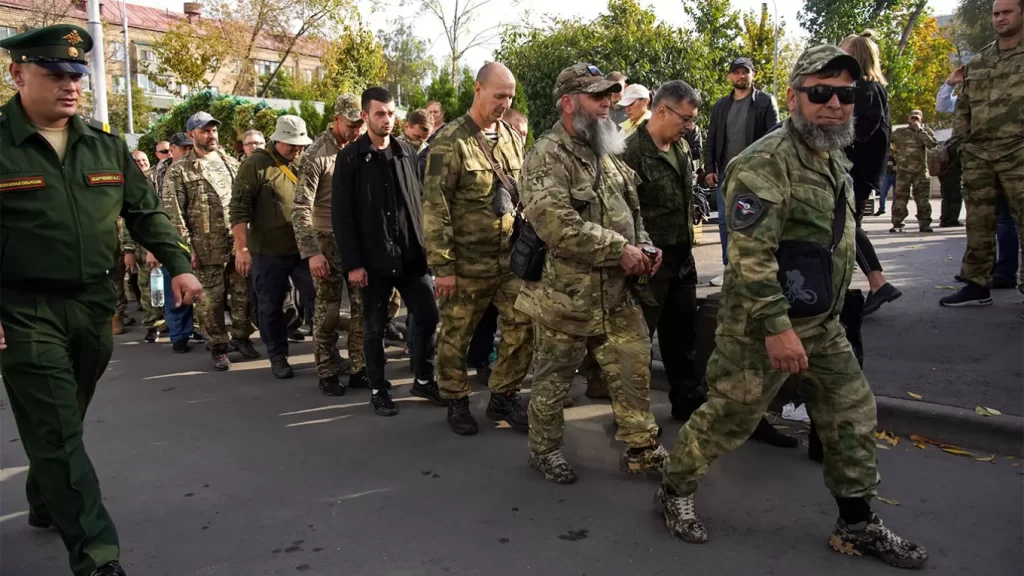
The Kremlin has established an extensive international recruitment system to generate additional manpower for its war against Ukraine. The network reportedly extends across 135 countries. By 2026, more than 42,000 foreign nationals had allegedly been recruited into Russian forces, including personnel from North Korea’s regular armed forces.
Russian recruitment networks deliberately exploit poverty, high unemployment and the legal vulnerability of people in countries across the Global South. Prospective recruits are frequently attracted by misleading employment advertisements offering work in construction, private security and other ostensibly civilian sectors.
The enormous scale of Russian battlefield casualties in Ukraine, combined with the reluctance of parts of the Russian population to participate directly in the fighting, has pushed the Kremlin to seek additional sources of military manpower abroad.
One of the mechanisms used to recruit foreigners involves deception. Prospective recruits may initially be offered civilian employment or substantial financial incentives, only to find themselves subsequently drawn into military service and deployed as part of Russian forces fighting against Ukraine.
Such practices demonstrate Moscow’s willingness to exploit economically and legally vulnerable populations in developing countries, including in Latin America, as an additional source of wartime manpower.
Latin America as a Russian Recruitment Pool
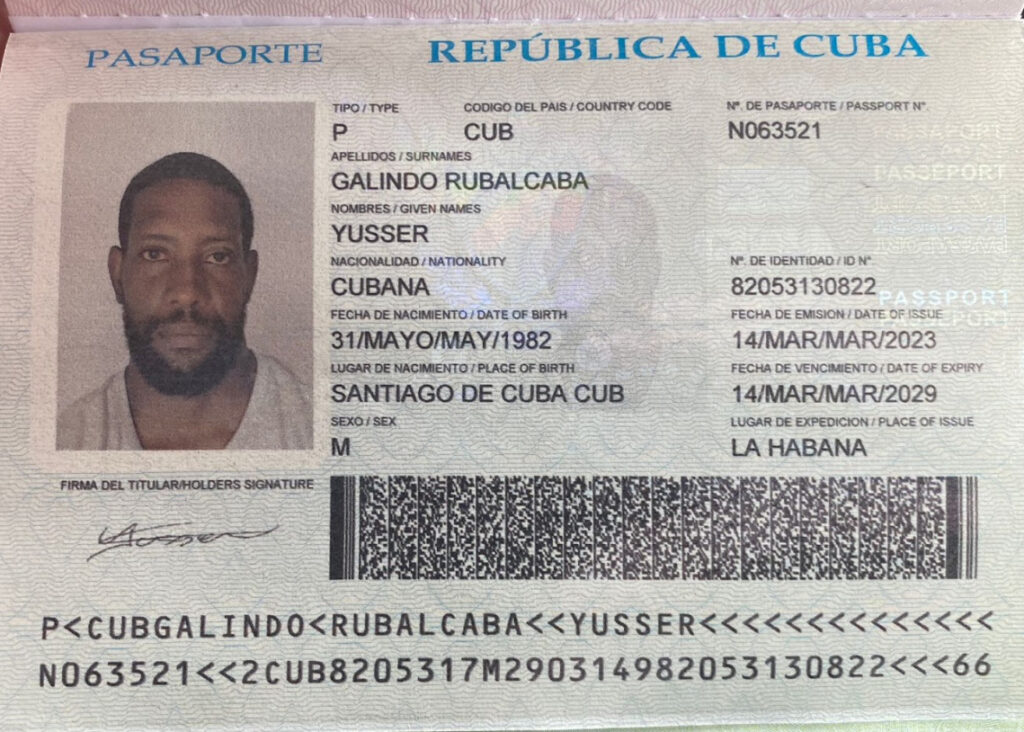
Within Latin America, Cuba has emerged as the principal source of foreign recruits for Russia’s war against Ukraine. Russian-linked recruitment structures have targeted Cuban citizens with promises of comparatively high salaries and simplified procedures for obtaining Russian citizenship.
At the same time, authorities in Peru, Bolivia and Panama have begun investigating possible cases involving human trafficking or deceptive recruitment. Citizens of these countries were allegedly recruited under the pretext of civilian employment but were subsequently sent to participate in combat operations against Ukraine.
These cases suggest that Russian recruitment activities in Latin America should not be viewed solely as conventional military contracting. Where recruits are deliberately deceived about the nature of the employment, transported abroad and subsequently placed in military units, the recruitment mechanism potentially overlaps with patterns associated with labour exploitation and trafficking in persons.
The Panama Case
The cases of at least 15 Panamanian citizens, including individuals reported killed or missing, illustrate the risks faced by foreigners recruited into Russia’s war effort.
Available information suggests that some recruits did not leave Panama with the explicit intention of fighting in Ukraine. Instead, they were allegedly offered civilian employment—including security or construction-related work—and subsequently found themselves connected to Russian military structures.
The fate of those reported missing also raises questions regarding Russia’s mechanisms for registering, tracking and accounting for foreign recruits deployed to combat zones.
Rather than providing transparent information regarding the circumstances of their recruitment, military service, deaths or disappearance, Russian representatives have emphasized that foreigners voluntarily sign military contracts. Families of those killed or missing have consequently struggled to obtain clear information about what happened to their relatives.
The Question of “Voluntary” Recruitment
The Russian Foreign Ministry’s assertion that foreign nationals voluntarily and individually sign military contracts does not by itself resolve the central issue.
The key question is not simply whether a recruit’s signature appears on a contract, but whether informed consent existed when that contract was signed.
A military agreement signed after an individual has been recruited through false promises of civilian employment, transported to another country, confronted with language barriers or misled regarding the actual nature of the work cannot automatically be regarded as evidence of a fully informed and voluntary decision.
This distinction is particularly important when analysing recruitment networks operating in economically vulnerable communities.
If Panamanian investigators establish that citizens were recruited through intentionally false job advertisements and subsequently channelled into Russian military service, the case would provide further evidence that Moscow’s international manpower strategy extends beyond straightforward recruitment of volunteers.
Instead, it would point toward a broader system in which economic vulnerability, misleading employment offers, migration channels and military contracting are combined to generate additional manpower for Russia’s war against Ukraine.
The Panama investigation therefore has significance beyond the relatively small number of citizens currently identified. It may provide another case study of how Russia has increasingly internationalized its wartime manpower recruitment while shifting part of the demographic and political cost of sustaining the war onto vulnerable populations outside Russia.
The emerging Panamanian evidence suggests that there is not one single recruitment mechanism. At least two pathways are visible: deliberate military recruitment for people who know what they are signing up for, and a more concerning pathway in which civilian employment offers allegedly become military contracts after the recruit has already left Panama. Panama’s government says it is tracking at least 15 nationals, with one reported dead and several missing.
How the recruitment chain works in practice
Based on Panamanian investigations and testimony collected by La Prensa, the alleged deceptive pathway looks roughly like this:
1. Economic targeting in Panama → 2. attractive overseas job → 3. travel through third countries → 4. arrival in Russia → 5. transfer to military facility → 6. military training/contract → 7. deployment.
The initial offer can appear entirely civilian. Families have reported offers involving construction, security, cooking, heavy machinery and factory work. In one particularly revealing Chiriquí case, a young man was allegedly offered work in a plastic-furniture factory, with a salary of up to $3,000 per month and an initial $10,000 bonus. His family says he subsequently found himself at a Russian military facility receiving training.
This means the recruitment pitch can be constructed to appeal to a Panamanian looking for labour migration rather than military service.
Recruitment appears concentrated among economically vulnerable young men
The cases identified by La Prensa include people from Chiriquí, Coclé and Veraguas, with several originating around David and surrounding communities. Economic motivation is explicit in the testimony of at least one recruit.
A 19-year-old Panamanian serving with Russian forces told the newspaper that he had actively sought the opportunity because he believed Panama offered young people insufficient economic prospects. In his case, he says there was no deception: he knew he was joining the Russian military.
That distinction is analytically important. The network apparently does not need to deceive every candidate.
It can recruit from two pools:
informed volunteers attracted by military salaries and bonuses, and civilian-job applicants who allegedly discover the military nature of the arrangement later.
The financial offer is extremely powerful
The informed Panamanian recruit interviewed by La Prensa described a three-year Russian contract offering an initial $20,000 bonus plus approximately $2,500–$3,000 per month. Another family described the supposed civilian factory offer of up to $3,000 monthly plus a $10,000 initial payment.
For recruitment analysis, this matters more than ideological motivation. There is currently little public evidence that Panamanians are being selected primarily because they are pro-Russian.
The principal vulnerability appears to be economic aspiration.
Russia can advertise compensation dramatically above what many young jobseekers expect to earn domestically. The military nature of the work can then either be explicit from the beginning or, according to families’ allegations, concealed behind civilian employment.
Travel routes obscure the final purpose
One documented Russia-bound case is particularly informative.
According to the recruit’s grandfather, the journey followed:
Panama → Colombia → France → Turkey → Russia.
The family says the young man did not understand that Russia would ultimately be his destination. After arrival, he was transferred to a military facility and began training.
Panama’s vice foreign minister Carlos Hoyos has said authorities face difficulties tracking the recruits because they use different routes through Europe and do not necessarily inform Panamanian migration authorities that they are ultimately heading into a combat environment.
That fragmented travel pattern is important. A ticket from Panama directly to Moscow for a prospective Russian serviceman would create an obvious indicator. A multi-stage journey that initially resembles ordinary international travel is much harder to identify as military recruitment.
The contract is the critical transition point
Once inside Russia, the legal character of the person’s presence changes.
Russia’s position is that foreigners serving in its armed forces have voluntarily signed military contracts. Panama’s investigation is examining the more difficult question of what recruits were told before travelling and whether they understood the true purpose of the journey.
The Chiriquí complaint illustrates the problem. Panama’s Public Prosecutor established that the young man was an adult who left Panama voluntarily with valid documentation. But that does not establish whether the employment proposition that induced him to travel was truthful.
This creates the central legal grey zone:
Voluntary departure from Panama does not necessarily mean informed consent to military service.
If someone voluntarily boards an aircraft believing he will operate construction machinery, but subsequently finds himself signing a Russian military contract, investigators need to establish what happened between those two events.
Recruitment may become self-replicating
There is another potentially important mechanism: Panamanian recruits can become recruitment vectors themselves.
The Russian-serving Panamanian interviewed by La Prensa said he knew of five compatriots in his environment, including people from Pedregal, San Cristóbal and Los Abanicos. That does not prove he recruited them, but it indicates clustering within existing social/geographic networks.
The same phenomenon is visible even more clearly on the Ukrainian side: La Prensa identified a Panamanian already serving in Ukraine who publicly uses social media to encourage other foreigners to join his unit.
This suggests an important intelligence hypothesis for the Russian cases:
foreign recruiter → first Panamanian recruit → friends/relatives/social-media contacts → additional recruits.
Once several Panamanians successfully reach Russia, the network needs less direct Russian involvement in Panama because trusted compatriots can validate the opportunity.
What happens after arrival?
The publicly available Panama evidence becomes much thinner here.
The family of the Russia-bound Chiriquí recruit says he was placed at a military base and underwent training. His last reported communication told his grandmother that he was leaving on a mission and would be unable to communicate for several days.
There is not yet enough reliable public information to establish the exact Russian military units, training centres or recruitment offices processing Panamanians.
Those details should therefore be treated as an intelligence gap, rather than filled using evidence from Cuban, African or South Asian recruitment cases.
The most important assessment
The Panama case appears less like a conventional Russian recruiting office operating openly in Panama and more like a distributed recruitment ecosystem.
The preliminary model is: economic vulnerability in Panama;
→ civilian or explicit military opportunity;
→ personal/social-media intermediary;
→ international travel using third countries;
→ arrival in Russia;
→ military processing and contract;
→ accelerated training;
→ deployment.
The weakest-understood part of this chain is the intermediary.
The central KIQ therefore should be:
Who is actually making the first contact with Panamanian candidates, arranging their travel and connecting them with Russian military structures after arrival?
That is potentially more important than identifying the Russian unit receiving them. If investigators can identify who advertised the jobs, who communicated with applicants, who paid or booked travel, who met recruits during transit, who received them in Russia, and whether recruiters receive commissions per recruit, they can determine whether the Panama cases represent opportunistic individual enlistment, a private recruitment business, or an organized Russian state-supported manpower pipeline.
A second priority would be to investigate the Panama–Colombia connection. The documented Panama→Colombia→France→Turkey→Russia itinerary raises the question of whether Colombia is merely a convenient transit point or whether Russian-oriented Latin American recruitment networks already operating among Colombians are being extended into Panama. That hypothesis is plausible, but the evidence currently available does not establish it.
A Panamanian citizen who signs a contract and joins a foreign state’s regular armed forces is not necessarily committing the Panamanian crime of “mercenarism” simply because he is paid to fight abroad. The legal classification depends on the facts.
The international definition of a mercenary is deliberately narrow. Under the 1989 UN Mercenary Convention, a person must satisfy multiple conditions, including being specially recruited to fight, being motivated essentially by private gain, not being a national/resident of a party to the conflict, and not being a member of the armed forces of a party to the conflict.
That last element is especially important for the Russia cases. If a Panamanian genuinely signs a Russian Ministry of Defence contract and thereby becomes a formal member of the Russian Armed Forces, calling him a “mercenary” in the strict international-law sense may be legally incorrect, even though journalists or politicians may use that term more broadly.
There is another important point: Panama is not listed as a party to the 1989 UN International Convention against the Recruitment, Use, Financing and Training of Mercenaries in the current UN/ICRC treaty records. So one should not state that Panama is prosecuting these recruits under that treaty.
For the current Panama investigation, the potentially stronger criminal-law issue appears to be deceptive recruitment or trafficking, rather than mercenarism itself. If recruiters falsely promise factory, construction, security or machinery jobs, arrange transportation abroad, and then place the victims into military service, investigators can examine whether the conduct falls under offences involving fraud, coercion, trafficking in persons, document offences or related organized-crime activity.
The average life expectancy of a servicemember after signing a military contract and being deployed to the war in Ukraine reportedly ranges from 10 days to one month, while during intensive assault operations, survival time directly on the front line may fall to 20–35 minutes.
The Russian Ministry of Defence ultimately absorbs the recruits, but the acquisition of candidates is substantially outsourced to local intermediaries, social-media recruiters, personal networks, and—in some cases—people presenting civilian employment opportunities. Cuba and Colombia are the two largest documented regional hubs.
Who appears responsible?
1. Russian Ministry of Defence — the end-user and institutional beneficiary. Russia formally opened military contract service to foreigners, simplified entry procedures, and linked military contracts to accelerated citizenship. Once candidates reach Russia, they can be incorporated through official Russian military contracting structures. This is the strongest demonstrable Russian-state connection.
2. Local and transnational recruiters — the acquisition layer. These actors appear to find candidates, advertise opportunities, maintain WhatsApp/TikTok/Facebook contacts, and sometimes facilitate travel. The evidence suggests that this layer differs by country rather than operating under a single publicly identified organization.
3. Cuba — the largest recruitment pool. Reporting cited by El País describes Cuba as Russia’s principal Latin American source of foreign recruits. Some Cubans knowingly enlist for salaries and Russian citizenship benefits; others have reported responding to advertisements presented as civilian employment and discovering the military character only after travelling.
4. Colombia — a second regional hub. Colombia is particularly attractive because it has a large population of former soldiers with substantial combat experience. Recruitment also operates through personal referrals and social media: one Colombian serving Russia told El País that he found the opportunity through TikTok after a friend had already followed the same route.
Bolivia provides the clearest evidence of a local recruitment cell
The July 2026 Bolivian investigation is particularly valuable because authorities have moved beyond allegations and arrested three people associated with an alleged recruitment network.
Bolivian prosecutors are investigating the cases as potential human trafficking. At least 16 alleged victims were identified, while reporting indicated that 26 Bolivians had entered Russian service. Recruits were allegedly attracted through false employment opportunities and pressured to sign Russian-language contracts. Their travel reportedly passed through Brazil and Turkey before Russia.
The Russian Embassy in Bolivia has categorically denied any connection to the recruiters or knowledge of such organizations.
That produces an important distinction:
Russian state responsibility for accepting foreigners into its armed forces — established.
Direct Russian embassy management of the Bolivian recruitment network — not established and denied by Russia.
Panama probably fits the intermediary model
The Panamanian cases we discussed appear compatible with the same architecture:
Russian military demand
→ recruitment coordinators/intermediaries
→ social media, job offers and personal referrals
→ Panamanian candidate
→ multi-country travel
→ Russia
→ official military contract
→ training
→ deployment
The unresolved issue is the middle of that chain.
We still do not have enough public evidence to identify who connects the first Panamanian recruiter to the Russian military authority receiving the candidate.
That is the most important intelligence gap.
Is the GRU running it?
Russian intelligence services could conceivably facilitate or protect aspects of foreign recruitment, particularly where international networks are involved, but the public evidence found establish that the GRU can commands the Latin American recruitment programme.
The evidence is considerably stronger for a model in which:
Russian MoD manpower requirements → official Russian military contracting infrastructure → intermediaries/recruiters abroad.
This arrangement also gives Moscow useful deniability when deceptive recruitment becomes exposed.
Why Cuba and Colombia matter disproportionately
The two countries provide different types of manpower.
Cuba: economic vulnerability + established Russia-Cuba connections + attraction of Russian salaries/citizenship.
Colombia: economic incentives + unusually large pool of combat-experienced veterans.Russia therefore gains both quantity and military experience from different Latin American recruitment markets.