
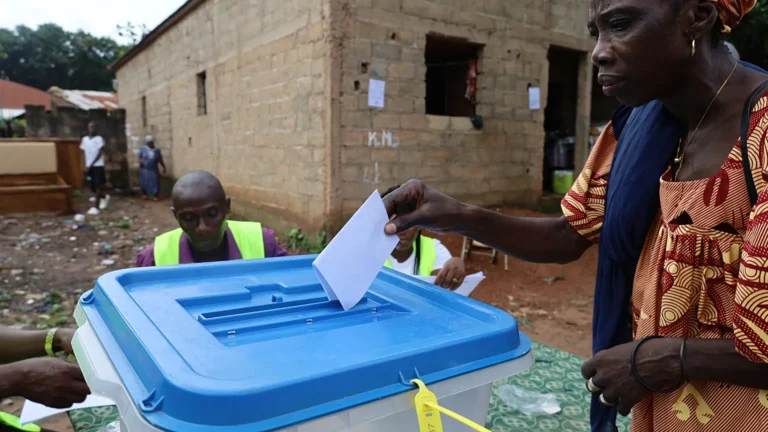
Guinea-Bissau’s August 30 constitutional referendum should be understood as a constitutional redesign, a mechanism for legitimizing the post-coup political order, and potentially a means of restructuring the political system in favor of the military-security establishment and political networks associated with former President Umaro Sissoco Embaló.
The proposed constitution addresses a genuine structural problem. Guinea-Bissau’s semi-presidential arrangements have repeatedly generated conflicts between presidents, prime ministers and parliamentary majorities. Presidents have dissolved parliament, dismissed governments and competed with prime ministers for control over the state apparatus. Supporters therefore have a plausible argument that clearer executive authority could reduce institutional deadlock. Even before the 2025 coup, regional officials and analysts acknowledged the need for constitutional clarification.
But the political context fundamentally changes the meaning of the reform. The constitution was prepared not by a freely elected legislature or broadly representative constituent assembly, but under institutions created after the military interrupted the November 2025 elections. Opposition activity has been restricted, prominent opponents have faced detention or pressure, and the authorities replaced the leadership structure responsible for administering elections.
The reform would strengthen the presidency while simultaneously reducing parliament from 102 to 65 seats, reducing constituencies, and imposing higher barriers to presidential candidacies and party participation. The cumulative effect is therefore not merely to clarify executive authority but to raise the political value of controlling the presidency while weakening competing institutional and electoral centers of power.
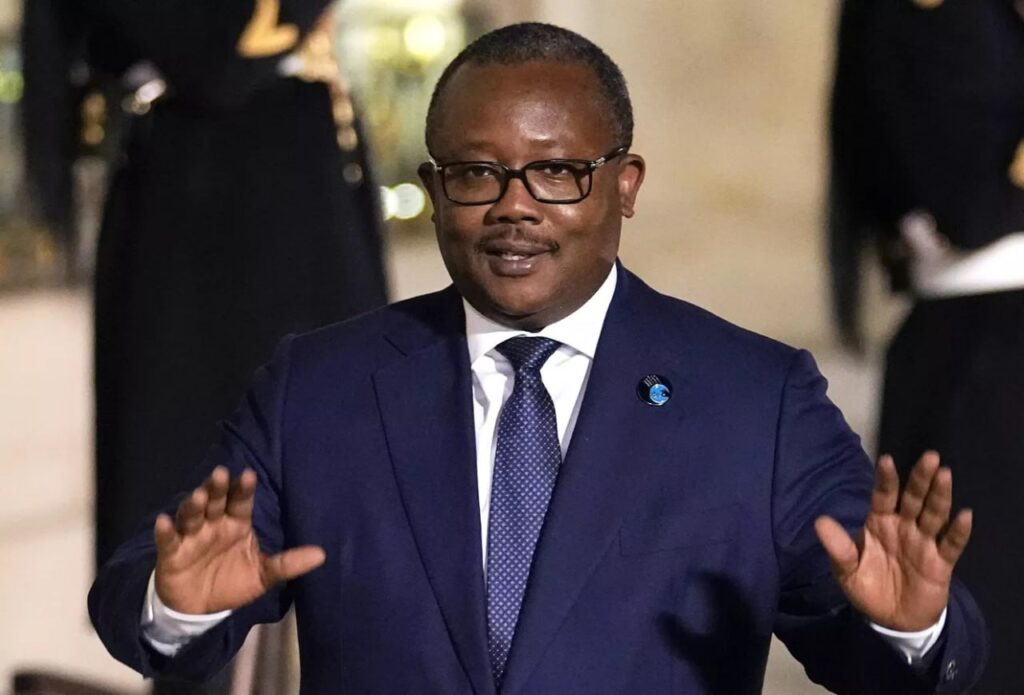
This matters particularly because several leading figures in the transitional regime have close connections to Embaló. Transitional President General Horta Inta-A Na Man was a close ally of the ousted president; Prime Minister Ilídio Vieira Té was Embaló’s finance minister and campaign manager; and Major-General Tomás Djassi, who heads the Transitional National Council, was also associated with Embaló’s security apparatus. Embaló’s MADEM G15 is openly campaigning for a “yes” vote.
This does not prove that the referendum is an Embaló-directed operation. But it creates a strong structural alignment between the constitutional reforms and the interests of the political-military network that dominated the presidency before the coup.
The central analytical judgment is therefore:
The referendum is best interpreted as an attempt to transform Guinea-Bissau’s recurring informal military influence over politics into a more durable political architecture centered on a powerful presidency.
Whether this produces stability depends less on the wording of the constitution than on who controls that presidency and whether the military accepts genuine civilian supremacy after the December elections.
Why the Referendum Is Happening Now
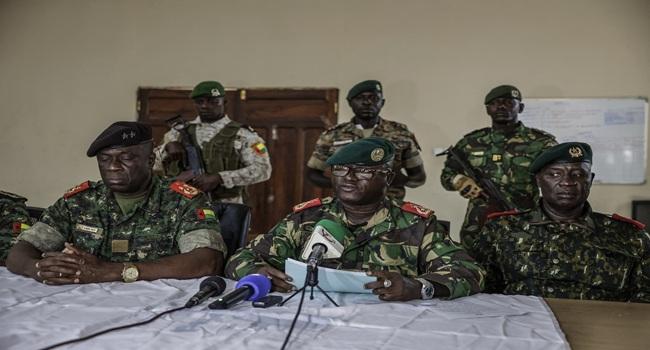
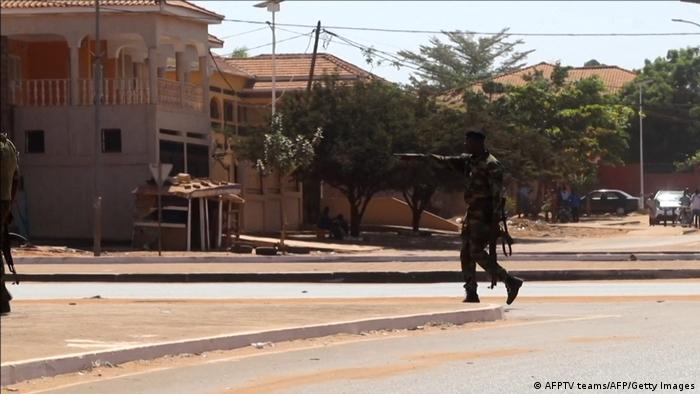
Presidential and legislative elections took place on November 23, 2025. Three days later, before official presidential results were announced, soldiers seized power, suspended the electoral process and subsequently installed General Horta Inta-A Na Man as transitional president. The electoral commission later said that ballots had been seized and servers containing results destroyed.
The coup therefore prevented the electoral process from producing an undisputed political winner.
That created a legitimacy problem for the military authorities. They could either restore the interrupted constitutional order or construct a new transition.
They chose the second route.
The transitional charter established a one-year process culminating in presidential and legislative elections on December 6, 2026. It also created a 65-member Transitional National Council containing military, political, civil-society and regional representatives. Fifteen members are directly drawn from the military command and another ten are designated by the transitional president.
The constitutional referendum therefore performs an important political function: it places a popular vote between the coup and the elections.
The sequence becomes: 2025 election → military intervention → transitional regime → new constitution → referendum → December 2026 elections.
That sequence allows the transitional authorities to argue that the December elections will not simply restore the pre-coup political system but inaugurate a supposedly corrected institutional order.
In other words, the referendum potentially converts a military interruption of constitutional politics into a constituent political process.
2. The Official Rationale: Ending Institutional Dualism
The junta’s strongest argument concerns Guinea-Bissau’s chronic executive conflict.
The existing system divides authority between a directly elected president and a prime minister dependent upon parliamentary support.
In practice, this has repeatedly created competing claims to democratic legitimacy.
President → elected nationally.
Parliament → elected nationally.
Prime minister → derives authority from the parliamentary majority.
When the president and parliamentary majority come from opposing camps, institutional confrontation becomes extremely difficult to resolve.
The conflict was particularly visible under Embaló. His opponents won a parliamentary majority in 2023 while advocating reforms intended to clarify presidential and prime-ministerial powers. Embaló instead developed an expansive interpretation of presidential authority, created a network of presidential advisers functioning partly as a parallel executive, dismissed the parliament-backed prime minister and dissolved parliament.
General Tomás Djassi has articulated the junta’s solution in unusually straightforward terms: the country cannot effectively have two competing leaders, and presidential supremacy should therefore be made explicit.
From this perspective, the referendum represents a form of constitutional conflict prevention.
The problem is that it resolves the ambiguity overwhelmingly in favor of one institution.
What the New Constitution Actually Changes
The proposed system would significantly increase presidential control over the executive.
The president would be able to appoint and dismiss the prime minister and cabinet, chair the Council of Ministers and, under specified conditions, dissolve parliament. Parliamentary representation would simultaneously shrink dramatically.
The legislature would fall from: 102 → 65 seats
while electoral constituencies would fall from: 29 → 12.
The reform also raises barriers to political entry. According to the Africa Center, presidential candidates would need to lodge a deposit of 50 million CFA francs — roughly $90,000 — while sponsoring parties would need 5,000 members, including minimum regional membership requirements.
These provisions matter collectively.
A smaller parliament and fewer constituencies tend to favor larger organizations capable of competing nationally. Higher financial and organizational thresholds make presidential candidacies more difficult for smaller political movements.
Meanwhile, the presidency becomes considerably more powerful.
The constitutional reform therefore creates a political system in which:
the presidency becomes more valuable + parliament becomes smaller + electoral entry becomes harder.
That combination is more consequential than any individual constitutional provision.
The Deeper Objective: Stabilizing the State — or Stabilizing Control?
There are effectively two explanations for the reform, and they are not mutually exclusive.
The first is institutional.
Guinea-Bissau has experienced repeated coups, attempted coups, parliamentary dissolutions and executive-legislative confrontations. A clearer hierarchy within the executive could theoretically reduce disputes between presidents and prime ministers.
Indeed, constitutional reform itself was not originally a junta invention. Political actors and regional observers had previously recognized that ambiguities between presidential and prime-ministerial powers contributed to instability.
But the second explanation is political.
A powerful presidency provides the military with a much simpler political interface.
Under a genuinely competitive parliamentary or semi-presidential system, political authority is distributed among:
president → parliament → prime minister → governing coalition → political parties.
Under the proposed architecture, much more authority converges on:
president → government → security apparatus.
For a military establishment accustomed to playing a decisive political role, this arrangement is potentially easier to influence.
The reform may therefore reduce horizontal political conflict while increasing vertical concentration of power.
That distinction is crucial.
The Military’s Interest
The armed forces are the most obvious institutional beneficiaries.
Guinea-Bissau’s military has repeatedly intervened in politics since independence. The problem has therefore never been purely constitutional; it concerns the absence of stable civilian control over the security establishment.
The 1993 constitutional architecture itself partly reflected an effort to move away from excessive presidential concentration following João Bernardo Vieira’s long rule. The Africa Center argues that previous concentration of executive authority contributed to politicization of the military and subsequent military intervention.
The referendum therefore contains a paradox.
The junta argues: strong presidency → less institutional conflict → greater stability.
But Guinea-Bissau’s historical experience also permits the opposite chain: strong presidency → higher stakes around presidential control → closer president-military relationship → greater incentive for military intervention.
The referendum does little by itself to solve the country’s fundamental civil-military problem.
It potentially changes where the military needs to exert influence.
Instead of arbitrating between competing civilian institutions, military elites would primarily need access to one overwhelmingly important institution: the presidency.
Who Supports the Referendum?
Three identifiable constituencies appear central.
The military-transition establishment
The most direct support comes from the armed forces and institutions created after the November coup.
General Tomás Djassi has publicly defended presidential predominance as necessary to prevent recurring president-prime minister conflict. The “yes” campaign has been led in part by military authorities and figures associated with the transition.
Their interest is institutional as well as political.
A presidential system provides clearer executive command structures and reduces dependence on unstable parliamentary coalitions.
MADEM G15 and the Embaló political network
This is potentially the most important political constituency.
Umaro Sissoco Embaló’s Movement for Democratic Alternation, Group of 15 — MADEM G15 — has openly supported the “yes” campaign.
A MADEM official argued that strengthening presidential authority was precisely what Guinea-Bissau required to overcome institutional instability.
This support is significant because Embaló himself had favored stronger presidential powers while in office.
The personnel continuity is equally important.
General Horta was close to Embaló. Prime Minister Ilídio Vieira Té served as Embaló’s finance minister and campaign manager. Djassi was also associated with his apparatus. Le Monde reports concerns among opponents that much of Embaló’s network remains embedded in the transitional system.
The constitutional reform therefore closely resembles the institutional model Embaló had sought but could not obtain through the parliament elected in 2023.
Parts of the administrative and political establishment
A third constituency consists of political and administrative actors who genuinely view executive fragmentation as the principal cause of Guinea-Bissau’s instability.
Their support should not automatically be reduced to military authoritarianism.
Guinea-Bissau has suffered real constitutional dysfunction, and some political elites appear to believe that stronger presidential government could provide predictability.
This explains why the referendum cannot simply be characterized as a military-versus-democracy confrontation.
There is an authentic institutional debate underneath the power struggle.
Who Opposes It — and Why?
The principal organized opponent is the PAIGC.
Its objections are both procedural and structural.
Procedurally, PAIGC argues that institutions created by the coup lack democratic authority to rewrite the country’s fundamental political rules.
Structurally, it argues that the constitution weakens the prime minister, government, parliament and political parties while concentrating power in the presidency.
Civil-society critics make an additional argument: the process itself has not been genuinely competitive.
Human-rights activists report that “no” campaigners were not permitted to organize normally, while political freedoms remained restricted. Political activity, demonstrations and strikes have faced restrictions since the coup, while opposition organizations and independent media have operated under pressure.
That creates a major legitimacy problem.
A referendum intended to establish a new constitutional consensus normally derives authority from broad participation.
Here the opposite dynamic may occur:
the stronger the boycott, the easier a “yes” victory becomes — but the weaker the political legitimacy of that victory may be.
The most sensitive issue is whether the constitutional process is ultimately preparing conditions for Embaló’s political return.
There is no conclusive public evidence establishing that.
It should therefore remain an analytical hypothesis rather than a factual conclusion.
But several indicators justify scrutiny.
First, Embaló had already advocated stronger presidential authority.
Second, his party supports the new constitution.
Third, several important transitional figures have close political or institutional relationships with him.
Fourth, the November 2025 coup itself remains surrounded by unusual circumstances. It occurred immediately before election results were expected, after opposition candidate Fernando Dias claimed victory. International observers and opposition figures subsequently raised suspicions that the military intervention may have prevented an Embaló defeat. The European Parliament explicitly noted allegations that the takeover had been orchestrated to pre-empt electoral defeat.
The Washington Post subsequently reported claims from analysts, opposition figures and regional and Western officials that Embaló may effectively have engineered a coup against himself, although Embaló and his associates did not substantively respond to those allegations.
Most importantly, Le Monde reports that MADEM figures have not ruled out a future Embaló candidacy if circumstances permit.
That creates a plausible strategic sequence:
interrupted 2025 election → military transition → opposition weakened → constitution rewritten → presidency strengthened → December election → possible restoration of an Embaló-aligned political order.
This scenario should be monitored rather than treated as established.
9. Why the Reduction of Parliament Matters
The reduction from 102 to 65 deputies may appear administrative, but politically it could be one of the referendum’s most consequential changes.
Smaller legislatures combined with larger electoral districts generally increase the effective threshold for representation.
In Guinea-Bissau this could disadvantage:
small regional parties,
independent political movements,
locally concentrated groups,
and fragmented opposition formations.
The larger national parties and political networks with access to financing, patronage and administrative structures would be better positioned to survive consolidation.
This effect becomes more important when combined with the higher membership and financial requirements for presidential candidates.
The reform therefore appears designed not merely to strengthen the presidency but potentially to consolidate the entire party system.
That could produce more governable majorities.
But it could equally reduce pluralism.
10. The Drug-Trafficking Dimension
There is another reason concentration of executive power presents particular risks in Guinea-Bissau.
The country occupies a strategic position in cocaine trafficking between Latin America and Europe, and senior political and military figures have repeatedly been implicated in illicit networks.
The political economy of the state is therefore unusually important.
Control over the presidency potentially provides influence over: security appointments, customs, ports and airports, law enforcement, prosecutorial structures, military leadership, and access to state patronage.
Reporting following the 2025 coup again highlighted allegations of relationships between political-security elites and narcotics networks.
This does not mean that the referendum is being driven by narcotics interests.
There is insufficient evidence for such a conclusion.
But it does mean that reducing institutional checks on presidential authority carries unusually high governance risks in Guinea-Bissau, because political power intersects with highly profitable illicit economies.
The Referendum May Actually Increase Coup Risk
The junta’s central claim is that stronger presidential authority will reduce instability.
That outcome is possible.
But the reform may produce the opposite effect.
Under the existing system, political power is distributed among several institutions. Losing the presidency does not necessarily mean losing access to government because parliamentary coalitions remain politically significant.
Under the proposed system, presidential elections become much closer to a winner-takes-most contest.
That raises the value of controlling the presidency.
And when the presidency becomes the dominant gateway to state resources, security appointments and political patronage, losing presidential elections becomes more costly.
In fragile states, this can increase incentives for:
electoral manipulation,
military intervention,
elite defections,
political violence,
or attempts to prevent unfavorable election outcomes.
The constitutional reform could therefore solve one type of instability — president-versus-prime-minister conflict — while intensifying another:
competition for control of the presidency itself.
Implications for the December Elections
The December 6 elections will consequently be more important than an ordinary post-transition vote.
They could determine control over an institution substantially more powerful than the presidency contested in November 2025.
This makes five indicators particularly important:
First — Embaló’s status. Whether he attempts to return, endorses another candidate, or remains outside the process will reveal whether the post-coup structure is evolving independently of him.
Second — Fernando Dias. His ability to compete freely will be an important test of whether the interrupted 2025 election has genuinely been superseded by a credible new process.
Third — PAIGC participation. Continued restrictions against PAIGC or Domingos Simões Pereira would severely undermine the democratic credibility of the transition.
Fourth — military neutrality. The decisive question is whether security forces remain neutral once presidential competition begins.
Fifth — electoral administration. The junta replaced the previous electoral leadership and created a new secretariat. Confidence in the December vote will therefore depend heavily on transparency, observation and publication of results.
Regional Implications
ECOWAS faces an uncomfortable dilemma.
It condemned the November coup and demanded restoration of constitutional government. It has also called for the unconditional release of detained political figures, including PAIGC leader Domingos Simões Pereira.
But if the junta organizes a referendum followed by elections, regional governments will face pressure to recognize the resulting civilian administration.
That creates the possibility of constitutional laundering:
a military takeover is followed by transitional institutions,
those institutions rewrite constitutional rules,
a referendum validates them,
elections are conducted under those rules,
and the resulting government obtains international recognition.
Formally, civilian rule has returned.
Substantively, however, the institutional order created by the military remains.
This precedent would matter well beyond Guinea-Bissau at a time when West Africa is already struggling with repeated military interventions.
Scenario Assessment
Scenario 1 — Managed presidential transition: 45%. The constitution is approved, December elections proceed with meaningful competition, and a civilian president takes office. The military retains influence but gradually withdraws from overt government. Political stability improves somewhat because executive authority is clearer.
Scenario 2 — Military-backed presidential regime: 35%. The constitution becomes the institutional foundation for a civilian-looking government closely aligned with military and former Embaló networks. Elections occur, but political competition remains constrained. Guinea-Bissau evolves toward electoral presidentialism under military tutelage.
Scenario 3 — Renewed constitutional crisis: 20%. Opposition forces reject the referendum’s legitimacy, disputes intensify over December candidacies or results, and demonstrations or repression trigger another intervention by the armed forces. The stronger presidency increases rather than reduces the stakes of political competition.
These probabilities should be revised once official referendum results, turnout data and geographic voting patterns are available.
The central issue is therefore not whether Guinea-Bissau needs constitutional reform. It probably does.
The existing institutional arrangement has repeatedly produced destructive competition between the presidency, parliament and prime minister. Clarifying constitutional authority could contribute to stability.
The decisive issue is who is rewriting the rules, under what political conditions, and who benefits from the resulting concentration of power.
The August referendum reverses the logic of previous reform efforts. Whereas the 1993 constitutional settlement and the opposition’s 2023 reform agenda sought to constrain excessive presidential authority through power sharing, the new constitution treats power sharing itself as the problem.
That is a fundamental change in Guinea-Bissau’s political trajectory.
The referendum effectively asks voters to accept the proposition that institutional stability requires concentration rather than dispersion of political authority.
The military establishment and MADEM G15 have the clearest reasons to support that proposition. A stronger presidency simplifies executive control, weakens parliamentary bargaining, reduces the importance of fragmented political parties and creates a single dominant institution around which political-security networks can organize.
The PAIGC and much of the opposition oppose it for precisely the inverse reason: the reform potentially converts temporary military dominance following the 2025 coup into a durable constitutional architecture.
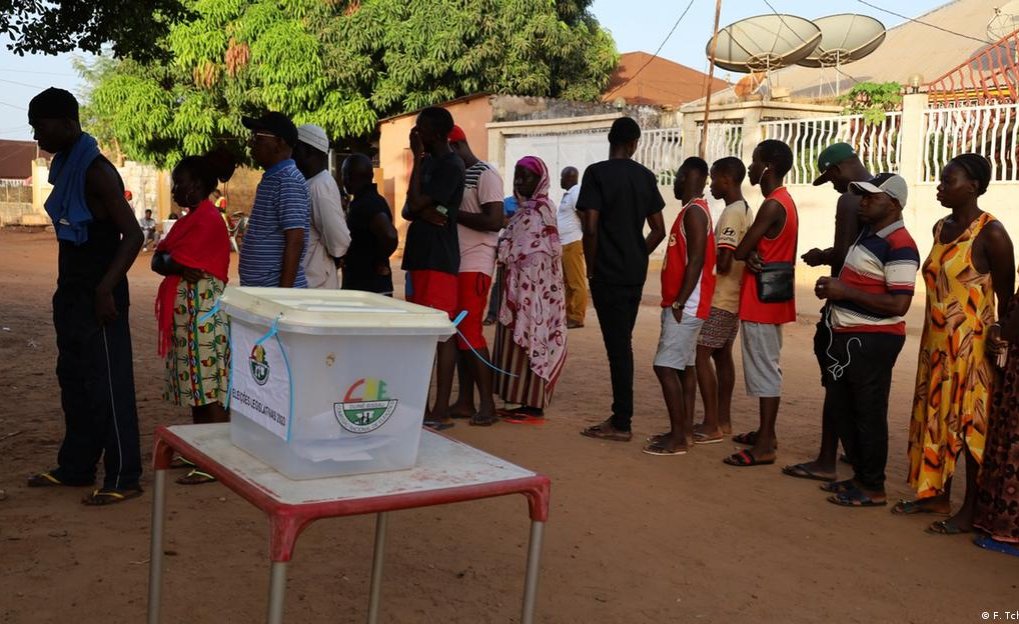
There is already a major dispute over participation in Sunday’s referendum. The election commission said on August 31 that turnout exceeded 50% and that provisional results were expected September 1; Domingos Simões Pereira, by contrast, claimed participation was below 5%. Those radically incompatible claims make turnout itself an early test of the transition’s credibility.
The most important question after the referendum will therefore not be simply whether “yes” wins.
It will be:
Does the new presidential system subordinate the military to an elected civilian president — or does it create a more powerful presidency through which the military and its allied political networks can exercise influence?
If the first occurs, the referendum could become part of Guinea-Bissau’s stabilization.
If the second occurs, the November 2025 coup will not truly have ended with the December 2026 elections. It will have been constitutionalized.

More on this story: Guinea-Bissau’s foiled coup: linked to drug or against French-friendly President