
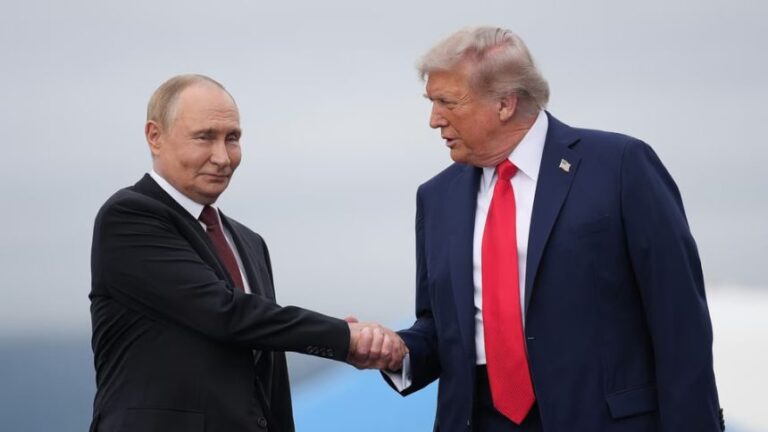
- Donald Trump’s October 9, 2026 decision to temporarily ease restrictions on transactions involving Russian diesel fuel, followed the next day by his call for Ukraine to elect a new president, marks a notable shift in Washington’s negotiating tactics.
- The immediate motive for the sanctions exemption is high diesel prices in the United States ahead of the midterm elections. At the same time, the arrangement has a strategic effect: Russia receives economic relief without publicly confirmed reciprocal commitments, while Kyiv faces demands to limit strikes on Russian oil refineries.
- The intensification of pressure on Ukraine may reflect not only pragmatic calculation but also the personal importance Trump attaches to achieving a rapid peacemaking result. However, public evidence does not establish that psychological frustration with Putin’s intransigence is the decisive motive.
- For NATO, the principal risk is not a formal U.S. abandonment of Article 5, but the possibility that Moscow may begin to doubt the speed and resolve of an American response. This is particularly important for the Baltic states and Poland.
What Trump’s Decision Changed
On October 9, after a telephone conversation with Vladimir Putin, Trump announced an arrangement concerning supplies of Russian diesel fuel. The same day, OFAC issued General License 135, authorizing specified transactions involving the sale, delivery, unloading, and import of Russian-origin diesel through April 7, 2027. This is not a complete lifting of U.S. energy sanctions, but a targeted exemption.
On October 10, Trump said Ukraine needed a new president capable of reaching an agreement with Russia and linked Ukrainian strikes on Russian oil refineries to high U.S. diesel prices. Kyiv, by contrast, proposed a reciprocal halt to strikes on energy infrastructure. This creates a negotiating asymmetry: U.S. demands on Ukraine are specific, while there are no publicly confirmed symmetrical commitments from Moscow.
Why Washington Chose to Ease Restrictions
Energy and Elections
The most obvious motive is domestic economics. As of October 9, the average U.S. diesel price was about $6.28 per gallon, and the fuel crisis had hit truckers, farmers, and businesses dependent on road logistics particularly hard. Ahead of the November 3 elections, the administration has a strong incentive to demonstrate that it can act quickly to influence prices.
The actual effect of Russian supplies remains uncertain, however. Russia itself has lost part of its refining capacity as a result of Ukrainian strikes, while additional exports may simply redistribute fuel between markets rather than materially expand global supply. The political impact of the announcement may therefore arrive before any economic benefit.
An Attempt to Bring Putin Back to the Negotiating Table
A second motive is the use of sanctions relief as an incentive for Moscow. Trump has consistently relied on direct contacts with Putin and personalized diplomacy. The weakness of this approach is that a concession is effective only when accompanied by concrete and verifiable reciprocal steps. There is currently no public evidence of such Russian commitments.
Why Pressure Is Shifting from Moscow to Kyiv
Washington has far more direct leverage over Ukraine, including military assistance, intelligence sharing, diplomatic support, and financial mechanisms. U.S. influence over Russia operates primarily through sanctions and economic restrictions. From a negotiating perspective, it is therefore easier to extract concessions from Kyiv than to change the Kremlin’s position.
This creates a structural problem: the party dependent on U.S. support may face greater pressure than the aggressor state. The diesel arrangement reinforces this asymmetry, giving Russia an economic incentive while Ukraine is asked to curtail one of its instruments of military pressure.
The Psychology of Unsuccessful Mediation
Peacemaking occupies a prominent place in Trump’s public political image. He has repeatedly portrayed himself as a leader capable of ending conflicts through personal negotiations, while international recognition of diplomatic achievements clearly carries political significance for him.
This supports an analytical hypothesis: if Putin refuses terms that would allow Trump to quickly declare the negotiations a success, pressure may shift toward the partner more susceptible to U.S. influence – Ukraine. This resembles a displacement mechanism, although it would be inappropriate to diagnose the psychology behind a specific political decision without direct evidence. The same behavior may be explained by purely pragmatic calculation.
The key indicator will be repetition: whether criticism of Zelensky intensifies after unsuccessful contacts with Putin; whether demands on Ukraine increase without comparable demands on Russia; and whether U.S. assistance becomes linked to political changes in Kyiv.
Political Change in Ukraine as a Negotiating Instrument
If the White House begins to view Zelensky as the main obstacle to a rapid agreement, a change in Ukrainian leadership could be seen as a way to alter Kyiv’s negotiating position without requiring fundamental concessions from Moscow. Trump’s October 10 statement makes the Ukrainian presidency part of public U.S. rhetoric surrounding the negotiations.
There is, however, insufficient evidence that Washington has a plan to bring a specific, more accommodating candidate to power. Stronger indicators would include systematic U.S. contacts with potential alternatives to Zelensky, discussion of specific candidates, linking aid to elections, or demands to replace Ukraine’s negotiating team.
The principal risk lies not in a presidential change itself, but in the possible use of political transition to impose terms Ukraine would otherwise reject. That could allow Moscow to shift the negotiations away from ending aggression and toward deciding who should represent Ukraine, while seeking political gains it has failed to achieve by military means.
What Russia Gains
- Economic effect: additional opportunities to export petroleum products and earn foreign currency.
- Weaker sanctions signaling: the exemption demonstrates that restrictions may be eased before Russia fulfills political conditions.
- Negotiating leverage: Moscow can argue that Russian energy resources remain necessary for global market stability.
- Political effect: U.S. criticism of Ukraine’s leadership partly echoes Russia’s argument that political conditions in Kyiv must change, although this does not demonstrate coordination between Washington and Moscow.
Consequences for the United States and Its Allies
The principal reputational risk for Washington is a decline in the predictability of U.S. sanctions and alliance policy. Sanctions derive effectiveness not only from financial restrictions but also from the expectation among partners and adversaries that they will remain in force until specified conditions are met. Easing them without visible reciprocal Russian steps could encourage European governments to develop more autonomous sanctions and defense mechanisms.
For Ukraine, this raises questions about confidence in U.S. mediation and may strengthen calls for broader European participation in negotiations. Domestically, the political consequences for the United States will depend largely on whether fuel prices fall before the elections. If the economic benefit fails to materialize, the administration will remain vulnerable to criticism that it granted Russia a concession without delivering tangible gains for American consumers.
U.S. history includes cases in which domestic or broader strategic interests in Washington took precedence over partners’ preferences: the 1956 Suez Crisis, the 1971 ‘Nixon Shock,’ and the Nord Stream 2 sanctions waiver in 2021. None is a direct analogue, but all demonstrate the willingness of U.S. administrations to act against allies’ expectations when the White House believes a broader American interest is at stake.
Consequences for NATO: The Credibility of Article 5
The most serious consequence of the current policy may not be a formal weakening of NATO, but the emergence of doubts in the Kremlin about whether the United States would use force quickly enough to defend its allies. Deterrence depends both on military capabilities and on political willingness to employ them.
Ukraine is not a NATO member, so U.S. obligations to Poland and the Baltic states rest on a different treaty foundation. For Russian planning, however, perceptions of American intentions matter. If Moscow interprets concessions over Ukraine as evidence that Washington wishes to avoid confrontation with Russia, it may become more willing to test the limits of allied resolve.
The Baltic States
The most dangerous scenario is not necessarily an immediate large-scale invasion, but a sequence of actions below the obvious threshold of war: border incidents, sabotage, cyberattacks, airspace violations, information operations, or short-duration armed provocations. Their purpose could be to determine how quickly the allies agree that an incident constitutes an attack requiring a collective response.
Estonia remains sensitive because of Narva and its border with Russia; Latvia is particularly exposed to hybrid pressure against critical infrastructure; Lithuania faces risks associated with Kaliningrad, Belarus, and the Suwalki corridor. At the same time, Finland’s and Sweden’s accession to NATO has significantly expanded the Alliance’s ability to support the Baltic region from the north.
Poland
Poland is a key logistical hub on NATO’s eastern flank, hosts U.S. forces, and facilitates the movement of reinforcements toward the Baltic states. Directly extending a policy of concessions to Russia into the sphere of Polish security would therefore be far more difficult. More plausible instruments of pressure include sabotage, cyberattacks, airspace violations, and operations against transport infrastructure.
For Warsaw, the principal danger may be not the absence of allied forces, but a delay in the political decision to employ them during an ambiguous crisis.
Central Europe
U.S.-Russian dialogue could deepen existing divisions within Central Europe. Poland, the Czech Republic, and the Baltic states emphasize deterrence, while Hungary and Slovakia have shown greater willingness to maintain political dialogue with Moscow. U.S. sanctions relief may strengthen arguments for normalization with Russia and complicate consensus on responses to hybrid operations.
Why the Outcome of the War in Ukraine Matters for the Baltic Region
As long as a substantial share of Russian ground forces remains committed in Ukraine, Moscow’s ability to rapidly form large additional groupings against NATO is constrained. If, however, a peace settlement allows Russia to preserve substantial military capacity, rebuild economic resources, and redeploy forces toward the western and northwestern directions, risks to NATO’s eastern flank would increase.
At the same time, an end to the war would not in itself mean a greater threat to NATO. The decisive variables would be the terms of peace, the security guarantees provided to Ukraine, and Russia’s ability to regenerate offensive military power.
The Paradox: Weaker Confidence in the United States Could Strengthen NATO’s European Component
The unpredictability of U.S. policy is encouraging European states to increase defense spending, expand arms production, and strengthen their own capabilities. Europe, however, cannot quickly replace U.S. strategic intelligence, space-based surveillance, logistics, long-range strike capabilities, and nuclear deterrence.
The most dangerous period may therefore be the transition: political confidence in Washington could decline before European capabilities are sufficient to compensate for any reduction in U.S. involvement.
The diesel arrangement matters less because of the volume of Russian fuel than because of the political signal it sends. It combines a domestic U.S. energy calculation, Trump’s desire for a rapid diplomatic result, and the asymmetry of American leverage over Moscow and Kyiv.
For Ukraine, the central danger is a possible substitution of negotiating objectives: instead of compelling Russia to alter the terms of its war, pressure may be placed on Ukraine to make its position compatible with a rapid agreement. The public call for a new Ukrainian president increases this risk, although there is still insufficient evidence of a U.S. plan to bring a specific, more accommodating candidate to power.
For NATO, the implications are broader. If Moscow interprets U.S. concessions as evidence of Washington’s reluctance to confront Russia, it could encourage attempts to test allied resolve through hybrid or limited military provocations. The most important strategic question for the Kremlin is not whether NATO is capable of defending the Baltic states, but whether Russian leaders come to believe that the Alliance would hesitate to do so in time.The long-term significance of Trump’s policy will therefore be determined not only by whether it produces a ceasefire, but by whether any agreement preserves Ukraine’s sovereignty, allied confidence in the United States, and the credibility of deterrence on NATO’s eastern flank.