
Risks to Japan’s National Security and the Need for Enhanced Export Controls
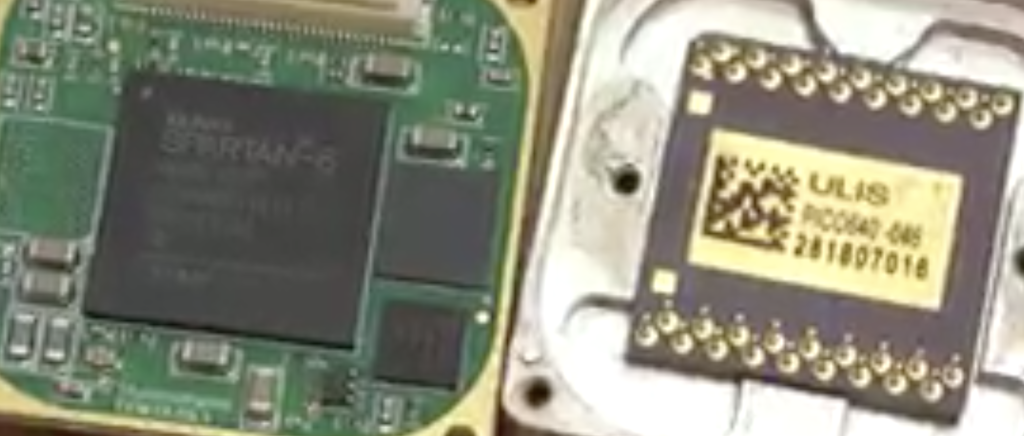
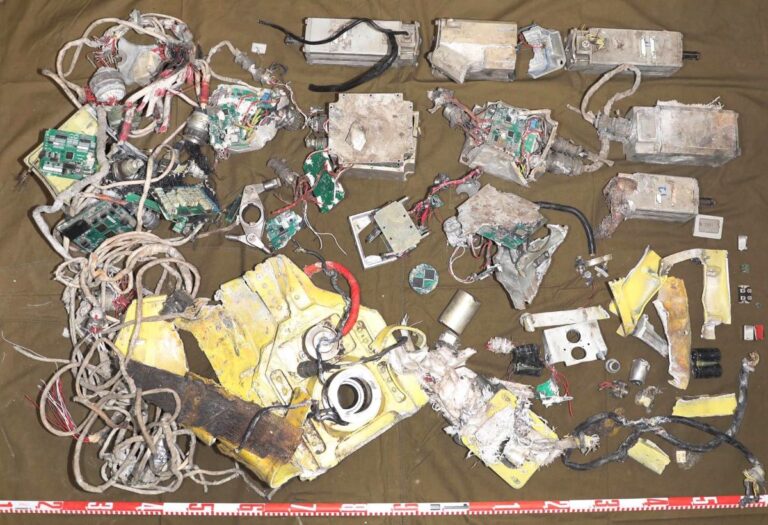
Analysis of debris from North Korean KN-23 and KN-24 ballistic missiles used by Russia in attacks against Ukraine during 2024–2026 reveals the presence of Japanese electronic components and critically important Japanese-made precision equipment within the production cycle of North Korea’s missile systems.
The issue extends far beyond reputational concerns or sanctions violations. The war in Ukraine has effectively provided North Korea with an opportunity to test its missiles under real combat conditions against Western air-defense systems. This creates a critical risk for Japan, as the empirical data obtained by Pyongyang could be used to adapt missile systems against the Aegis and Patriot PAC‑3 missile-defense systems deployed on Japanese territory.
Particularly concerning is not only the incorporation of individual Japanese microchips into KN‑23 and KN‑24 missiles, but also the systemic use of Japanese CNC machine tools and digital control systems that reach the Russian defense-industrial base through Chinese intermediaries and may subsequently become integrated into a joint Russian–North Korean production ecosystem. This demonstrates the need for Japan to move beyond formal export-control procedures toward a system capable of verifying the actual end use of exported equipment and technologies.
The presence of Japanese electronic components in North Korean missiles creates a strategic paradox: technologies originating from a key Western ally are indirectly strengthening the missile capabilities of a state that represents one of Japan’s principal security threats.
Investigations of KN‑23 and KN‑24 missile debris recovered in Ukraine identified Japanese-made components within navigation systems, guidance units, digital-processing modules, sensors, and computing systems. Among the manufacturers identified are Panasonic, Toshiba Corporation, TDK Corporation, Murata Manufacturing, and NSK Ltd.
Most of these components fall into the category of dual-use goods. They are legally employed in automotive manufacturing, industrial automation, consumer electronics, and other civilian industries, enabling North Korea to integrate commercially available technologies into its missile programs through complex procurement networks.
The war in Ukraine has effectively become a proving ground for the combat testing of KN‑23 and KN‑24 missiles. Through battlefield employment, North Korea gains valuable data regarding strike accuracy, guidance-system performance, Western air-defense responses, and opportunities to adapt missile designs to overcome modern interception capabilities.
From a strategic perspective, this creates a long-term threat to Japan’s missile-defense architecture, including Aegis-equipped destroyers, Patriot PAC‑3 batteries, and U.S. military infrastructure stationed in Japan. North Korea is acquiring a unique body of combat data that cannot be replicated through conventional testing.
Available evidence suggests that Russia increasingly serves as a technological intermediary between Japanese technologies and North Korea’s missile program. A closed production cycle is emerging: Japanese technologies and equipment are imported, integrated into Russian industrial processes, employed in manufacturing, and ultimately transferred or incorporated into North Korean missile systems.
Precision manufacturing equipment is as important as electronic components themselves. Without advanced CNC machine tools, mass production, precision machining, guidance-system manufacturing, and the production of modern missile systems would be impossible.
Reports concerning deliveries of Japanese precision equipment—including ESR‑123 machine tools produced by Tsugami Corporation and CNC systems manufactured by Fanuc Corporation—to entities linked with LOMO and the Kalashnikov Concern illustrate the potential military significance of such technologies. The equipment could be used in the production of infrared seeker heads, components for Verba and Igla MANPADS, and missiles for the Pantsir‑S air-defense system.
Information further suggests a systemic pattern of Japanese machine tools reaching Russia through Chinese intermediary companies, highlighting weaknesses in existing export-control mechanisms and the use of China as a buffer jurisdiction for re-export operations.
Japan’s current export-control framework remains heavily focused on documentation, end-user certificates, and formal compliance procedures. However, modern sanctions-evasion schemes rely on re-export through third countries, falsified documentation, and opaque logistics networks.
Japan should therefore move toward continuous end-use verification mechanisms, including remote monitoring, tamper-resistant systems, physical verification of end users, and closer coordination with the United States and the European Union regarding re-export monitoring and sanctions enforcement.
The broader strategic concern is the emergence of a long-term China–Russia–North Korea military-technological ecosystem in which Japanese technologies may ultimately be turned against Japan itself.
In a future regional conflict, likely targets for North Korean missile forces would include U.S. military facilities in Japan, command centers, ports, airfields, missile-defense sites, and naval installations such as Yokosuka Naval Base, Kadena Air Base, Misawa Air Base, and Sasebo Naval Base. More capable KN‑23 and KN‑24 missiles could complicate U.S. and Japanese military responses during the opening stages of a conflict.Ultimately, the issue is no longer merely a matter of sanctions circumvention. A new transnational military-technological ecosystem is emerging: Japanese technologies → Chinese re-export networks → the Russian defense-industrial base → North Korea’s missile program → combat testing in Ukraine → potential future employment against Japan.
For this reason, the challenge should be treated not as a commercial or customs violation, but as a matter of Japan’s national security and the security of the broader Indo-Pacific region.
More on this story: China Continues Supplying Russia with Critical Dual-Use Components