

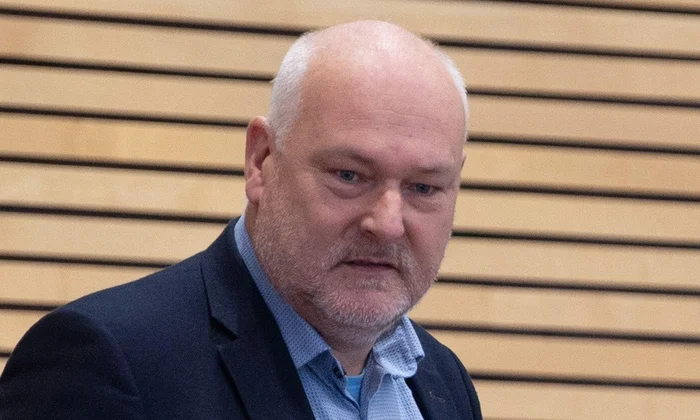
Four members of the far-right party Alternative for Germany (AfD) have confirmed their participation in the St. Petersburg International Economic Forum (SPIEF), scheduled to take place from June 3–6, 2026. The delegation will include AfD Bundestag economic policy spokesman Steffen Kotré, deputy parliamentary group leader Markus Frohnmaier, head of the party’s Saxony branch Jörg Urban, and AfD Member of the European Parliament Petr Bystron. Their visit follows an official invitation from Russian presidential adviser Anton Kobyakov.
The German politicians have justified their trip by citing the need to restore economic relations with Russia and facilitate the return of German companies to the Russian market. Kotré and Urban have specifically advocated the resumption of what they describe as “cheap and reliable Russian energy supplies,” while criticizing the German government’s “militaristic rhetoric.” Bystron has stated that he intends to personally deliver European Commission President Ursula von der Leyen’s call for Russia to end the war to Vladimir Putin, while simultaneously advocating the normalization of business ties with Moscow.
The St. Petersburg International Economic Forum (SPIEF) is an annual Russian event traditionally used by the Kremlin to showcase international influence and attract foreign investment. Since Russia’s full-scale invasion of Ukraine, however, most Western governments and major corporations have boycotted the forum. In response, organizers have increasingly focused on attracting delegations from Asia, Africa, and politically sympathetic European actors. Organizers expect representatives from more than 130 countries to attend this year’s event.
Petr Bystron has previously been implicated in several high-profile controversies, including allegations that he received support from the pro-Russian media platform Voice of Europe in exchange for promoting Kremlin interests. Markus Frohnmaier has repeatedly visited occupied Crimea and Russian-controlled territories in eastern Ukraine. Steffen Kotré has consistently advocated renewed energy cooperation with Russia, while Jörg Urban opposes German military assistance to Ukraine and attended the “BRICS–Europe” symposium in Sochi in November 2025.
Since the beginning of Russia’s full-scale war against Ukraine, SPIEF has gradually evolved from an economic forum into a political and propaganda instrument of the Kremlin. For Moscow, the forum’s primary value no longer lies in generating significant economic outcomes but in securing the symbolic presence of foreign politicians, particularly from Europe, in order to project an image of international legitimacy. Consequently, the participation of AfD representatives carries substantial informational and reputational significance for the Kremlin.
By inviting an AfD delegation, Moscow seeks to demonstrate that political forces within the European Union remain willing to engage with Russia despite the ongoing war against Ukraine. The presence of German politicians will likely be used by the Kremlin to undermine perceptions of European unity, cultivate additional channels of political influence, and legitimize Russian narratives in the international information space.
The visit of four prominent AfD figures will also be exploited by Russian state media as purported evidence that Western sanctions policy has failed. Russian outlets are likely to portray the delegation’s participation as proof that support for restoring cooperation with Moscow is growing even within leading EU member states. The mere fact that German politicians are attending the forum allows Russia to advance a favorable narrative both domestically and internationally.
At the same time, the trip has important domestic political significance for AfD itself. It comes only months before state elections in Saxony-Anhalt, Berlin, and Mecklenburg-Western Pomerania, regions where the party enjoys substantial support. The visit signals the party’s responsiveness to segments of the East German electorate, where calls for restoring economic relations with Russia are more common than in western Germany.
For AfD, participation in SPIEF also serves as a means of emphasizing its political distinctiveness from the federal government. The party seeks to present itself as an advocate of pragmatic economic engagement with Russia and the restoration of energy cooperation. At the same time, this further reinforces perceptions of AfD as a pro-Russian political force willing to maintain dialogue with the Kremlin despite Russia’s war against Ukraine.
The statements made by the delegation members closely align with key Russian information narratives. Criticism of “military rhetoric,” calls for the return of Russian energy imports, and appeals to restore business contacts effectively shift attention away from Russia’s responsibility for the war and toward Europe’s economic costs. Such messaging contributes to weakening public support for continued assistance to Ukraine and serves Kremlin interests in its broader information confrontation with the West.
Bystron’s claim that he intends to personally convey Ursula von der Leyen’s appeal to Putin appears designed to elevate the political significance of his trip and create the impression of a mediation role between the European Union and the Kremlin. There is, however, no indication that the President of the European Commission authorized any AfD representative to deliver official messages to Moscow. Such statements allow AfD to present itself as an alternative communication channel with Russia while promoting the normalization of relations with the Kremlin.
The visit takes place against the backdrop of continuing criticism in Germany regarding the ties between certain AfD figures and Russia. In 2025, Martin Huber, Secretary General of the Christian Social Union (CSU), described Markus Frohnmaier as “Putin’s vassal” and warned about the potential security risks such relationships pose to Germany and the European Union. These concerns reflect broader anxieties about the possible use of political actors as conduits for Russian influence operations.
More broadly, the trip once again highlights the issue of Russia’s use of European political parties as instruments of foreign influence. The Kremlin has long sought to cultivate relationships with political movements that oppose sanctions, military support for Ukraine, and deeper European integration. Over the long term, such activities pose additional challenges to the political resilience and security of both Germany and the European Union.
The decision by Germany’s Federal Office for the Protection of the Constitution (BfV) in 2025 to classify AfD as an extremist organization further raises the significance of these contacts. This designation means that the party is viewed as a potential threat to Germany’s constitutional order and national security, enabling intelligence services to employ expanded surveillance and monitoring measures. Against this backdrop, interactions between AfD members and the Kremlin take on heightened importance when assessing the risks of Russian influence operations within the European Union.
The participation of senior AfD representatives in SPIEF should not be viewed merely as an isolated political visit but as part of a broader Russian strategy aimed at cultivating sympathetic political actors within Europe capable of challenging consensus policies on sanctions, military assistance to Ukraine, and European integration. In this context, the Kremlin’s objective extends beyond public relations and includes the long-term development of political networks that may influence decision-making processes within key European states.
For Moscow, the presence of AfD politicians at SPIEF serves several strategic purposes simultaneously. First, it helps undermine the narrative of Russia’s international isolation by demonstrating that representatives of one of Germany’s largest opposition parties remain willing to engage directly with Russian officials despite the ongoing war. Second, it provides the Kremlin with an opportunity to amplify narratives suggesting that economic pragmatism and energy security concerns are gradually eroding European support for sanctions. Third, it enables Russian officials to maintain direct communication channels with influential European political figures outside official diplomatic frameworks.
Particularly noteworthy is the composition of the AfD delegation. The selected participants represent different levels of political influence: the Bundestag, the European Parliament, and regional leadership structures in eastern Germany. This suggests that Moscow is not merely seeking symbolic visitors but is engaging individuals capable of shaping party messaging across multiple political arenas. The inclusion of figures such as Markus Frohnmaier and Petr Bystron, both of whom have previously been associated with controversies involving Russian interests, further reinforces the perception that the Kremlin values long-term political relationships with actors willing to challenge mainstream European positions on Russia.
The Kremlin likely views AfD as one of the most promising political vehicles for advancing several long-term objectives within Germany weakening German support for Ukraine; promoting sanctions fatigue among voters and businesses; encouraging the restoration of Russian-German energy cooperation; increasing political polarization within Germany; challenging the foreign-policy consensus among mainstream parties.
Importantly, Moscow does not necessarily need AfD to enter government in order to achieve these objectives. Even as an opposition force, a strong AfD can influence public debate, shift political discourse, and force mainstream parties to respond to issues favorable to Russian interests.
Germany remains Russia’s most important political target within the European Union. Berlin plays a central role in: EU sanctions policy; military support for Ukraine; NATO force posture in Eastern Europe; European energy policy; industrial and technological cooperation.
As a result, any political force advocating the normalization of relations with Moscow naturally acquires strategic value from the Kremlin’s perspective.
The emphasis by AfD representatives on restoring Russian energy imports is particularly significant. Before 2022, Russian natural gas constituted a cornerstone of Germany’s industrial competitiveness. Moscow continues to exploit nostalgia for this model, particularly among sectors affected by rising energy costs. Calls for the return of “cheap Russian energy” resonate with portions of the electorate experiencing economic uncertainty, especially in eastern Germany.
The timing of the visit is unlikely to be coincidental. With upcoming state elections approaching, AfD appears to be reinforcing its appeal among voters who remain skeptical of sanctions and military support for Ukraine.
Eastern Germany remains particularly receptive to such messaging due to several factors: historical ties to the former East Germany’s relationship with the Soviet Union; lower levels of identification with NATO compared to western Germany; greater economic dissatisfaction; stronger support for anti-establishment political narratives.
The visit therefore serves both foreign-policy and domestic-electoral purposes. It allows AfD leaders to present themselves as defenders of German economic interests while simultaneously distinguishing themselves from mainstream political parties.
From an intelligence standpoint, one of the key concerns is not necessarily direct recruitment or espionage, but rather influence cultivation.
Russian influence operations have historically focused on building long-term personal relationships; providing privileged access to Russian officials; offering media visibility; creating opportunities for political networking; shaping perceptions through repeated engagement.
SPIEF serves as an ideal platform for such activities because it combines political access, economic messaging, and international visibility under a framework that appears legitimate and non-governmental.
For Russian intelligence and influence structures, forums such as SPIEF offer opportunities to identify future partners, reinforce existing contacts, and assess the political trajectories of sympathetic foreign actors.
Petr Bystron’s statement that he intends to personally convey Ursula von der Leyen’s appeal to Vladimir Putin deserves particular attention.
The significance lies not in the substance of the message itself, but in the attempt to portray AfD as a diplomatic intermediary between Europe and Russia.
This narrative serves several purposes: elevating AfD’s international profile; portraying mainstream European institutions as ineffective; presenting AfD as a pragmatic alternative channel of communication; reinforcing Russian claims that meaningful dialogue remains possible only through politicians willing to challenge the current European consensus.
Such positioning is especially valuable for Kremlin propaganda because it helps legitimize contacts with European politicians despite official efforts to isolate Russia diplomatically.
The visit highlights broader vulnerabilities within democratic systems that Russia has sought to exploit for years.
The primary risk is not that AfD representatives will directly advance Russian policy objectives upon returning from Russia. Rather, the concern is that repeated engagement gradually normalizes narratives favorable to Moscow, including: portraying sanctions as ineffective; questioning military assistance to Ukraine; emphasizing economic cooperation over security concerns; framing Russia as a necessary partner rather than a strategic challenger.
Over time, these narratives can influence public opinion, affect electoral outcomes, and complicate efforts to maintain a unified European response to Russian aggression.
To What Extent Did Russian Officials Coordinate Messaging with AfD Representatives Before SPIEF?
Assessment: Moderate-to-High Probability of Informal Coordination (65–80%)
There is currently no public evidence that Russian officials directly scripted or formally instructed AfD representatives on what to say before the St. Petersburg International Economic Forum (SPIEF). However, several indicators suggest a moderate-to-high probability of prior message alignment and expectation-setting between Russian organizers and participating AfD politicians.
Indicators Supporting Prior Coordination
Remarkable Consistency with Kremlin Narratives
Statements made by Steffen Kotré, Jörg Urban, Petr Bystron, and Markus Frohnmaier closely mirror long-standing Russian strategic narratives:
| AfD Position | Corresponding Kremlin Narrative |
| Restore economic relations | Sanctions hurt Europe more than Russia |
| Resume Russian energy imports | Europe needs Russian energy for competitiveness |
| End “militaristic rhetoric” | NATO and Western governments are escalating the conflict |
| Normalize business contacts | Russia remains an indispensable economic partner |
| Promote negotiations | The West is prolonging the war |
Such alignment does not automatically prove coordination, but the consistency is notable.
Official Invitation from the Kremlin
The delegation reportedly received invitations from presidential adviser Anton Kobyakov, one of the principal organizers of SPIEF.
SPIEF is not merely an economic conference. Since 2022, it has increasingly become a managed political platform overseen by Kremlin structures.
Russian organizers routinely: select favorable participants; arrange media appearances; coordinate discussion themes; facilitate meetings with senior officials.
This creates opportunities for narrative synchronization before the event even begins.
Participant Selection Suggests Deliberate Russian Interest
The Kremlin did not invite random AfD members.
The delegation includes individuals who: have previously visited Russia; publicly oppose sanctions; criticize military aid to Ukraine; advocate restoring energy cooperation.
This suggests Moscow selected participants already known to be politically compatible.
Rather than persuading them, Russian officials likely view them as reliable amplifiers of narratives that already align with Kremlin interests.
Russian political influence operations rarely rely on explicit instructions.
Historically, Russian outreach to European political actors follows a softer model: identify sympathetic politicians; invite them to conferences and forums; provide privileged access; reinforce shared viewpoints; amplify their statements through Russian media.
This approach creates what intelligence services often call “voluntary narrative convergence.”
Politicians retain formal independence while repeatedly advancing themes beneficial to Moscow.
AfD Already Holds These Positions. An important caveat is that AfD has advocated many of these policies for years.
The party: opposed sanctions before SPIEF; criticized military aid to Ukraine before SPIEF; advocated Russian energy imports before SPIEF.
Therefore, Russian officials may not need to coordinate messaging because the party already promotes many positions favorable to Moscow.
The upcoming state elections in eastern Germany provide independent political incentives.
Many AfD voters favor: lower energy prices; reduced support for Ukraine; normalization of relations with Russia.
Consequently, AfD leaders have strong domestic reasons to emphasize these themes regardless of Kremlin influence.
The Most Likely Scenario
The most probable assessment is that Russian officials did not need to dictate talking points to AfD representatives because both sides already share substantial ideological and policy overlap.
However, there is a high probability that SPIEF organizers and Russian officials engaged in informal narrative coordination, including: discussions about key themes; expectations regarding public statements; media planning; framing of economic and political issues.
In intelligence terms, this would not constitute command-and-control influence but rather message alignment between actors whose interests temporarily converge.
The critical question is not whether Moscow told AfD representatives what to say.
The more important question is: To what extent has the Kremlin successfully cultivated a political environment in which influential European politicians voluntarily promote narratives that advance Russian strategic objectives without requiring direct instruction?
The SPIEF delegation suggests that, at least in this case, Moscow may no longer need to persuade certain political actors—the narratives have already become self-sustaining within parts of the European political landscape.
Does the Kremlin View AfD as a Future Governing Partner or Primarily as a Disruptive Opposition Force?
At present, the Kremlin primarily views AfD as a disruptive opposition force rather than a realistic future governing partner. However, Moscow would prefer a scenario in which AfD eventually participates in government or becomes indispensable to coalition-building at the federal or state level.
Probability Assessment: Primarily a disruptive opposition force: 70–80%; Potential future coalition partner at regional level: 50–60%;Potential participant in a federal government within 5–10 years: 20–30%; Strategic long-term governing partner comparable to Hungary’s Fidesz: 10–15%.
From Moscow’s perspective, AfD already delivers significant benefits without holding executive power.
AfD can: challenge sanctions policy; oppose military aid to Ukraine; undermine political consensus; increase polarization; weaken confidence in mainstream institutions; amplify narratives favorable to Russia.
Russia’s influence strategy in Europe has often focused on weakening political cohesion rather than installing friendly governments.
The Kremlin understands that a fragmented Germany is often more useful than a Germany governed by a stable pro-Russian administration that may never materialize.
Historically, Moscow has supported parties that: challenge NATO; oppose sanctions; criticize EU integration; promote national sovereignty over supranational institutions.
Examples include: Viktor Orbán and Fidesz; Marine Le Pen and National Rally; Matteo Salvini and Lega; Freedom Party of Austria.
In many cases these movements were more valuable while influencing public debate than while actually governing.
Why AfD Is Not Yet a Realistic Governing Partner
Several obstacles remain.
Germany’s major parties maintain a “firewall” against AfD.
Currently: CDU/CSU rejects coalition cooperation; SPD rejects coalition cooperation; Greens reject coalition cooperation; Left Party rejects coalition cooperation.
This significantly limits AfD’s path to power.
The designation of AfD as an extremist organization by Germany’s domestic intelligence authorities has increased political risks associated with cooperation.
Many German elites increasingly view AfD not simply as a political competitor but as a potential security concern.
This reduces the likelihood of near-term federal coalition participation.
Unlike Hungary or Slovakia, Germany remains strongly anchored in NATO; the EU; transatlantic institutions.
A sudden geopolitical reorientation toward Russia remains unlikely.
How Moscow Probably Sees AfD’s Future
The Kremlin likely applies a long-term strategy.
In Short Term Moscow expects to maximize AfD electoral gains; increase pressure on mainstream parties; weaken support for Ukraine.
Russia does not necessarily expect AfD to enter government.
In Medium Term (3–7 years)The Kremlin sees to normalize cooperation with AfD; erode the political firewall;make coalition discussions unavoidable.
This is similar to the path followed by several European populist parties that were initially considered politically untouchable.
In Long Term (5–10 years) the ideal Kremlin scenario would be a Germany where: AfD participates in regional governments; coalition arrangements become normalized; sanctions policy becomes politically contested; military support for Ukraine faces stronger resistance.
Even partial success would represent a strategic gain for Moscow.
The Kremlin pays particular attention to eastern German states because: AfD performs strongest there; economic grievances are more pronounced; pro-dialogue attitudes toward Russia are more common; historical links to the Soviet era remain stronger.
The participation of Jörg Urban and other eastern German figures in SPIEF is therefore likely not accidental.
Moscow may view eastern Germany as the most promising entry point for expanding political influence.
The Kremlin’s immediate objective is not to place AfD in power. Rather, Moscow seeks to use AfD to weaken Germany’s political consensus on Russia, Ukraine, sanctions, and European security.
At present, AfD’s greatest value to the Kremlin lies in its ability to act as a force multiplier for narratives that divide German society and complicate policymaking.
However, Moscow is almost certainly investing in a long-term relationship. If AfD continues to expand its electoral base and gradually breaks political isolation, the Kremlin would readily welcome its evolution from a disruptive opposition movement into a coalition-capable political force.
In intelligence terms, AfD is currently more useful to Moscow as a destabilizing actor than as a governing actor—but the Kremlin would prefer to have both.
What Role Do Russian Intelligence and Influence Networks Play in Facilitating Contacts Between Russian Officials and AfD Representatives?
There is no publicly available evidence that Russian intelligence services directly manage or control AfD representatives. However, there is substantial evidence that Russia has developed a broader ecosystem of influence networks that facilitate contacts between Russian officials and sympathetic European politicians, including some members of AfD.
The most likely assessment is that Russian intelligence services play an enabling, coordinating, and protective role, while overt engagement is conducted through seemingly legitimate intermediaries such as political forums, business associations, media platforms, think tanks, cultural organizations, and parliamentary diplomacy.
Historically, Russia rarely relies on classic espionage when dealing with foreign politicians.
Instead, Moscow employs a layered influence architecture:
Outer Layer – Public Influence Structures
These include: international conferences; business forums; media organizations; academic institutions; cultural foundations; parliamentary friendship groups.
Examples include: SPIEF; the former Voice of Europe network; various Russia-Europe dialogue forums; BRICS-related conferences; Russian cultural diplomacy initiatives.
These organizations create legitimate reasons for contact.
Middle Layer – Political and Business Intermediaries
This layer often includes: former politicians; lobbyists; businessmen; consultants; pro-Russian activists; unofficial intermediaries.
Their function is to build personal relationships and establish trust.
In many cases, politicians never interact directly with intelligence officers but instead with individuals who have links to Kremlin institutions.
Inner Layer – Intelligence Oversight
Russian intelligence services such as: Federal Security Service (FSB); Foreign Intelligence Service (SVR); Main Directorate of the General Staf are unlikely to run every political contact directly.
Their role is more likely to include: identifying promising political figures; assessing vulnerabilities; collecting political intelligence; evaluating influence opportunities; protecting Russian strategic interests.
SPIEF provides an ideal environment for influence operations because it combines: political access; economic discussions; media visibility; networking opportunities.
Unlike formal diplomatic meetings, participants often perceive the forum as a business event rather than a geopolitical engagement.
This reduces political sensitivity.
From an intelligence perspective, SPIEF functions as a: networking platform; assessment platform; recruitment environment; influence marketplace.
Russian officials can identify which foreign politicians: are receptive to Russian narratives; may become future leaders; possess influence within their political systems.
One of the most significant recent examples involves the now-sanctioned platform Voice of Europe.
Voice of Europe
European investigations alleged that the platform was used to: disseminate pro-Kremlin narratives; build relationships with European politicians; potentially channel influence and support.
The allegations involving Petr Bystron make this issue particularly relevant.
Even if specific allegations remain legally contested, the case illustrates how Russian influence networks can operate through media rather than traditional intelligence channels.
The most effective influence operations are often those in which political actors advance objectives that coincide with Russian interests because of their own ideological convictions or domestic political incentives.The most likely model is not one of direct control but of relationship management and influence cultivation. Russian intelligence services probably operate behind a broader ecosystem of media outlets, political forums, business networks, and intermediaries that help sustain contacts with sympathetic European politicians. In the case of AfD, Moscow’s greatest success may not be persuading party figures to adopt Russian narratives, but finding politicians whose pre-existing views already overlap with Kremlin objectives and then providing them with platforms, access, and visibility that reinforce those positions.
More on this story: AfD, Russian Influence, and the Growing Risk of Ethnic Polarization in Germany

More on this story: Threat Assessment: Kremlin Exploitation of Pacifist Networks in Germany
Estimated reading time: 18 minutes