
The Security Council of the Russian Federation, in an official statement, accused Lithuania of creating a center of tension near the borders of the Kaliningrad Oblast. In particular, Lithuanian authorities are criticized for allegedly ignoring domestic economic and social problems, continuing a course of militarization, and using rhetoric about the “Russian threat” to strengthen defense within the framework of reinforcing NATO’s eastern flank.
The Russian Security Council also drew attention to Lithuania’s formation of the 1st Infantry Division, which is expected to reach full operational capability by 2030 and number up to 20,000 personnel.
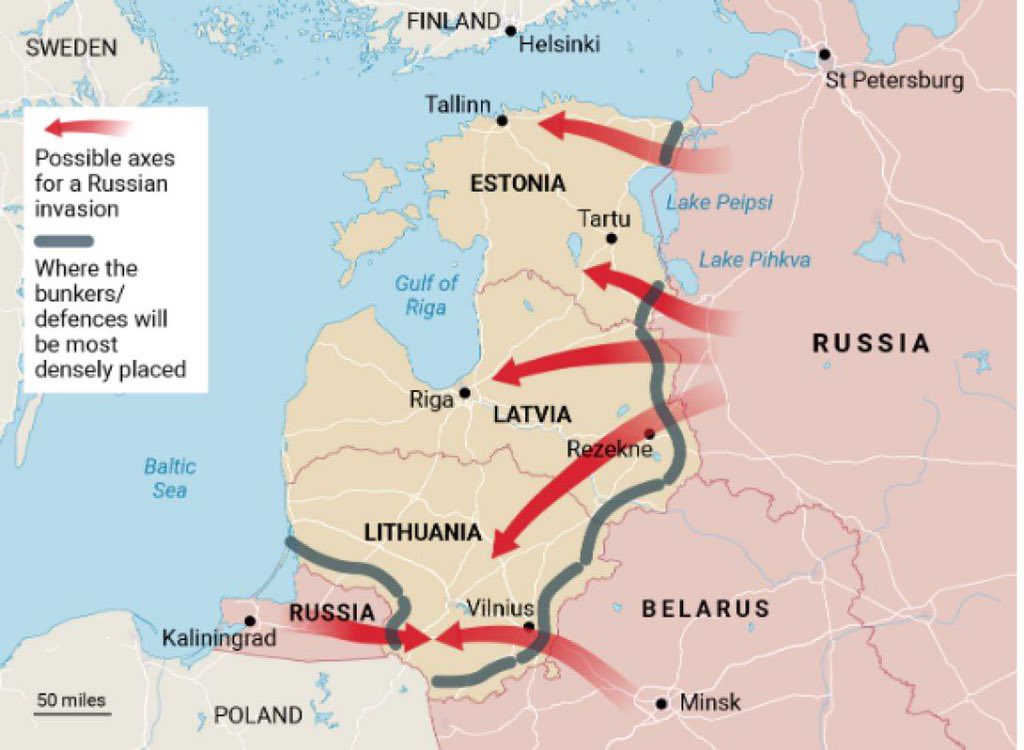
Kaliningrad Oblast is separated from Belarus by the so-called Suwalki Corridor, a roughly 100-kilometer stretch of land border between Poland and Lithuania. In Russian military strategy, this narrow land bridge is considered a critical نقطة, as its seizure would allow Moscow to physically cut off the Baltic states from their NATO allies. Russian control over the corridor would effectively isolate Lithuania, Latvia, and Estonia, turning them into a strategic “island” that could not be rapidly reinforced by land.
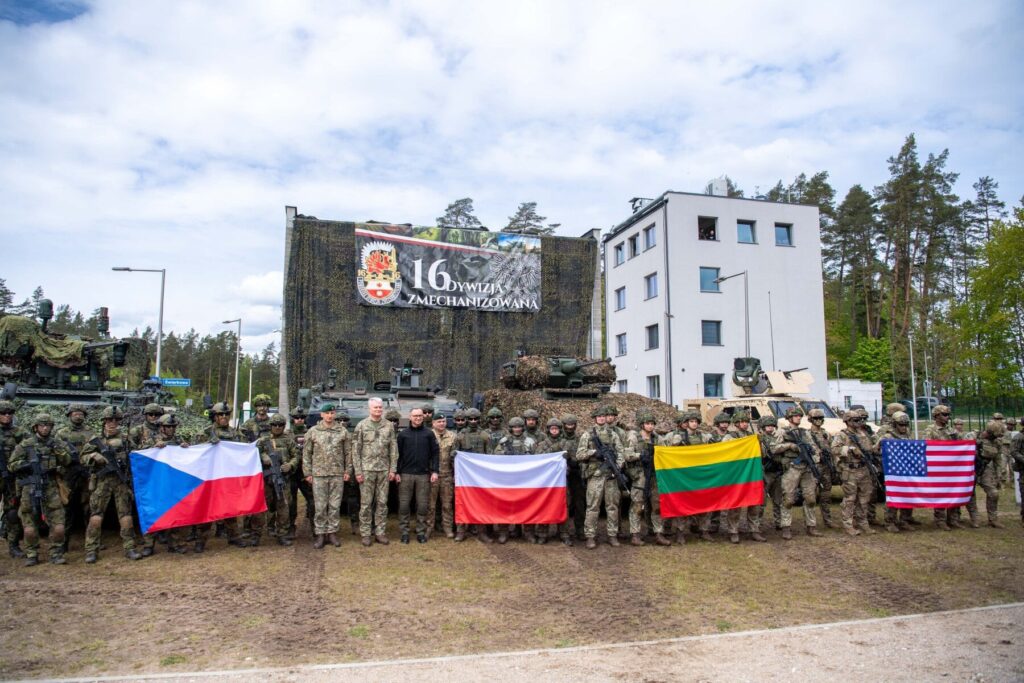
Recently, the Lithuanian parliament approved plans by the Ministry of Defense to establish a military training ground near the Suwalki Corridor. Lithuanian Defense Minister Robertas Kausnas stated that the training area—capable of accommodating up to 4,000 troops—is critical for national defense and necessary both for Lithuania’s national division and for the German brigade deployed in the country.
Kaliningrad Oblast holds ключове military-political significance for Russia as a forward outpost in Eastern Europe. It is used by the Kremlin for power projection, deployment of advanced weaponry, and maintaining постоянного pressure on the Baltic states and Poland.
The accusations by the Russian Security Council that Lithuania is creating a “center of tension” should be understood as part of the Kremlin’s information campaign within the broader context of hybrid warfare against Europe. Their purpose is to shift responsibility for escalation onto Lithuania and NATO, while legitimizing Russia’s own military activities in the Baltic region.
The Suwalki Corridor is widely regarded as one of the most important strategic points in European security. Potential Russian control over it could sever the Baltic states from NATO allies, posing a serious threat to their defense capabilities. For this reason, the corridor could become a potential target of future Russian military action, as its geographic position is critical for maintaining the unity and defense of NATO’s eastern flank.
Statements about Lithuania’s “militarization” signal the Kremlin’s readiness to use Kaliningrad as a staging ground for demonstrations of force. This increases the risk of both hybrid provocations and military escalation near EU borders.
Russia is systematically attempting to discredit Lithuania by portraying its defensive measures as provocations that allegedly escalate tensions with the Russian exclave. This rhetoric is aimed at undermining trust among NATO allies and legitimizing Russia’s aggressive policies. Moreover, accusations of “militarization” create an informational pretext for possible coercive actions against Lithuania.
Kremlin information operations target not only international audiences but also Lithuanian society. By promoting narratives about “provocations” and “militarization,” Moscow seeks to instill fear of potential Russian aggression and erode trust in Lithuania’s government.
Lithuania should continue strengthening its defense capabilities, including through the formation of new military units, while resisting political and informational pressure from the Kremlin. At the same time, it should conduct proactive communication efforts to explain that its defense measures are a response to Russian aggression—not the cause of tensions.
The European Union and NATO must ensure coordinated support for Lithuania as a frontline state on the eastern flank. The alignment of political, economic, and military measures is essential for deterring Russian provocations and demonstrating Western unity.
Russia’s accusations that Lithuania is “militarizing” the area near Kaliningrad should be read not as a neutral security assessment, but as part of a familiar Kremlin pattern: portraying defensive measures by neighboring states as offensive threats in order to justify Russian pressure, intimidation, or future escalation.
The comparison with Ukraine is useful, but with one crucial distinction: Lithuania is a NATO member, Ukraine was not. This makes a direct full-scale invasion of Lithuania much riskier for Moscow because it could trigger Article 5. However, the informational and hybrid phases of pressure look strikingly similar.
The Kremlin narrative: from “Ukraine is a threat” to “Lithuania is a threat”
Before the 2022 invasion, Moscow repeatedly framed Ukraine as a militarized, Western-controlled threat to Russia. The argument was used to justify troop deployments, coercive diplomacy, recognition of proxy entities, and finally the full-scale invasion.
Now, Russia is using a similar rhetorical model against Lithuania. The Russian Security Council has accused Vilnius of creating a “hotbed of tension” near Kaliningrad and criticized Lithuania’s creation of a 1st Infantry Division, which is expected to reach full operational readiness by 2030 with up to 20,000 personnel.
Lithuania’s own measures are defensive. Its armed forces have reported that the 1st Division has reached initial operational capability, while full operational capability is planned for 2030. Lithuania’s parliament has also approved a new training ground near the Suwałki Gap, intended to support brigade-sized exercises of around 3,500–4,000 troops.
The Kremlin’s aim is to invert causality: Russia militarizes Kaliningrad and threatens NATO’s eastern flank, then presents Lithuania’s defensive response as the source of instability.
Why the Suwałki Gap matters
The Suwałki Gap is one of NATO’s most vulnerable geographic points. It connects Poland and Lithuania while separating Belarus from Russia’s Kaliningrad exclave. If Russia and Belarus were able to close this corridor, the Baltic states could be physically isolated from NATO’s main land reinforcement routes.
That makes Lithuania’s military planning strategically rational. The creation of a national division and a large training ground near the corridor is not evidence of aggression; it is a response to geography. Lithuania is preparing for the most dangerous scenario: a Russian attempt to create a land bridge between Belarus and Kaliningrad.
For Moscow, however, the corridor has propaganda value. By claiming that Lithuania is “militarizing” the border, Russia creates an informational pretext for:
- military exercises in Kaliningrad;
- cyber or sabotage operations against Lithuanian infrastructure;
- border provocations;
- pressure on NATO cohesion;
- psychological intimidation of Lithuanian society.
Comparison with the Ukraine invasion timeline
Phase 1: Narrative preparation
Ukraine, 2014–2021:
Russia built a long-term narrative that Ukraine was controlled by “Nazis,” hostile to Russian speakers, and transformed into a Western military platform. These claims were used after 2014 to justify aggression in Crimea and Donbas, and later to frame the 2022 invasion as “defensive.”
Lithuania, 2026:
Russia is now portraying Lithuania as a militarized anti-Russian state allegedly provoking tensions near Kaliningrad. The vocabulary is different, but the logic is similar: Moscow presents the neighboring state’s sovereign defense policy as a threat to Russia.
Analytical conclusion:
This is the pretext-building phase. It does not automatically mean invasion is imminent, but it creates the political and informational basis for coercion.
Military pressure and geographic encirclement
Ukraine, 2021–February 2022:
Russia massed forces near Ukraine’s borders. In early February 2022, satellite imagery showed one of the largest Russian deployments near Belarus since the Cold War, and Western governments warned that Moscow intended to invade.
Lithuania, 2026:
Russia already has a military platform in Kaliningrad and a close military partner in Belarus. This gives Moscow a two-sided pressure position against Lithuania and Poland around the Suwałki Gap. Unlike Ukraine, Russia does not need to build an entire new theater from scratch; the geography is already militarized.
The threat to Lithuania is less likely to begin with a classic invasion column and more likely to start with hybrid pressure around the corridor: cyberattacks, GPS jamming, border incidents, sabotage, refugee manipulation, or snap exercises.
Phase 3: Legal-political justification
Ukraine, February 2022:
Russia recognized the so-called “people’s republics” in Donetsk and Luhansk shortly before launching the full-scale invasion, using a manufactured legal-political pretext to justify military action.
Lithuania:
Russia has no equivalent separatist proxy structure inside Lithuania. This limits Moscow’s ability to replicate the Donbas model. However, it can use other justifications: “protection” of Kaliningrad, alleged NATO threats, accusations of blockade, or claims about discrimination against Russian speakers.
Analytical conclusion:
Against Lithuania, the Kremlin’s likely pretext would not be “separatism,” but defense of Kaliningrad and response to NATO militarization.
Phase 4: Military action threshold
Ukraine, 2022:
Ukraine was outside NATO. Moscow calculated that the West would support Kyiv but avoid direct war with Russia.
Lithuania, 2026:
Lithuania is inside NATO. Any open Russian attack on Lithuanian territory would risk direct confrontation with the Alliance. This is the main deterrent factor.
Analytical conclusion:
A full-scale Russian invasion of Lithuania is less likely than the invasion of Ukraine was in early 2022. But the probability of hybrid aggression below the Article 5 threshold is significantly higher.
Most likely Russian threat scenarios against Lithuania
Scenario 1: Information-psychological pressure
Russia intensifies claims that Lithuania is provoking war near Kaliningrad. The goal is to frighten Lithuanian society, weaken trust in the government, and pressure NATO allies to avoid escalation.
Probability: high.
Scenario 2: Cyberattacks and sabotage
Moscow may target railways, ports, energy systems, logistics hubs, military communications, or government networks. This would mirror Russia’s broader pattern of using sabotage and cyber operations across Europe.
Probability: high.
Scenario 3: Border incidents and military demonstrations
Russia could stage exercises in Kaliningrad and Belarus, conduct airspace or maritime provocations, or create incidents near the Suwałki Gap.
Probability: medium-high.
Scenario 4: Limited coercive crisis around transit to Kaliningrad
Moscow could manufacture a crisis over goods, rail transit, sanctions implementation, or alleged restrictions on Kaliningrad. This would allow Russia to frame Lithuania as “blockading” the exclave.
Probability: medium.
Scenario 5: Direct attack on the Suwałki Gap
This is the most dangerous scenario, but also the riskiest for Moscow because it would likely trigger NATO collective defense.
Probability: low in the short term, but strategically significant.
Russia’s current pressure on Lithuania resembles the early informational and coercive stages of the Ukraine playbook: accuse the neighbor of militarization, portray NATO as the real aggressor, create fear among the population, and prepare the informational ground for future escalation.
However, the Lithuania case differs in three decisive ways:
- Lithuania is protected by NATO Article 5.
- Russia lacks a Donbas-style separatist proxy inside Lithuania.
- The main target is likely not occupation, but coercion and destabilization.
Therefore, the most realistic threat is not an immediate invasion, but a hybrid campaign centered on Kaliningrad and the Suwałki Gap. Moscow’s objective would be to test NATO’s reaction, weaken Lithuanian resilience, and force the Alliance into a defensive political debate.
Lithuania’s response should be twofold: continue strengthening military readiness, while explaining clearly to domestic and international audiences that its defense measures are a reaction to Russian militarization—not the cause of escalation.
Probability estimate for 2026
| Threat type | Probability | Assessment |
| Russian hybrid operations against Lithuania | 75–85% | Very likely |
| Major hybrid campaign affecting critical infrastructure | 45–60% | Likely |
| Limited border / air / maritime provocation | 35–50% | Medium-high |
| Direct Russian military invasion of Lithuania | 3–7% | Low, but strategically dangerous |
| Limited armed incident near Suwałki / Kaliningrad | 10–15% | Low-medium |
Russia already uses hybrid methods across Europe: cyberattacks, sabotage, disinformation, recruitment of disposable agents, border pressure, GPS jamming, and infrastructure disruption. NATO defines hybrid threats as a combination of military and non-military, covert and overt tools designed to destabilize societies and blur the line between war and peace.
Lithuania is especially exposed because of three factors: its border with Belarus, proximity to Kaliningrad, and its role in defending the Suwałki Gap. Lithuania has already faced hybrid pressure from Belarus-linked balloon incidents that disrupted Vilnius airport and triggered a national emergency.
Recent reporting also points to Russian-backed disruption campaigns in Latvia and Lithuania against clean-energy infrastructure, including recruitment of low-level local agents.
Why direct invasion remains unlikely
A direct Russian attack on Lithuania would mean attacking a NATO member. That creates a much higher escalation threshold than Ukraine in 2014 or 2022. Unlike Ukraine before the full-scale invasion, Lithuania is covered by Article 5, hosts NATO forces, and benefits from forward-defense planning, including the German brigade presence.
That said, Russia may test NATO below the Article 5 threshold. A Belfer Center assessment argues that Russia is more likely to pursue limited action designed to fracture NATO than a large assault through the Suwałki Gap, which would be far more escalatory.
Bottom line
The most realistic risk is not Russian tanks crossing into Lithuania, but a sustained hybrid campaign: sabotage, cyberattacks, airspace incidents, GPS disruption, propaganda, and pressure around Kaliningrad transit.
My final estimate:
Hybrid operations: 80% probability in 2026.
Direct invasion: 5% probability in 2026.
- In case of a clear invasion of Lithuania ~80–90% of NATO members would participate in some form of defense, though not all equally or immediately.
- In case of hybrid attacks (cyber, sabotage, pressure). ~50–70% would respond actively, with the rest offering limited, delayed, or symbolic support.
Why support is high in case of invasion
A. Article 5 credibility is existential
A Russian attack on Lithuania would trigger Article 5. If NATO fails to respondmthe alliance’s credibility collapses, Eastern members lose trust, Deterrence globally weakens
For most states, defending Lithuania = defending NATO itself
B. Frontline + core states are fully committed
These countries would almost certainly respond militarily Baltic states: Latvia, Estonia, Key Eastern flank: Poland, Major powers: United States, United Kingdom, Germany.
Germany is especially important due to its brigade deployment in Lithuania.
These states alone create a credible military response core
C. Northern Europe is highly aligned
Finland, Sweden, Denmark,
These countries view Russia as a direct threat and are likely to respond quickly.
Why not 100% participation
Even in invasion scenarios, NATO response is uneven by design:
A. Capability gaps
Some members lack deployable forces:
- Balkans; Smaller Central European states.
They contribute politically, not militarily.
B. Political hesitation
Some governments may delay or limit involvement:
- Hungary, Slovakia, Turkey.
Reasons:
- Domestic politics, Relations with Russia, Strategic autonomy concerns.
Support likely, but slower or conditional.
C. Geography matters
Southern NATO states:mItaly, Spain, GreeceWould contribute:
- Air/naval forces, Logistics,
- Political backing.
But not frontline ground combat in large numbers.
Hybrid attack scenario: why support drops
Hybrid attacks create ambiguity:
A. Attribution problem
- Was it Russia?
- Criminal networks?
- False flag?
Slows decision-making.
B. Article 5 threshold unclear
Hybrid attacks often Stay below war threshold; Avoid triggering collective defense automatically. States interpret response differently.
C. Political fragmentation risk
Some NATO members may argue “Not serious enough”; “Avoid escalation”.
Leads to split response
Realistic response structure
In invasion scenario:
Core military responders (~10–12 states): US, UK, Poland, Germany, Nordics, Baltics. Secondary contributors (~10–15 states): logistics, air, naval, cyber. Minimal contributors (~5–8 states): political support only
Total involvement: ~80–90%.
In hybrid scenario:
Active responders (~12–18 states): cyber, intelligence, limited deployments.
Passive/slow (~10–15 states): political statements, delayed action.
Total meaningful involvement: ~50–70%.
Strategic interpretation
NATO is highly reliable in clear war.
NATO is less unified in gray-zone conflict.
This creates a window for Russia Hybrid operations exploit alliance hesitation; Full invasion triggers alliance unity.
Final assessment
Defense of Lithuania in war: highly likely and credible. Defense against hybrid attacks: fragmented and slower. Key risk: Russia operates just below the threshold where NATO unity becomes automatic.
A precise percentage of Lithuanians who would be “loyal to Russia” or unwilling to resist is not measurable in a reliable way, and framing it that way can be misleading. What we can assess—based on elections, polling trends, and societal behavior—is the very low level of pro-Russian alignment in Lithuania and the high baseline of national resistance.
Bottom line (evidence-based estimate)
- Openly pro-Russian / pro-Kremlin alignment: ~1–3%
- Passive / neutral / conflict-averse (would avoid involvement rather than support Russia): ~10–20%
- Likely to support national defense or resistance (active or indirect): ~70–85%
Why pro-Russian alignment is very low
1) Strong historical memory
Lithuania’s experience under the Soviet Union—including repression and deportations—creates deep societal resistance to Russian domination. This is not abstract; it’s embedded in education, public discourse, and political identity.
2) Clear geopolitical orientation
Lithuania is firmly anchored in:
- NATO
- European Union
Public support for both remains consistently high, which correlates with low receptivity to Kremlin narratives.
3) Political marginalization of pro-Kremlin views
Parties or figures seen as pro-Russian have minimal electoral traction. There is no mainstream political force advocating alignment with Moscow.
4) Security awareness and resilience
Lithuania has:
- Active civil defense planning
- Strong information resilience programs
- Public awareness of hybrid threats (disinformation, sabotage, coercion)
The “passive segment” matters—but differs from loyalty
The 10–20% estimate reflects people who might:
- Avoid participation in resistance
- Prioritize personal safety
- Be vulnerable to disinformation or fear
This group is not pro-Russian, but could be targeted by hybrid operations (e.g., panic narratives, economic fear, war-avoidance messaging).
Russian-speaking minority
Lithuania has a smaller Russian-speaking population than neighbors like Latvia or Estonia. Importantly:
- Most are integrated and politically loyal to Lithuania
- Language ≠ political allegiance
What this means for hybrid or invasion scenarios
- Mass collaboration scenario: Highly unlikely
- Localized or individual collaboration: possible, but limited
- Primary vulnerability: not loyalty, but psychological pressure and information warfare targeting undecided or passive groups
Strategic conclusion
Lithuania is one of the least susceptible societies in Europe to pro-Russian alignment. Any Russian strategy would rely far more on:
Societal loyalty vs. invasion outcomes: Lithuania, Latvia, Estonia, Ukraine (pre-2022)
Snapshot (evidence-based ranges)
| Country | Openly pro-Kremlin alignment | Passive / ambivalent | Pro-state / likely to resist | Key structural factor |
| Lithuania | 1–3% | 10–20% | 70–85% | Small Russian-speaking share; strong anti-Soviet memory |
| Latvia | 5–10% | 20–30% | 60–75% | Larger Russian-speaking population; media exposure gaps |
| Estonia | 4–8% | 20–25% | 65–80% | Similar to Latvia but stronger digital/state integration |
| Ukraine | 10–20% (regionally concentrated) | 25–35% | 50–65% | Deep regional divides (Donbas/Crimea vs. west/center) |
Ranges synthesize election results, language/identity data, and pre-war polling. They indicate alignment tendencies, not fixed behavior under stress.
What the Ukraine case shows (baseline)
Before the 2022 full-scale invasion, Ukraine had:
- Higher pro-Russian and ambivalent shares, concentrated in Donbas and Crimea
- Fragmented identity and media space (Russian TV penetration, local elites tied to Moscow)
- Existing proxy structures after 2014 (armed groups, “people’s republics”)
Outcome effect: Russia could gain rapid local footholds in 2014 (Crimea/parts of Donbas) and expected similar dynamics in 2022. That expectation proved wrong at the national level—society consolidated around resistance—but the initial access points mattered.
Baltic cases: why the same playbook is harder
Lithuania — minimal internal leverage
Very low pro-Kremlin base and high readiness to resist; Limited space for “compatriot protection” narratives to take .No regions with a plausible separatist trajectory.
Implication Fast internal collapse scenario: very unlikely. Russia would rely on external pressure (Kaliningrad/Belarus) + hybrid tools, not local support.
Latvia — the “information battleground” case
Larger Russian-speaking population; historically higher exposure to Russian media; Some ambivalence pockets in urban areas (e.g., Riga/Daugavpils).
Implication:
Hard to create separatism, but easier to run disinformation, protest mobilization, or panic campaigns; Vulnerable to hybrid destabilization, not territorial breakaway.
Estonia — high integration, strong resilience
- Russian-speaking minority exists, but Higher state trust; Strong digital governance and counter-disinformation capacity.
Implication: Similar to Latvia in structure, but more resilient in practice. Hybrid effects likely shorter-lived and more containable.
How societal loyalty shapes outcomes (causal chain)
A. Entry points
- Ukraine (pre-2022): Local elites + identity splits → entry points existed.
- Baltics: No credible local power bases → entry points minimal.
B. Speed of initial phase
- Ukraine 2014: Rapid takeover in Crimea/parts of Donbas. Baltics (hypothetical): No rapid internal takeover; any move is overt and escalatory
C. Type of operation
- Ukraine: Combined proxy war + conventional invasion.
- Baltics: Likely hybrid-first (cyber, sabotage, intimidation), with high risk if escalated due to NATO commitments.
D. Population response
- Ukraine 2022: Broad mobilization and resistance despite earlier divisions
- Baltics: Expect even faster consolidation given higher baseline cohesion
Scenario implications
If Russia repeats the Ukraine model:Lithuania: No viable “Donbas” analogue. Outcome: immediate resistance + rapid NATO engagement risk
Latvia / Estonia: Possible localized unrest or information shocks. Outcome: contained instability, not secession.
Ukraine (pre-2022 baseline): Local footholds enabled initial advances (2014). 2022 showed national identity can rapidly harden under attack.
Strategic takeaway
High pro-state cohesion (Lithuania, Estonia) → denies Russia internal leverage; forces Moscow into riskier, overt actions. Moderate ambivalence (Latvia) → opens space for hybrid disruption, but not territorial change. Pre-2022 Ukraine levels of division → enabled early penetration, though not decisive long-term success.
Net effect:
In the Baltics, societal loyalty shifts the battlefield from inside the state (Ukraine 2014 model) to the border and the information domain—where Russia tests NATO without expecting internal collapse.
More on this story: Hybrid War at the Border: Russia’s Covert Assault on Latvian Sovereignty