
The situation in Mali in 2026 reflects the collapse of a decade-long international counterterrorism architecture and the failure of its replacement by Russian-backed forces. What was initially framed by the military junta as a sovereign pivot away from Western dependence has instead produced a fragmented security landscape in which insurgent groups have expanded, state authority has eroded, and external actors—particularly Russia—have reached the limits of their operational model.
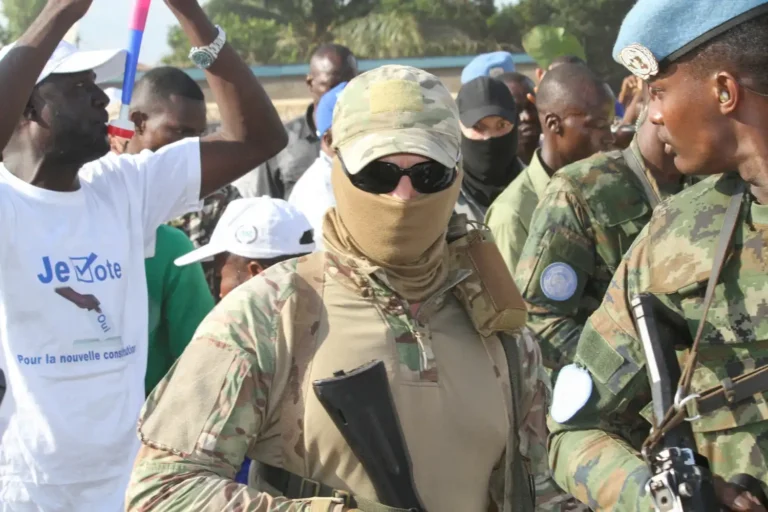
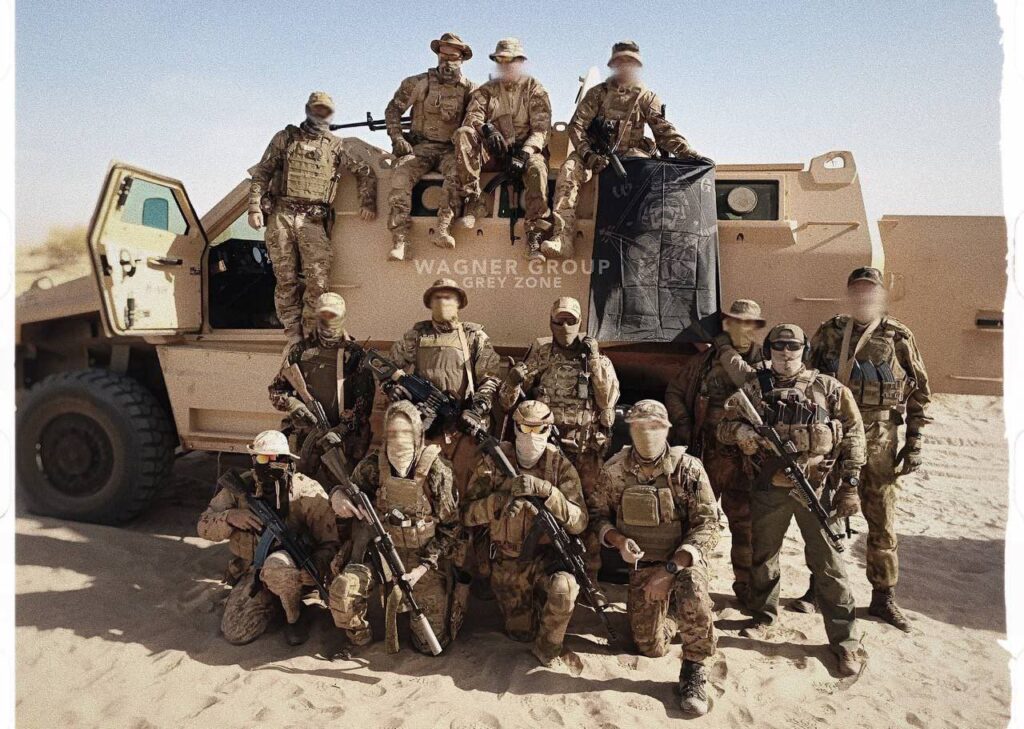
The roots of the current crisis lie in the strategic vacuum created after the withdrawal of French forces in 2022 and the gradual exit of the UN mission. Mali’s military leadership, consolidated after coups in 2020–2021, sought to redefine its alliances by turning to Moscow. This pivot was not only geopolitical but also ideological, framed in anti-colonial rhetoric that portrayed Western presence as ineffective and intrusive. Into this vacuum stepped the Wagner Group, later replaced by the Kremlin-controlled Africa Corps, which institutionalized Russian influence under direct state control.
The arrangement between Bamako and Moscow was transactional. Mali gained regime protection and counterinsurgency support, while Russia secured access to strategic resources and geopolitical leverage across the Sahel. Payments reportedly included both financial transfers and concessions in mining sectors, reinforcing a pattern of resource-for-security exchanges that had already been tested in the Central African Republic.
However, the internal dynamics of Mali’s conflict were far more complex than external actors anticipated. The main adversaries of the state are not a single insurgency but a layered ecosystem of armed groups. The most prominent include the al-Qaeda–linked Jama’at Nusrat al-Islam wal-Muslimin, the Tuareg-led Azawad Liberation Front, and factions aligned with the Islamic State in the Sahel. These groups have increasingly coordinated operations, combining jihadist ideology with local grievances and separatist ambitions.
The scale of their resurgence became evident in April 2026, when Mali experienced its largest coordinated attacks in years. Militants struck multiple cities, including Bamako, Gao, and Kidal, demonstrating operational reach that directly contradicted the junta’s claims of improved security. The killing of Defense Minister Sadio Camara and the temporary loss of key northern positions exposed the fragility of the regime and the ineffectiveness of its security partners.
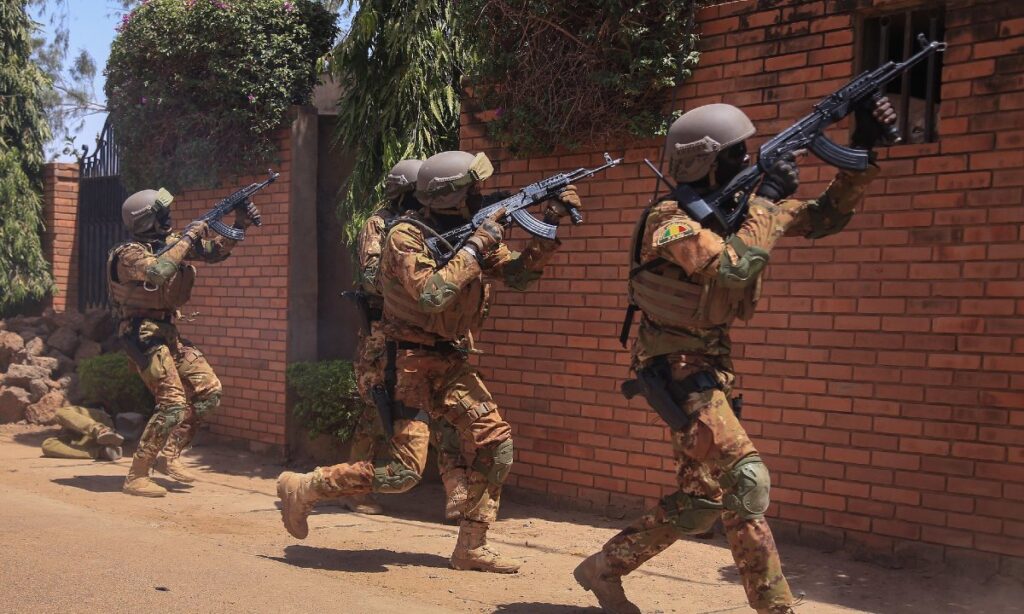
It is within this context that the failure of the Africa Corps must be understood. The problem is not simply tactical but structural. First, the Russian model relies heavily on kinetic operations and technical intelligence—airstrikes, drone surveillance, and targeted raids—without sufficient integration into local human intelligence networks. This has led to tactical successes without strategic control, allowing insurgents to disperse, regroup, and re-emerge in new areas.
Second, the Africa Corps inherited the limitations of Wagner while losing some of its operational flexibility. Wagner operated as a hybrid actor, combining brutality with localized negotiation and informal networks. The Africa Corps, by contrast, is more bureaucratized and tied to the Russian Ministry of Defence, which reduces adaptability in fluid insurgent environments.
Third, the Russian approach has alienated local populations. Reports of abuses—mass killings, forced disappearances, and sexual violence—have undermined any legitimacy the Malian government hoped to build through its alliance with Moscow. This has fueled recruitment for insurgent groups and deepened intercommunal tensions.
Fourth, insurgents have adapted faster than external forces. The recent cooperation between JNIM and Tuareg separatists represents a strategic shift: a convergence of jihadist and ethnonationalist agendas that complicates counterinsurgency efforts. By combining local legitimacy with transnational networks, these groups have effectively outmaneuvered both Malian forces and their Russian partners.
Finally, Russia itself faces constraints. Its engagement in Mali is shaped by broader geopolitical priorities, including the war in Ukraine. This limits the scale of resources it can deploy in the Sahel and reduces its ability to sustain prolonged counterinsurgency campaigns. The Africa Corps, numbering only in the low thousands across multiple African theaters, lacks the mass required to control territory in a country as vast and fragmented as Mali.
The consequences of this failure are already visible. Mali is entering a new phase of state fragility in which the government retains formal sovereignty but loses practical control over large مناطق of territory. Northern regions such as Kidal are slipping back into insurgent or separatist hands, while central Mali remains contested. The capital itself has become vulnerable, as demonstrated by attacks near Bamako.
Regionally, the crisis is spilling across borders. Mali is part of a broader Sahelian arc of instability that includes Burkina Faso and Niger—states that have followed similar political trajectories and security partnerships with Russia. The failure of the Africa Corps in Mali therefore raises questions about the sustainability of Russia’s entire Sahel strategy.
At the international level, the situation creates both risks and opportunities. Western actors, particularly the United States, are reassessing their disengagement from the region, while regional organizations struggle to respond effectively. The weakening of Mali’s junta could open space for political transition, but it could also lead to further fragmentation or even state collapse.
In strategic terms, Mali illustrates the limits of externalized counterinsurgency when it is divorced from governance, legitimacy, and local dynamics. The Africa Corps did not lose because of a single battlefield defeat; it is losing because it operates within a model that prioritizes regime security and resource extraction over sustainable state-building. In a conflict defined by hybrid insurgency, local grievances, and adaptive adversaries, such a model is inherently insufficient.
The trajectory suggests that unless there is a fundamental shift—either toward political reconciliation within Mali or a reconfiguration of international engagement—the country will remain trapped in a cycle of insurgency, external intervention, and state erosion, with consequences that will reverberate across West Africa for years to come.
The situation in Mali sends a stark and multilayered signal to both global security actors and the African continent: it exposes the limits of externalized security models, the resilience of hybrid insurgencies, and the accelerating fragmentation of state authority when legitimacy collapses.
At the global level, Mali demonstrates that replacing one external security provider with another does not resolve structural instability. The transition from French-led operations to Russian-backed forces, particularly the Africa Corps, has not improved security outcomes. Instead, it underscores a broader lesson: counterinsurgency cannot be outsourced in a purely transactional manner. External actors—whether Western or Russian—cannot compensate for weak governance, fractured social contracts, and unresolved ethnic and political tensions. This sends a warning to policymakers worldwide that geopolitical competition is increasingly being played out in fragile states, but without delivering sustainable stability.
The failure of the Russian model in Mali also signals the limits of Moscow’s expeditionary strategy in Africa. While the Wagner Group initially achieved tactical successes through brutality and flexibility, its successor lacks both the autonomy and local adaptability needed to manage complex insurgencies. For global security, this suggests that Russia’s growing footprint in Africa may be more fragile than it appears, constrained by limited resources, competing priorities such as the war in Ukraine, and an overreliance on coercion rather than legitimacy.
For the African continent, the signal is even more immediate and consequential. Mali illustrates the risks of military juntas positioning themselves as guarantors of sovereignty while dismantling democratic institutions. The narrative of “security first, politics later” has proven hollow. In reality, the erosion of political legitimacy has strengthened insurgent recruitment, deepened intercommunal violence, and weakened already fragile state structures. This pattern is now visible across the Sahel, particularly in Burkina Faso and Niger, suggesting a regional contagion effect.
Another key signal is the evolution of insurgent strategy. Groups such as Jama’at Nusrat al-Islam wal-Muslimin are no longer isolated jihadist actors; they are increasingly embedded in local conflicts and capable of forming tactical alliances with separatist movements. This hybridization makes them far more resilient and difficult to defeat. For African states, this means that traditional counterterrorism approaches—focused on military suppression—are insufficient without parallel political and socio-economic strategies.
Mali also signals a shift in how sovereignty is practiced on the continent. While governments emphasize independence from Western influence, their reliance on alternative external actors creates new forms of dependency. The resource-for-security model—trading mining concessions for military support—risks entrenching extractive governance structures that benefit elites and foreign partners while alienating local populations. This dynamic may replicate across other resource-rich but unstable states.
Finally, the situation sends a warning about urban vulnerability. The expansion of attacks toward major cities, including Bamako, indicates that no area is insulated from instability. This challenges a long-standing assumption in African security planning that insurgencies can be geographically contained. For international actors, it raises concerns about the protection of diplomatic missions, economic investments, and critical infrastructure.
In sum, Mali is not an isolated crisis but a strategic signal. It reveals that the future of security—both in Africa and globally—will be shaped less by conventional military superiority and more by the ability to integrate governance, legitimacy, and local dynamics. Where these elements are absent, even well-armed external interventions will fail, and instability will not remain confined within borders.
The trajectory observed in Mali points to a broader and increasingly consistent pattern across parts of Africa: where Russia intervenes to protect regimes that emerged from coups, the overall security environment tends to deteriorate rather than stabilize. This dynamic is not confined to Mali alone but can also be observed, with varying intensity, in cases such as Central African Republic and more recently in Burkina Faso.
The mechanism behind this pattern is structural. Russian support—whether through the Wagner Group or its successor, the Africa Corps—prioritizes regime survival over state stabilization. It reinforces ruling elites militarily and politically, but does not address the root causes of conflict: governance deficits, marginalization of local communities, corruption, and contested national identities. As a result, regimes become more insulated from internal pressure while societies become more vulnerable to insurgent mobilization.
Moreover, the reliance on coercive tactics and the frequent reports of abuses by Russian-linked forces deepen grievances among local populations. This accelerates recruitment into insurgent and militant networks, including groups such as Jama’at Nusrat al-Islam wal-Muslimin, which capitalize on state violence and absence of accountability. In this environment, counterinsurgency becomes self-defeating: each tactical gain is offset by a strategic loss in legitimacy.
Another critical consequence is the hollowing out of national armed forces. Governments increasingly depend on external actors for core security functions, weakening domestic military institutions and reducing long-term resilience. This creates a cycle of dependency in which regimes cannot survive without continued foreign backing, while security conditions continue to decline.
For the African continent, the implication is clear. The model of post-coup stabilization through Russian security partnerships does not produce durable order; it produces managed instability. It may temporarily shield ruling authorities from collapse, but it expands ungoverned spaces, intensifies insurgencies, and undermines prospects for political reconciliation.
For global security, this trend signals that geopolitical competition in fragile states—when divorced from institution-building and governance—risks amplifying instability rather than containing it. In this sense, Mali is not an exception but a warning: where external intervention is designed to protect regimes rather than rebuild states, insecurity is not reduced—it is reproduced and, over time, magnified.
Russia’s reliance on violence in counterinsurgency—both abroad and domestically, as in Chechnya—is not incidental. It reflects a consistent doctrine shaped by historical experience, institutional culture, and political priorities that favor coercion over legitimacy.
First, Russian counterinsurgency thinking is rooted in the Soviet and post-Soviet security tradition, where internal conflicts were treated as threats to state survival rather than political problems requiring negotiation. In Second Chechen War, the Kremlin adopted a model of overwhelming force, mass repression, and collective punishment. This approach did not aim to win “hearts and minds” but to break the insurgency’s capacity and will to resist. The eventual stabilization of Chechnya under Ramzan Kadyrov reinforced a belief within Russian security elites that brutality works—at least in the narrow sense of restoring control.
Second, Russian operations prioritize regime security over population-centric strategies. Whether in Chechnya or in African theaters such as Mali, the primary objective is not long-term stabilization but the immediate survival of allied authorities. Violence becomes a tool to rapidly suppress threats, deter opposition, and signal resolve. This aligns with the Kremlin’s broader governance model, where coercion is an accepted instrument of political management.
Third, Russian forces often lack the institutional capacity—and sometimes the incentive—for more nuanced counterinsurgency. Population-centric approaches require deep local knowledge, language skills, interagency coordination, and sustained economic investment. Russian deployments abroad, including those by the Wagner Group and later the Africa Corps, are relatively small, expeditionary, and resource-constrained. Violence offers a cheaper, faster, and more controllable method of influence than long-term state-building.
Fourth, brutality serves an economic function in overseas operations. In places like Mali or the Central African Republic, coercion is tied to the protection of extractive interests—mining sites, transport routes, and political elites who grant concessions. Violence is used not only against insurgents but also to secure economic zones and intimidate local populations, reinforcing a model of resource-backed security.
Fifth, there is a signaling dimension. Russia uses harsh counterinsurgency tactics to project an image of decisiveness and reliability to partner regimes. The message is clear: Moscow will not impose political conditions, human rights constraints, or democratic reforms. This distinguishes it from Western actors and makes it attractive to juntas or embattled leaders, even if the long-term consequences are destabilizing.
Finally, the Chechen precedent created a cognitive bias within Russian strategic thinking. The relative “success” in pacifying Chechnya—achieved through massive destruction, targeted assassinations, and the delegation of power to a loyal strongman—has been overgeneralized to very different environments. In reality, Chechnya’s outcome depended on specific local factors: a limited geographic area, heavy federal investment, and the co-optation of local elites. These conditions do not exist in vast, fragmented theaters like Mali, where insurgencies are transnational and socially embedded.In sum, Russia’s focus on violence in counterinsurgency stems from a doctrine that equates control with stability, a political system that prioritizes regime survival, and operational constraints that favor coercion over complexity. While this approach can deliver short-term tactical results, it tends to generate long-term instability by deepening grievances, strengthening insurgent narratives, and eroding the legitimacy of the state it seeks to defend.


More on this story: Mali After the Arrests: Scenarios for Power, Instability, and Foreign Influence”
More on this story: Malian authorities set a dangerous precedent of making terrorists legitimized
More on this story: he worsening insurgency and insecurity in Mali