
Recent reporting attributed to a European intelligence assessment points to a marked tightening of personal security around Vladimir Putin and rising friction among Russia’s (security services). Taken together, these signals suggest a regime that is not on the verge of collapse but is increasingly preoccupied with internal threats, adjusting its security posture accordingly. The pattern is consistent with a leadership moving from outward risk-taking to inward consolidation, where the primary concern is not external attack but elite defection, intra-service rivalry, and coup-proofing.
According to the reporting, the Federal Protective Service has substantially upgraded protective protocols since early 2026. The practical effect is a sharp reduction in presidential mobility and a shift toward controlled environments: A narrower set of locations deemed safe for presidential presence; Reduced use of traditional residences and increased reliance on secure facilities. Greater use of pre-recorded or tightly managed public appearances. This evolution is typical of late-stage personalist regimes under perceived internal threat. Limiting exposure reduces vulnerability not only to kinetic threats (including drones) but also to insider risks. The move toward bunkerized governance indicates that continuity of command is prioritized over political signaling and visibility.
The second layer of changes reflects deepening mistrust within the system: Multi-layer screening for all visitors; Restrictions on digital connectivity among staff; Expanded surveillance of personnel in close proximity to the president; Broadening of FSO authority across Moscow’s security environment These measures suggest that the Kremlin is shifting from standard protection to pervasive counterintelligence control, treating even routine interactions as potential vectors of compromise. The elevation of the FSO—traditionally a protective service—into a more intrusive security actor points to a redistribution of power inside the siloviki ecosystem.
A key finding attributed to the intelligence report is that Vladimir Putin is more concerned about an internal conspiracy than external attacks. While Ukraine’s demonstrated capacity for precision strikes in the Russian rear has altered the tactical environment, the strategic concern appears to be insider-enabled action.
This is consistent with three dynamics: Erosion of elite cohesion under prolonged war conditions. Rising costs and uncertainty affecting patronage networks, Precedents of successful targeting of senior officers, which can undermine confidence in internal security.
The mention of drone-enabled assassination scenarios is notable not for its novelty, but for its implication: external methods could be paired with internal facilitation.
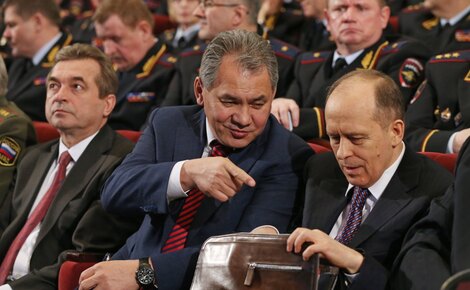
The reported confrontation involving Valery Gerasimov, Alexander Bortnikov, and Viktor Zolotov points to institutional rivalry reaching visible levels.
This is not unprecedented. Russian governance has long relied on overlapping mandates and competition amongsiloviki to prevent any single actor from becoming dominant. However, in wartime conditions, this system can shift from controlled competition to destabilizing conflict, especially when: Attribution of failures (e.g., security breaches, assassinations) becomes politicized; Resources are strained; Personal loyalties diverge
The reported decision to assign the FSO additional protective responsibilities over senior figures underscores the Kremlin’s concern about intra-elite threats and the need to re-balance trust across agencies.
The current signals align with several regime-risk scenarios previously outlined by the Robert Lansing Institute in its 2020–2023 assessments:
Scenario A: “Palace Coup / Elite Conspiracy”
- Triggered by sustained military or economic failure; Initiated by a coalition within the security elite; Characterized by rapid, opaque leadership change;
Relevance today:
Heightened counterintelligence measures and inter-agency conflict are consistent with coup-prevention behavior, even if no immediate plot is confirmed.
Scenario B: “Siloviki Fragmentation”
- Escalating rivalry between FSB, military, and National Guard
- Breakdown of coordination leading to security lapses
- Increased risk of localized or elite-targeted violence
Relevance today:
The reported dispute among senior security officials suggests early-stage fragmentation dynamics.
Scenario C: “Fortress Russia / Defensive Consolidation”
- Leadership retreats into highly secured environments
- Expansion of surveillance and internal repression
- Reduced public engagement and increased reliance on controlled messaging
Relevance today:
The shift toward bunkerized governance and information control matches this trajectory closely.
Scenario D: “Managed Succession Under Pressure”
- Elite consensus forms around a controlled transition; triggered by declining leadership capacity or rising risk; seeks to preserve regime continuity without systemic collapse.
Relevance today:
Not yet dominant, but increasing elite tension raises the probability of contingency planning.
For external actors, these developments suggest: Russia is becoming more inward-looking and security-obsessed, potentially reducing strategic flexibility. Decision-making may become less predictable, as it is increasingly shaped by internal fears. Escalatory behavior cannot be ruled out, as regimes under internal pressure may externalize risk
At the same time, the consolidation of personal security indicates that regime survival remains the overriding priority, limiting the likelihood of uncontrolled collapse in the near term.
The available reporting does not confirm an imminent coup, but it reveals a system under stress, where trust is narrowing, institutions are competing, and the leadership is prioritizing survival over openness.
The Kremlin is transitioning toward a “fortress governance model”, consistent with scenarios long anticipated by analytical frameworks: a regime that is stable on the surface, but increasingly brittle beneath it.
20–30% probability of a serious coup attempt or forced leadership-transition move within the next 12–18 months. A successful coup is lower: 10–15%. The higher-probability scenario is not tanks on Red Square, but an elite-managed removal, medical pretext, “security incident,” or forced delegation of power.
The main reason the risk is rising is that the Kremlin itself appears to be behaving as if it fears insider danger. Important Stories and OCCRP report that an EU intelligence assessment describes unprecedented FSO security tightening, reduced Putin travel, tougher screening around the presidency, and concern over a coup or drone-enabled assassination.
Most likely actors
The first circle to watch is the security bloc, especially the FSB, FSO, Rosgvardia, and parts of the military command. They have access, coercive capacity, and the ability to control communications, movement, and elite arrests. But they are also fragmented by design, which makes a coordinated coup difficult.
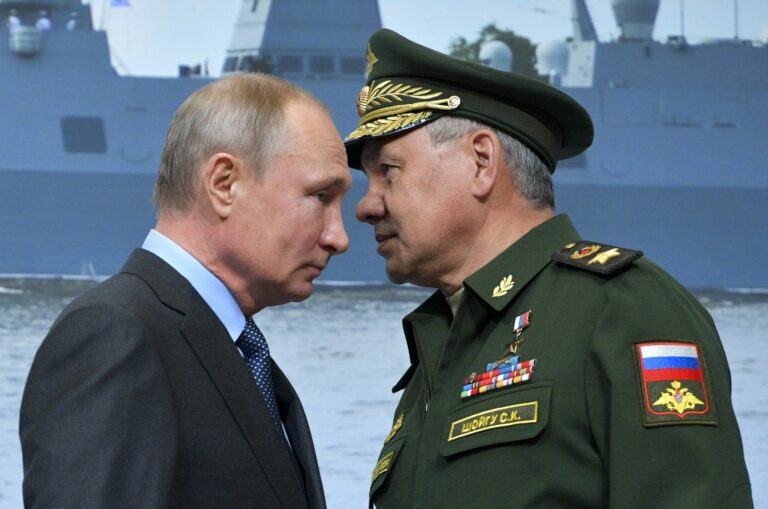
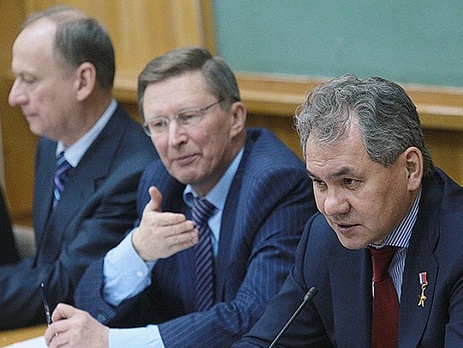
The second actor is Sergei Shoigu’s network. Recent reporting says the Kremlin sees Shoigu as a possible coup risk because of his residual influence in military circles after the arrest of former deputy Ruslan Tsalikov. That does not mean Shoigu is planning a coup, but it suggests the Kremlin views his network as politically dangerous.
The third actor is the Gerasimov–General Staff / military command layer. Their motive would come from blame for battlefield failures, fear of purges, and frustration with political micromanagement. Their weakness is that the army is watched by the FSB and balanced by Rosgvardia.
The fourth actor is Rosgvardia under Viktor Zolotov. Rosgvardia is designed as a regime-protection force, and it functions as a kind of presidential guard with heavy coercive capacity. Its role in a crisis would likely be kingmaker or coup-blocker rather than initiator.
The fifth actor is the technocratic-economic elite, including figures around the government and major state companies. Their motive is economic survival: sanctions, war costs, asset loss, and fear that Putin’s war has become a liability. But they lack armed power, so they would need protection from siloviki.
Putin has deliberately fragmented the elite, raised the cost of dissent, and built overlapping coercive institutions to prevent any single faction from dominating. Russia Matters notes that this system closes coup pathways through elite fragmentation and punishment of disloyalty. The failed Wagner mutiny in 2023 showed cracks in elite unity, but also showed that open rebellion is extremely risky.
Most plausible coup scenario
The most realistic scenario is a palace transition, not a revolutionary coup. A coalition of security and technocratic elites could move if they conclude Putin has become the main obstacle to regime survival. The public version might be illness, temporary incapacity, emergency delegation, or a Security Council decision. The real mechanism would be control over Putin’s access, communications, and public appearances.
A major Russian military defeat, a wave of successful Ukrainian strikes on senior officers, visible arrests inside Shoigu/FSB/General Staff networks, a severe budget shock, mass unrest in regions, or unexplained disappearance of Putin from live public events would push the risk above 35–40%.
Russia is not yet in a pre-coup situation, but it is entering a coup-anxiety phase. The regime remains strong institutionally, but trust inside the elite is narrowing. That makes a sudden, opaque elite move more plausible than a popular uprising.
Russia is not in an imminent coup phase, but it has entered a “coup anxiety” stage characterized by elite distrust and defensive consolidation.
However, there are important nuances in how each framework evaluates probability, actors, and trajectory.
What we’re seeing is a degradation of the managed-succession model into a riskier, more personalized system under wartime pressure. The same mechanisms that once ensured stability are now raising the probability of elite rupture.
In the 2000s, power transfer in Russia followed a controlled rotation logic (e.g., Medvedev–Putin). The system relied on elite bargains, predictable rules, partial institutional mediation.
That equilibrium broke down after 2012 and was decisively replaced by constitutional personalization with the 2020 Russian constitutional amendments. The amendments removed clear term limits and eliminated a credible timeline for transition.
Thus succession became uncertain, and uncertainty is the primary driver of coup risk.
The full-scale war against Ukraine transformed elite incentives:
- Higher stakes: outcomes now affect regime survival and personal liability; rising costs: sanctions, fiscal pressure, and battlefield losses; attribution battles: who is responsible for failures. War shifts the system from elite coordination → elite competition.
In such conditions, a planned transition is harder to negotiate, while preemptive moves become more attractive for threatened actors.
The Kremlin long relied on competitive overlap among thesiloviki :
- FSB, Rosgvardia, Federal Protective Service, military command structures.
This “divide-and-balance” model prevents any single faction from dominating.
But under stress, it produces:, mistrust, blame shifting, coordination breakdown
The system that prevented coups begins to generate coup conditions.
In stable authoritarian systems, elites tolerate a strong leader because they expect: predictable exit, protection of assets and status.
In Russia today: no clear successor, no guaranteed post-Putin settlement, rising fear of purges or asset loss.
This creates a “now-or-never” logic among elites.
The leadership response—tightened security, expanded powers of the Federal Protective Service, reduced mobility—signals: declining trust in inner circles; prioritization of physical survival over political flexibility; increasing reliance on surveillance and control; Coup-proofing is paradoxical. It reduces short-term risk, but increases long-term instability by alienating elites.
Sanctions, isolation, and battlefield dynamics weaken economic foundations; strain patronage networks; increase dependence on a shrinking resource base.
As resources shrink, elite competition intensifies.
Russia is moving along a typical trajectory of personalist regimes:
Consolidation → strong centralized control. Over-centralization → dependency on one leader. Stress (war, sanctions) → elite tension. Brittleness → rising coup risk.
The system becomes stable on the surface; fragile underneath
Russia did not intentionally choose coup risk. It emerged because:
- succession rules were removedm war increased stakes and stress, elite management mechanisms began to fail, trust within the system eroded.
The result is a shift from:
“managed transition system” → “personalist regime with latent coup risk”
Thus, Coup risk in Russia is not an anomaly—it is the logical outcome of over-personalization combined with wartime pressure.
The more the system tries to preserve stability through control, the more it undermines the very mechanisms that made stable transitions possible.
More on this story: Domestic political confrontation in Russia threatens Putin’s regime
More on this story: The Kremlin power reshuffle amid the war in Ukraine and Putin’s disease
More on this story: Latent split in Russian military and political leadership