
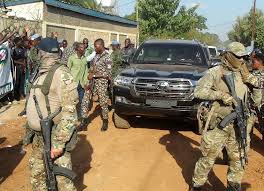
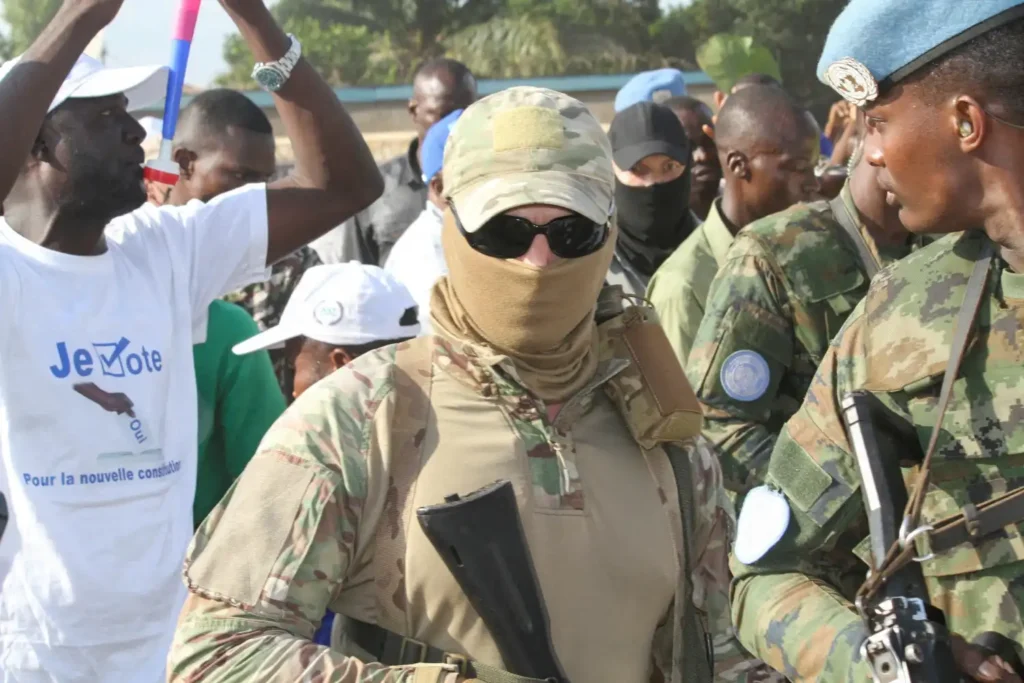
Russia’s recent military and political setbacks in Mali represent more than a tactical defeat in the Sahel. The withdrawal of the Russian-controlled Africa Corps from key northern positions such as Kidal exposed deep structural weaknesses in Moscow’s African strategy and raised critical intelligence questions regarding the sustainability of Russian influence operations across the continent.
The events in Mali demonstrate that Russia’s model of influence in Africa—built around military juntas, mercenary structures, coercion, disinformation, and resource extraction—may be reaching operational limits. The defeat also exposed vulnerabilities inside Russia’s intelligence architecture, including failures in local penetration, force protection, threat forecasting, and strategic assessment.
Is Russia is losing the ability to act as Africa’s primary external security patron because its intelligence, military, and hybrid influence model is structurally incapable of stabilizing allied regimes.
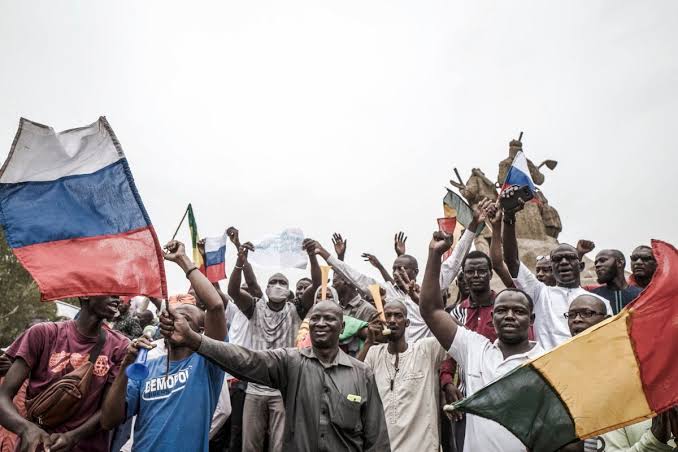
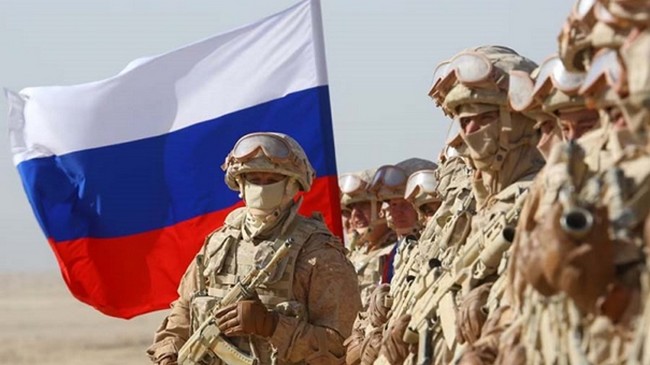
Russia successfully positioned itself after 2021 as an alternative to Western and French influence in the Sahel by presenting Wagner Group, and later the Africa Corps as decisive anti-jihadist security providers willing to fight without Western political conditions.
However, the coordinated offensives by Tuareg separatists, Jama’at Nusrat al-Islam wal-Muslimin (JNIM), and other insurgent actor revealed that Russian-backed structures could not secure strategic areas despite years of military presence.
The Strategic Importance of Kidal
Kidal was symbolically and strategically critical for Moscow.
Its capture in 2023 had been presented as proof of Russian military effectiveness; evidence that Wagner/Africa Corps succeeded where France failed; and a demonstration of Moscow’s rise as a dominant African security actor. The humiliating retreat from Kidal in 2026 therefore caused damage far beyond Mali itself.
The withdrawal undermined Russia’s image of inevitability; exposed operational fragility; and weakened the mythology of Russian expeditionary effectiveness.
For many African regimes, Russia’s attractiveness depended less on ideology than on perceived effectiveness and regime survival guarantees.
That perception has now been damaged.
The events in Mali suggest multiple intelligence failures.
Failure to Assess Insurgent Coordination. Russian and Malian structures appear to have underestimated the ability of Tuareg separatists, jihadist factions, and local anti-junta forces to coordinate operations simultaneously across multiple regions.
The offensive demonstrated unusually high operational synchronization, local intelligence penetration, and mobility superiority over Russian-backed forces. This indicates that Russian intelligence either failed to detect preparations, underestimated insurgent capabilities, or could not effectively infiltrate hostile networks.
Russia repeated a classic Soviet and later Wagner mistake: overreliance on coercion without sufficient understanding of local ethnic, tribal, and political realities.
The Kremlin attempted to treat Mali primarily as a military problem, rather than a deeply fragmented political ecosystem.
This produced several strategic weaknesses: alienation of local populations; dependence on juntas rather than institutions; excessive use of violence; and limited intelligence penetration outside regime-controlled zones.
Following the Wagner expansion in: the Central African Republic, Libya, Sudan, and Mali,Moscow appeared to assume that the same coercive model could be scaled indefinitely.
But Mali demonstrated the limits of mercenary-centered governance, extractive security partnerships, and brutality-based counterinsurgency.
The Africa Corps inherited Wagner’s methods but lacked Wagner’s operational flexibility, personal networks, and informal adaptability.
Wagner system functioned partly outside formal Russian bureaucracy.
Africa Corps, however, became directly subordinated to the Russian Ministry of Defense.
This created several problems slower decision-making; reduced operational flexibility; bureaucratization; and lower local adaptability.
The Mali setbacks suggest that Russia may struggle to replace Wagner’s informal expeditionary model with a centralized state-controlled system.
The Mali case reinforces a broader pattern visible across Africa wherever Russia supports coup regimes or military juntas, long-term instability tends to worsen.
Russian strategy often focuses on regime survival, elite protection, and resource access,
rather than: governance, institution-building, or economic stabilization.
This creates a structural contradiction: Russia promises security but its model frequently deepens: insurgency, state fragmentation, and anti-government violence.
Can Russia sustain long-term military influence in Africa without achieving real territorial stabilization?
The answer increasingly appears uncertain.
Moscow can still: eploy force, protect capitals, and secure elites.
But Mali demonstrates it may struggle to control large territories, defeat insurgencies, or maintain durable legitimacy.
Russian structures in Mali increasingly relied on: scorched-earth tactics, intimidation, and collective punishment.
This resembles earlier Russian methods in Chechnya, Syria, and parts of Ukraine.
The assumption behind such doctrine is: fear can substitute for legitimacy.
But in Mali, heavy-handed tactics appear to have fueled insurgent recruitment; alienated communities; and strengthened anti-Russian resistance.
The Mali defeat may have broader effects across Africa.
Damage to Russia’s Security Reputation
African governments increasingly evaluate external powers pragmatically.
Russia’s appeal depended heavily on the perception that it was ruthless, effective, and politically reliable.
Mali damaged that image.
The setbacks create opportunities for: the United States, France, Turkey, Gulf states, and regional African actor to challenge Russian influence.
As military effectiveness weakens, Russia may increasingly rely on propaganda, political manipulation, and elite corruptio to maintain influence.
The main strategic danger for Moscow is reputational.
Russia’s African influence model depends heavily on the image of strength, inevitability, and military competence.
A visible retreat damages: deterrence, recruitment, and bargaining power.
If African elites conclude that Russia cannot guarantee survival, or cannot defeat insurgencies. Moscow’s influence architecture could weaken rapidly.
The events in Mali suggest Russia is entering a new phase in Africa:
from rapid expansion → toward overstretch and attrition.
The Kremlin still retains: military presence, propaganda networks, and influence assets.
But Mali exposed the limits of Russia’s expeditionary warfare model and raised serious questions about the long-term viability of Moscow’s Africa strategy.The defeat of Russia’s Africa Corps in Mali exposed fundamental weaknesses in Moscow’s African strategy, revealing that Russia’s model of regime protection through coercion, mercenary structures, and hybrid influence is increasingly unable to deliver lasting territorial control, political stabilization, or strategic credibility across the continent.
More on this story: Russia’s Influence Operations in Mali: Strategic Assessment

More on this story: Russia’s Africa Corps: Wagner’s Successor in Africa (2022–2025)