
In Rome, former Italian Ambassador to Uzbekistan Piergabrielle Papadia was arrested on charges of organizing a corruption scheme for issuing long-term Schengen visas to Russian citizens. According to investigators, the diplomat, acting in cooperation with three Moscow-based travel agencies, helped Russians obtain visas valid for up to three years by circumventing official procedures.
The cost of the “service” reportedly ranged from €4,000 to €16,000. Authorities have currently confirmed 95 cases of illegally issued visas, while most recipients allegedly never even visited the Italian consulate in Tashkent in person. Applications were reportedly approved through the messaging platform Telegram.
Italian prosecutors are now continuing their investigation into approximately 400 additional suspicious visa cases linked to former ambassador Papadia.
The scandal involving the illegal issuance of Schengen visas by the Italian consulate in Uzbekistan demonstrates that corruption schemes remain one of the key instruments used by Russia to circumvent European restrictions. The alleged involvement of an Italian ambassador in such operations undermines trust not only in a single diplomatic mission, but also in the credibility of Italy’s broader diplomatic and consular system.
The use of travel agencies and Telegram channels to coordinate Schengen visas outside official procedures highlights the scale, adaptability, and sophistication of shadow networks servicing Russian citizens. Against the backdrop of Russia’s war against Ukraine, such cases demonstrate the urgent need for: stricter control over Schengen visa issuance; enhanced vetting mechanisms; and deeper investigations into potential corruption links inside EU institutions.
The case also illustrates how Russia increasingly relies not only on formal diplomatic channels, but on:
- corruption,I ntermediary networks, commercial facilitators,
- and informal digital communication platforms.
to preserve access to Europe despite sanctions and political restrictions.
From a broader security perspective, the scandal raises concerns about possible intelligence exploitation of visa channels; penetration of EU administrative systems; and the use of corruption as a hybrid instrument of influence and sanctions evasion.
The arrest in Rome of former Italian ambassador to Uzbekistan Piergabrielle Papadia over allegations of organizing corrupt long-term Schengen visa schemes for Russian citizens represents more than an isolated diplomatic scandal. The case exposes broader structural vulnerabilities within the European visa system and demonstrates how Russian-linked networks continue to exploit corruption, intermediaries, and weak institutional oversight to circumvent post-2022 European restrictions.
The alleged use of Moscow-based travel agencies, encrypted messaging platforms such as Telegram, and informal approval mechanisms.
illustrates the evolution of shadow facilitation networks that increasingly operate parallel to official EU migration and sanctions-control systems. The scandal also highlights a growing strategic challenge for Europe: the intersection of corruption, sanctions evasion, migration channels, and potential intelligence risks. According to Italian investigators, Papadia allegedly collaborated with multiple Russian travel agencies to provide Russian citizens with long-term Schengen visas—some reportedly valid for up to three years—outside normal consular procedures.
Key elements of the scheme reportedly included visa processing without personal appearance at the consulate; use of Telegram for informal approvals; manipulation or bypassing of standard vetting procedures; payments ranging from €4,000 to €16,000 per visa.
Authorities have confirmed at least: 95 illegal visa cases, while approximately 400 additional suspicious applications remain under investigation. The operational sophistication of the scheme suggests: organized coordination, repeated procedural manipulation, and exploitation of diplomatic authority for commercial or potentially broader strategic purposes.
Since the start of Russia’s full-scale invasion of Ukraine, Central Asian states—especially Uzbekistan, Kazakhstan, and Kyrgyzstan—have become critical transit and sanctions-evasion hubs for Russian citizens and businesses.
These countries gained importance because they retained visa-free or simplified access for Russians; became relocation centers for Russian elites and IT specialists; and developed into intermediary zones for financial and logistical operations.
Tashkent in particular emerged as a diplomatic gray zone, where Russian citizens could seek access to European services with less scrutiny than inside Russia itself.
This created fertile conditions for: corrupt facilitation networks, commercial intermediaries, and influence operations targeting EU consular systems.
The scandal demonstrates a recurring pattern in Russian external operations: the systematic use of corruption to bypass restrictions and penetrate institutions.
Historically, Russia and previously the Soviet Union often relied on corrupt intermediaries, commercial facilitators, compromised officials, and informal patronage networks to achieve strategic objectives abroad.
In the post-2022 environment, corruption increasingly functions as a hybrid instrument, enabling sanctions circumvention, mobility preservation, and access to Western systems.
This approach is especially effective because: corruption is cheaper than formal influence; harder to attribute directly to the state; and exploits existing institutional weaknesses.
The Papadia case fits into a broader history of visa and consular corruption linked to Russian networks.
Before and after 2022, Russian oligarchs and politically connected figures extensively used: Malta, Cyprus, Portugal, and other EU residency program to obtain residence permits, citizenship, banking access, and mobility rights.
These systems became major channels for sanctions avoidance, capital movement, and political influence.
The EU later began tightening oversight due to security concerns.
Several Eastern European states previously uncovered: corrupt visa facilitators, fake employment invitations, and intermediary agencies.
helping Russian and post-Soviet citizens obtain EU access.
These networks often involved: local businessmen, consular staff, and criminal intermediaries.
Historically, Soviet intelligence actively exploited diplomatic missions, visa systems, and cultural exchang for intelligence penetration, agent movement, and operational logistics.
Modern Russia continues using diplomatic and quasi-commercial infrastructure as: cover mechanisms, access channels, and influence tools.
While there is currently no public evidence linking the Papadia case directly to Russian intelligence services, the operational model mirrors methods historically associated with Russian covert networks.
The use of Telegram is strategically significant.
Telegram has increasingly become a logistical platform, an informal coordination tool, and a gray-zone communication infrastructure for sanctions evasion, migration facilitation, and covert intermediary operations.
Encrypted and semi-anonymous communication platforms dramatically increase operational flexibility, deniability, and scalability of illicit networks.
This increases a highly adaptive hybrid ecosystem difficult for traditional bureaucratic oversight to monitor.
\
The strategic risk extends far beyond illegal visa issuance itself.
Potential dangers include: A. Intelligence Penetration. Long-term Schengen visas potentially allow: freer movement across Europe, establishment of operational networks, and access to sensitive sectors.
B. Sanctions Evasion. Visa access facilitates: financial activity, shell-company operations, intermediary trade schemes.
C. Organized Crime Overlap. Russian shadow networks increasingly overlap with: money laundering, organized crime, and informal financial systems.
D. Institutional Erosion. Repeated corruption scandals weaken: trust in EU institutions, Schengen integrity, and diplomatic credibility.
The involvement of a former ambassador makes the scandal particularly damaging because it: undermines the credibility of European diplomatic institutions; strengthens narratives about institutional vulnerability and demonstrates that Russian-linked corruption networks can penetrate even senior levels of the diplomatic apparatus.
For Moscow, such systems are strategically valuable because they: preserve channels of access despite sanctions and political isolation.
The scandal may accelerate tighter Schengen controls; expanded anti-corruption investigations; greater scrutiny of consular procedures in third countries; intelligence vetting inside diplomatic systems.
It also reinforces broader European concerns that hybrid threats increasingly exploit administrative weaknesses rather than purely military means.
The Italian visa scandal illustrates how corruption, shadow intermediaries, and digital communication platforms are becoming central tools in Russia’s broader strategy of adapting to European restrictions.
Rather than confronting sanctions directly, Russian-linked networks increasingly: bypass them, fragment enforcement, and exploit weak institutional points inside Europe itself.
The case demonstrates that the struggle between Europe and Russia is no longer confined to: military confrontation, or traditional espionage, but increasingly involves: administrative systems, migration channels, corruption ecosystems, and digital gray-zone operations.
The Papadia visa scandal reveals how Russian-linked shadow networks exploit corruption, intermediary business structures, and weak oversight within European consular systems to preserve strategic mobility, circumvent restrictions, and potentially create broader intelligence and sanctions-evasion vulnerabilities across the EU.
France, Italy, and Spain have become the primary gateways through which Russian citizens gain access to the Schengen Area, accounting for nearly three-quarters of the total visa flow. Source: Euractiv.
According to confidential data from national governments cited by the publication, the number of visas issued to Russian citizens in 2025 increased by 10.2%, reaching approximately 477,000 tourist visas alone. France emerged as the leading issuer, increasing the volume of visa approvals by more than 23% over the course of the year.
In total, Russian citizens submitted more than 670,000 visa applications during the reporting period, an 8% increase compared to 2024. The overwhelming majority of applications — approximately 77% — were related to tourism, followed by family visits and business travel.
This noticeable increase has reportedly triggered serious debates and tensions during closed-door meetings among European diplomats discussing visa policy toward Russia.
At the same time, experts from the Association of Tour Operators of Russia argue that the statistics should not necessarily be interpreted as evidence of a dramatic surge in Russian travelers. According to their assessment, the increase is largely the result of stricter European Commission restrictions on issuing multiple-entry visas.
Because Russian citizens are now rarely granted long-term visas, they are increasingly forced to repeatedly submit new applications for short-term travel permits.
Schengen countries are facing not only illegal border crossings, but also provocations ranging from acts of arson to propaganda activities. In his opinion, refusing tourist visas to Russian citizens is a moral obligation of the European Union.
Increased Schengen visa issuance to Russian citizens creates moderate to high counterintelligence vulnerability, not because most applicants are dangerous, but because higher volumes widen the space for hostile actors, corrupt facilitators, and sanctions-evasion networks to hide inside legitimate travel flows.
The risk is especially acute because EU policy is uneven. In 2025, Russian citizens submitted more than 670,000 Schengen applications, and EU states issued over 620,000 visas, up 10.2% from 2024; France, Italy, and Spain accounted for almost three-quarters of the flow.
The European Commission itself has recognized the security problem. In November 2025, it tightened visa rules for Russian nationals, citing risks from Russia’s war against Ukraine, including weaponized migration, sabotage, espionage, and potential misuse of visas for propaganda or subversive activities. Russians generally lost access to multiple-entry visas and must apply more frequently, theoretically allowing closer scrutiny.
The core vulnerability is not tourism itself, but screening overload and policy fragmentation. If some states issue large numbers of visas while frontline states restrict Russian tourist access, Moscow can exploit the weakest consular gateways. Once a Russian citizen legally enters the Schengen Area, movement across much of Europe becomes easier, which complicates monitoring and creates opportunities for intelligence collection, influence activity, or logistics support.
A second vulnerability is corruption inside consular systems. The arrest of former Italian ambassador to Uzbekistan Piergabrielle Papadia over an alleged illegal Schengen visa scheme for Russian citizens shows how visa channels can be monetized and manipulated; investigators are reportedly reviewing around 400 suspicious files. Such cases demonstrate that Russia-linked mobility networks do not need to defeat Schengen security centrally; they can exploit weak nodes in third-country consulates.
A third vulnerability is the current Russian shift toward sabotage and proxy operations inside Europe. Poland’s ABW has warned that Russia is moving from low-cost online recruits toward more professional sabotage cells involving people with military, law-enforcement, criminal, or Wagner-linked backgrounds; Poland opened 69 counterintelligence investigations in 2024–2025, equal to the previous three decades combined. In that environment, legal mobility becomes more sensitive because even small numbers of trained or tasked individuals can use ordinary travel channels for reconnaissance, meetings, financing, or logistics.
The risk is therefore selective, not mass-based. Most Russian visa holders are likely ordinary travelers, family visitors, or businesspeople. But from a counterintelligence perspective, the problem is that hostile services need only a small number of individuals embedded in a large legal flow. The larger the flow, the harder it becomes to separate normal mobility from operational mobility.
Assessment: increased visa issuance creates a real vulnerability at three levels: operational access for Russian intelligence and proxies, institutional corruption risks inside consular systems, and political fragmentation inside the EU over how to treat Russian mobility. The risk is manageable only if Schengen states harmonize vetting, share applicant data more aggressively, audit high-volume consulates, and treat visa facilitation networks as a counterintelligence issue rather than a purely administrative one.
Russia could use large-scale legal mobility access as part of future hybrid escalation, but most likely selectively, not by moving masses of operatives. The danger is that a large legitimate travel flow gives Russian intelligence and proxy networks cover, logistics, and ambiguity.
Russia could exploit mobility access in five main ways.
First, it can use tourist or business travel as cover for reconnaissance of ports, rail hubs, energy infrastructure, defense industries, Ukrainian logistics routes, and diaspora communities. This matters because European services are already warning that Russia is shifting toward more professional sabotage networks in Europe. Poland’s ABW says Russia is moving from disposable online recruits toward organized cells with military, law-enforcement, criminal, or Wagner-linked backgrounds.
Second, mobility access helps build logistical infrastructure: safe apartments, rental vehicles, bank accounts, prepaid SIM cards, courier routes, and face-to-face meetings with recruited locals. These are not dramatic actions individually, but together they create the support base for sabotage, influence, or intelligence activity.
Third, Russia can use legal entry to support diaspora and propaganda operations: May 9 events, anti-Ukraine demonstrations, intimidation of Russian opposition figures, and staged “Russophobia” incidents. The European Commission has explicitly cited potential misuse of visas for propaganda and subversive activities as one reason for tightening rules on Russian applicants.
Fourth, visa access can support sanctions evasion and elite mobility. Businesspeople, intermediaries, and family members can use Schengen access to manage assets, meet lawyers or bankers, coordinate shell-company activity, and reconnect commercial channels disrupted after 2022.
Fifth, mobility access creates a screening-overload effect. In 2025, Russian visa numbers rose again despite restrictions, and EU countries remain divided over policy; France, Italy, and Spain are key gateways. If some Schengen states remain permissive while frontline states restrict access, Moscow can exploit the weakest entry points.
The most plausible escalation scenario would be hybrid preparation under civilian cover: higher Russian travel through southern or western Schengen states, parallel growth in suspicious visa facilitators, more visits near transport and military-logistics nodes, increased pro-Russian diaspora mobilization, and then isolated sabotage or arson incidents executed by recruited locals or small professional teams.
The EU already recognizes this risk. In November 2025, it ended routine multiple-entry visas for Russian nationals, requiring new applications for each trip to allow more frequent scrutiny. The Commission cited Russia’s war, weaponized migration, sabotage, espionage, and visa misuse risks.
Assessment: probability that Russia will use legal mobility channels as one layer of hybrid escalation is high, around 65–75%. Probability of mass infiltration through tourist flows is much lower, around 15–25%. The real threat is not mass movement, but a small number of operational actors hidden inside large legal mobility flows.
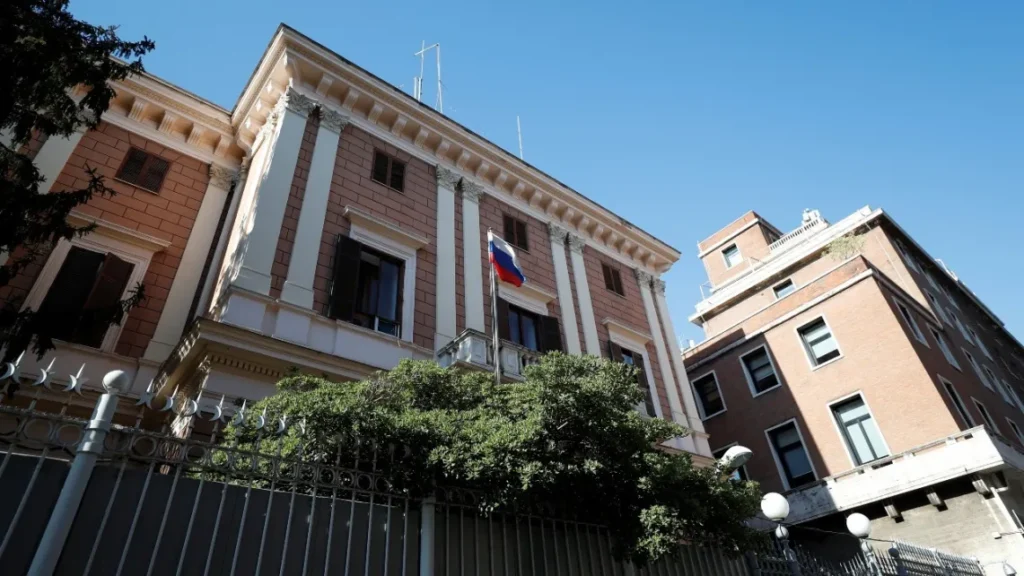
More on this story: Easy Capital, Hidden Agents: The Security Fallout of Europe’s Visa Programs”
More on this story: Budapest Establishes Infiltration Channel for Russian Intelligence
More on this story: The Iron Curtain reborn as the only way to stop expanding Russian aggression