
Algeria will hold parliamentary elections on 2 July 2026, marking the first legislative contest since President Abdelmadjid Tebboune consolidated his authority following his re-election and a series of constitutional and electoral reforms. More than 10,000 candidates representing dozens of political parties and independent lists have entered the race, making it one of the largest electoral exercises in recent Algerian history.
Despite the appearance of political pluralism, the election is unlikely to produce major changes in Algeria’s power structure. The military-security establishment remains the ultimate arbiter of political life, while the ruling alliance centered around the National Liberation Front (FLN), the National Democratic Rally (RND), and pro-government independents is expected to retain control of parliament.
The principal significance of the election lies not in determining who governs Algeria, but in measuring: Public support for Tebboune’s post-Hirak political model. The strength of Islamist and secular opposition forces. The regime’s ability to maintain legitimacy amid economic and social pressures. The influence of foreign powers competing for influence in North Africa.
Political Situation Before the Vote
A Controlled Political Environment
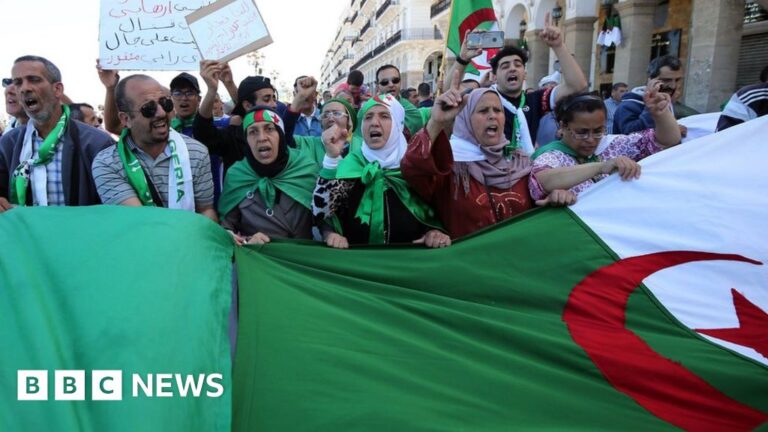
Seven years after the 2019 Hirak protest movement overthrew the political order associated with former President Abdelaziz Bouteflika, the Algerian leadership has largely re-established centralized control.
Recent constitutional and electoral reforms have strengthened presidential authority while limiting the ability of opposition forces to challenge the system. Critics argue that the reforms have weakened electoral oversight and increased executive influence over political institutions.
International democracy watchdogs continue to characterize Algeria as a system dominated by a political-military elite where elections occur but meaningful political competition remains constrained.
The election takes place amid several structural problems: Economic Pressure; Youth unemployment remains high; Heavy dependence on hydrocarbons persists. Diversification efforts have produced limited results. Inflation continues to affect purchasing power.
Many Hirak activists remain marginalized. Public trust in political institutions remains weak. Voter turnout is expected to remain relatively low.
Security Concerns: Instability in the Sahel. Terrorist activity along southern borders. Migration pressures Tensions with Morocco over Western Sahara.
These issues dominate voter concerns more than ideological debates.
Main Political Actors and Their Electoral Base
National Liberation Front.
Electoral Base: State bureaucracy. Older voters. Rural communities. Veterans of the independence struggle. Public-sector employees.
The FLN remains Algeria’s symbolic ruling party despite declining popularity. It continues to benefit from extensive organizational networks and institutional support.
Expected Result: Largest single party. Estimated: 100–130 seats
National Democratic Rally(RND).
Electoral Base: Business elites. Technocrats. Urban middle classes. State-connected economic actors. Traditionally allied with the FLN, the RND represents continuity and stability rather than ideological politics.
Expected Result: Second-largest pro-government party. Estimated: 60–90 seats
Movement of Society for Peace
Electoral Base: Conservative urban voters. Religious middle classes. Educated youth. Some regions in eastern Algeria.The MSP remains the country’s strongest organized opposition force and largest Islamist party. It advocates gradual reform rather than revolutionary change.
Expected Result: Largest opposition bloc. Estimated: 50–80 seats
Front of Socialist Forces
Electoral Base: Kabylie region. Berber communities. Secular intellectuals.Historically Algeria’s oldest opposition movement, though weaker than during previous decades.
Expected Result: 15–30 seats
Rally for Culture and Democracy
Electoral Base: Urban secular voters. Berber communities. Educated professionals.
Expected Result: 10–20 seats.
Independent candidates have become increasingly important under Algeria’s electoral reforms.
Electoral Base: Young voters. Local notables. Former Hirak sympathizers. Non-partisan protest voters.
There are more than 130 independent lists participating.
Expected Result: 70–110 seats
Forecasted Election Outcome
Because reliable polling is limited in Algeria, forecasts rely on historical trends, organizational strength, and candidate registration data.
Projected Distribution
| Bloc | Estimated Seats |
| FLN | 100–130 |
| RND | 60–90 |
| MSP | 50–80 |
| Independents | 70–110 |
| FFS | 15–30 |
| RCD | 10–20 |
| Others | 40–60 |
Probability Assessment
| Scenario | Probability |
| Pro-government majority | 75% |
| Fragmented parliament requiring broader coalition | 20% |
| Significant opposition breakthrough | 5% |
Foreign Actors and Their Influence
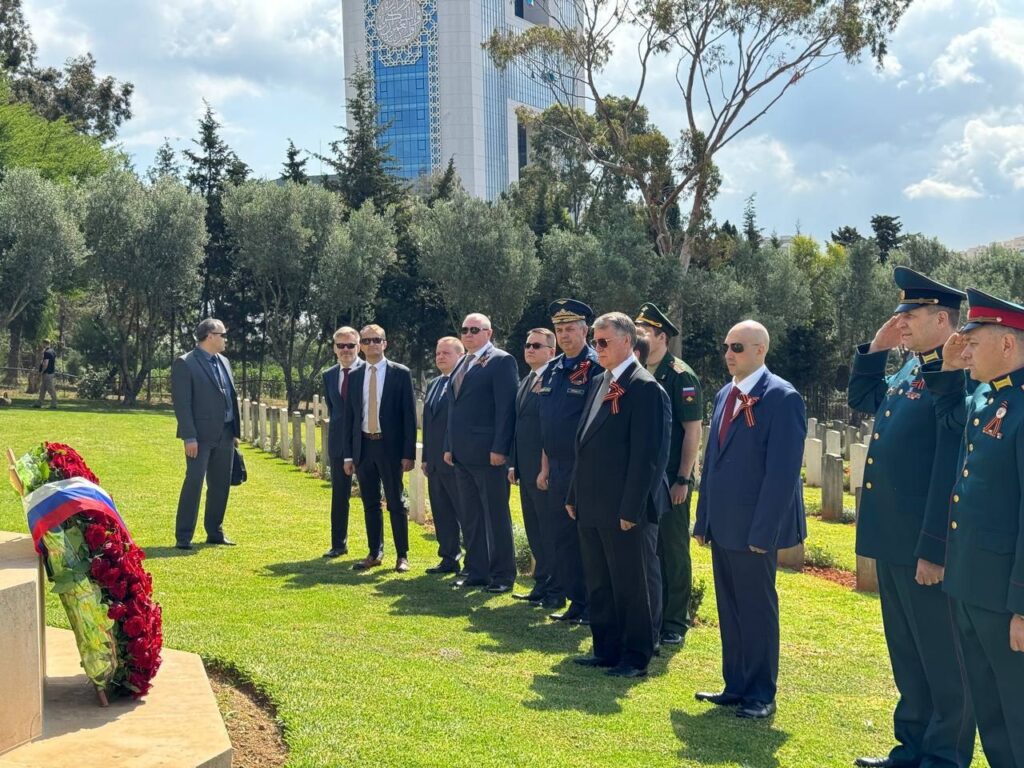
Russia remains Algeria’s most important defense partner.
Russian Interests: Arms exports. Military cooperation. Energy coordination. Diplomatic support against Western pressure.
Moscow prefers political continuity and strongly favors the survival of the current establishment.
China
China has become Algeria’s largest economic partner in several infrastructure sectors.
Chinese Interests: Belt and Road projects. Construction. Telecommunications. Energy investments.
Influence Level: Very High
France remains economically influential but politically weakened by historical disputes and anti-colonial sentiment.
French Interests: Energy cooperation. Migration management. Counterterrorism.
Influence Level: Moderate
United States seeks: Counterterrorism cooperation. Stability in the Sahel. Reduced Russian influence. Energy security.
Influence Level: Moderate
Gulf States compete for investment opportunities and political influence.
Influence Level: Growing
Consequences of the Election
Most Likely
The election will reinforce Tebboune’s political model and provide a renewed parliamentary mandate for economic reforms and state-led modernization.
Risks include: Low turnout may undermine legitimacy. Economic grievances could trigger localized protests.Opposition parties may challenge electoral transparency. Social frustration among youth may continue growing.
Regional Consequences
A stable Algerian government will continue: Counterterrorism cooperation. Border security operations. Mediation efforts in regional crises.
No major improvement is expected in relations with Morocco. The Western Sahara dispute will remain the principal obstacle.
Implications for Great-Power Competition
The election is likely to confirm Algeria’s strategy of multi-vector balancing: Military cooperation with Russia. Economic engagement with China. Energy cooperation with Europe. Security dialogue with the United States.
Algiers will continue avoiding formal alignment with any single geopolitical bloc.
The 2026 parliamentary election is primarily a test of regime legitimacy rather than a contest for power.
The FLN-RND establishment is highly likely to retain parliamentary dominance.
The MSP will remain the strongest opposition force but is unlikely to threaten the ruling bloc.
Independent candidates may emerge as the biggest surprise of the election.
Russia and China benefit most from political continuity.
The greatest threat to long-term stability remains economic stagnation and youth dissatisfaction rather than opposition parties.The election is likely to strengthen, not weaken, President Tebboune’s position and further consolidate the post-Hirak political order.
More on this story: The Foreign Policy of Abdelmadjid Tebboune: Analyzing the