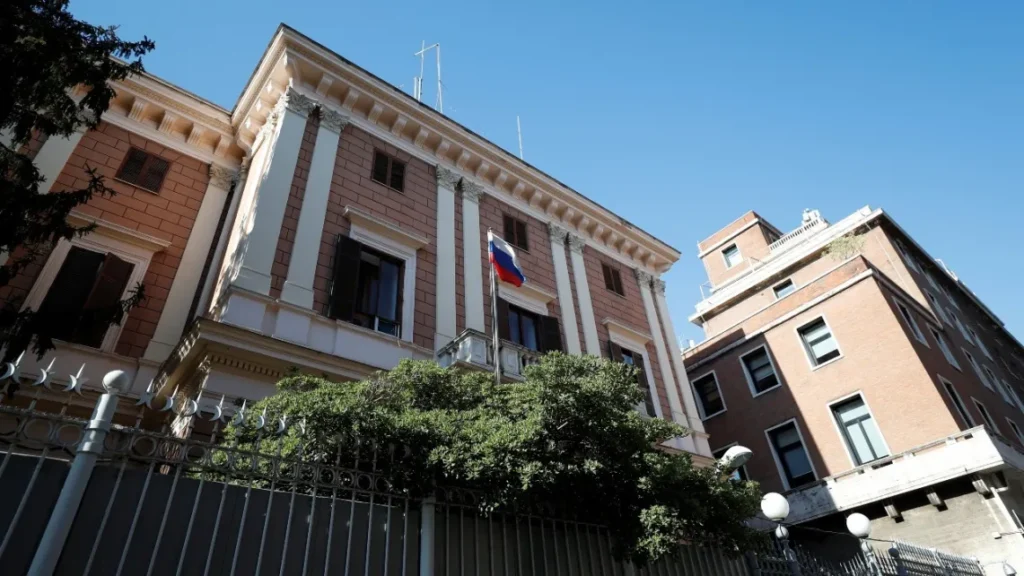

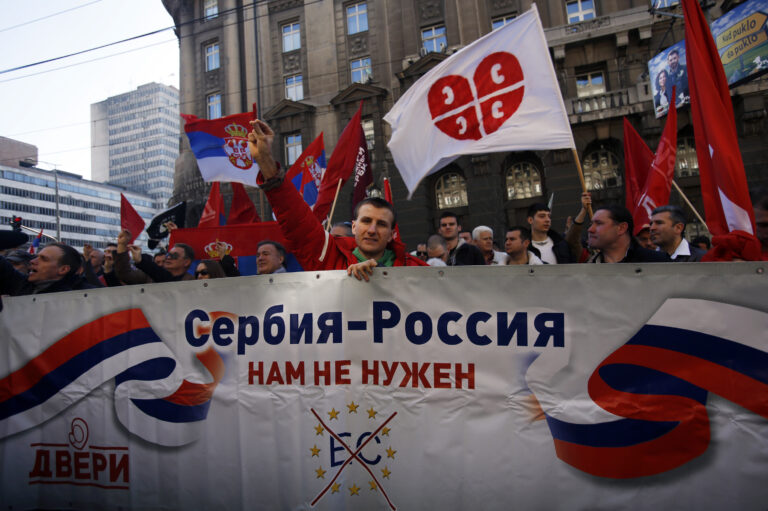
The growing number of Russian citizens acquiring Serbian citizenship and thereby gaining visa-free access to the European Union presents potential security risks for the EU. According to a European Commission document, while Serbia has the sovereign right to determine its citizenship policy, Belgrade must strengthen its screening procedures for visa applications submitted by nationals of countries considered to pose risks in terms of illegal migration or security.
The European Commission notes that Serbia’s visa policy is “only partially aligned” with that of the European Union, including the EU’s list of third countries whose citizens require visas to enter the bloc, according to the Commission’s rule-of-law report on Serbia. Currently, 12 countries enjoy visa-free travel with Serbia but not with the EU: Russia, Belarus, Armenia, Azerbaijan, Bahrain, China, Indonesia, Jamaica, Kyrgyzstan, Kazakhstan, Suriname, and Turkey. Under its commitments to the EU, Serbia is expected to introduce visa requirements for at least three of these countries by the end of 2026.
Serbia’s policy toward granting citizenship to Russian nationals remains relatively accommodating, although Belgrade has been forced to balance its traditional ties with Russia against growing pressure from the European Union. Serbian authorities continue to make extensive use of expedited citizenship procedures based on “special merit to the country,” which do not require applicants to renounce their original citizenship or reside in Serbia.
Between early 2022 and April 2025, more than 200 Russian citizens obtained Serbian passports through this simplified procedure.
Investigations have identified dozens of recipients with links to Russia’s defense-industrial complex, intelligence services, and Kremlin-linked elites. These individuals have reportedly used Serbian documents to circumvent European sanctions and travel visa-free within the EU. One notable example emerged in April, when Yakub Zakriev, a nephew of Chechen leader Ramzan Kadyrov, was granted Serbian citizenship by government decree. Following public scrutiny, Belgrade later revoked the decision. According to Serbia’s Interior Ministry, between 2022 and 2024, approximately 67,200 Russian citizens received residence permits in Serbia, while around 1,700 individuals acquired Serbian citizenship.
Serbian President Aleksandar Vučić has previously stated that Serbia will not impose visas on Russian citizens.
As a candidate country for EU membership, Serbia has committed itself to gradually harmonizing its visa and migration policies with European standards. The continued preservation of a special regime for Russian citizens and nationals of other countries that Brussels considers high-risk is raising increasing concerns about Belgrade’s willingness to fulfill its obligations toward the European Union. As a result, this policy could negatively affect Serbia’s future accession negotiations with the EU.
The large-scale granting of Serbian citizenship to Russian nationals effectively creates an additional channel of access to the Schengen area for individuals who might otherwise face visa restrictions or sanctions imposed by the European Union. Particularly concerning are cases in which Serbian passports are granted to individuals connected to Russian state institutions, intelligence services, the military-industrial sector, Kremlin-linked elites, or organized crime networks.
Against the backdrop of Russia’s ongoing war against Ukraine, any loopholes enabling sanctions circumvention acquire strategic significance for the Kremlin and Russia’s political and economic elite. Serbian citizenship potentially allows Russian nationals to conceal the true origin of assets, facilitate international travel, and undermine the effectiveness of the sanctions regime that the European Union has spent years constructing.
The growing number of Serbian passport holders who are simultaneously Russian citizens also increases the risk of financial misconduct within Europe. This concern extends beyond potential money laundering to include the use of the European financial system for supporting pro-Russian influence networks, circumventing restrictions, and financing activities that run counter to the EU’s security interests.
The issue of granting Serbian citizenship to Russian nationals extends far beyond migration policy and touches upon Europe’s broader ability to counter Russian hybrid threats. The Kremlin has long used business connections, financial instruments, and Russian citizens living abroad as channels of influence. Simplified access to citizenship in a country aspiring to join the European Union expands Russia’s ability to conduct hybrid operations against European states through the cultivation of political influence networks, integration of criminal structures, and other forms of covert activity.
For Belgrade, the current policy of granting Serbian citizenship to Russian nationals represents an attempt to combine the economic benefits associated with Russian capital and migration flows with the desire to maintain favorable relations with Moscow. However, the longer the Serbian government delays aligning its visa policy and citizenship practices toward Russian nationals with EU standards, the greater the security risks Serbia creates not only for the Balkans but for Europe as a whole.
The issue is no longer simply one of migration management or visa harmonization. It increasingly concerns the credibility of the European Union’s enlargement policy and the security of the Schengen area itself. By continuing to grant citizenship and residency privileges to Russian nationals—including individuals linked to Russia’s military-industrial complex, security services, sanctioned enterprises, and Kremlin-connected networks—Serbia is positioning itself not as a future contributor to European security, but as a potential vulnerability within it.
The European Union’s accession process is built on the assumption that candidate countries gradually align their legislation, foreign policy, security standards, and strategic interests with those of the Union. Serbia’s current approach moves in the opposite direction. While Brussels is investing enormous political and financial resources in isolating Russia’s war machine and limiting the Kremlin’s ability to bypass sanctions, Belgrade continues to provide Russian citizens with an alternative route into Europe.
The fundamental question for Brussels is becoming increasingly difficult to ignore: Can a country that systematically facilitates access to Europe for individuals connected to Russian state structures realistically be considered ready for EU membership?
The Serbian passport grants visa-free access to the Schengen area and more than one hundred countries worldwide. Through Serbia’s discretionary citizenship-by-exception mechanism, individuals can receive citizenship without meeting traditional residency or naturalization requirements.
Investigations by Serbian and international journalists found that between 2022 and April 2025, Serbia granted citizenship to at least 204 Russian nationals under the category of “special merit” or “national interest.” Among them were individuals linked to Russia’s defense industry, state corporations, intelligence structures, and Kremlin-associated networks.
This effectively creates a legal mechanism through which Russian elites can acquire a travel document that provides access to Europe despite the EU’s broader efforts to restrict Russian influence and sanctions evasion.
Among the individuals identified by investigative journalists were:
Viktor Shendrik, reportedly a former member of the FSB’s elite Vympel special forces unit and a former security figure associated with Vladimir Putin’s inner circle. Connected to Russian security circles and Rotenberg networks
Individuals connected to KRET (Concern Radio-Electronic Technologies), one of Russia’s leading producers of electronic warfare systems and military avionics and a subsidiary of the state-owned defense conglomerate Rostec.
Executives and family members associated with sanctioned Russian defense enterprises, including firms linked to missile systems, radar technologies, military electronics, and air-defense production.
Associates of Ramzan Kadyrov, including his nephew Yakub Zakriev, who was briefly granted Serbian citizenship before public scrutiny forced the government to reverse the decision.
Individuals reportedly connected to Russian activities in occupied Ukrainian territories and to Kremlin-linked political and business networks. None of these examples automatically prove intelligence activity. However, they demonstrate that Serbia’s screening procedures either fail to identify obvious security concerns or deliberately tolerate them.
From a European security perspective, the concern is not that every Russian passport holder constitutes a threat.The problem is that Serbia’s system creates an environment in which Russian intelligence officers, facilitators, sanctions evaders, financial intermediaries, and influence operators can obtain legitimate travel documentation from an EU candidate state.
Historically, Russian intelligence services have relied heavily on: business structures, diaspora networks, dual nationals, investment vehicles, and legal residency mechanism to establish long-term influence operations abroad.
The granting of Serbian citizenship to individuals connected to Russian state structures potentially expands the Kremlin’s operational space inside Europe.
In practical terms, Serbian passports can facilitate: Easier movement across Europe. Opening bank accounts and corporate structures. Acquisition of real estate. Establishment of business fronts. Creation of influence networks. Concealment of asset ownership. Circumvention of sanctions and travel restrictions.
At a time when EU member states are strengthening counterintelligence measures against Russian activities, Serbia is effectively lowering barriers for the same networks.
The issue increasingly challenges a basic principle of EU enlargement: accession is not merely a technical process but also a strategic alignment process.
Countries seeking membership are expected to: align with EU foreign policy, align with sanctions regimes, strengthen counterintelligence cooperation, protect external borders, and contribute to collective security.
Serbia’s refusal to impose visas on Russian citizens, combined with its willingness to grant citizenship to individuals connected to Russian power structures, suggests that Belgrade continues to prioritize its special relationship with Moscow over full alignment with the European Union.
As a result, Serbia increasingly appears not as a future security provider within the EU framework but as a potential security consumer—and, in some respects, a security risk.
If current trends continue, Brussels may face growing pressure to reconsider whether Serbia should advance further in accession negotiations before undertaking fundamental reforms of its citizenship, migration, and security-screening systems.
The problem is no longer the number of Russian citizens receiving Serbian passports. The real issue is that Serbia has created a mechanism through which individuals linked to Russia’s defense sector, security apparatus, political elite, and influence networks can gain easier access to Europe.
In the context of Russia’s war against Ukraine and the EU’s unprecedented sanctions regime, such practices directly undermine European strategic objectives.
For Brussels, the central question is becoming increasingly unavoidable:
Can the European Union safely integrate a candidate state that simultaneously serves as one of the Kremlin’s most accessible gateways into Europe?
Until Serbia demonstrates a willingness to fully align its visa policy, citizenship procedures, sanctions implementation, and security standards with those of the European Union, its credibility as a future EU member will remain under growing scrutiny. The longer these practices continue, the more Serbia risks being perceived not as a bridge between East and West, but as a conduit through which Russian influence can enter the European political, financial, and security space.
There is also substantial evidence that Serbia has been one of the principal transit countries for irregular migration into the EU via the Western Balkans route. However, it is important to distinguish between two separate arguments: Serbia as a transit hub for illegal migration into the EU — strongly supported by EU, Frontex, and Council documents. Russian citizens using Serbian citizenship as a migration channel into the EU —The stronger argument concerns sanctions evasion, mobility, financial access, and influence operations rather than illegal migration.
Evidence that Serbia Has Been a Major Gateway for Irregular Migration
The European Council explicitly describes Serbia as part of the Western Balkans migration route, one of the main corridors used by migrants from the Middle East, Africa, and Asia to reach the European Union. The route runs through North Macedonia and Serbia before entering Hungary, Croatia, or other EU member states.
According to Frontex and EU data: Nearly 100,000 irregular border crossings were detected on the Western Balkans route in 2023. In 2022, almost 130,000 attempted irregular crossings were recorded on Western Balkan routes, prompting the European Commission to launch a dedicated Western Balkans Action Plan.
The EU has repeatedly described Serbia as a “key partner” for controlling migration because of its central role in the route.
Austria and Hungary concluded special arrangements with Serbia specifically to combat irregular migration crossing Serbian territory.
EU Criticism of Serbia’s Visa Policy
One of the reasons Brussels pressured Belgrade was that Serbia maintained visa-free access for several countries whose nationals later appeared disproportionately in irregular migration statistics inside the EU.
In 2022, the EU openly warned Serbia that it could reconsider Serbia’s own visa-free access to the Schengen Area if Belgrade failed to address migration flows originating from its territory.
European institutions repeatedly criticized Serbia for maintaining liberal visa regimes that allowed citizens of countries such as: India, Tunisia, Burundi, Egypt, Turkey to enter Serbia and then continue toward EU member states through irregular channels.
Under EU pressure, Serbia subsequently abolished visa-free travel for several of these countries.
For several years, EU institutions viewed Serbia’s visa policy as creating a loophole that undermined the Schengen system because: Migrants could legally fly into Belgrade. They could then move through smuggling networks across the Western Balkans. Many subsequently attempted to enter Hungary, Croatia, Austria, Germany, or Italy illegally.
This concern became serious enough that Frontex expanded its operations across Serbian territory and signed a new agreement allowing deployments throughout Serbia rather than only on EU borders.
Serbia has already demonstrated that misalignment between its visa regime and EU standards can create migration and security vulnerabilities for the European Union. The same institutional weaknesses that previously allowed nationals of third countries to use Serbia as a gateway into the Schengen area now raise concerns regarding the large-scale issuance of Serbian residency permits and citizenship to Russian nationals, including individuals linked to Russia’s military-industrial complex, sanctioned entities, and state structures.
This argument is stronger and more defensible than claiming Russians are entering the EU illegally through Serbia.
A potentially more damaging argument for Serbia’s EU candidacy is that Brussels is increasingly concerned not only with migration but also with hybrid threats.
Recent investigations and court cases have linked Serbian territory to Russian influence and destabilization networks operating in Europe. Analysts and media reports have described Serbia as an important logistical hub for Russian influence operations because of: visa-free access for Russians, extensive Russian business presence, limited sanctions enforcement, and weak alignment with EU foreign policy.
Thus, The migration issue demonstrates that Serbia has repeatedly functioned as a gateway into the European Union when its domestic policies diverged from EU standards. The ongoing mass naturalization of Russian citizens raises concerns that a similar dynamic could emerge in the security domain, where Serbian citizenship, residency rights, and financial access become instruments for sanctions circumvention, influence operations, and other forms of Russian hybrid activity inside Europe. Given these risks, Serbia’s readiness for EU accession increasingly depends not only on migration reforms but also on its willingness to align its citizenship, visa, and security policies with the strategic interests of the European Union.
Russian cultural, religious, and business organizations in Serbia constitute one of the Kremlin’s most effective soft-power ecosystems in Europe. While most of these organizations operate legally and openly, together they create a favorable environment for Russian influence by shaping public opinion, cultivating elite networks, promoting pro-Kremlin narratives, facilitating economic dependence, and preserving Serbia’s geopolitical ambivalence toward the European Union and NATO.
Unlike in many EU countries where Russian influence networks were significantly disrupted after 2022, Serbia remains one of the few European states where Russian soft-power infrastructure continues to function relatively unhindered.
The primary objective is not necessarily espionage but rather the long-term maintenance of Serbia as a friendly political, economic, and informational space that can serve Russian strategic interests in the Balkans.
The relationship between the Serbian Orthodox Church and the Russian Orthodox Church represents one of Russia’s most valuable influence channels in Serbia.
The Serbian Orthodox Church enjoys levels of public trust that often exceed those of political parties, parliament, government institutions, and the media.
Russia exploits several shared narratives: Orthodox Christian solidarity. Defense of traditional values. Opposition to Western liberalism. Protection of Kosovo. Historical memory of Slavic brotherhood. Resistance to NATO.
Influence Mechanisms
Russian cultural institutions help sustain the ideology of the “Russkiy Mir” (Russian World).
Examples include: Russkiy Mir Foundation, Russian cultural centers, Language programs, Academic exchanges, Historical memory projects, Youth initiatives.
These organizations: Promote favorable perceptions of Russia; Reinforce anti-NATO sentiment; Shape historical narratives; Build networks among academics, journalists, students, and local elites.
Many activities emphasize: Russia as Serbia’s historical ally. Western betrayal during the Kosovo crisis. Common Orthodox identity. Shared resistance to Western influence.
The objective is to cultivate future generations of Serbian opinion leaders who are sympathetic to Russian geopolitical interests.
Russian business influence in Serbia extends far beyond commerce.
Historically, Russian state-linked firms have established significant positions in: Energy, Banking, Real estate,Infrastructure, Logistics.
The most prominent example remains Gazprom Neft through its controlling stake in: Naftna Industrija Srbije.
Since the invasion of Ukraine, tens of thousands of Russians have relocated to Serbia.
This migration includes: IT professionals. Entrepreneurs. Wealthy investors. Former state-sector employees. Individuals connected to state corporations.
From an intelligence perspective, large expatriate communities create opportunities for:
Recruitment, Influence activities, Financial transfers, Cover mechanisms, Network expansion.
The concern is that Russian intelligence services historically operate within large expatriate communities and can exploit them for operational purposes.
Several Western security assessments increasingly describe Serbia as one of Russia’s most permissive operating environments in Europe.
Factors include: Visa-free access for Russian citizens. Absence of sanctions against Russia. Strong cultural affinity. Extensive business networks. Political neutrality. Historical ties.This environment allows Russia to maintain networks that would be far more difficult to sustain inside most EU states.
More on this story: Serbia poses a threat to NATO allies