
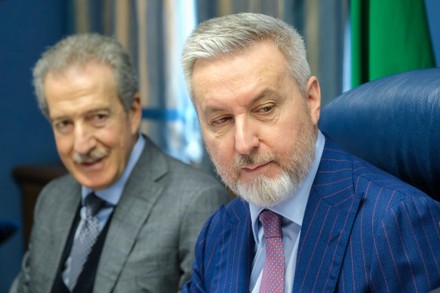
In its latest report, the Italian Parliamentary Committee for the Security of the Republic (Copasir) concluded that Russia, China, and Iran are conducting coordinated disinformation and influence campaigns aimed at shaping public opinion in their favor and interfering in Italy’s democratic processes. Italian intelligence services have documented the use of social media platforms and artificial intelligence algorithms to polarize public opinion and manipulate the public’s perception of information. According to the report, Russia promotes narratives portraying the Italian government as “hypocritical” and “subservient to foreign interests,” while simultaneously depicting the West and Ukraine as being in a state of “moral, political, and economic decline.” Chinese influence operations, by contrast, seek to promote the image of the People’s Republic of China as a “reliable trading partner.”
Among the states pursuing anti-Western influence strategies, Russia stands out as the most active in attempting to interfere in Italy’s internal affairs. Through coordinated information campaigns and by amplifying political actors that adopt positions favorable to the Kremlin, Moscow seeks to shape public opinion, deepen political polarization, and undermine national cohesion within Italy.
The findings of the Parliamentary Committee on Security demonstrate that both the Italian intelligence community and the government recognize the true scale and seriousness of the threat posed by foreign information operations—particularly Russia’s hybrid influence activities—to Italy’s national security and its democratic institutions.
Intelligence Assessment: Which Russian State Institutions or Intelligence Services Are Directing Influence Operations Against Italy?
Executive Assessment
The available evidence indicates that Russian influence operations targeting Italy are coordinated at the state level and involve multiple institutions rather than a single intelligence service. The principal actors are assessed to be the Foreign Intelligence Service (SVR), the Main Directorate of the General Staff (GRU/GU), and, to a lesser extent, the Federal Security Service (FSB), supported by state media, diplomatic missions, and state-linked organizations. Their activities align with broader Kremlin foreign policy objectives and are coordinated through Russia’s national security apparatus.
Foreign Intelligence Service (SVR)
Assessment: High confidence
The SVR is the Russian intelligence service most likely responsible for the strategic direction of long-term political influence operations in Italy.
Its mandate includes: recruitment of political, academic, business and media contacts; cultivation of long-term influence networks; collection of political intelligence; covert influence operations under diplomatic and non-official cover; coordination with Russian embassies and cultural organizations.
The SVR traditionally emphasizes discreet, long-term influence rather than overt disruption. In the Italian context, this would likely include building relationships with political elites, think tanks, journalists, and business figures capable of shaping public debate over time.
Likely objectives
- Weaken Italian support for Ukraine. Reduce public backing for sanctions.
- Encourage divisions within NATO and the EU. Influence elite decision-making. Preserve Russian economic interests in Italy.
Main Directorate of the General Staff (GRU)
The GRU is assessed to lead the more aggressive component of Russia’s hybrid operations.
Unlike the SVR, the GRU has repeatedly been linked by Western governments to: cyber operations; sabotage; hack-and-leak campaigns; covert influence operations; military information warfare.
Where influence campaigns intersect with cyber activities or coordinated hybrid pressure, the GRU is a likely participant.
Likely objectives: Amplify political crises. Increase polarization. Undermine confidence in democratic institutions.Exploit elections or referendums. Support broader Russian military and strategic objectives.
Federal Security Service (FSB)
Assessment: Moderate confidence
Although primarily responsible for domestic security, the FSB has increasingly conducted foreign cyber and influence activities, particularly through technical operations and support to Russian intelligence missions abroad.
The FSB is more likely to contribute through: cyber espionage; technical intelligence; protection of Russian intelligence networks; counterintelligence support; cyber-enabled information operations.
Its direct role in political influence inside Italy is assessed to be secondary to that of the SVR but complementary.
Presidential Administration
Assessment: High confidence
Although not an intelligence agency, the Presidential Administration of the Russian Federation is widely assessed to provide the political direction for major foreign information campaigns.
Strategic narratives—including claims that: NATO provoked the war; sanctions harm Europe more than Russia; Ukraine is corrupt or failing; European governments are subordinated to Washington— are typically consistent across state media, diplomatic messaging, and intelligence-linked influence activities, suggesting centralized political guidance rather than independent agency initiatives.
Ministry of Foreign Affairs
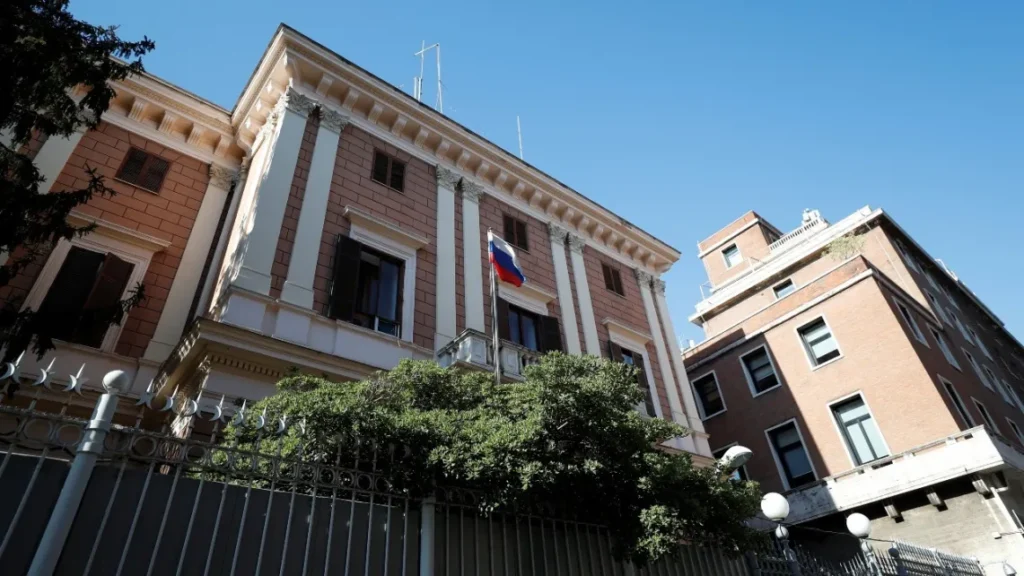
Russian embassies and consulates may provide: diplomatic cover for intelligence officersengagement with political and business elites; amplification of official narratives; support for public diplomacy aligned with Kremlin messaging.
Diplomatic personnel do not themselves prove intelligence involvement, but Russian diplomatic missions have historically been used by the SVR for official-cover intelligence operations.
State Media Ecosystem
The intelligence services do not operate alone.
Their activities are reinforced by: state television; international broadcasters; state news agencies; online proxy media; multilingual websites; social media amplification.
These outlets disseminate narratives that intelligence services may help identify, target, or amplify.
Proxy Organizations
Influence operations are also supported through: cultural organizations; academic exchanges; business associations; think tanks; religious contacts; social media influencers; local intermediaries.
Such actors may range from individuals acting knowingly on behalf of Russian interests to those who independently repeat narratives that align with Kremlin objectives. Public evidence often does not allow clear differentiation between coordinated cooperation and ideological affinity.
Command Structure
A simplified analytical model is:
President Vladimir Putin
↓
Security Council
↓
Presidential Administration
↓
SVR — long-term political influence and elite engagement
GRU — cyber, hybrid operations, disruptive activities
FSB — cyber support, technical operations, counterintelligence
↓
Russian diplomatic missions
↓
State media and proxy networks
↓
Local amplifiers
↓
Italian public opinion
Italy-Specific Objectives
According to Copasir, Russian influence efforts seek to: portray the Italian government as subordinate to foreign interests; weaken support for sanctions against Russia; undermine public backing for military assistance to Ukraine; deepen ideological and political polarization; reduce trust in democratic institutions; encourage divisions within NATO and the European Union.
These objectives are consistent with broader Russian Foreign Information Manipulation and Interference (FIMI) patterns documented by European institutions.
Intelligence Indicators
The following would suggest increased Russian intelligence involvement: Increased diplomatic contacts with politically influential intermediaries, Coordinated dissemination of identical narratives across multiple platforms, Simultaneous amplification by state media and local actors, Use of AI-generated content or coordinated inauthentic accounts,financial links between Russian entities and Italian organizations or intermediaries,cyber intrusions coinciding with major political events or elections, expansion of Telegram-based influence ecosystems targeting Italian audiences.
Overall Assessment
The evidence supports the assessment that Russian influence operations directed at Italy are not the work of a single intelligence service, but rather a coordinated state effort. The SVR is the most likely lead organization for long-term political influence, elite cultivation, and covert foreign operations. The GRU is likely responsible for the more disruptive elements of hybrid warfare, including cyber-enabled influence and information operations that coincide with broader military objectives. The FSB provides technical, cyber, and counterintelligence support where required. These intelligence services operate within a broader ecosystem that includes the Presidential Administration, the Ministry of Foreign Affairs, state-controlled media, and proxy organizations, enabling the Kremlin to synchronize political messaging, intelligence collection, and influence campaigns in pursuit of its strategic objectives in Italy.
Intelligence Assessment: Which Regions of Italy Are Most Susceptible to Russian Influence, and Why?
Executive Assessment
Russian influence operations in Italy are not geographically uniform. Rather than targeting entire regions equally, Moscow appears to prioritize areas where political polarization, economic interests, historical ties with Russia, strategic infrastructure, or favorable political ecosystems provide greater opportunities for influence.
Based on Copasir’s findings, previous Italian intelligence assessments, electoral geography, and open-source reporting, the regions most susceptible to Russian influence can be grouped into four categories: Political influence hubs; Economic and business hubs; Strategic infrastructure regions; Information and societal influence centers.
Lazio (Rome)
Highest Strategic Priority
Rome is Italy’s: political capital; diplomatic center; intelligence hub; location of Parliament; headquarters of ministries; headquarters of national media.
Any foreign influence campaign ultimately seeks to affect national decision-making.
Russian Objectives
Likely priorities include: influencing parliamentary debates; shaping elite opinion; cultivating political advisers; targeting journalists; influencing think tanks; monitoring NATO and EU policymaking.
Key Vulnerabilities
- concentration of political elites; diplomatic community; lobbying activities; media organizations; academic institutions.
Lombardy
Economic Influence Center
Milan remains Italy’s financial capital.
Russian influence here is primarily economic rather than ideological.
Historical Factors
Prior to 2022: extensive business ties; banking relationships; uxury markets; energy partnerships; real estate investments.
Likely Objectives
- influence business associations; lobby against sanctions;
- maintain commercial access; shape economic narratives; exploit concerns over competitiveness.
Why Vulnerable?
Business communities generally prioritize:
- trade;
- investment;
- market stability.
Russian messaging portraying sanctions as economically harmful finds a more receptive audience among sectors directly affected by lost commercial opportunities.
Veneto
Veneto contains:
- export-oriented manufacturers;
- SMEs;
- logistics networks;
- strong international trade links.
Many companies previously maintained commercial relations with Russia.
Russian narratives emphasizing: economic losses, sanctions fatigue, energy costs;
may resonate more strongly than in less export-dependent regions.
Emilia-Romagna
Historically: strong civic institutions, left-of-center politics, active universities, industrial economy.
Russian influence here is less likely to exploit business interests than: peace movements, anti-war activismm anti-NATO discourse, academic debates.
Tuscany
Russian influence traditionally focused on: tourism; luxury real estate; cultural diplomacy; elite business relationships.
Prior investigations also highlighted significant Russian property ownership in parts of Tuscany before sanctions.
Liguria
The Port of Genoa representsstrategic logistics,maritime infrastructure, energy imports.
Potential Russian interests include:
- shipping, sanctions circumvention, maritime intelligence, influence among port-related business communities.
Sicily
Strategic Importance
Sicily hosts: NATO facilities; U.S. military presence; Sigonella Air Base; Mediterranean logistics.
Russian narratives frequently portray Sicily as: excessively militarized; subordinated to U.S. interests; vulnerable because of NATO.
Anti-military narratives may therefore receive greater attention here.
Sardinia
Sardinia hosts numerous: military training areas, NATO exercises, defense infrastructure.
Russian messaging often seeks to exploit: environmental concerns, anti-military protests, local grievances regarding military facilities.
Friuli Venezia Giulia
Border region.
Important because of: NATO logistics; transportation corridors; proximity to Central Europe.
Russian intelligence may prioritize monitoring military mobility rather than mass influence.
Calabria, Campania, Apulia
These southern regions experience: higher unemployment, socioeconomic disparities, migration pressures.
Russian narratives may attempt to exploit dissatisfaction by arguing that: sanctions worsen inflation; resources should be spent domestically rather than supporting Ukraine.
However, there is less evidence that these regions are primary targets compared with Rome or northern Italy.
Political Ecosystems
Russian influence does not primarily target geography.
It targets political ecosystems.
Greater susceptibility exists where there are:
- Eurosceptic constituencies;
- anti-establishment movements;
- anti-sanctions sentiment;
- strong energy concerns;
- ideological polarization.
These constituencies are distributed across multiple regions rather than concentrated in one.
Universities
Major universities remain important targets because they provide:
- future political elites;
- researchers;
- journalists;
- opinion leaders.
Priority institutions likely include: Sapienza University (Rome), University of Bologna, University of Milan, Bocconi University, University of Padua
Russian influence may take the form of:
- conferences, academic exchanges, think-tank cooperation, information operations rather than direct recruitment.
Social Media Geography
Digital influence largely transcends regional boundaries.
However, Italian intelligence notes that AI-enabled campaigns increasingly target:
- young voters;
- economically dissatisfied populations;
- anti-establishment communities.
These groups are concentrated in major metropolitan areas rather than specific provinces
Overall Assessment
The regions most susceptible to Russian influence are those where national political decision-making, strategic economic interests, and public narratives intersect. Lazio remains the highest-priority target because it hosts Italy’s political leadership, intelligence community, diplomatic corps, and major national media. Lombardy and Veneto are particularly attractive because of their export-oriented economies and historically significant commercial links with Russia, making economic and anti-sanctions messaging more salient. Sicily and Sardinia are strategically important due to their concentration of NATO and U.S. military infrastructure, while Liguria and Friuli Venezia Giulia are relevant because of maritime logistics and military mobility.
At the same time, regional geography alone does not determine vulnerability. Russian influence operations are increasingly network-centric rather than location-centric, focusing on political parties, media ecosystems, business elites, universities, and digital communities that can amplify Kremlin narratives across Italy regardless of where they are physically based. The principal challenge for Italian counterintelligence is therefore not protecting a single region, but identifying and disrupting interconnected influence networks that operate nationally while exploiting distinct regional political and socioeconomic dynamics.
Comparative Assessment: Russian vs. Iranian Propaganda Narratives in Italy
Executive Assessment
Although Russia and Iran frequently converge in their anti-Western strategic objectives, their information operations in Italy differ significantly in scope, target audiences, messaging priorities, and operational sophistication. Russia conducts a comprehensive, long-term hybrid influence campaign designed to weaken Italy’s democratic institutions, reduce support for NATO and Ukraine, and deepen political polarization. Iran’s influence operations are narrower and more issue-specific, concentrating primarily on Middle East conflicts, anti-Israel messaging, anti-U.S. sentiment, and mobilization of sympathetic ideological communities.
Italian intelligence assessments indicate that Russia remains the principal foreign information threat, while Iran plays a complementary role, occasionally reinforcing Russian anti-Western narratives but pursuing distinct geopolitical objectives.
Strategic Objectives
| Russia | Iran |
| Undermine NATO cohesion | Reduce Western support for Israel |
| Reduce Italian support for Ukraine | Legitimize Iran’s regional policies |
| Weaken EU sanctions | Build support for the Palestinian cause |
| Increase political polarization | Undermine pressure on Iran’s nuclear program |
| Promote distrust of democratic institutions | Expand ideological influence among activist networks |
| Encourage strategic neutrality toward Russia | Portray Iran as resisting Western “hegemony” |
Russian Narratives
Russian messaging is broad, multidimensional, and designed to influence Italian domestic politics.
Government legitimacy
- Italy has lost its sovereignty.
- Rome follows Washington’s orders.
- The government sacrifices Italian interests for NATO.
- Italy is subordinated to Brussels.
Ukraine
Russia consistently portrays Ukraine as:
- hopelessly corrupt;
- militarily defeated;
- controlled by extremists;
- wasting European taxpayers’ money.
Another recurring narrative claims that continued military assistance only prolongs the war.
NATO
Russian narratives depict NATO as:
- provoking confrontation with Russia;
- expanding unnecessarily;
- dragging Italy into foreign conflicts;
- increasing insecurity rather than protecting Europe.
Economy
Frequent themes include:
- sanctions hurt Europe more than Russia;
- inflation is caused by anti-Russian policies;
- energy prices increased because of sanctions;
- Italian industry suffers while the United States profits.
Migration
Russian influence operations increasingly attempt to connect:
- migration,
- economic decline,
- political instability,
into a single narrative of Western failure.
Democracy
Another major objective is to convince Italians that:
- democratic institutions are corrupt;
- elections cannot solve national problems;
- elites ignore ordinary citizens;
- traditional media cannot be trusted.
Iranian Narratives
Iranian messaging is considerably more focused.
Israel
The dominant theme portrays:
- Israel as the principal source of instability in the Middle East;
- Israeli military operations as disproportionate or unlawful;
- Western governments as applying double standards.
Palestine
Iran consistently seeks to:
- emphasize Palestinian suffering;
- delegitimize Israeli security policies;
- frame Iran as supporting “resistance.”
United States
Iran portrays Washington as:
- destabilizing the Middle East;
- pursuing regime change;
- violating international law;
- protecting Israel at the expense of global justice.
Multipolarity
Iran increasingly promotes:
- BRICS;
- alternative financial systems;
- non-Western political models;
- “Global South” solidarity.
Sanctions
Iran argues:
- sanctions constitute economic warfare;
- Western sanctions violate international law;
- sanctions harm civilians rather than governments.
Target Audiences
Russia
Russian campaigns seek to reach a broad cross-section of Italian society:
- conservative voters;
- far-right constituencies;
- far-left movements;
- anti-globalization activists;
- business communities;
- anti-establishment voters;
- energy-intensive industries;
- peace movements.
The objective is broad societal polarization rather than ideological purity.
Iran
Iran concentrates on more narrowly defined audiences:
- pro-Palestinian activists;
- anti-war movements;
- Muslim communities;
- human-rights campaigners;
- anti-imperialist organizations;
- left-wing international solidarity networks.
Information Channels
Russia
Russia employs an extensive ecosystem:
- state media;
- multilingual websites;
- Telegram;
- X;
- Facebook;
- YouTube;
- proxy news portals;
- AI-generated content;
- coordinated amplification networks.
Iran
Iran relies more heavily on:
- state broadcasters;
- affiliated media outlets;
- religious organizations;
- activist networks;
- Middle East-focused online communities;
- pro-Palestinian digital campaigns.
AI and Social Media
Italian intelligence has specifically warned about Russia’s use of:
- AI-generated content;
- automated amplification;
- algorithmic manipulation;
- coordinated social media campaigns.
Russian operations appear significantly more technologically sophisticated.
Iran also employs social media extensively, but there is less public evidence that it operates AI-enabled influence infrastructure in Italy at the same scale.
Shared Narratives
Despite different priorities, Russian and Iranian messaging frequently overlaps.
Common themes include:
- NATO is responsible for international instability.
- Western democracies are hypocritical.
- Sanctions are ineffective.
- The United States dominates European governments.
- Europe is economically declining.
- International law is applied selectively.
- Multipolarity is preferable to Western leadership.
Principal Differences
| Russia | Iran |
| Focuses on Italian domestic politics | Focuses on Middle East politics |
| Primary issue: Ukraine | Primary issue: Israel–Palestine |
| Seeks political polarization | Seeks ideological mobilization |
| Attempts to influence elections and governance | Attempts to influence foreign-policy debates |
| Broad societal targeting | Narrower activist targeting |
| Extensive AI-enabled campaigns | More traditional ideological messaging |
| Long-term strategic influence | Issue-driven influence |
Potential Coordination
Italian intelligence assesses that Russia, China, and Iran conduct coordinated or mutually reinforcing influence campaigns, but this should not be interpreted as evidence of a single integrated command structure. Based on publicly available reporting, it is more accurate to assess that they:
- amplify compatible anti-Western narratives;
- exploit the same geopolitical crises;
- benefit from one another’s messaging;
- reinforce themes that weaken confidence in Western institutions.
Their strategic objectives overlap, but their operational priorities remain distinct.
Intelligence Indicators
Analysts should monitor:
Russian Operations
- Expansion of AI-generated political content.
- Coordinated anti-Ukraine messaging during elections.
- Amplification of anti-sanctions campaigns.
- Simultaneous narratives appearing across multiple platforms.
- Engagement between local political actors and Russian state-affiliated media or intermediaries.
Iranian Operations
- Increased anti-Israel mobilization linked to Italian political debates.
- Expansion of pro-Palestinian digital campaigns using coordinated messaging.
- Greater activity by Iran-linked media outlets or affiliated organizations.
- Attempts to connect Middle East conflicts with criticism of NATO, the EU, or U.S. policy.
Convergent Indicators
- Identical anti-Western narratives appearing simultaneously in Russian- and Iranian-affiliated media ecosystems.
- Coordinated amplification around major geopolitical events involving Ukraine, Israel, sanctions, or NATO.
- Shared use of alternative media platforms, encrypted messaging channels, or social media influencers to broaden audience reach.
Overall Assessment
Russia and Iran pursue complementary rather than identical influence strategies in Italy. Russia represents the more significant strategic threat because it seeks to shape Italy’s domestic political environment, weaken democratic institutions, erode support for Ukraine, and undermine cohesion within NATO and the European Union. Its campaigns are broad, technologically sophisticated, and aimed at multiple segments of Italian society.
Iran’s influence efforts are more narrowly focused on Middle East issues. They seek to increase sympathy for Palestinian causes, reduce Italian support for Israel, challenge U.S. regional policies, and portray Iran as a legitimate actor resisting Western dominance. While these campaigns can reinforce anti-Western sentiment, they are generally less comprehensive and less directly oriented toward altering Italy’s internal political landscape.The principal convergence lies in their shared objective of reducing confidence in the Western-led international order. However, Russia seeks to reshape Italy’s strategic orientation as a NATO and EU member, whereas Iran’s primary goal is to influence Italian perceptions of Middle Eastern conflicts and reduce international pressure on Tehran. From a counterintelligence perspective, Russian influence operations therefore constitute the broader systemic challenge, while Iranian campaigns represent a more focused but potentially reinforcing component of the overall foreign information threat.