
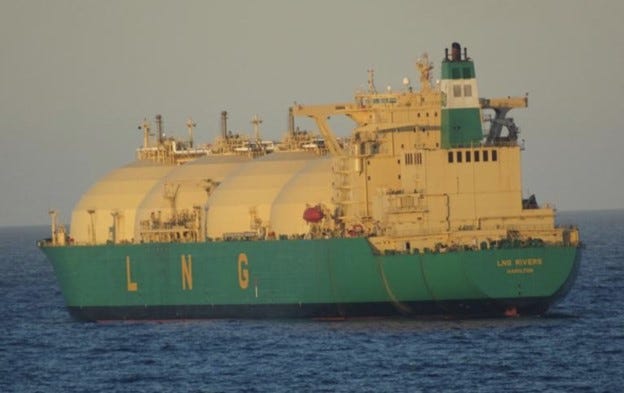
Russia is actively developing a dedicated “shadow fleet” for the export of liquefied natural gas (LNG) in preparation for the European Union’s planned ban on imports of Russian LNG, which is scheduled to take full effect in 2027. According to maritime analytics firm Windward, Moscow has already acquired at least eight LNG carriers on the secondary market and intends to supplement them with newly built Russian-made gas carriers. The emerging shadow LNG fleet has now reached approximately 25 vessels, including two new LNG carriers constructed at Russia’s Zvezda Shipyard.
The initiative mirrors the model of Russia’s much larger shadow oil tanker fleet, which since 2022 has enabled Moscow to circumvent Western price caps and sanctions on crude oil exports. However, replicating this approach in the LNG sector is considerably more difficult and expensive. LNG transportation requires highly specialized vessels equipped with advanced cryogenic containment systems capable of maintaining cargo temperatures of approximately –162°C. The construction cost of a modern LNG carrier approaches US$300 million, while the global LNG carrier fleet remains comparatively small, technologically sophisticated, and subject to stringent international regulatory oversight.
Industry assessments indicate that the current shadow LNG fleet is likely sufficient to sustain exports from the Yamal LNG project, which continues to account for the majority of Russia’s seaborne LNG deliveries to Europe. Supporting full-scale exports from Russia’s newer Arctic projects—particularly Arctic LNG 2—will be substantially more challenging because of the limited availability of suitable vessels, shortages of Arc7 ice-class LNG carriers, insurance and classification restrictions, and increasing international scrutiny. Although Russia is clearly preparing for a prolonged sanctions environment and seeking to preserve hard-currency export revenues, technological constraints, the limited supply of appropriate vessels, and expanding Western enforcement mechanisms make the shadow LNG strategy considerably more restrictive and costly than its counterpart in the oil sector.
In response to the European Union’s decision to completely prohibit the import and transshipment of Russian LNG by 2027, Moscow has accelerated the creation of a specialized shadow LNG fleet. Industry analysts estimate that the target size of this fleet is approximately 25 vessels, with at least eight LNG carriers already acquired through intermediary companies registered in third-country jurisdictions. The project’s primary objective is to preserve export volumes and maintain foreign currency revenues after the European market is effectively closed to Russian LNG.
The development of Russia’s shadow LNG fleet creates the potential for a new sanctions-evasion mechanism, although its effectiveness will remain constrained by significant technological and logistical limitations. Unlike conventional oil tankers, LNG transportation requires expensive, purpose-built vessels with sophisticated cryogenic systems and, for Arctic operations, high-specification Arc7 ice-class capabilities. Moreover, vessel maintenance, technical certification, insurance, and classification remain concentrated within a relatively small number of internationally recognized companies, many of which continue to operate within Western regulatory frameworks.
Should Russia nevertheless succeed in establishing an independent transportation infrastructure, Moscow would be better positioned to preserve export revenues that remain essential for financing both the national economy and military expenditures despite restrictions imposed by the European Union and the G7.
The existing and projected size of the shadow fleet appears sufficient to ensure the continued operation of Yamal LNG, whose export routes and logistical infrastructure are already established. However, the current inventory of available LNG carriers is insufficient to support the full commercial deployment of new Arctic export capacity, particularly Arctic LNG 2, which remains subject to comprehensive U.S. blocking sanctions and continues to experience a critical shortage of high ice-class LNG carriers.
In assembling and operating its shadow LNG fleet, Moscow is employing many of the same sanctions-evasion techniques previously developed for the oil sector. LNG carriers are acquired through networks of shell companies registered in jurisdictions across the Middle East and Southeast Asia, while complex corporate ownership structures conceal the identity of the ultimate beneficial owners. Additional measures designed to complicate regulatory oversight include frequent changes of flag state registration, the deliberate deactivation of vessel identification systems during voyages, and cooperation with opaque insurance providers operating outside the traditional Western insurance market.
The ultimate effectiveness of the European Union’s 2027 prohibition on Russian LNG will largely depend on the ability of the United States, the European Union, and the United Kingdom to rapidly identify and sanction not only the vessels themselves but also their beneficial owners and the broader logistical infrastructure supporting their operations. Effective enforcement will require sanctions extending beyond individual LNG carriers to include vessel operators, shipyards, port facilities, classification societies, insurers, financial intermediaries, and maritime service providers that facilitate the construction, maintenance, financing, insurance, and operation of Russia’s shadow LNG fleet. Only such a comprehensive approach is likely to prevent the emergence of a parallel maritime logistics network capable of significantly undermining the strategic objectives of Western sanctions.
From an economic perspective, the success or failure of Russia’s shadow LNG fleet will have implications extending well beyond the energy sector. Should Moscow fail to establish a sufficiently large and operationally sustainable shadow transportation network before the European Union’s 2027 prohibition on Russian LNG takes full effect, the Kremlin would face a significant reduction in export capacity, foreign currency earnings, and long-term investment potential within its gas industry.
Unlike crude oil, LNG exports depend upon an uninterrupted logistical chain consisting of specialized cryogenic vessels, certified maintenance facilities, internationally recognized classification societies, marine insurers, and destination terminals. Disruptions affecting any element of this supply chain directly constrain export volumes.Consequently, even if Russia retains sufficient production capacity, the absence of adequate transportation assets would prevent substantial portions of LNG output from reaching international markets.
The greatest economic vulnerability concerns Russia’s long-term Arctic LNG strategy. While existing infrastructure at Yamal LNG is likely to remain operational using the currently assembled shadow fleet, the same cannot be said for Arctic LNG 2 and future Arctic export projects. These facilities were designed around assumptions of unrestricted access to international shipping, financing, insurance, and advanced maritime technology. Without a sufficient fleet of high ice-class LNG carriers, large portions of their planned production capacity could remain underutilized or idle, significantly reducing the expected return on multi-billion-dollar investments already committed to Arctic energy infrastructure.
Failure to preserve LNG exports would also weaken one of Russia’s remaining high-value sources of foreign currency revenue. Although oil continues to dominate Russian hydrocarbon exports, LNG provides access to premium international markets and contributes to export diversification. A sustained decline in LNG sales would reduce hard-currency inflows at a time when the Russian federal budget remains under growing pressure from elevated defense expenditures, increasing social obligations, and the long-term costs of sustaining military operations. Lower export earnings would reduce fiscal flexibility and increase Moscow’s dependence on alternative financing mechanisms, including higher domestic borrowing, expanded taxation of the energy sector, or greater reliance on sovereign wealth reserves.
The financial consequences would likely extend beyond immediate export revenues. Reduced confidence in Russia’s ability to commercialize new LNG projects would discourage future investment, delay Arctic infrastructure development, and increase financing costs for both state-owned energy companies and associated industrial suppliers. The resulting slowdown could undermine one of the Kremlin’s principal long-term objectives: establishing Russia as one of the world’s leading LNG exporters capable of competing with the United States, Qatar, and Australia.
The industrial impact would also be significant. Russia has invested heavily in developing domestic shipbuilding capabilities—particularly through the Zvezda Shipyard—to reduce dependence on foreign technology and sanctions-sensitive suppliers. However, if international sanctions continue limiting access to advanced propulsion systems, cryogenic containment technologies, specialized equipment, and maritime services, domestic shipbuilding alone is unlikely to replace lost international capabilities at the scale or pace required. This would further constrain Russia’s capacity to expand its LNG fleet and delay the commercialization of future Arctic production projects.
From a macroeconomic perspective, prolonged underperformance of the LNG sector would gradually erode one of the Kremlin’s most important long-term strategic advantages: the ability to diversify hydrocarbon exports away from crude oil. Such an outcome would increase Russia’s dependence on discounted pipeline gas sales to a limited number of buyers and expose the economy to greater fluctuations in global energy prices and regional demand. It would also reduce Moscow’s leverage in global LNG markets at a time when energy exports remain central to both economic stability and foreign policy influence.
For the United States and its allies, these vulnerabilities present an opportunity to maximize the long-term effectiveness of sanctions. The strategic objective should extend beyond restricting individual LNG cargoes to preventing the emergence of an independent Russian maritime logistics ecosystem capable of sustaining exports despite sanctions. Coordinated sanctions targeting shipowners, beneficial owners, classification societies, insurers, financial intermediaries, ports, shipyards, maintenance providers, and maritime service companies would significantly increase the economic cost of operating a shadow LNG fleet. Such measures would force Russia to devote substantially greater financial resources to preserving export capacity while simultaneously reducing the profitability of its Arctic LNG projects.If these constraints remain effective through the end of the decade, Russia’s ambition to become one of the world’s dominant LNG exporters is likely to experience a structural setback rather than a temporary delay. This would have broader strategic implications by reducing future export revenues available to support state finances, military modernization, and the Kremlin’s long-term geopolitical objectives, while strengthening the competitive position of alternative LNG suppliers, particularly the United States and Qatar, in global energy markets.