
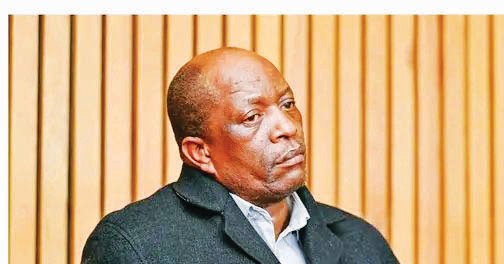
The treason case against opposition leader Tšepo Lipholo represents one of the most consequential political and security developments in Lesotho in recent years. The government alleges that Lipholo recruited Basotho youth for military-style training on farms in South Africa and sought to establish an alternative political authority capable of challenging the constitutional order. Prosecutors further accuse him of advocating the annexation of Lesotho as South Africa’s tenth province and encouraging hostility toward King Letsie III and the government.
The case sits at the intersection of several sensitive issues: Rising Basotho nationalism and territorial revisionism. Chronic political instability in Lesotho. Long-standing socioeconomic dependence on South Africa. Competition between traditional authority, constitutional governance, and populist political movements. Regional security concerns regarding possible militant mobilization.
The outcome of the trial could significantly affect Lesotho’s domestic political trajectory and its relations with South Africa.
The case is primarily political, but it contains genuine security dimensions. The allegations involve both protected political speech and potential security threats. While Lipholo’s territorial claims have long been part of his political platform, allegations regarding recruitment, military training, and preparation for coercive territorial action move the issue beyond ordinary opposition politics.
There is currently insufficient public evidence proving the existence of an organized insurgent force. South African police and intelligence investigations reportedly found no evidence of illegal military training camps operating on South African farms despite repeated allegations by Lesotho security services.
This discrepancy creates three possibilities: Lesotho intelligence possesses information not publicly disclosed. The alleged network existed but was too limited or informal to be detected. The threat has been exaggerated for political purposes.
Lipholo’s movement reflects deeper structural frustrations within Lesotho.
The appeal of the movement stems from: High youth unemployment. Economic dependence on South Africa. Migration pressures. Historical grievances over colonial-era border demarcation. Perceptions that political elites have failed to improve living standards.
These conditions provide fertile ground for nationalist mobilization regardless of the outcome of the criminal proceedings.
Historical Context
The movement led by Lipholo is rooted in a longstanding Basotho nationalist narrative that claims large portions of present-day South African territory historically belonged to the Kingdom of Basutoland.
The disputed areas include: Free State; Parts of KwaZulu-Natal; Eastern Cape; Northern Cape; Mpumalanga.
Lipholo has repeatedly argued that these territories were lost through colonial arrangements and should be returned to Lesotho.
Although such claims have little prospect of international recognition, they resonate with some constituencies that view Lesotho’s economic weakness as linked to historical dispossession.
Why the Government Views Lipholo as a Threat
Several aspects of the case likely concern Lesotho’s authorities.
Challenge to the Monarchy. Lesotho’s constitutional system relies heavily on the symbolic legitimacy of the monarchy.
Authorities accuse Lipholo of: Declaring himself paramount chief. Undermining the authority of King Letsie III. Suggesting that the monarchy surrendered sovereignty to South Africa. For the state, such claims challenge one of the country’s most important stabilizing institutions.
According to court documents, prosecutors allege that Lipholo and associates developed: A shadow cabinet. A separate national flag. A national anthem. Plans for alternative governance structures.
If substantiated, these actions could be interpreted as preparations for a parallel political authority rather than ordinary opposition activity.
The most serious allegation is that recruits aged 18–35 were being prepared for future operations aimed at reclaiming territory from South Africa.
Even limited recruitment efforts would trigger concern because Lesotho has a history of military intervention in politics and periodic instability.
Regional Security Implications
Threat to Lesotho-South Africa Relations
South Africa has a strong interest in maintaining stability in Lesotho.
The two countries are deeply interconnected through: Labor migration. Water infrastructure. Trade. Security cooperation.
Any suggestion of territorial revisionism is highly sensitive because it directly challenges internationally recognized borders.
Although South African authorities have found no evidence of military camps, the allegations themselves create diplomatic friction.
Potential Role of SADC
The Southern African Development Community has repeatedly intervened in Lesotho’s political crises over the past two decades.
If the case evolves into broader unrest, SADC could become involved through: Mediation efforts. Political monitoring. Security consultations. Electoral oversight.
The organization remains highly sensitive to any development that could destabilize Southern Africa.
Possible Scenarios
Scenario 1: Conviction and Political Marginalization
Lipholo is convicted on major charges and receives a lengthy prison sentence.
Consequences: Short-term stabilization. Weakening of the BCM. Risk of creating a nationalist martyr. Potential radicalization of supporters.
Scenario 2: Partial Conviction, Political Survival
The court dismisses the most severe allegations but upholds lesser offenses.
Consequences: BCM remains politically relevant. Government claims legal victory. Reduced risk of unrest.nContinued nationalist rhetoric.
Scenario 3: Acquittal and Political Resurgence
The state fails to prove treason allegations.
Consequences: Major embarrassment for security services. Strengthening of opposition narratives. Increased scrutiny of government conduct. Growth of territorial nationalist activism.
The naming of former police officer Mpiti Thamae raises questions about possible participation by current or former members of Lesotho’s security sector.
The Lipholo case is unlikely to trigger an immediate insurgency or territorial crisis. However, it highlights deeper structural vulnerabilities within Lesotho: Weak economic growth. High unemployment. Dependence on South Africa. Fragile political institutions. Recurring tensions between traditional and constitutional authority.
The greatest long-term risk is not a military confrontation with South Africa but the gradual emergence of a more radicalized nationalist movement capable of exploiting social and economic frustrations. If the government relies primarily on prosecution and repression without addressing underlying grievances, the ideological appeal of territorial nationalism could survive regardless of the court’s verdict.
Who Could Stand Behind Tšepo Lipholo?
At present, there is no publicly available evidence linking Tšepo Lipholo to any foreign government or intelligence service. However, from an intelligence assessment perspective, it is useful to examine which domestic actors could benefit from his activities and which external actors might theoretically have an interest in supporting or exploiting such a movement.
The most likely explanation remains that Lipholo’s movement is primarily domestically driven, rooted in Basotho nationalism, economic frustration, and dissatisfaction with the political establishment. Foreign sponsorship remains possible but unproven.
Domestic Actors Potentially Interested in Supporting Lipholo
Radical Basotho Nationalist Networks
Lipholo’s core political message is based on the concept of “Greater Basutoland”—the restoration of territories lost to South Africa during the colonial era.
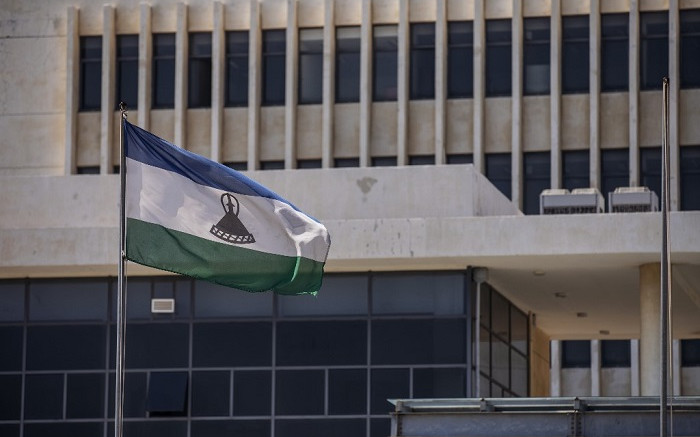
More on this story: Territorial claims by Lesotho’s opposition further post-apartheid tensions
Potential supporters include: Traditionalist groups dissatisfied with the constitutional monarchy. Cultural organizations promoting Basotho identity. Youth activists frustrated by unemployment and emigration. Diaspora communities advocating territorial claims.
These groups are the most natural constituency behind his movement.
Elements Within Traditional Leadership Structures
The allegations that Lipholo declared himself a “paramount chief” suggest competition not only with the government but also with traditional authority structures.
Certain local chiefs may view: Political elites in Maseru as corrupt. Existing governance arrangements as failing rural communities. The monarchy as too closely tied to the political establishment.
However, most traditional leaders remain loyal to King Letsie III, making broad support unlikely.
Letsie III remains one of the country’s most respected institutions.
Disgruntled Former Security Personnel
Lesotho has experienced decades of military and police involvement in politics.
Several past crises involved: Military factions. Rival police structures. Political patronage networks.
The reported involvement of former police officer Mpiti Thamae raises questions about whether retired or marginalized security personnel could have assisted organizational efforts.
This possibility deserves close scrutiny because Lesotho’s political crises historically become more dangerous when security-sector actors become involved.
Opposition Political Figures
Some opposition politicians may privately sympathize with criticism of the government while avoiding association with annexation rhetoric.
Such support would likely be:
- Informal.
- Tactical.
- Designed to weaken the governing coalition.
However, most mainstream opposition parties would likely avoid endorsing territorial revisionism.
Foreign States Potentially Interested
South Africa
Although South Africa is central to Lipholo’s narrative, Pretoria is almost certainly not behind the movement.
South Africa benefits from: Stable borders. Predictable governance in Lesotho. Secure operation of the Lesotho Highlands Water Project.
Any movement advocating border changes or political instability would directly threaten South African interests.
South African authorities have reportedly investigated the alleged training camps and found no supporting evidence.
Russia
Probability of Direct Sponsorship: Low
Russia has increasingly sought influence across Africa through: Information operations. Support for anti-Western narratives.
A destabilized Lesotho would have little direct strategic value to Moscow.
However, Russian influence actors could potentially exploit: Anti-colonial narratives. Historical grievances. Anti-Western sentiment.
The “stolen territories” narrative could be reframed as an anti-colonial struggle similar to messaging Moscow has used elsewhere in Africa.
The main incentive would be information influence rather than territorial outcomes.
China
China has significant economic interests across Southern Africa but generally prioritizes: Stability. Infrastructure investment. Predictable governments.
China is unlikely to support a movement advocating border revision or political disruption.
Anti-Monarchy Networks Abroad
Certain ideological groups outside Lesotho may view challenges to traditional monarchies favorably.
However: Such networks lack significant resources. They would have limited ability to influence events inside Lesotho.
South African Radical Nationalist Groups
A more plausible external actor would not be a state but fringe political organizations operating inside South Africa.
Potential motives: Weakening Pretoria. Promoting ethnic nationalism. Challenging existing constitutional arrangements.
No evidence currently supports this scenario, but it cannot be entirely dismissed.
Actors Most Likely to Oppose Lipholo
The strongest coalition against Lipholo is likely composed of: The Lesotho monarchy. The Lesotho government. Lesotho security services. South African authorities. The Southern African Development Community (SADC).
All of these actors share a common interest in maintaining existing borders and preventing political destabilization.
Intelligence Questions Worth Monitoring
The most probable assessment is that Lipholo represents a homegrown nationalist-populist phenomenon rather than a foreign-backed operation. The movement appears to be driven by economic frustration, identity politics, and historical grievances rather than by external sponsorship.
The greater concern for Lesotho’s authorities is not foreign manipulation but the possibility that unresolved socioeconomic problems could transform a fringe nationalist movement into a broader anti-establishment platform. If unemployment, migration, and political dissatisfaction continue to worsen, actors such as Russia or other influence networks may eventually find opportunities to exploit these grievances even if they did not create them.
What Is the Probability of a Coup in Lesotho?
Probability of a successful coup in Lesotho (2026–2028): 20–30%
Probability of an attempted coup, mutiny, or extra-constitutional security intervention: 40–50%
While Lesotho is not currently facing an imminent coup, it remains one of Africa’s most coup-prone constitutional monarchies because of its long history of military involvement in politics, weak coalition governments, factional security institutions, and recurring political crises.
The arrest of Tšepo Lipholo alone is unlikely to trigger a coup. However, the case highlights structural tensions that could contribute to future instability.
Why Lesotho Has a High Coup Risk
Lesotho has experienced repeated military interventions since independence.
Major examples include: 1986 military coup. 1994 royal intervention in politics. 1998 post-election crisis requiring intervention by South African and Botswana forces under SADC. 2014 attempted coup against Prime Minister Tom Thabane. 2017 military-political confrontation.
Unlike most Southern African states, Lesotho has never fully established stable civilian control over security institutions.
Historical precedent remains one of the strongest indicators of future coup risk.
Fragmented Political System
Lesotho’s political environment is characterized by: Weak coalition governments. Frequent parliamentary realignments. Personalistic parties. Elite factionalism.
Governments often survive through fragile coalitions rather than broad popular mandates.
This creates opportunities for security actors to intervene during periods of deadlock.
Security Sector Rivalries
Historically, tensions have existed between: Lesotho Defence Force (LDF). Lesotho Mounted Police Service (LMPS). Political factions connected to both institutions.
Many previous crises emerged not from ideological disputes but from rival security networks aligned with competing political leaders.
This remains one of the country’s greatest vulnerabilities.
How Does Lipholo Fit Into This?
Lipholo’s movement lacks: Large armed forces. Significant parliamentary strength. Control over security institutions Therefore, BCM itself is unlikely to stage a coup.
The case could become dangerous if: Supporters view the trial as politically motivated. Protests escalate. Security forces split over how to respond. Opposition groups unite around anti-government narratives.
Historically, coups often emerge from political crises rather than from the original opposition movement itself.
Who Could Actually Conduct a Coup?
Coalition Breakdown
Another possibility is a “constitutional coup” involving: Parliamentary maneuvering. Royal intervention. Security pressure behind the scenes.
This is often more likely in Lesotho than a classic military takeover.
Foreign Actors and Coup Risk
The greatest threat to Lesotho is not Tšepo Lipholo himself. Rather, it is the combination of: chronic political fragmentation, weak institutions, economic stagnation, youth unemployment, and the historical politicization of the security sector.
The Lipholo case is better understood as a symptom of these underlying stresses than as the principal driver of instability.The most plausible path toward a coup would not be a nationalist uprising led by BCM, but rather a broader political crisis that creates divisions within the military and security apparatus. If such a crisis coincides with economic deterioration or disputed elections, Lesotho could once again become one of Southern Africa’s most unstable political systems.

More on this story: Lesotho’s optimistic elections outcome amid doubts in effective corruption fight