
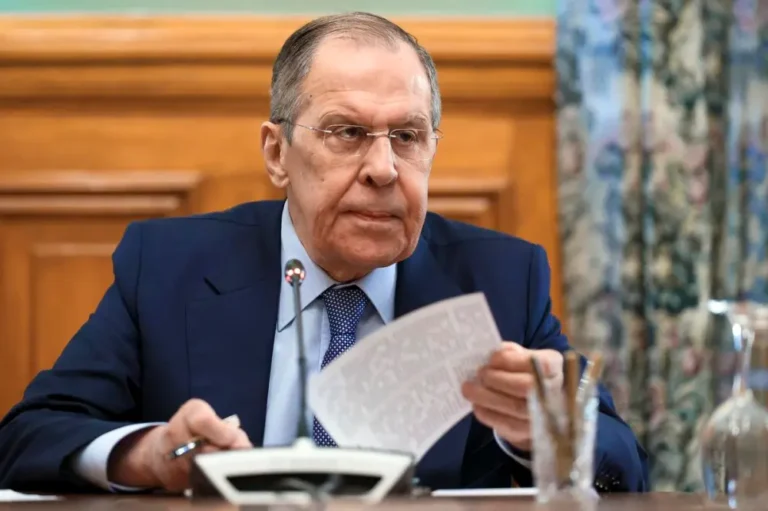
Sergey Lavrov’s claim that “Biden’s war” has become “Trump’s war” is not merely a rhetorical attack on Washington. It is a calibrated Russian information operation aimed at reframing the war in Ukraine as a direct U.S.-Russia confrontation, undermining Donald Trump’s previous political narrative that the war belonged to his predecessor, and pressuring Washington to reduce support for Kyiv. Lavrov made the statement after U.S. Secretary of State Marco Rubio told the Senate that Russia may never be able to achieve militarily the objectives it is demanding at the negotiating table, while also stressing that Ukrainians are fighting effectively.
Moscow’s immediate objective is to exploit the gap between Trump’s earlier promise that the war would not have happened under his presidency and the current U.S. position that America remains a supporter of Ukraine. By saying that the conflict is now “Trump’s war,” Lavrov seeks to impose political costs on the White House and portray any continued military assistance to Kyiv as a betrayal of Trump’s own peace rhetoric. This is designed for several audiences at once: U.S. isolationists, European governments, Ukraine, the Global South, and the Russian domestic public.
The timing is important. Rubio’s remarks came amid U.S. frustration over the absence of progress toward ending Russia’s full-scale war, with Rubio stating that neither side—especially Russia—had shown the concessions necessary for peace. He also indicated that news could come “fairly soon” on $400 million in congressionally approved military aid to Ukraine that had been delayed at the Pentagon. Lavrov’s response therefore appears intended to preempt renewed U.S. assistance and discourage Washington from abandoning the role of mediator in favor of openly backing Ukraine.
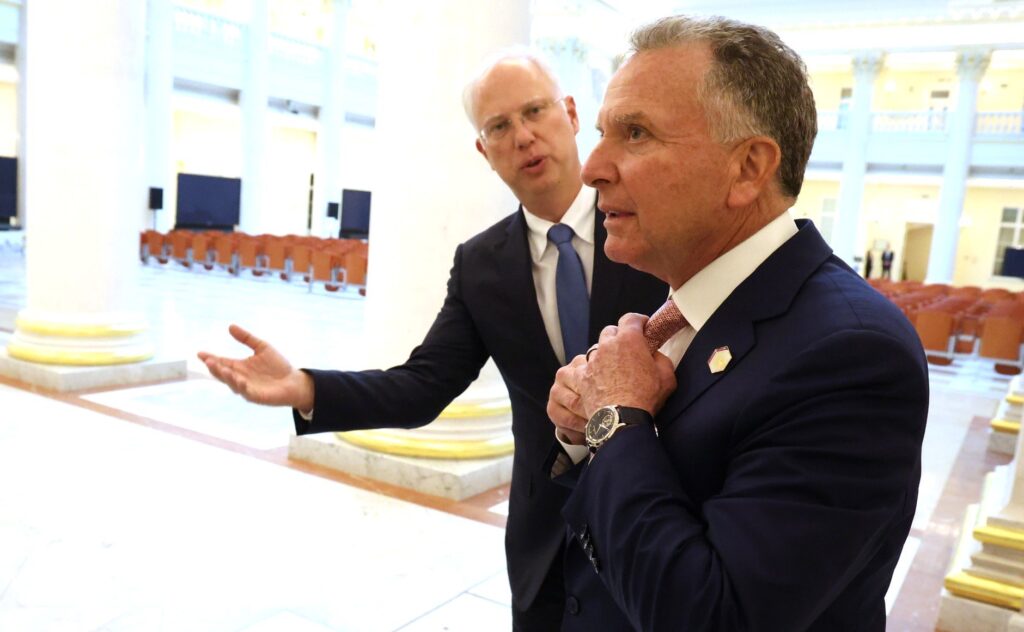
A second Russian message is that Moscow wants to preserve the illusion of U.S.-Russia dialogue while blaming its opponents for any failure. Kirill Dmitriev, who participates in Russia’s Ukraine-related negotiations, said on June 4 that Russia-U.S. dialogue continues and will become more active, while accusing unnamed “enemies of dialogue” of spreading disinformation. This creates a dual-track narrative: Russia presents itself as ready for talks, while simultaneously accusing Washington of turning the war into a Trump-era conflict.
This suggests Moscow is trying to manufacture a diplomatic baseline favorable to itself: any U.S. refusal to recognize Russian control over Donbas can then be framed as Washington walking back from an alleged understanding Russia is trying to force negotiations on terms shaped by battlefield pressure, political fatigue in the West, and ambiguity inside U.S. policy.
Strategically, Lavrov’s statement signals that Moscow is not preparing for genuine compromise. Instead, The Kremlin’s likely calculation is that the Trump administration remains vulnerable to arguments about “ending Biden’s war,” especially if Ukraine-related funding becomes politically contentious.
For Ukraine and Europe, the risk is that Russia will use negotiations not to end the war, but to freeze Western decision-making while continuing military operations. Moscow’s rhetoric indicates that it wants the U.S. to act less as Ukraine’s security backer and more as an arbiter between Kyiv and Moscow. That would weaken Ukraine’s position and allow Russia to convert military occupation into diplomatic bargaining capital.
Russia is attempting to rebrand the war as a Trump administration responsibility in order to raise the political cost of U.S. support for Ukraine.
Lavrov’s remarks are part of a coordinated Russian effort to divide the concepts of “peace talks” and “military aid,” portraying continued support for Kyiv as incompatible with mediation.
Moscow is likely using alleged past understandings with Trump to create a false diplomatic baseline around Donbas.
The Kremlin’s current posture suggests readiness for talks, but not for meaningful concessions.
The main Russian objective is to preserve military pressure while weakening Western political unity around Ukraine.
Current evidence suggests the Kremlin has not concluded that the Trump administration has fundamentally shifted toward Russian negotiating positions. Rather, Moscow appears to assess that Washington is internally divided and potentially more susceptible to pressure than during the previous administration, creating opportunities to shape future negotiations.
Several indicators support this assessment.
Moscow continues to test, rather than assume, U.S. flexibility. Lavrov’s repeated references to previous conversations with Donald Trump and alleged understandings regarding Ukraine indicate that Russia is attempting to determine whether the administration is willing to revive earlier negotiating frameworks. If the Kremlin believed Washington had already adopted a more favorable position, there would be little need for such persistent public messaging.
Instead, Russian officials continue to frame their statements as questions directed at Washington, suggesting they are probing rather than celebrating a policy shift.
Recent U.S. statements contradict Russian expectations. Statements by senior U.S. officials—including Secretary of State Marco Rubio that Russia is unlikely to achieve militarily all of its political objectives and that Ukraine continues to defend itself effectively— demonstrate continued American skepticism toward Russian demands.
Likewise, discussions regarding additional U.S. military assistance indicate that Washington has not abandoned military support as leverage.
From Moscow’s perspective, these developments likely indicate that: diplomatic engagement remains possible; strategic concessions remain unlikely; military pressure will continue alongside negotiations.
The Kremlin likely sees political opportunity rather than strategic. Alignment. Russian decision-makers probably distinguish between: the Trump administration’s desire to end the war quickly, and its willingness to accept Russia’s territorial and political demands.
Accordingly, Russian diplomacy seeks to increase the perceived political costs of continued U.S. support for Ukraine by portraying the conflict as “Trump’s war” rather than “Biden’s war.”. This messaging is designed to encourage Washington to prioritize ending the conflict over resisting Russian territorial claims.
Russia continues negotiating from a position of military pressure. Russian military operations have not slowed in anticipation of diplomatic progress.
Instead, Moscow continues: offensive operations; long-range missile and drone strikes; pressure on Ukrainian logistics and energy infrastructure.
This behavior indicates that the Kremlin still believes battlefield gains will improve its negotiating leverage.
Had Moscow concluded that favorable negotiations were imminent, one might expect greater willingness to implement confidence-building measures or reduce escalation. Such indicators remain absent.
Information operations suggest uncertainty. Russian state media simultaneously promote several narratives: Trump wants peace. Europe obstructs negotiations. Ukraine refuses compromise. Washington keeps changing its position.
The coexistence of these narratives suggests that Moscow has not settled on a clear assessment of U.S. intentions and is instead attempting to influence the policy debate while preserving multiple future options.
The Kremlin likely assesses that the Trump administration is more politically constrained and potentially more open to dialogue than previous U.S. administrations, but it has not concluded that Washington is prepared to accept Russia’s core negotiating demands, including recognition of occupied territories, limits on Ukraine’s sovereignty, or long-term restrictions on NATO enlargement.
Russia therefore appears to be pursuing a dual-track strategy: militarily,and d politically, exploit divisions within the United States and among its allies to increase pressure for a negotiated settlement on terms more favorable to Moscow.
The relationship between Sergey Lavrov and Kirill Dmitriev is best understood not as a personal feud in the traditional sense, but as institutional competition within the Russian power vertical. Public reporting and observable behavior indicate differences in roles, access, and influence, but there is no conclusive evidence of an open personal rivalry. What can be assessed with greater confidence is that they represent different bureaucratic constituencies and negotiating approaches.
Assessment
There are persistent signs of competition between Lavrov’s diplomatic establishment and Dmitriev’s emerging role as one of the Kremlin’s informal negotiators with Washington.
Why does competition exist?
In the Russian political system, influence derives less from formal office than from direct access toVladimir Putin.
Lavrov traditionally monopolized Russia’s external diplomacy.
Dmitriev, however, enjoys several advantages: direct access to Putin; trusted relationships with members of the Presidential Administration; extensive contacts with Gulf monarchies; longstanding business and financial connections in the United States. His increasing role reduces the Foreign Ministry’s monopoly over negotiations.
Different institutional interests
Lavrov represents: the Foreign Ministry; career diplomats; formal interstate negotiations; established diplomatic procedures.
Dmitriev represents: economic diplomacy; investment diplomacy; SVR affiliated ; back-channel negotiations; informal elite networks.
These approaches frequently overlap but operate under different institutional logics.
Different negotiating philosophies
Lavrov generally favors: legally binding agreements; multilateral formats; formal diplomatic frameworks; gradual negotiations.
Dmitriev appears more comfortable with: leader-to-leader diplomacy; personal relationships; transactional bargaining; confidence-building through economic incentives.
His background in finance makes him naturally suited to transactional negotiations.
Why has Dmitriev become important?
Since 2022, Russia’s traditional diplomacy has become increasingly isolated.
Many Western governments have: reduced diplomatic engagement; expelled Russian diplomats; limited ministerial contacts.
Consequently, Putin has increasingly relied on individuals capable of maintaining unofficial communication channels.
Dmitriev has maintained relationships with: Gulf states; investment funds; business elites;
- selected U.S. interlocutors.
His value lies in creating channels unavailable to the Foreign Ministry.
How does this affect negotiations?
Positive effects for the Kremlin: Flexibility, Russia can simultaneously send different messages.
Lavrov delivers official state positions: Russia will not compromise.
Meanwhile Dmitriev can privately suggest: There may be room for practical arrangements.
This creates strategic ambiguity, Plausible deniability
If informal proposals fail, the Kremlin can claim: Dmitriev was not speaking officially.
If they succeed, Lavrov later formalizes the agreement.
Access to Washington
Dmitriev often speaks the language of: business, investment, economic cooperation, sanctions relief.
This differs significantly from Lavrov’s more confrontational rhetoric.
Negative consequences
Mixed messaging: Foreign governments may receive inconsistent signals.
For example Lavrov may reject concessions publicly, while Dmitriev privately discusses possible compromises.
This complicates intelligence assessments of Russia’s real negotiating position.
Bureaucratic competition
Different Russian institutions may pursue different priorities.
Foreign Ministry: geopolitical legitimacy; legal recognition; security guarantees.
Presidential Administration: sanctions relief; economic normalization; restoration of direct dialogue with Washington.
Slower decision-making
Negotiators must often determine Who actually speaks for Putin?
Is a proposal coming from:
- Foreign Ministry?
- Presidential Administration?
- Security Council?
- Putin personally?
This uncertainty complicates diplomatic engagement.
Does Putin encourage this competition?
Putin has long managed his governing system by allowing overlapping responsibilities among powerful institutions. Rather than assigning exclusive authority, he often creates parallel channels that compete for influence while remaining dependent on his final decisions.
In foreign policy, this means: Lavrov articulates Russia’s formal diplomatic position. Dmitriev explores unofficial or economically framed contacts. Yuri Ushakov coordinates presidential diplomacy. Nikolai Patrushev and the security establishment shape the strategic boundaries within which negotiations can occur.
This structure makes it difficult for foreign counterparts to identify a single authoritative negotiator, but it also allows the Kremlin to test ideas without committing publicly.
Implications for U.S.-Russia negotiations
The emergence of Dmitriev as a prominent interlocutor suggests that Moscow is emphasizing back-channel, transactional diplomacy alongside its formal diplomatic track. This can facilitate exploratory discussions, especially on sanctions, economic issues, or confidence-building measures.
However, there is little evidence that Dmitriev has authority to alter Russia’s core negotiating positions on Ukraine independently. Decisions on territorial claims, security guarantees, or the conditions for ending the war remain centralized around Putin.
The relationship between Lavrov and Dmitriev is better characterized as managed institutional competition than a personal rivalry. The Kremlin benefits from maintaining both channels: Lavrov provides continuity and official state messaging, while Dmitriev offers flexibility for informal engagement. For foreign negotiators, this dual-track approach increases uncertainty because exploratory messages conveyed through informal channels should not be assumed to represent final Russian policy unless they are subsequently endorsed through official state mechanisms.
More on this story: Delegitimising Dmitriev: From Surrogate Diplomat to Defiant Propagandist